
Photography: Susanna Blåvarg
Recipe | One-pot spelt spaghetti
This dish can step up to any occasion – late-night dinners, impromptu guests, hangovers – you name it. Just pop it all in a pan and in 15 minutes you’ll have a delicious meal
Serves 4
500g dried spelt spaghetti (wheat pasta is also fine here if you prefer)
500g cherry tomatoes, chopped
1 onion, thinly sliced
A large handful of fresh spinach
2 garlic cloves, thinly sliced
A handful of black olives
2 sprigs of fresh basil
4 tbsp olive oil
1 tbsp dried oregano
1⁄2 tsp chilli flakes
1 litre vegetable stock
A handful of freshly grated Parmesan cheese, to serve
1 Place all of the ingredients in a large saucepan and cover with 400ml cold water. Place a lid on it and bring back to the boil.
2 Remove the lid, reduce the heat, simmer and cook for 10 mins, stirring occasionally until the liquid has reduced to a silky sauce.
3 Serve straight away with lashings of Parmesan cheese.
Recipe from Milly’s Real Food by Nicola Millbank (HarperCollins).
More from the September issue:
Featured


More pasta recipe:
Featured


Photography: Andrew Montgomery
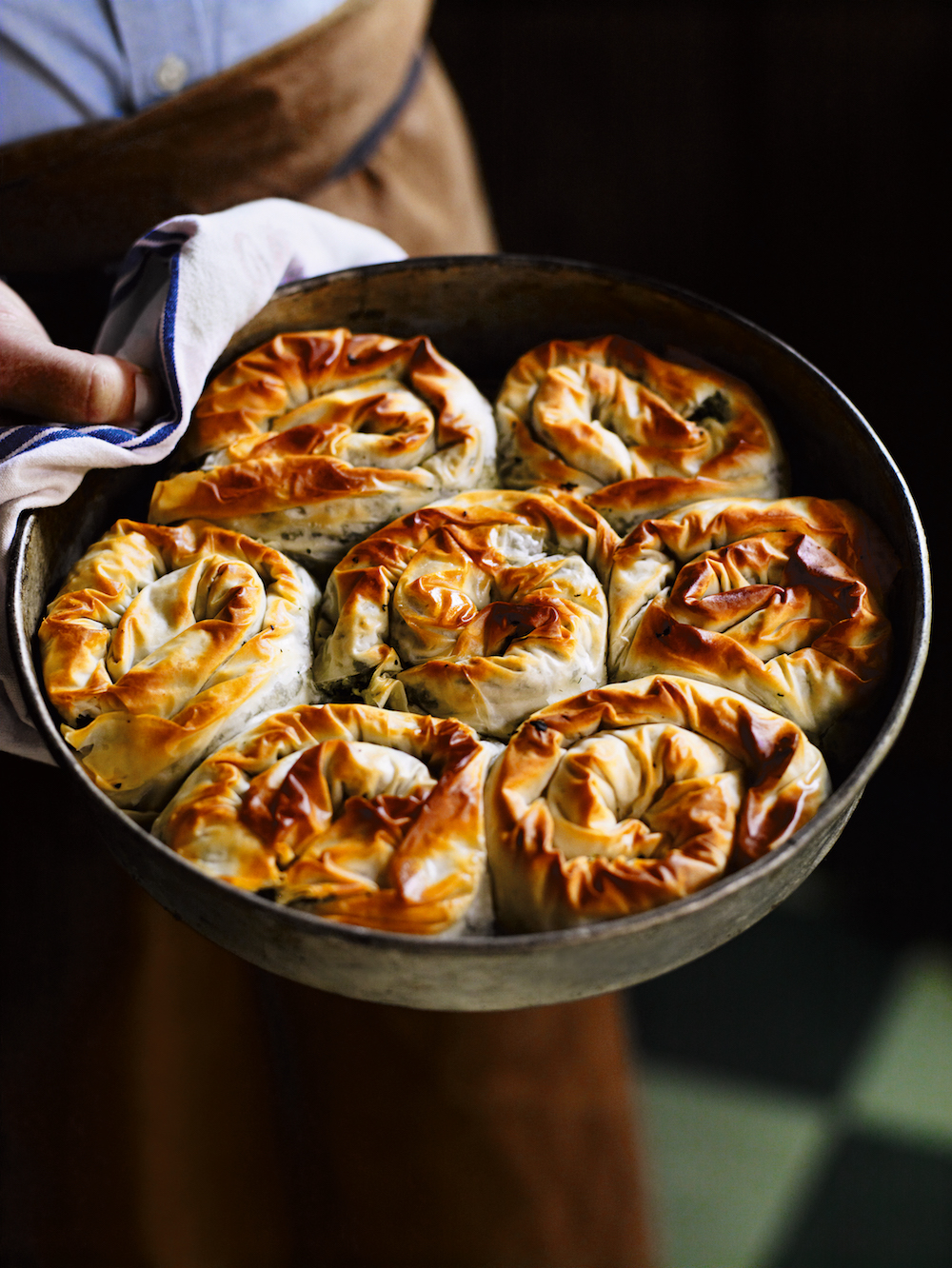
Recipe | Börek
Eke out summer with these Turkish spinach and feta pastries. Rolled in this unusual way they look even more impressive
Makes 6–8
Oil, for greasing and brushing
350g/12oz fresh spinach or Swiss chard leaves, rinsed
Good handful of flat-leaf parsley, chopped
100g feta cheese, crumbled
1⁄4 tsp salt
1 x 350g packet of filo pastry
1 Preheat oven to 180C/Fan 160C/350F. Oil a shallow, round cake tin, approx 30cm in diameter.
2 Lightly cook the spinach and parsley in a lidded pan with just the water that is left clinging to the leaves after washing. When the leaves have wilted, drain them through a sieve and leave them to cool. When they are cool to the touch, give them a good squeeze to get rid of any remaining water. Once completely cold, mix them with the feta and salt and set aside.
3 Unroll a sheet of filo pastry. Spoon a little of the spinach mixture down one long edge, then roll it up like a cigar. If it splits or seems a little fragile, roll another sheet of filo around it. (Take care not to do this too tightly or it will split again during the cooking process.) Coil the cigar into a ‘snail’ shape.
4 Repeat this process until you have made 6–8 ‘snails’, then arrange them neatly (sides touching) in the prepared pan. Brush with oil and bake for 40 mins or until golden brown.
Cook’s note: You can freeze the cooked greens and parsley mixture if you have a glut of fresh veg and use it throughout the year.
Recipe from The Great Dixter Cookbook by Aaron Bertelsen (Phaidon Press).
More from the September issue:
Featured
More pastry recipes:
Featured



Photo by Giulia Bertelli on Unsplash
A could-do list for September
Things you might want to do this month (no pressure!)
- Start the new season with a new notebook
- Take five deep breaths every day
- Enjoy every minute of late summer sunshine
- Leave the car at home for the day
- Take comfort from a return to routine
- Stay in bed on a Sunday morning
What would you add? Come over and tell us on Facebook or Twitter.
More from the September issue:
Featured
More could-do lists:
Featured
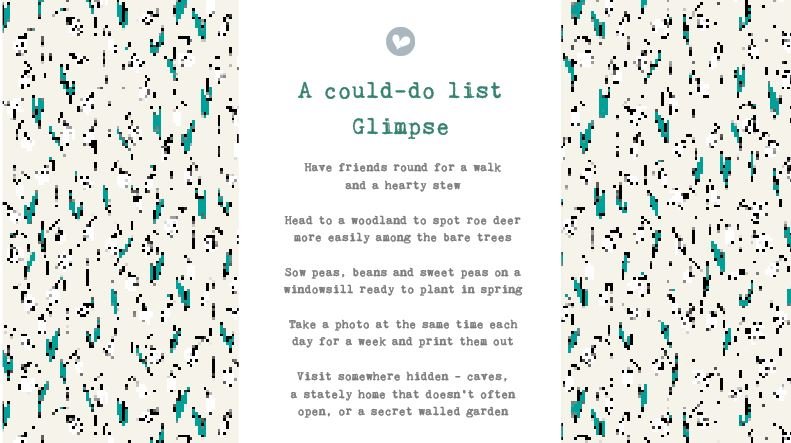
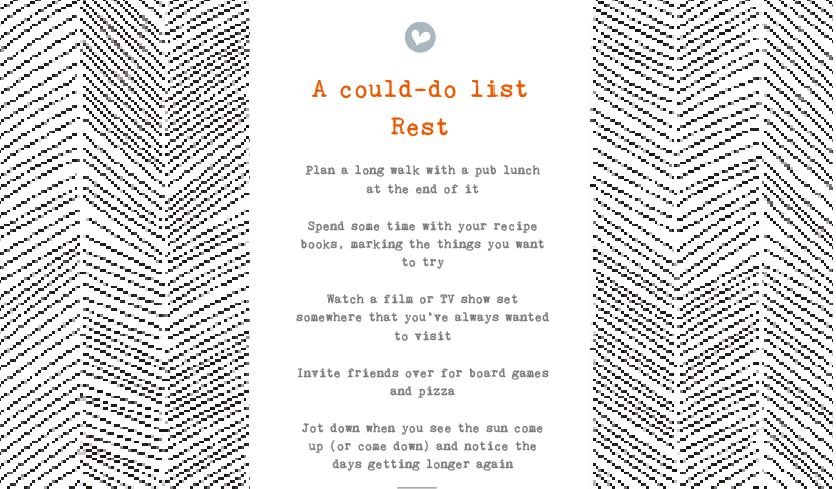


Image: Getty
My city | Venice
In this months The Simple Things, come with us through the winding streets, sunny squares and cool canals of Venice
There’s no better way to get to the heart of a city than through the people who live there. Every month, we ask someone, clearly in love with their city, to take us on a personal tour and tell us what makes it so special. You may feel inspired to visit one day or to rediscover the charms of a city closer to you, but for now just sit back, relax and enjoy some armchair travel.
This month, Iris Loredana takes us on a tour of her city, Venice.
How long have you lived in the city?
I grew up in Venice and went to university here. I’m passionate about my city, I did my thesis on ecology and the urbanisation of the Venetian Lagoon. I currently live and work in both Venice and Vienna.
Tell us what makes your city unique.
One thing is the light, which you can’t help noticing even on a rainy day. It’s a kind of translucent light that changes rapidly, as does its shimmering reflection on the water, making Venice look like she’s wearing a different dress several times a day. In late summer the sun’s rays immerse the buildings in brilliant sparkles.
What’s it like in September?
Warm and calm. Venice sits in the midst of a vast lagoon and this large water basin stores warmth. This means that summer lasts a little bit longer here. In late summer (we call September ‘summer with a bonus’), the colours become sharper. Early autumn is called ‘Canaletto season’ because the Venetian painters used to benefit from this mesmerising light and clear skies. It’s a great time of the year to go for long walks. The scent of the summer flowers is strong because the heat has abated. On a bright September morning you’ll notice the scents of wisteria, blossoming for the third time and oleander growing in the campi (squares) with its irresistible vanilla-lemon balm fragrance.
Tell us about the light and colours of your city.
In September, the early morning light has a rose gold hue. This colour is accentuated by the red brick façades and many buildings in town that are painted in rosso Veneziano (Venetian red). Towards noon, the sky turns 2 cobalt blue, shifting to emerald by late afternoon. If you’re lucky, your September evening sky will glow rose, pink and dark gold intermingled with light blue.
Turn to page 54 of September’s The Simple Things for more of Iris’s Venice secrets or look out for My City in every issue (and search previous posts here).
Iris Loredana founded website and blog La Venessiana: The Fragrant World of Venice, along with her grandmother, Lina, in 2015. They write about life in the Lagoon, and the city’s private homes, kitchens and secret gardens. Find them at lavenessiana.com.
More from the September issue:
Featured
More city guides to download:
Featured

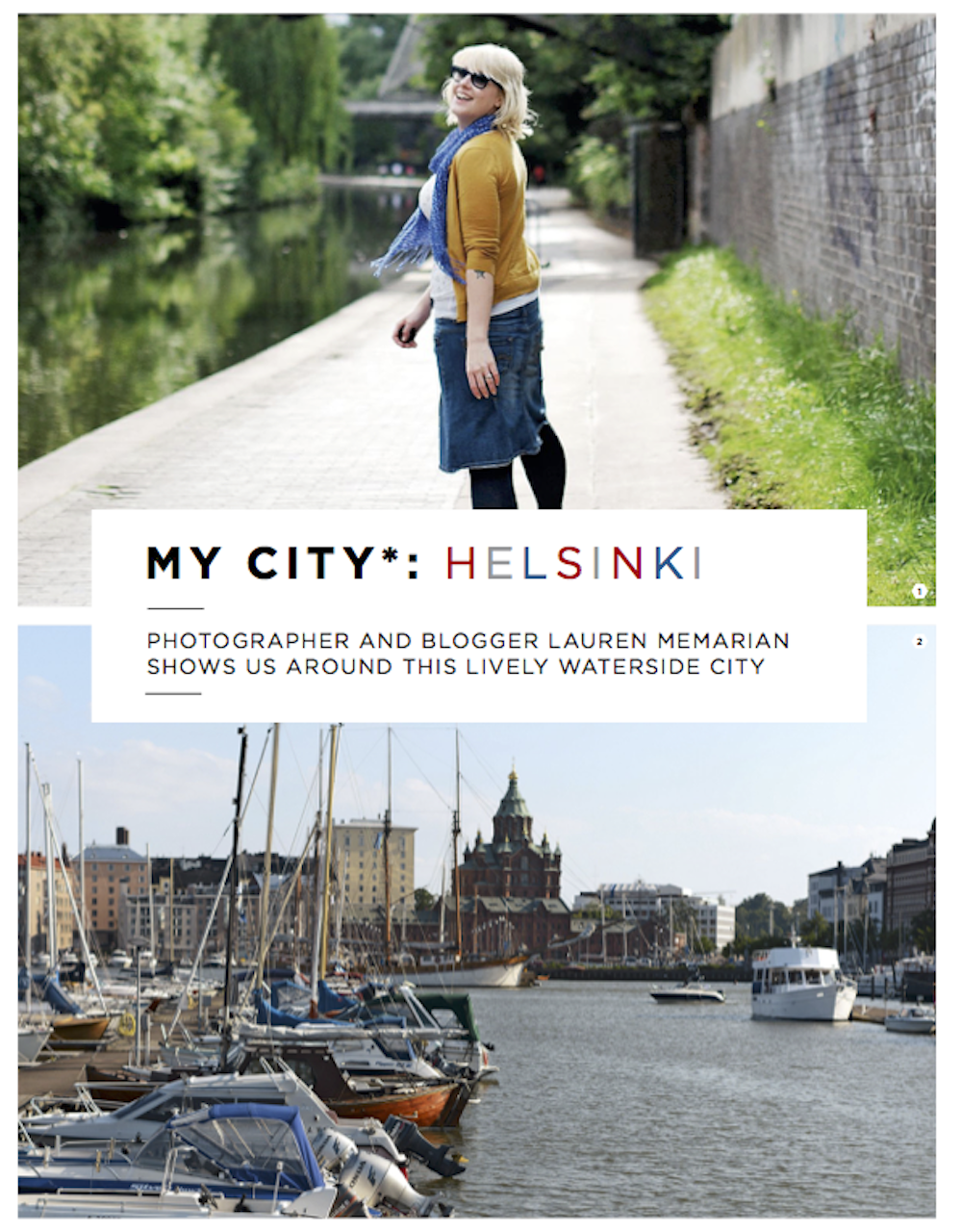

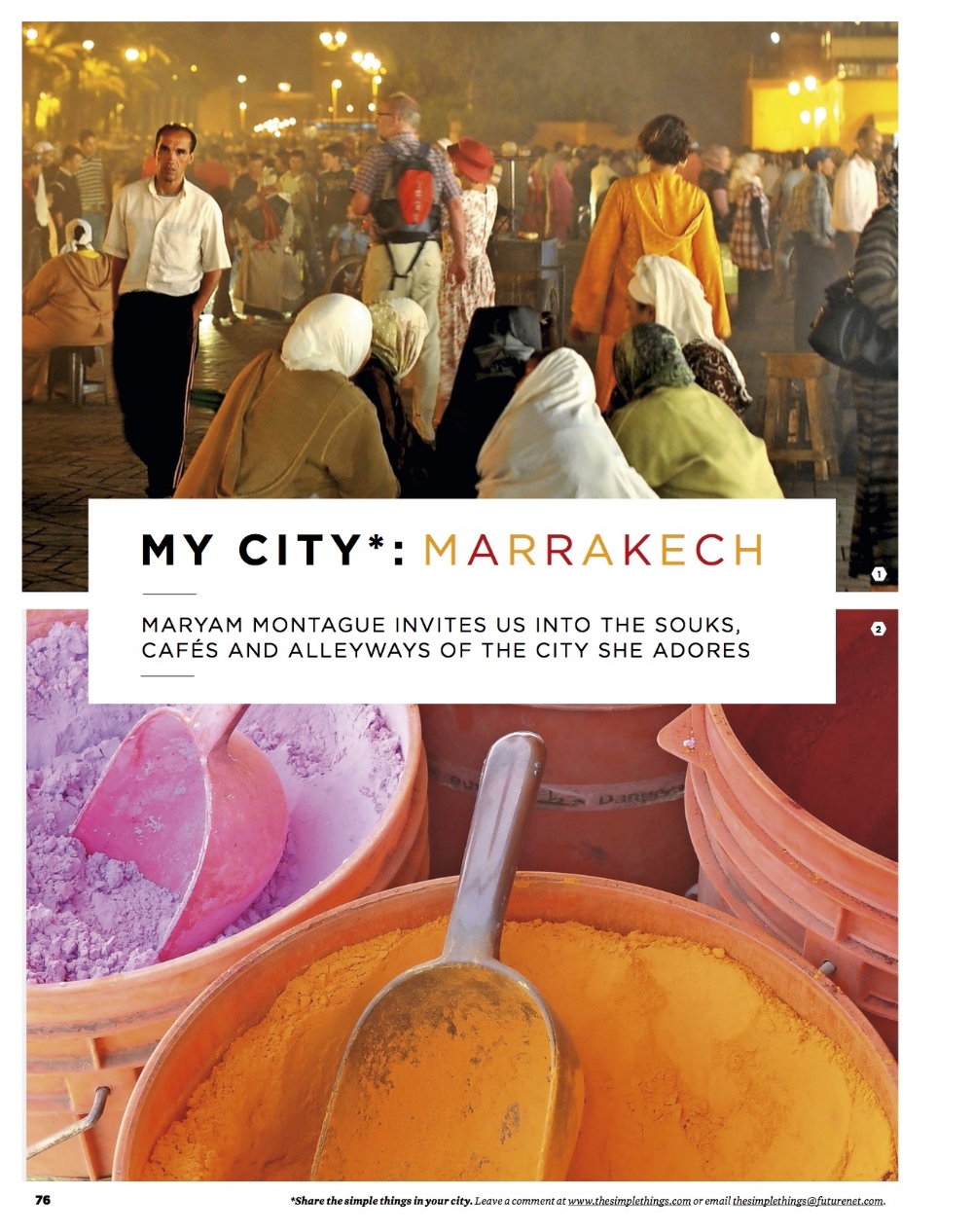

Image: Urbanara
The comfort of things | The bookshelf
There are certain items in your home that are like good friends: they always cheer you up. This month, we feel the love for the bookshelf on page 112 of the September issue.
It’s an undeniable fact that a bookshelf improves a room. The addition of a row of books, no matter how small, instantly adds warmth, colour and personality. Novelist Anthony Powell knew this when he entitled the tenth book in his ‘Dance to the Music of Time’ series Books do Furnish a Room. Any house without at least one bookshelf feels empty and unloved, and its owner risks the danger of looking like someone with a sketchy, suspicious identity. Nosing around other homes lined with a bookshelf or two, on the other hand, can reveal much, and is as irresistible as poking around a vinyl collection once was.
But which book lover are you?
The bibliophile
Organises their books according to category, chronologically, or alphabetically by author’s names, like a bookshop.
The aesthete
Arranges their books in colour bands: all books with colour co-ordinated spines are grouped together. Not especially handy when actually looking for a book however.
The would-be librarian
Houses books in bookcases that line walls or even entire rooms, which can then be called ‘the library’ or ‘the study’ with justification.
The curl-up-with-a-good-book loafer
Sits and reads on a wet afternoon in a designated armchair by a window next to a shelf of books.
The interior designer
Intersperses objects, plants and photographs in front of books. Shelves can then be treated as ‘decorative installation’ with displays changing according to whim.
Turn to page 112 of September's The Simple Things for more, including our pick of bookshelves to buy, make or hack.
More from the September issue:
Featured
More home ideas:
Featured

Recipes by Lia Leendertz, images by Kirstie Young
Recipe | Apple & fennel granita with fennel shortbread
Gentle hints of aniseed in both the shortbread and apple granita show off fennel at its grown-up best
Apple & fennel granita with fennel shortbread

Fennel is just as comfortable in sweet settings as it is in savoury, and its aniseed flavour adds a sophisticated note to this grown-up dessert.
Makes 12 servings/biscuits
700ml cloudy apple juice
Juice of lemon
100g granulated sugar
1 head (or 2 tbsp) fennel seeds for the shortbread
150g soft salted butter
70g golden caster sugar, plus 2 tbsp for sprinkling
150g plain flour, plus extra for dusting
70g rice flour
2 tbsp fennel seeds
Cook’s note: The granita is easy to make, but you should ideally make the liquid and leave it to cool the day before you’re going to turn it into granita. Freeze early on a day when you’ll be in the kitchen a lot, as it needs a little attention periodically.
1 Pour the juices and sugar into a saucepan and gently heat until the sugar is dissolved. Add the fennel seeds and bring to the boil, then simmer for a few mins. Remove from the heat and leave to cool completely.
2 Sieve into a plastic container with a lid and transfer to the freezer. Set a timer for two hours, then remove from the freezer and use a fork to break up the frozen edges and stir them into the centre.
3 Set a timer to repeat hourly, breaking up the ice crystals each time, shortening the timer to every half hour once it really starts to freeze. The more times you do this, the more snowy it will become, but even a few stirs will create a good result.
4 To make the shortbread, cream the butter and sugar together until fluffy, then add the flours, fennel seeds, and a pinch of salt. Mix together roughly, then use your hands to bring the mixture into a dough.
5 Roll out onto a floured surface, cut into rounds, and place onto a baking sheet covered with baking parchment. Prick all over with a fork, then chill in the fridge for at least 30 mins.
6 Preheat oven to 180C/Fan 160C/350F. Take the shortbread out of the fridge and sprinkle over 2 tbsp caster sugar. Bake for 20–25 mins until the colour of pale straw, then remove from the oven and leave to cool, transferring to a rack when they have hardened a little. Serve a small bowl of granita with a shortbread biscuit.
More from the September issue:
Featured
More granita recipes:
Featured


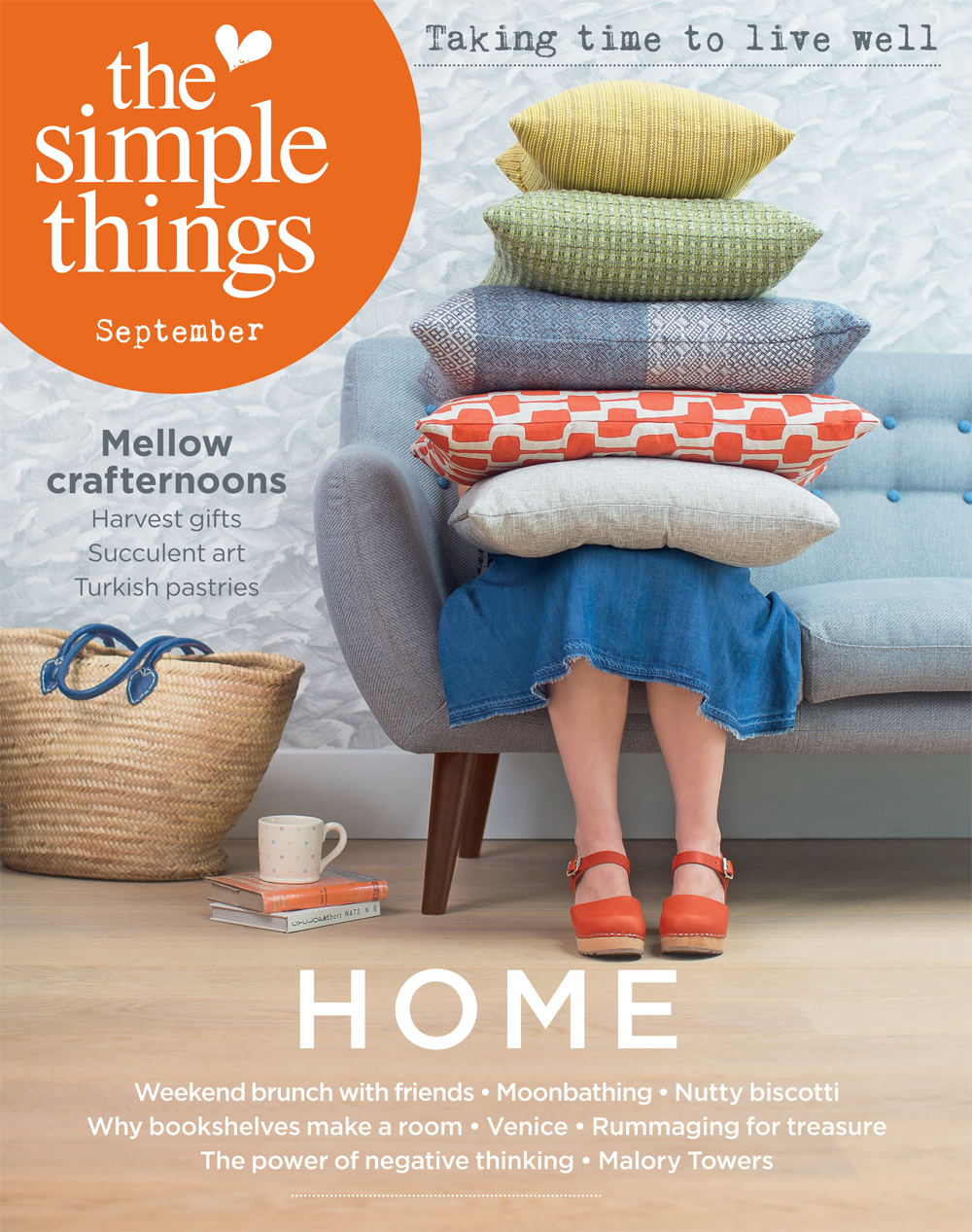
Home | September cover reveal
The turn of the year is never more marked than in September, bringing an enjoyable sense of purpose about the place. It’s a time of ‘things to plan and do’ and ‘things to want and wish for’ but this needn’t just be about the shiny and the new. Proudly homemade harvest projects and vintage shopping are seasonal pleasures too. If September is the new January, take a moment to embrace nostalgia and melancholy among the resolutions and getting stuff done. Happy new year.
Get hold of your copy of this month's The Simple Things - buy, download or subscribe
View the sampler here, buy back issues or try our sister mag, Oh Comely
More from the September issue:





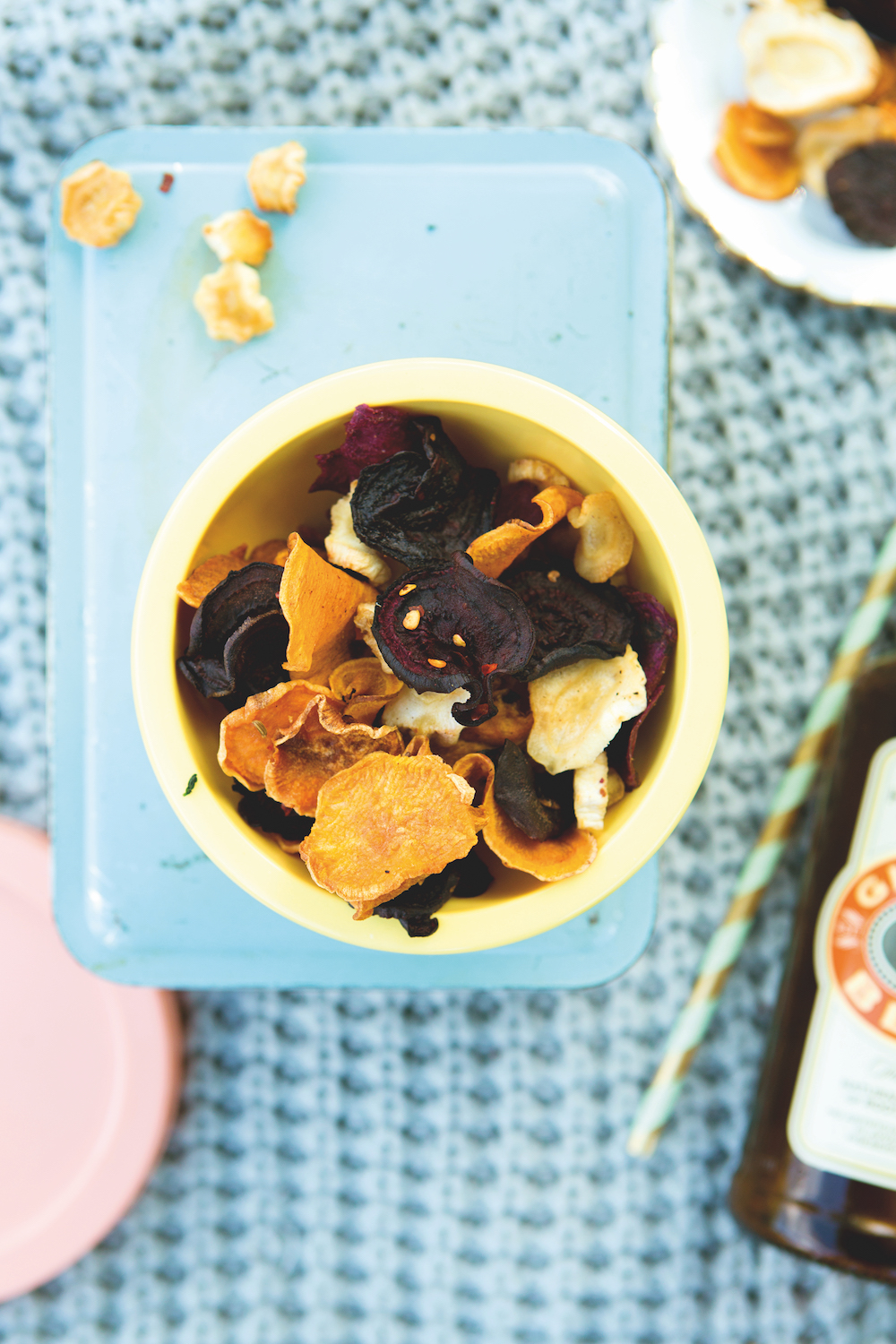
Recipe | Vegetable crisps
Sweet roots turned into a wonderfully crunchy snack
Serves 6
3 large parsnips
3 large beetroots
3 large sweet potatoes
Vegetable oil
Sea salt
1 tbsp fennel seeds
1 Preheat oven to 150C/Fan 130C/ 300F. Line 4 baking sheets with baking parchment (or if short of space or trays, cook crisps in batches).
2 In a small bowl, mix 3–4 tbsp of vegetable oil, the fennel seeds and a good grind of salt. Lightly brush the baking parchment with the oil mixture. Set aside.
3 Use a mandolin or vegetable slicer attachment on a food processor or, failing that, slice all the vegetables as thinly as possible. Use kitchen towel to pat slices dry.
4 Place the vegetable slices on your baking sheets, making sure they don’t overlap. Then lightly brush the crisps with the oil mixture.
5 Bake for 1 hour; after an hour, remove the parsnips, returning the beetroot and potatoes to the oven for another 30 mins. Cool on a rack, and store in an airtight container.
Turn to page 24 of August's The Simple Things for more of our picnic in the park menu, including:
- Build-your-own bruschetta
- Hummus Kale & basil pesto
- Jumbo apple sausage rolls
- Summer salad & orange dressing
- White chocolate & raspberry traybake
More from the August issue:
Featured

More summer picnic recipes:
Featured
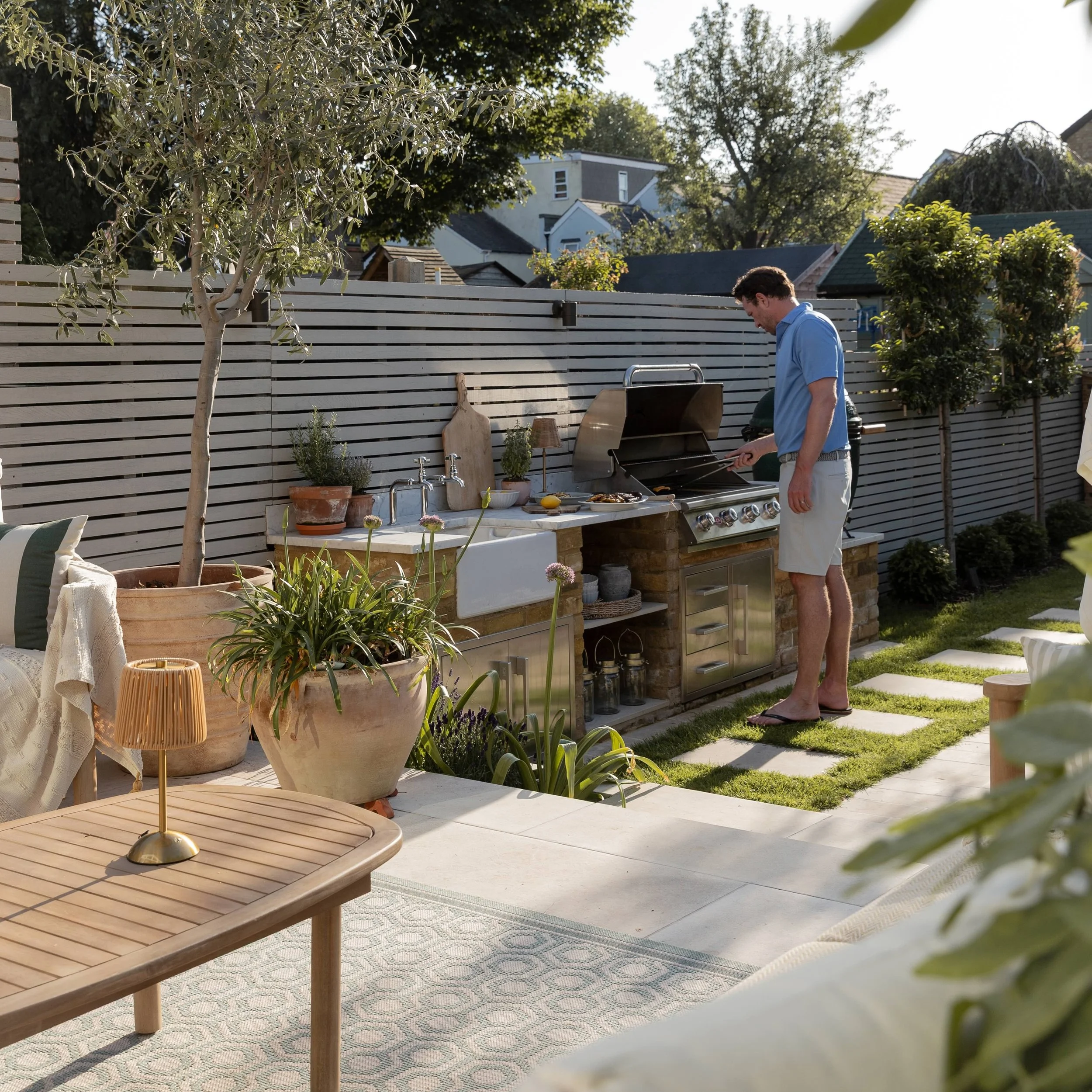
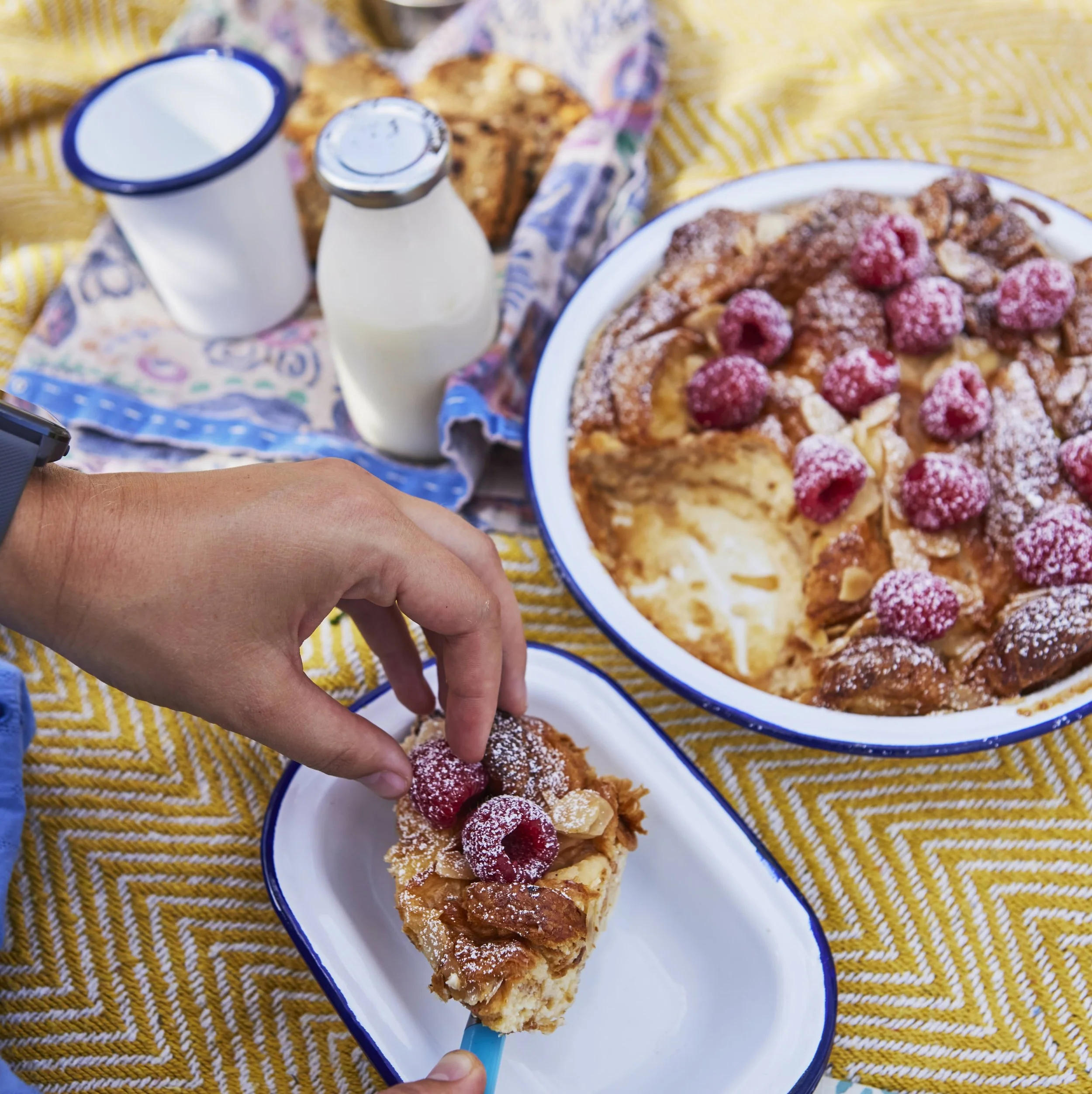
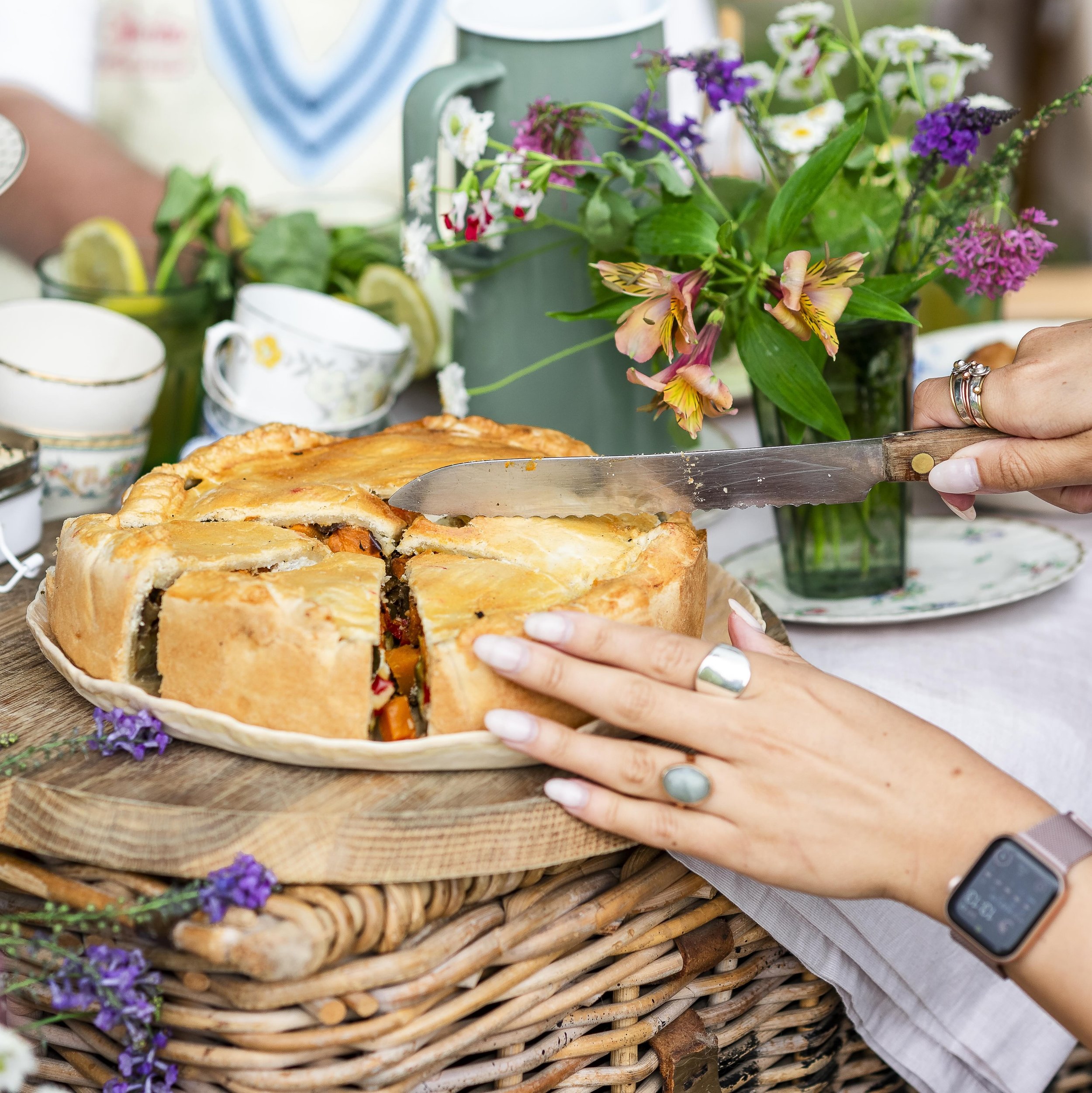
Image: Getty
Britain's outdoor games
There is little more English than a game of croquet – flamingos and hedgehogs optional. Or for an outdoor game that allows for standing about with a pastis in one had, Pétanque is your pastime
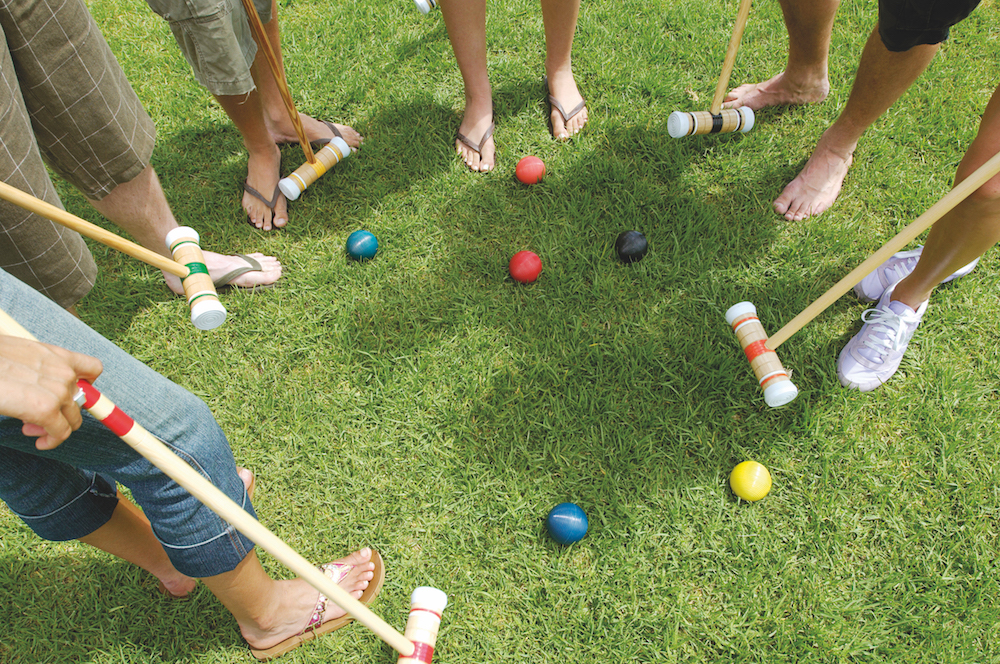
CROQUET
A cross between bowls, billiards and marquee erection, croquet is the feminist’s friend, being the first outdoor sport to allow women and men to play on an equal footing. It’s also an unusual game in that seemingly no one knows the rules, but because whacking balls through hoops with a mallet is such fun, nobody really cares. It’s a game long associated with the upper classes, and you can turn any old patch of grass into the sweeping lawn of a moneyed Victorian simply by having a friend run forward, urgently wave a piece of paper and call “Miss! News from
London, miss”. Remember, period-detail- lovers, attitudes to animal welfare were rather different in Lewis Carroll’s time and, today, use of live flamingos and hedgehogs is generally frowned upon.
PÉTANQUE
Derived from boules, a game traceable back to coin throwing in ancient Greece; Romans refined the concept to aiming at a target and the modern sport began to take shape. Pétanque itself only arrived in 1907, when rheumatic boules ace, Jules Lenoir, could no longer run and throw. Instead, he suggested this: stand inside a circle with both feet on the ground and toss hollow steel balls as close as possible to a small wooden ball, or cochonnet. In contrast to the rolled, lawn-requiring British bowls, this throwing technique makes it the ideal game if your local open space is a little on the uneven side. Indeed, gravel or hard dirt is the customary playing surface. For extra Francophone authenticity, liberally punctuate play with exclamations of “Bof!”, “Très bon!”, “Merde!”, etc.
Turn to page 71 of August’s The Simple Things for more games, including toe wrestling, ping pong and crazy golf.
More from the August issue:
Featured
More school holiday ideas:
Featured


Wellbeing | The power of negative thinking
Worries and doubts have their up-sides. They could even help you feel happier…
Negative thoughts – worries, doubts and irritations – are like weeds. Despite our best efforts to think positive, look on the bright side, or be grateful for what we have, they still spring up. But what if the reason they are so persistent is that they serve a purpose and are even sometimes useful? According to an increasing number of experts, it’s time we stopped demonising negativity. It could help you feel happier.
Turn to page 78 of September’s The Simple Things for more on the power of negative thinking, including how to harness its power plus a fear-setting exercise.
The TED talk below explores the hard choices - what we most fear doing, asking, saying - and how they are very often exactly what we need to do. How can we overcome self-paralysis and take action? Tim Ferriss encourages us to fully envision and write down our fears in detail, in a simple but powerful exercise he calls "fear-setting." Learn more about how this practice can help you thrive in high-stress environments and separate what you can control from what you cannot.
More from the September issue:
Featured
More wellbeing:
Featured


Listen | Homecoming songs
After a summer holiday, little feels as good as coming back home.
Listen to our homecoming songs playlist now
Listen to more playlists:
Featured


More from the September issue:
Featured
Illustration: Joe Snow
Garden hacks | Reuse cooking water on your plants
Don’t let water go to waste: it can add moisture and nutrition for your plants
Get around water scarcities. Re-use cooking water. Take out whatever you’ve been cooking and let the water cool to room temperature.
Add nutrients. Whatever you’ve cooked will mean that the water has extra nutrition for plants. For example, starches from pasta and potatoes, calcium from hard boiled eggs or iron from spinach. Just avoid using water that’s been salted.
Kill weeds. Or don’t let your water have time to cool after boiling, and (carefully!) tip it over areas with weeds.
More from the August issue:
Featured
More Garden hacks:
Featured


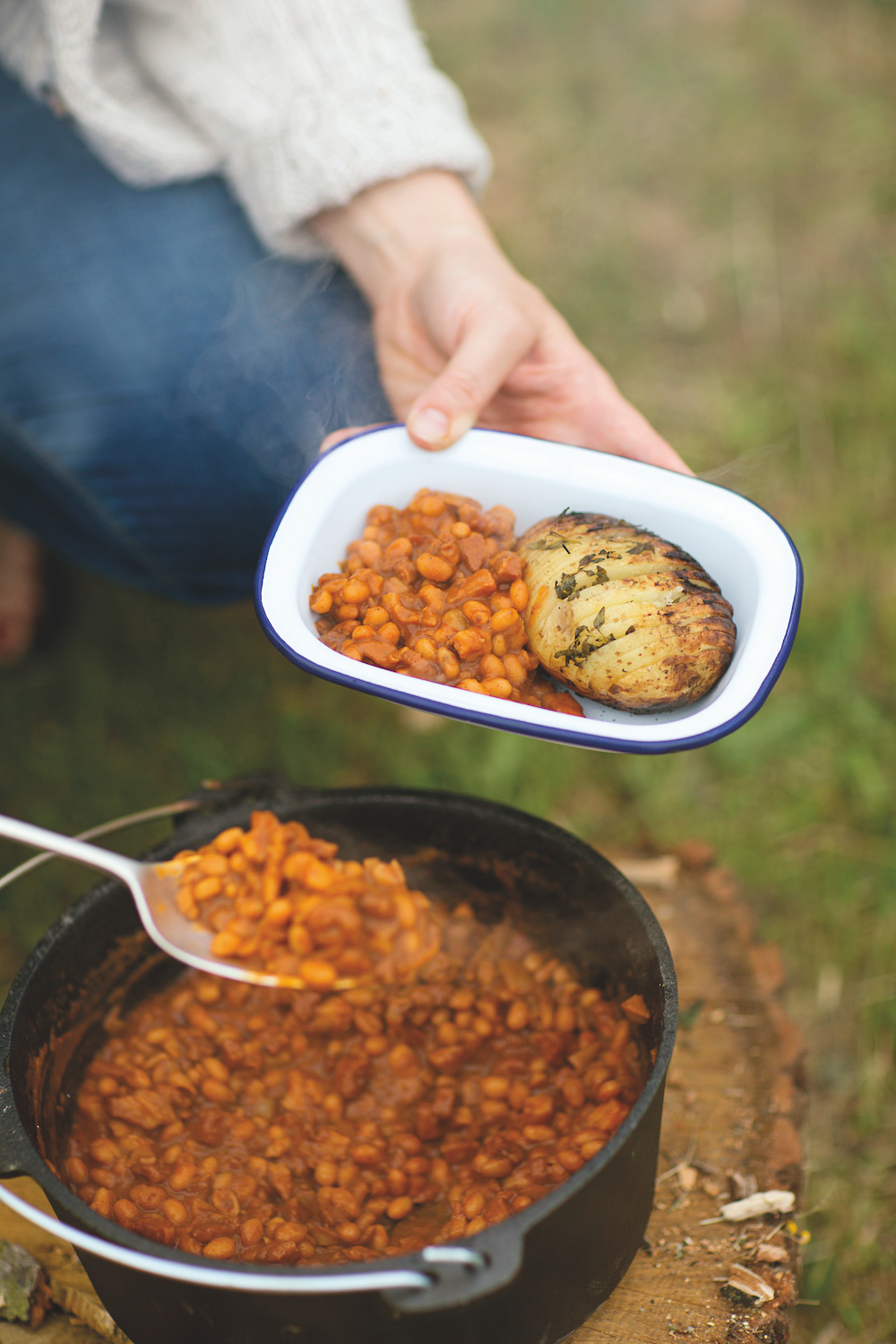
Camping recipe | Smoky Boston beans & armadillo potatoes
No flames are required for this comfortingly simple cowboy supper of foil-wrapped herby spuds and a casserole of sweet, smoky beans – all of which is tucked into the hot, white coals to cook.
Serves 4
4 baking potatoes
30g salted butter
Handful of fresh thyme for the beans
1 tbsp olive oil
400g smoked bacon lardons
1 onion, roughly chopped
2 garlic cloves, finely chopped
2 tsp smoked paprika
1 tsp ground cumin
2tsp English mustard powder
2 tbsp tomato purée
1 tbsp black treacle
2 x 400g tins haricot beans in water
Handful of fresh parsley, roughly chopped
Natural yogurt, to serve
1 Using a sharp knife, cut slits widthways into each potato, working your way along from end to end – be careful to only cut three-quarters of the way down. Rub each potato generously with butter and carefully stuff sprigs of thyme in between some of the slits.
2 Individually wrap each potato in a double layer of foil and place directly on white coals (when the flames have died), for 30–40 mins, turning every 10 mins.
3 Cook the beans in either a Dutch oven* on an open fire or in a large saucepan on a camping stove. Heat the oil over a medium-high heat and add the lardons, frying for 5 mins until they just start to brown. Add the onion and continue to cook until softened.
4 Add garlic, paprika, cumin and mustard powder; stir thoroughly before stirring through the tomato purée and treacle. Add the beans along with the water from their tins, then half fill one of the tins with extra water and add that to the pan also.
5 Bring the beans to a simmer and allow to cook, stirring often, until the sauce has thickened – around 10–20 mins, depending on how you’re cooking them. Before serving, scatter the parsley over the beans.
6 To test the potatoes, give them a gentle squeeze: if they feel soft, they’re ready. Carefully unwrap each one and serve with a generous helping of beans and a dollop of yogurt.
* A Dutch oven is a lidded cast-iron or earthenware casserole robust enough to cook in the coals.
Turn to page 38 of August's The Simple Things for more of our camping special.
More from the August issue:
Featured
Camping recipes:
Featured



Photography: LINDSAY ZIER-VOGEL
Make | I love my city tote bag
Make and decorate totes that celebrate what you love about where you live
You will need
For the bag:
38 x 46cm cotton twill (outer fabric)
38 x 46cm cotton fabric (liner fabric)
1 spool thread, to match twill
2 pieces of cotton webbing (50 x 4cm), for tote handles
OR, a ready-made blank tote bag
For the decoration:
2 skeins embroidery floss
Size 4 embroidery needle
18cm wooden embroidery hoop (or smaller)
Scissors
Pencil and white eraser
Ruler and straight pins
Iron
Embroider your love letter:
1 Think of something that you love about where you live. Maybe it’s a flower seller or the view from the waterfront, a skyline, or a certain stretch of road.
2 Pre-wash and dry fabric.
3 In pencil, write the letter in the centre of the twill fabric, leaving at least 6cm at the top and at least 10cm at the bottom. If using an existing tote bag, centre text.
4 Using all six strands of embroidery floss, chain stitch around pencilled text. To chain stitch: make a small stitch on your fabric. Bring the needle back up through the fabric a short distance below your stitch. Loop your thread through the first stitch, pull through before re-inserting your needle into the same hole you came up through. Repeat, by passing the needle through the last loop you made.
5 Trim loose threads and iron out any crease marks from the hoop. If you’re using an existing tote, you’re done! If sewing your own tote bag, proceed to the next step.
Make your bag:
1 Start by making the lining: pin together two pieces of liner material with right sides facing. Using a sewing machine with a 1cm seam allowance, stitch along one side, turn onto bag bottom, and turn again, sewing up the other side.
2 Pinch corner and line up the side seams so that corner fabric makes a triangle. Measure 7.5cm from corner and draw a perpendicular line with pencil. Sew along that line, keeping side seams open. Complete both liner corners and cut off extra fabric. Keep tote inside out and pin 4cm seam from open edge of bag.
3 Then make the outer bag: pin together two pieces of twill with right sides facing. Using a sewing machine with a 1cm seam allowance, stitch both sides of the bag and the bottom.
4 Pinch corner and line up side seams so that the corner fabric makes a triangle. Measure 8cm from the corner and draw a perpendicular line with pencil. Sew along that line, keeping the side seams open. Complete both corners and cut off any extra fabric.
5 Flip fabric right-side out and pin a 4cm seam from the open edge of bag.
6 Slide lining inside outer shell and pin corners together. Pin handle fabric to twill 10cm from the edge of the bag, with 10cm between each end of the handles. Pin outer fabric to inner fabric. Be careful to tuck handle tops down into bag. Sew through all layers at the top of the bag, keeping the handles sandwiched between the lining and the outside twill. Trim any loose threads to neaten it up.
Project by Lindsay Zier-Vogel, reprinted with permission from Strange Material: Storytelling through Textiles edited by Leanne Prain (Arsenal Pulp Press).
More from the August issue:
Featured
More weekend projects to make:
Featured


Nasturtiums
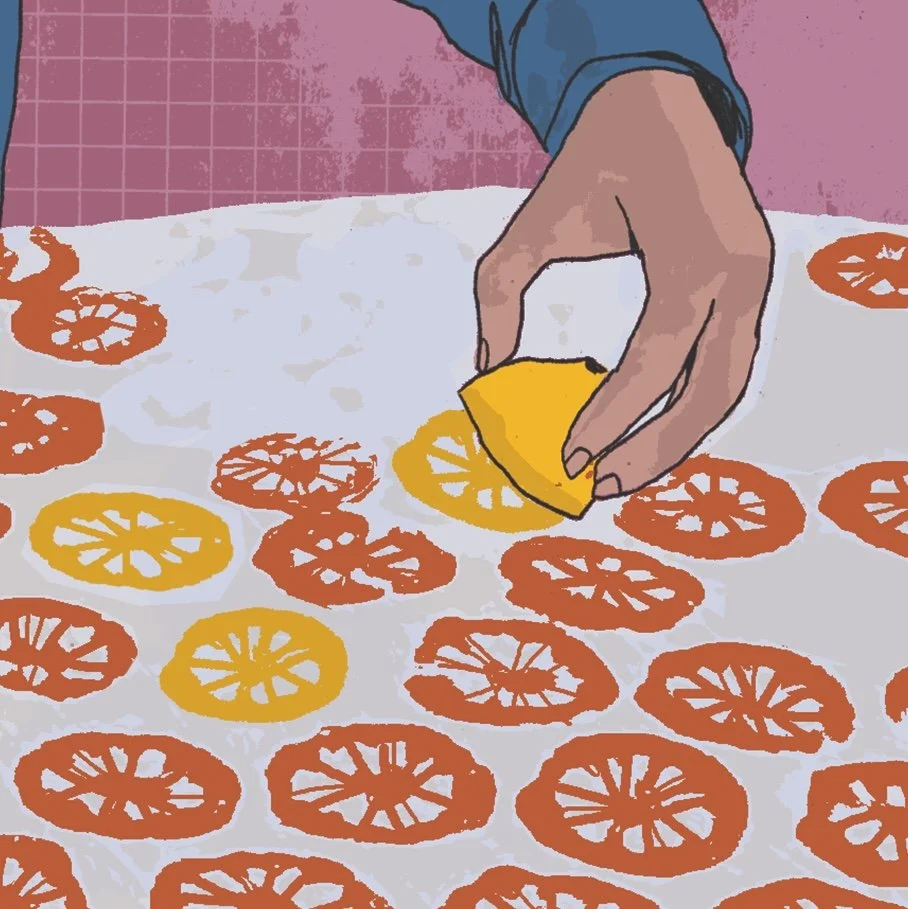
Nasturtiums are plants that just keep giving
From the moment they are planted in spring, they respond to the smallest amount of care (a bit of earth, occasional watering) with vigorous growth, lily-pad-shaped leaves and then, around about now, cheery and abundant blooms. Not only do the flowers look good in the garden as they scramble and tumble about, but they make a pretty, peppery addition to salads, and they can be brought indoors for an instant bit of summery colour.
More from the August issue:
Featured
More floral inspiration:
Featured


Photo by Alice Achterhof on Unsplash
Play time
There’s fun to be found in the everyday if you look for it
Listen to a funny podcast on your commute or play your favourite music while washing up
Be open to meeting new people. We tend to stick close to those we know, which is often to our disadvantage
Be curious – take up drawing, dancing, growing, anything that expresses your curiosity in a way that’s fun
Mix with happy people and benefit from what experts call ‘emotional contagion’
Act spontaneously - take a day off, do something unexpected, surprise yourself…
What would you add? And have you seen our could-do lists?
More from the August issue:
Featured
Wisdom: Nell Gifford of Gifford's Circus
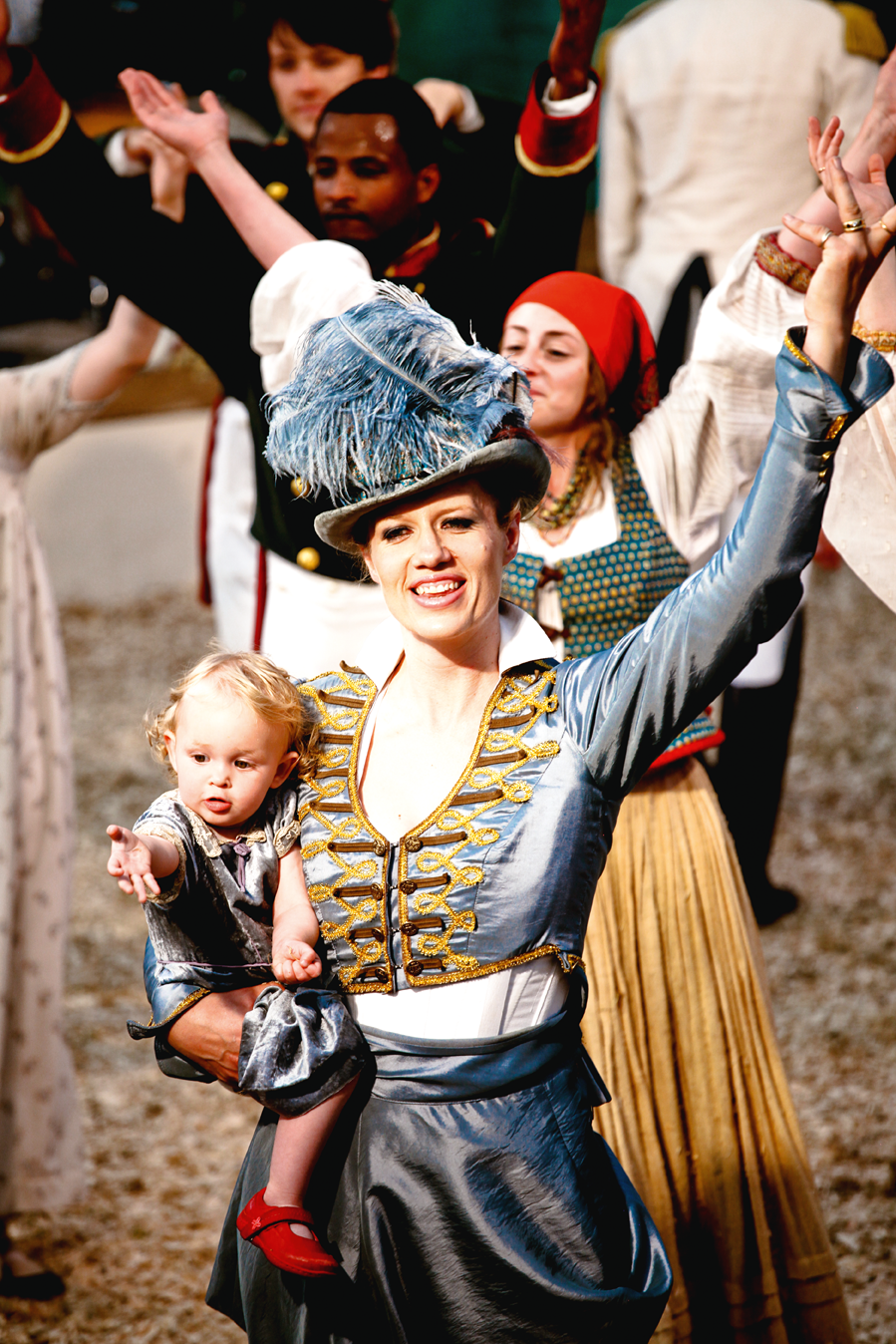
Meet Nell Gifford, founder of Gifford's Circus - the nation's most glamorous troupe. Nell's lifetime of learning - from recruiting clowns to dog training to facefuls of custard - has built the travelling show of her dreams
In the fifteen years since Nell Gifford and her husband Toti launched their travelling show out of a bevy of painted vintage wagons that tour the south west each summer, Nell has dazzled in scarlet and gold Ring Master's garb; set hearts racing astride rearing ponies; and left children crying with laughter as another custard pie splats in her face.
Their new permanent base at Fennels Farm where Nell and Toti live with their seven-year-old twins, son Cecil and daughter Red, is being refurbished to accommodate their burgeoning troupe of 50 clowns, jugglers, acrobats, contortionists and musicians, not to mention the 100 animals already in situ, which include horses, ponies, dogs, chickens, doves and a goose called Brian.
'Every year feels like the last,' she says, after describing the 16-hour days, non-stop questions and continual trouble-shooting that tis the pre-season lot of a circus boss. 'It's a nightmare, but once you get the bug, you can't live without it.'

Image: Lottie Storey
Nell is not what you might expect from someone who runs a circus. Her voice is low and measured, and she has an air of self-containment that seems at odds with the abundance and jollity of her chosen career. As a girl, she never dreamed of running a circus, or even running away to one, although in her 'threadbare and bohemian' childhood, she did once want to be a monkey trainer, and her favourite game involved gypsies and pretending to live in a caravan. 'Be careful what you wish for,' she says. But this isn't a story of the girl who never grew up. Perhaps rather the girl who was forced to grow up too quickly, when in 1991 catastrophe struck, and a riding accident left her mother Charlotte severely brain damaged. 'When your mum is put in to hospital for life, your home life is over in a day,' says Nell, who has a sister Clover, two years her junior, and two older siblings from her mother's previous marriage, Tom and Emma Bridgewater, the ceramics designer. 'I was 18, not 12, but it was abrupt. The house was sold, I packed up our home, put away my childhood; everything was dissipated.'
So Nell ran away with the circus. Or rather she was offered the chance to spend a year working at a circus in America that was owned by Tom's wife's family. 'I fell in love with the whole way of life,' she says, 'with the animals and the children, and the multilingual travelling village feel. I was more helped than helpful, but i knew that this was what I wanted to do with my life, nothing else was a possibility.'
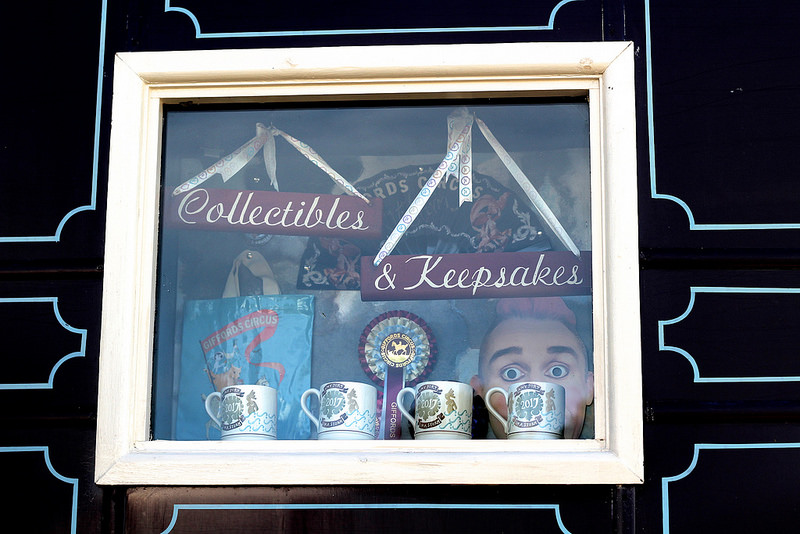
Image: Lottie Storey
Back in the UK, she took up a place at New College Oxford to read English, and on graduating, started her career selling ice cream for the Chinese State Circus. Over the next few years she worked her way around the industry, putting up tents and driving lorries, donning fishnets and riding elephants. In 1998, Nell met Toti who ran his own landscape contracting business in Cheltenham, they became engaged, and he followed her to Germany for a season at Circus Roncalli, where Nell worked as an assistant horse trainer and groom. It was here that their eyes were opened to what a circus could really be. 'All the English circuses were very unloved,' says Nell. 'Circus Roncalli was like a fantasy baroque travelling circus. It was absolutely beautiful, with twinkling lights, cinnamon cakes, beer and champagne. There was such a sense of occasion when it arrived in town. It showed me how culturally relevant circuses could be.'
In 1999, Nell and Toti, by now married, bought a second-hand tent through a newspaper and an old showman's wagon from a farmer, and began building their vision of the perfect circus, nail by nail. 'We wanted to create a jewel of a show on a village green, that was rowdy and handmade, with horses and a gas-lit feel,' says Nell. 'My mum's old curtains got cut up and made into costumes, we sewed sequins on to old riding clothes.' They held auditions at the Playhouse Theatre in Cheltenham, and hired 20 artists including a local juggler and a contortionist from Birmingham. Money from Toti's landscaping business was ploughed into the circus, they very nearly went bankrupt, and were forced to move into the old showman's wagon, in which they lived until 2005. 'It wasn't the easiest way to start a marriage, without a loo or a shower. It was non-stop hard work and it still is. But we never doubted it would be a success.' When Gifford's Circus launched at the Hay Festival in 2000, their faith and hard work was rewarded with a clamour of positive media coverage, and a sell-out first season.

Image: Lottie Storey
The circus may be a success, but there is a difference between successful and financially stable, says Nell: 'It's taken a long time to make it even slightly secure. It's not the cleverest thing to make something successful but not well off, because you are constantly trying to make things the best without a lot of money.' But year after year Gifford's Circus's old-fashioned and topsy turvy charm has continued to delight thousands of guests, with the help some of the best names in theatre creation including Angela de Castro and River Dance's Molly Molloy. IN 2002, good food was added to the line up with the opening of their mobile restaurant Circus Sauce, which offers a local and sometimes foraged menu, served at candlelit oak tables on Emma Bridgewater Pottery - Nell's sister also designs a range for the Gifford's Circus shop.
Today the constant challenge of balancing work and private life has been eased by the ability to hire more staff and delegate. If Nell is able to do a spot of gardening during rehearsals, she feels that she has cracked the system. The arrival of Red and Cecil in 2010 saw the twins seamlessly immersed in circus life. 'They just know the world of shows. It's a family business,' says Nell, who nevertheless only wants her children to continue with the circus if it is something they feel passionate about and can do well. But the twins certainly like to perform, and appear in the ring for finales whenever they feel like it, sometimes, Nell suspects, simply as an excuse to get out of bedtime.
'I think Red thinks she is in charge of the circus, whereas Cecil thinks mending lorries is more his department,' she smiles. This arrangement is not dissimilar from her own and Toti's division of labour; Nell is in charge of the overall steering of the business, the scheduling and the press, as well as turning her hand to a bit of animal training, most recently dogs; while Toti is in charge of logistics, the tent and the lorry.

Image: Lottie Storey
Winters are spent at the farm planning the next season, but there is little time off - work on next year starts the moment the tent comes down. But once spring arrives and the weather turns, they are keen to get back on the road. Nell describes the beginning of the season as a bit like a family wedding, 'There are lots of hellos and excitement at who's new and what's happening, but then it settles down and by the end everyone's quite pleased it's over. Some people are sick of each other, some are in love - we've had quite a few people meet and have children over the years.'
While Nell thrives on those days when a performance is 'packed and safe and rocking', it's an exhausting and stressful time, when she's constantly in uncomfortable costumes, and on high alert, unable to unwind. So when the road isn't calling, quiet time at home with Toti and the twins, playing puzzles, is how she switches off. Nell also finds time to learn something new each week, and at the moment takes sewing, fitness and riding lessons. 'I think it's really important to be taught something. It changes the dynamic from always telling people what to do, otherwise my automatic response is to become bossy, and I hate that.'
Setting up a circus may seem an improbably dream to most, but for Nell it has restored her faith in life: 'I think life is a question of what you want to do, not what you can do,' she says. 'Things just went so wrong with mum, that it's only in the last year with the move to this area and the farm that I definitely...' she tails off. 'It's like riches to rags to riches again,' she says. 'I just wake up every morning and think, 'what went right?'
This year's Any Port in a Storm runs until 24 September 2017. For tickets and venue information go to giffordscircus.com.
Not heard of Gifford's Circus? Allow us to introduce you...
This interview was first published in the April 2015 issue of The Simple Things - shop back issues
From the August issue:
Featured

Photography: Susanna Blävarg
Recipe | Lavender and honey cakes
August is a quiet season for baking... Let these light and pretty lavender numbers tempt you back into the kitchen
LAVENDER AND HONEY CAKES
Makes 12
40g salted butter (room temperature)
120g plain flour
140g caster sugar
11⁄2 tsp baking powder
120ml milk
1 egg
1 tsp lavender essence
for the icing
80g unsalted butter (room temperature)
160g icing sugar
1 tbsp honey
1 tsp lavender essence
Purple food colouring
Dried lavender to decorate (optional)
you will need
12-hole cupcake or muffin tin lined with 12 paper cases
1 Preheat oven to 170C/Fan 150C/325F. Measure the butter, flour, caster sugar and baking powder into a bowl and use an electric whisk to beat until the butter is incorporated and you have a sand-like texture.
2 In a separate bowl, mix the milk, egg and lavender essence and add slowly to the dry mixture, mixing to form a batter.
3 Pour the batter into the cupcake cases, about a heaped tablespoon in each, and bake in the centre of the oven for 15 mins or until lightly golden and springy to touch. Remove from the oven and allow to rest for 5 mins, then turn out onto a wire rack to cool completely.
4 To make the icing, whisk together the butter, icing sugar, honey and lavender essence for a couple of mins until smooth. Add as much purple food colouring as you like, then put in the fridge for 15–20 mins until firm.
5 Ice the cakes using the back of a spoon and garnish with a sprig of dried lavender.
Recipe from Milly’s Real Food by Nicola Millbank (HarperCollins).
Cake in the House is our monthly recipe feature - get a cake recipe every month in The Simple Things!
More from the August issue:
Featured
More cake recipes:
Featured


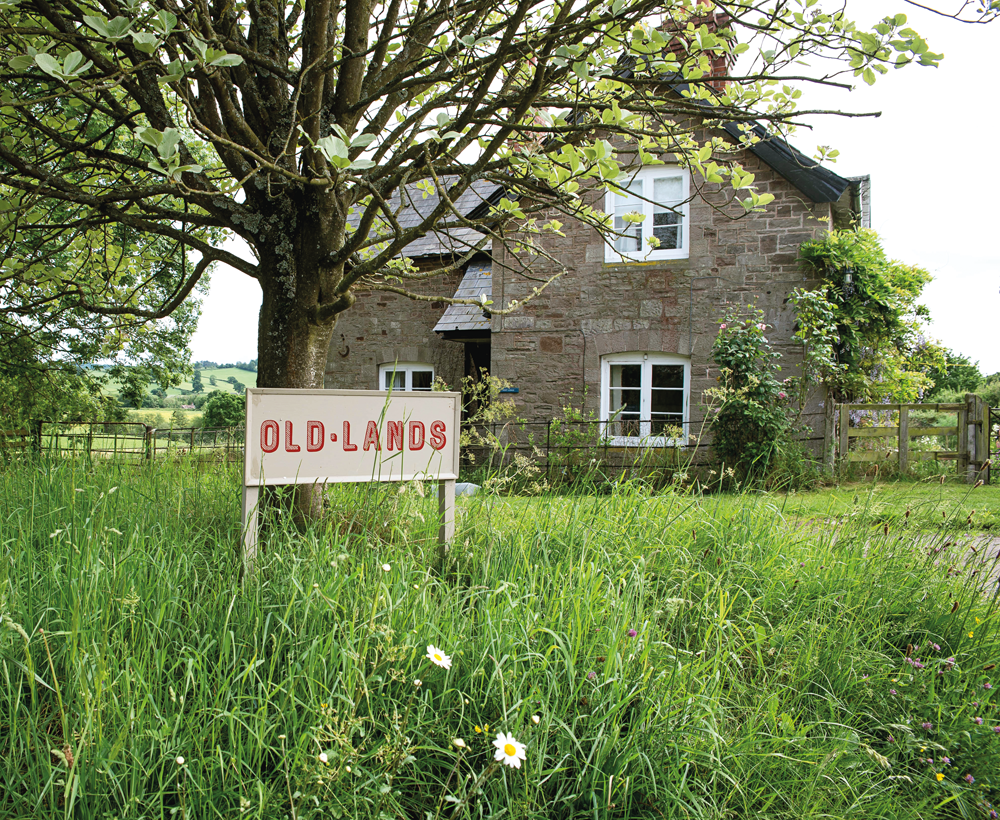
Escape | A Welsh eco retreat with room to roam
See, do, stay, love the UK. This month: Nina Nixon heads to Wales for a weekend retreat
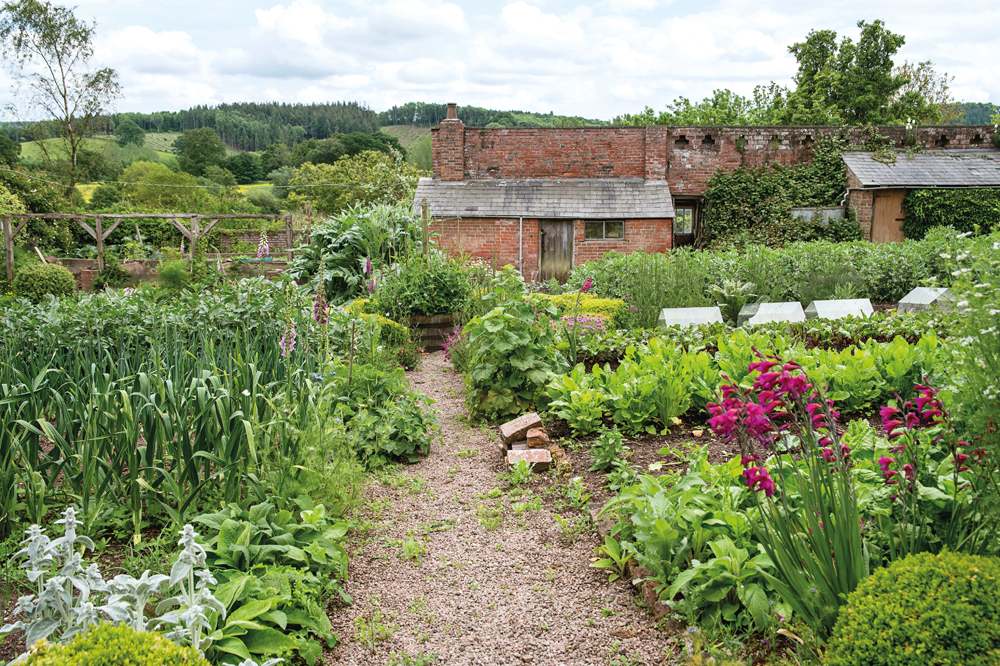
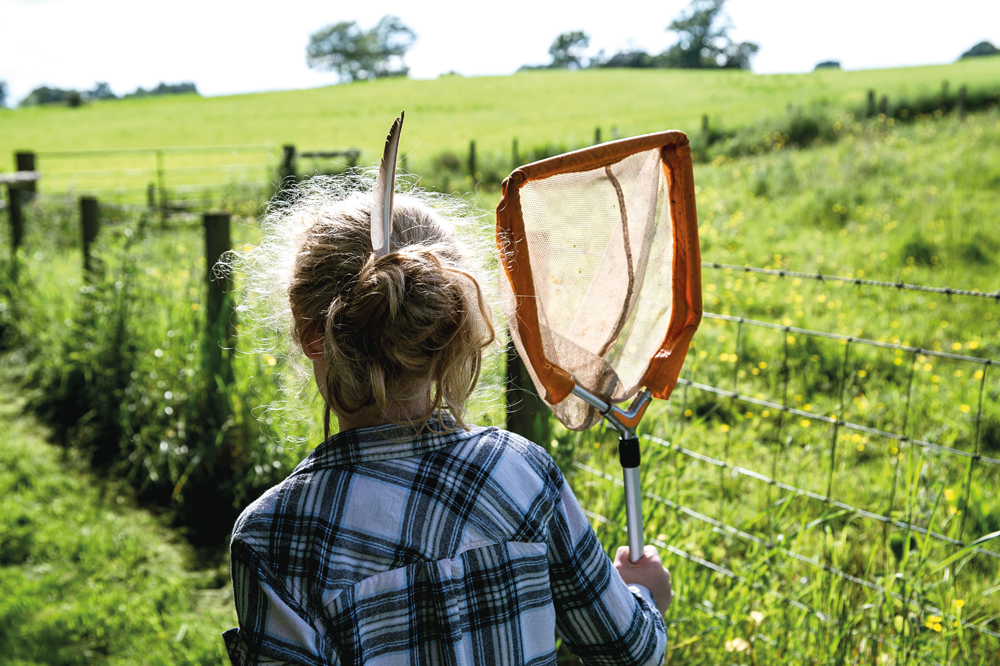
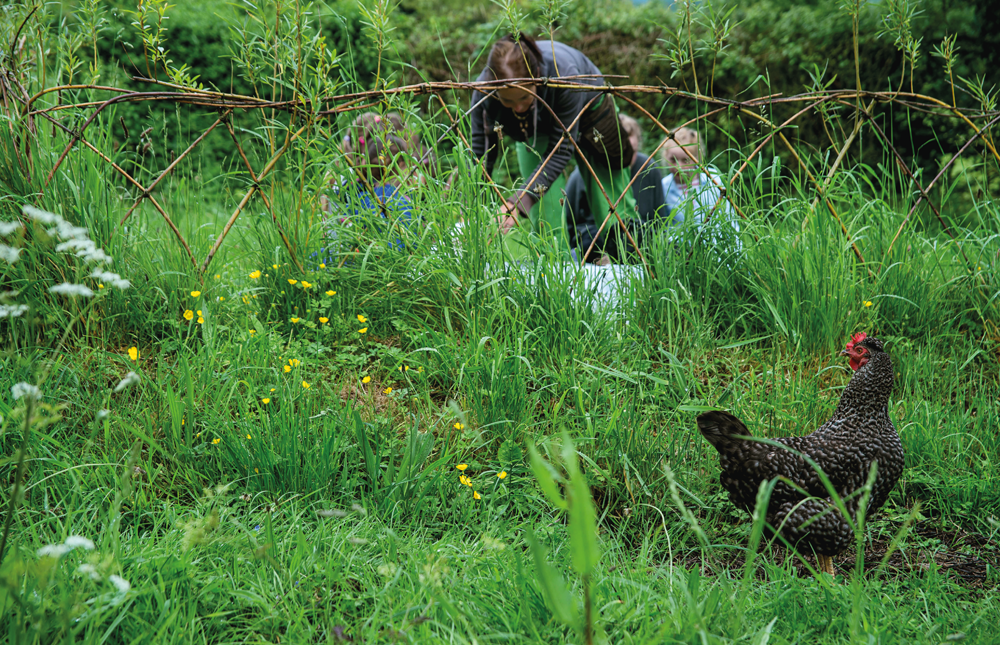

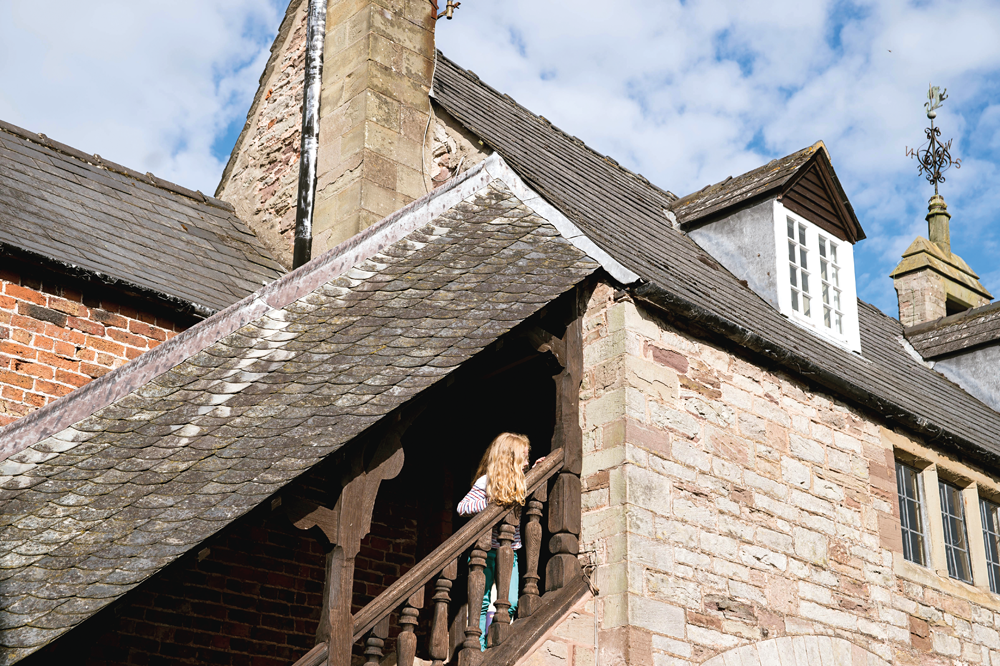
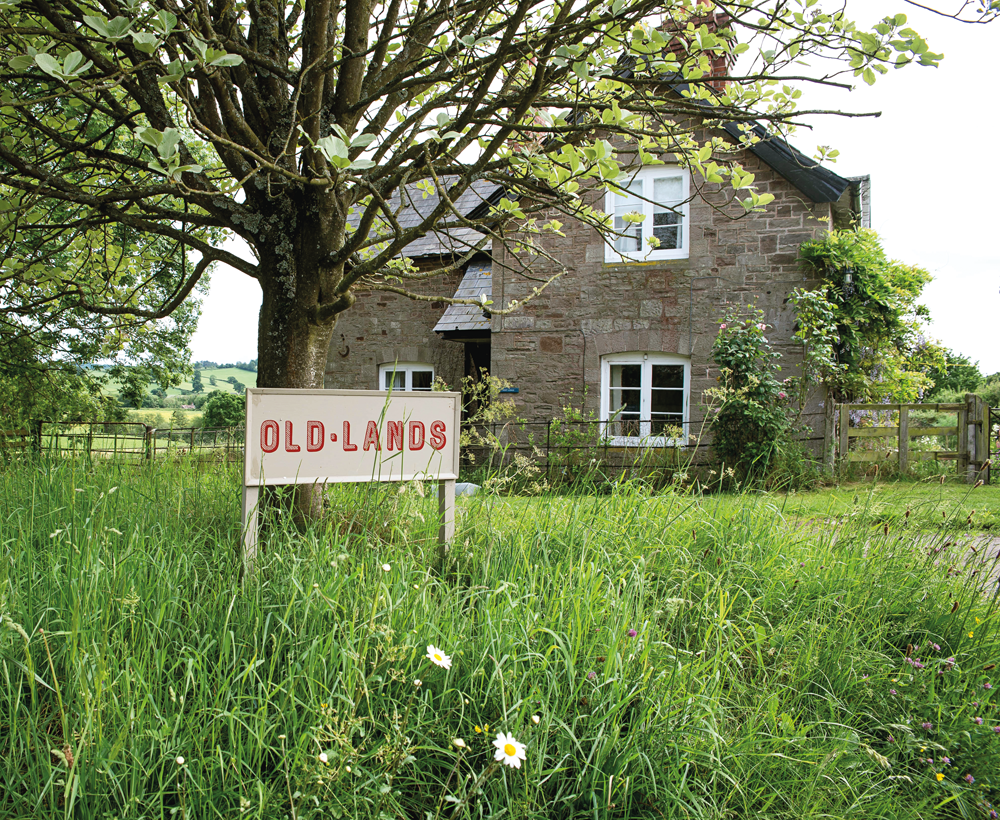
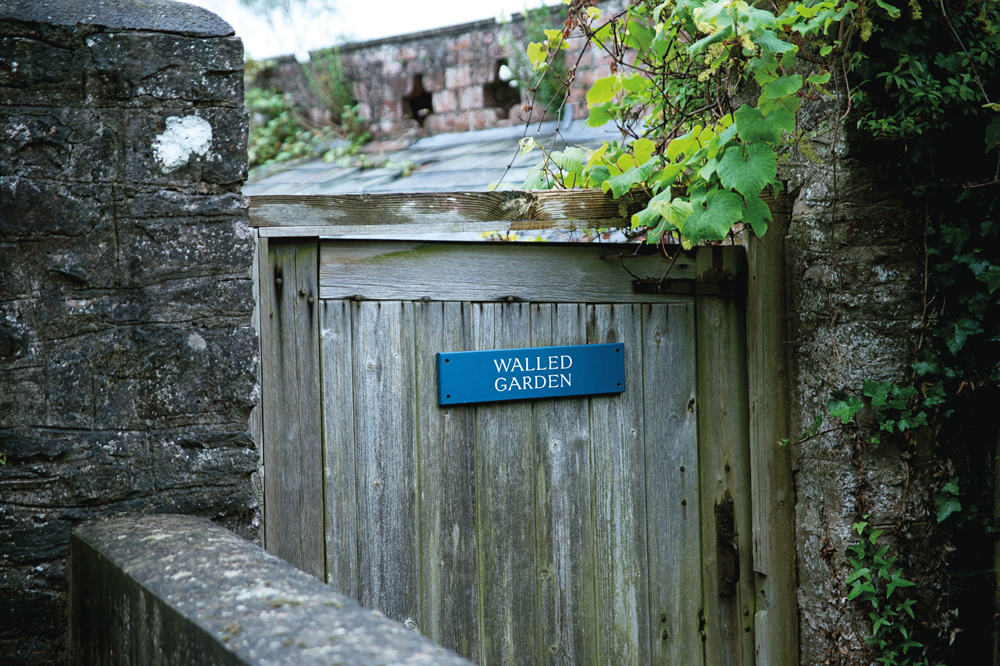
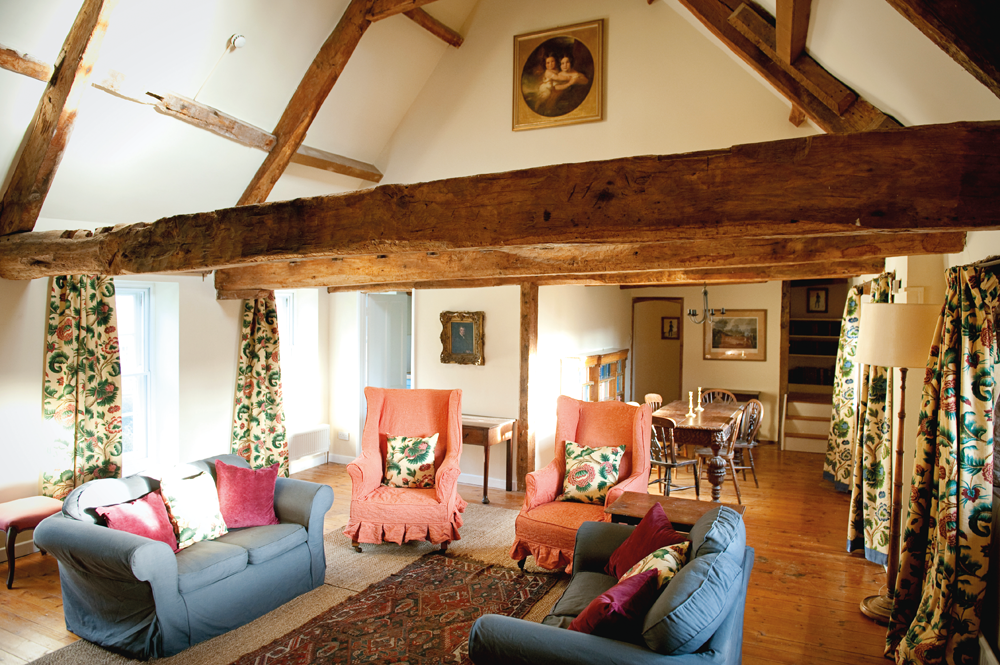
Our regular travel series comes from online UK travel guide This is Your Kingdom, whose handpicked contributors explore favourite places, special finds and great goings on.
You can read about one we love each month in The Simple Things – turn to page 76 of the August issue for more of this outdoors adventure – and plenty of others at thisisyourkingdom.co.uk.

Nina Nixon is a contributor to thisisyourkingdom.co.uk. She has a passion for photography, capturing moods and making memories. More of Nina’s work can be found on her blog ninanixon.co.uk and on Instagram @nina_nixon
More from the August issue:
Featured
More This is Your Kingdom inspiration:
Featured