


Photography: Alamy
Things to make and do at home
This time round we’re embracing lockdown from the start and doing it our way. Here’s how you can, too
Back in our October issue we shared some of the hobbies and skills we had learned in the last lockdown, and saw a few of your proudest moments, too. From virgin stitchers who were soon knocking up their own frocks to newbie gardeners overwhelmed by an autumnal glut thanks to their own hard work (and occasionally overenthusiasm).
With another few weeks at home stretching before us, we thought we’d share the feature again in case anyone had missed it.
It might just inspire you to take up sewing, invest in some hens or pen a novel, or perhaps it will spark off a completely different idea. Maybe you’re taking it easy this time and simply making the most of evenings in with a good book, a film you’ve always wanted to watch and a bit of gentle colouring. We all have to find our own way here, after all. While the world may not be your oyster right now, we hope you’ll find plenty of things to do and moments to treasure at home. We’d love to see photos and hear all about whatever you’ve been doing to keep busy.
Make yourself a cuppa, put your feet up and read our feature What I Did This Summer. You can download it to read or print below:
More things to make and do at home…

More ways to do ‘home’ well this winter…


Photography: The Happy Newspaper/Widdop
Seeking out | Happy news
Good news is all around us, if you just know where to look
In our November issue we met Emily Coxhead (pictured), founder of The Happy Newspaper, along with several other inspirational ‘shiny, happy people’ whose job it is to put a smile on your face.
With the world as it is, there’s never been a better time to look for good news, so we’ve collated a list of a few places you can go to find it.
1. The Happy Newspaper
As a self-described ‘platform to share positive news and wonderful people, there’s lots to make you smile here. Visit The Happy Newspaper to buy online or find your nearest stockist. They even sell ‘happy confectionery’ should you feel in need of a really strong dose of happy.
2. Positive News
A magazine and a movement that aims to change the world for the good. It is published in print every quarter and daily online and you can buy a copy through our own online shop, picsandink.com. Find our more at Positive News.
3. The Good News Network
A US-based website with good news, lifestyle and business stories to cheer your day. The Good News Network. They also publish the GNN Podcast, which is a happy treat for your ears.
4. BBC Uplifting Stories
Even Auntie is getting in on the happy news act now, with a special section on BBC News’s website for stories to uplift. Find them at the BBC website and search uplifting news. .
5. Squirrel News
Why squirrels, you ask? Well why not, we say. But also, they pick only the most nourishing nuts to store away, not the ones that will do them no good. And that’s what Squirrel News, based in Berlin, does too. Visit them here: squirrel-news.net.
Buy this month's The Simple Things - buy, download or subscribe
More from our November issue…
More happy news…


Photograph: Jonathan Cherry
Fun | Games to play around a fire
We think a good Autumn bonfire should be as much fun as a Summer campfire. Here are a few simple games to make sitting around a fire for an evening a proper event
With warmer clothes, warmer drinks and something to prevent soggy bottoms, November bonfires or fire pits can be just as much fun as summertime ones. But with chillier conditions and hands tied up with gloves and cupping hot drinks, you need games that don’t require cards or too many props. Who wants to be hunting around for a three of spades or a dice in leaf mould in the dark, after all? We’ve collated a few of our favourite games for around the fire that can be played with no kit at all. And if it gets a bit too chilly, they work just as well cosied up by the fire indoors too. We won’t tell anyone. <winks>
1. Spot the lie
Each player has to make three statements, one of which is a lie and two of which are true. If the lie isn’t spotted they get to go again. If they are caught out, play moves to the next person.
2. Fortunately/Unfortunately
This one’s good fun for kids too and can get quite raucous. The first person starts with any statement they like to begin a story. So it might be: ‘I went to the library to borrow the latest John Grisham…’ They then add an ‘unfortunately’ statement, for example. ‘Unfortunately, Prince Charles had come in just moments before and borrowed it himself.’ Play passes to the next person who adds a fortunately statement, such as: ‘Fortunately, I caught him up in the car park and asked if he’d mind lending it to me when he’d finished.’ Play continues with each player starting with a fortunately and then an unfortunately statement alternatively. Make them as ridiculous as you can. Play until you can’t stand any more!
3. Winking Assassin
You need a few players for this but it’s ideal for dark evenings. One player each turn is ‘The Godfather’. Everyone must close their eyes while the Godfather walks around the circle behind the players and taps one player on the back. That person is the assassin. The Godfather sits down and normal conversation continues. The assassin must surreptitiously wink at the other players one by one. If you’re winked at you ‘die’ (in dramatic, blood-curdling fashion, please). If you see the assassin winking at someone else you may accuse them, or you can make a guess any time. If you’re wrong, though you are also ‘dead’. The person who correctly identifies the assassin without being winked at is the next Godfather.
4. The Alphabet Game
One player shouts out a letter of the alphabet and at the same time another player shouts the name of a category. So it might be ‘B’ and ‘countries of the world’. You can either go round the group with each player naming a country that begins with B or just all shout out as many as you can at once, which is louder and more fun. Get creative with your categories. They could be chocolate bars, politicians or things you might find in your kitchen drawer.
5. Twenty One
This is an old drinking game (but it works just as well with hot chocolate). You do need a few people for it. Five or six is ideal. You go round the group ‘counting’ from one to 21. Each player can choose to say either one, two or three numbers, as long as they are in sequence. If they say just one number play continues in the same direction. If they say two, the direction of play reverses. If they say three the next person skips their go. If you mess it up you take a swig of your drink and start again from one. If it gets to 21 the person that says ‘21’ gets to add a new rule for the next round, eg on every odd number you have to clap, or on every number divisible by five play reverses and skips a player.
6. I went to market and I bought…
An oldie but a goodie and also one that works well with kids. Player one starts by saying ‘I went to market and I bought…’ and naming an item: ‘12 eggs’, for example. Play continues round the circle with each player repeating the list so far and adding their own: ‘I went to market and I bought 12 eggs, and a pint of milk’. Keep going until someone messes up the list. Make your shopping items as complex as possible to make it harder. ‘12 Cotswold Legbar blue eggs’, perhaps.
7. Six Degrees of Kevin Bacon
One for film buffs. Link any actor to Kevin Bacon in as few leaps as possible. So for example, Elvis Presley: Presley was in Change of Habit with Edward Asner, Edward Asner was in JFK with Kevin Bacon. So Elvis Presley has a Bacon Number of two. (Edward Asner has a Bacon Number of one). See if you can think of quicker links back to Bacon than the other players.
8. Hum that Tune
Just like Name That Tune but you can only hum. Pick a song or TV theme you think you can hum well (hint: go for songs light on percussion and heavy on strings) and hum it until someone guesses what it was. Play passes to the person who guesses first.
9. World Map
This is nice and easy and geography buffs will love it. One player says the name of a country. The next player has to think of a country whose name starts with the last letter of the previous country so play might go: England, Denmark, Kazakhstan… You can also play with counties, names. Bands, whatever you like.
10. Noises off
Pick a ‘theme’ - it can be anything really: ‘in the forest’, ‘horror movies’, ‘Christmas’. Everyone then takes turns to make a noise ‘from’ that theme. So if you’d chosen Christmas you might make the noise of a Christmas pudding being lit, a robin singing, Santa coming down the chimney, Brussels sprouts being chopped etc. You can only use your mouth, hands and feet to make the noises and ‘actions’ aren’t allowed. This is NOT charades. Charades is for wimps.
In our November issue, we are celebrating all that is magical about fire. Buy this month's The Simple Things - buy, download or subscribe
From our November issue…
More games to play outdoors…



Sponsored post | International Elf Service
Each December night, a magical letter appears mysteriously around your home … ready for the children to find, shriek excitedly and discover what's been happening with the Elves in the North Pole. All together, these letters form a magical Christmas Story.
If you’d love to sprinkle your Christmas with even more magic this year, then step into the magical world of International Elf Service – where delightful storytelling and illustrations are combined with the excitement of family traditions, precious family time, inspiring imagination, and creating childhood memories to treasure forever.
These Gold Award-winning collections of secret, personalised, eco-friendly Christmas Elf Letters from the North Pole include a truly stunning, personalised, chocolate-free and experience-rich Advent Calendar-style collection of letters – Elfie’s Christmas Advent Letters Ultimate Story Bundle (2020 Edition)
Appearing mysteriously around the home each day through December, each magical letter opens a door into the Elf world as they share their top secrets with the children about what pranks and adventures they are up to in the run up to Christmas!


Secretly delivered (by grown ups!) along with a map of the Elves Christmas Village and a letter from Father Christmas, each daily letter tells a magical Christmas story taking children and families on truly unforgettable literary journeys - a wonderful way to bring a huge dollop of Christmas magic into your home!
With exciting new themes, mysteries and adventures happening each year, children can follow the hijinks of these endearing little Elves year after year, escaping to a world of Magical Wind Machines, Cinnamon Mines, and Emergency Pyjama Meetings.
Adorned with beautiful hand-drawn illustrations, each spectacular Christmas Elf Letter, created using 100% recycled paper, is covered with splats, smudges, and splodges that you’d expect from busy Elves who always make a huge amount of mess!
And for the grown ups…you get to secretly unwrap each sustainable gift box that has been lovingly assembled by hand and beautifully wrapped using a soft, cotton Candy Cane cord bow for an extra dollop of festive delight! Have a sneak peek at the letters and brown envelopes tied with rustic jute twine that sit upon natural wood-filler spirals sourced from pine and spruce managed forests (more commonly known as wood shavings from the Elves’ workshop!)

International Elf Service personalised, eco-friendly Christmas Elf Letters are the most wonderful Christmas tradition to bring even more magic, joy and family togetherness into your home at this extra special time of year.
Reader offer
Join us on this wonderfully magical Christmas journey each year at internationalelfservice.com
Use SIMPLYMAGICAL20 when ordering to receive 20% off your order
Buy this month's The Simple Things - buy, download or subscribe
From our November issue…
Photography: Kirstie Young
Recipe | Cattern Cakes
Make these Cattern Cakes for St Catherine’s Day or to remember the Catherine Wheel on Bonfire Night
St Catherine’s Day falls on 25 November and celebrates St Catherine of Alexandria, who was condemned to death on a torture instrument known as a breaking wheel. Catherine wheel fireworks are named after her because of this association and foods celebrating her day – such as cattern cakes – are made in the shape of swirls. The day was once widely celebrated and known as Catterntide. In Medieval times it marked the beginning of Advent, which actually begins on 29 November this year.
St Catherine is the patron saint of spinners, weavers and lacemakers, and the latter used to take their annual holiday on this day. In her wonderful book Cattern Cakes and Lace (Dorling Kindersley), Julie Jones writes that lacemakers would set aside a small sum of money to provide tea and cakes on this day. This is based on her recipe for Cattern cakes, but slightly adapted.
Makes 8-10 cakes
275g self-raising flour
¼ tsp ground cinnamon
25g currants
50g ground almonds
2 tsp caraway seeds
200g caster sugar, plus extra for sprinkling
100g butter, melted
1 medium egg, beaten
1 Preheat the oven to 190C/Fan 170C/ Gas 5. Sift the flour and cinnamon into a large mixing bowl and add the currants, almonds, caraway seeds and sugar.
2 Add the melted butter and beaten egg and mix to form a soft dough.
3 Roll out onto a floured surface to about 2cm thick and cut out rounds using an 85mm biscuit cutter, then lay them onto a piece of baking parchment on a baking tray.
4 Take a knife with a sharp point and draw a swirl into the surface of the biscuit, then sprinkle on a little sugar.
5 Bake for around 10 mins or until they are browned and slightly risen. Cool on a wire rack.
Buy this month's The Simple Things - buy, download or subscribe
More from our November issue…
More Bonfire Night ideas…
Featured

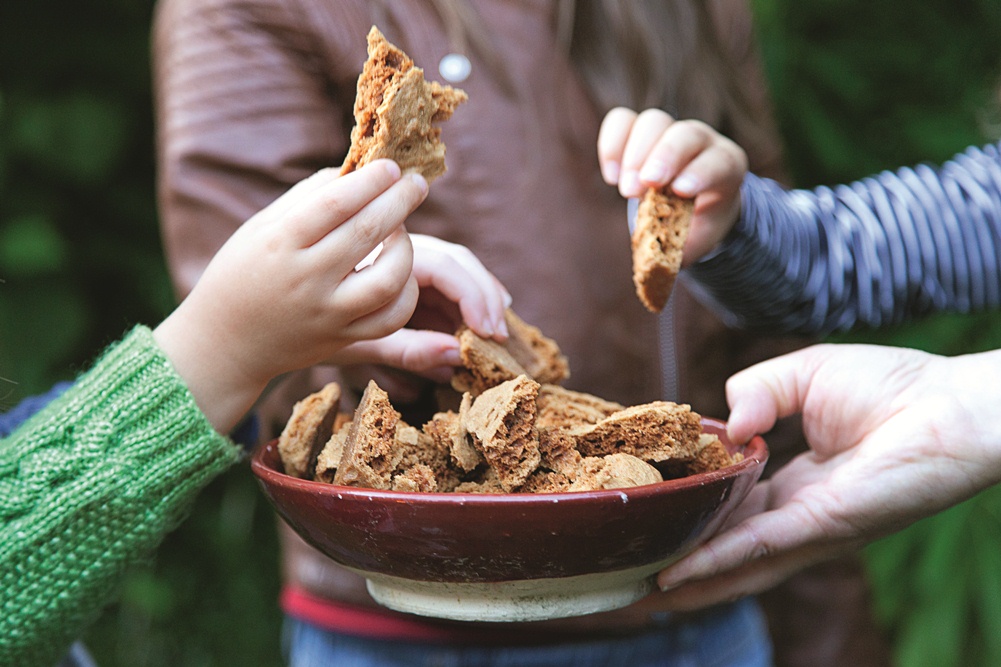

Make | Personalised Seed Packets
A thoughtful gift for a new gardener or anyone you want to share the joy of your garden with
Spend a happy weekend afternoon making gifts inspired by nature. In our November issue we have instructions for making goats’ milk and lavender soap, imprinted clay dishes and also these simple but beautiful personalised seed packets.
You will need:
Seeds
Pressed flowers (to make your own you will need to press them at least 2 weeks in advance of using)
Glue
Pencil
Pretty paper to make the envelopes
Plain paper for flower description
Scissors
An old empty seed packet or small money envelope
A bowl of water
Thin cardboard
Pen
To make:
1 Place the empty seed packet in a bowl of water until the glue eases apart. Be very careful when doing this, as the paper will have become fragile. Leave to dry before using to make a cardboard template, by drawing round the edge on the piece of card.
2 Use the template to trace around on the wrong side of your pretty paper to make the seed packet. Fold, and glue the sides together.
3 Fill the seed packet with seeds (around 10 per packet), before gluing shut. We suggest seeds they will be able to sow in springtime, or seeds for herbs that can be sown straight away.
4 Cut out a plain piece of paper, approximately 1 cm smaller all around than the seed packet. Carefully stick a pressed flower (ideally one of the same type as the seeds) to the front and label it with the flower name. Stick the label to your seed packet with a thin layer of glue.
Maker’s note: Planting advice you’d like to pass on? You could make another small label for the back and list it here, along with the date the seed packets were made.
Buy this month's The Simple Things - buy, download or subscribe
More from our November issue…
More weekend projects…

Halloween | Simple spells
It’s Halloween. Why not try a little magic?*
When you’re in the shower, visualise the water removing any anxieties and worries from the day before.
If you’re feeling unwell, make a soup and while stirring it chant, “Cold, flu and ills be gone, healthy body from now on.”
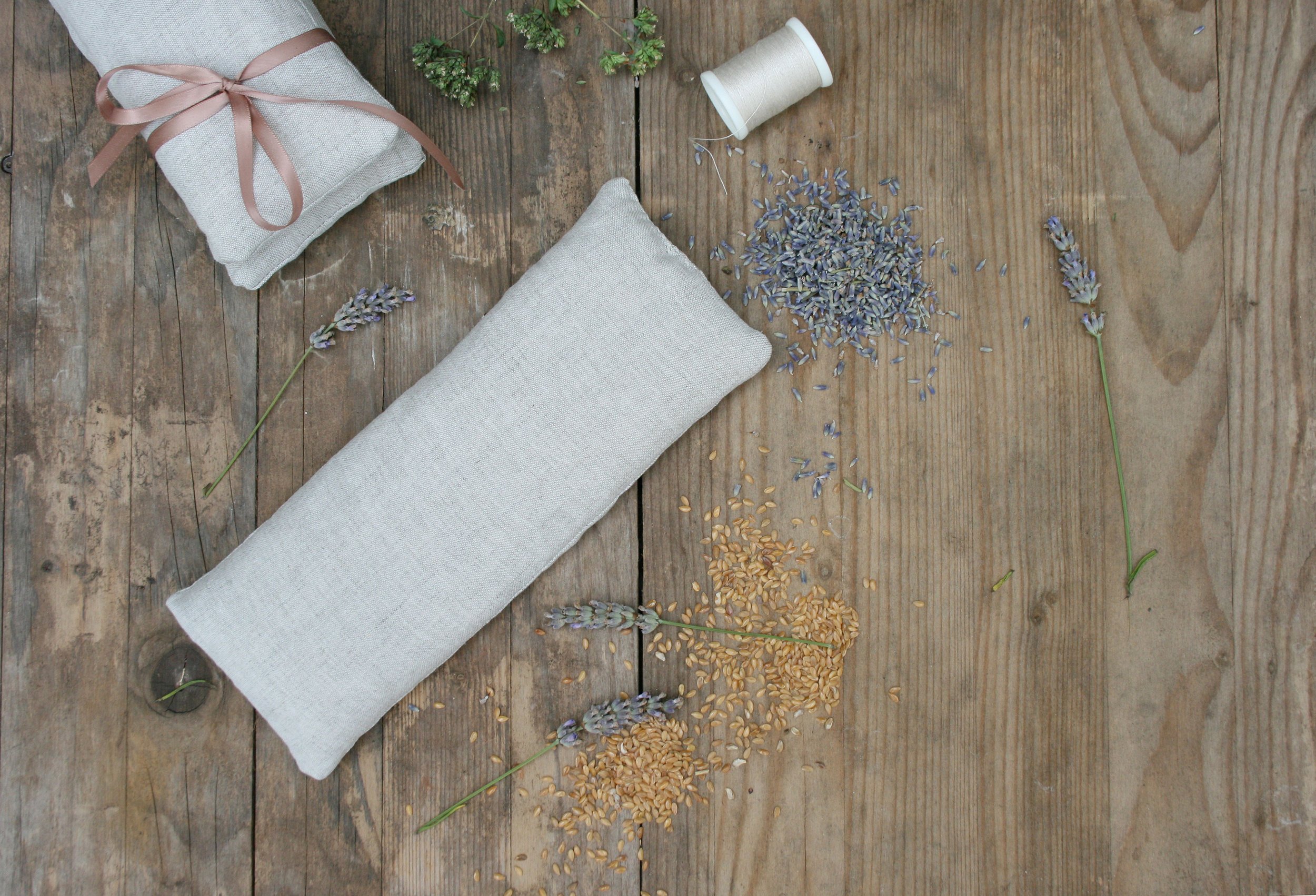
Make a love oil. Blend 5 drops each of rose and lavender oil and 120ml carrier oil. Shake the jar and focus on the intent of the oil (to bring love or friendship, say).
Be a positive force. Help others, act with love, cut the gossip and try not to judge.
*Adapted from The Good Witch's Guide by Shawn Robbins and Charity Bedell (Sterling)
More Halloween activities…


From our November issue…
![Avalon-01[1] (1).jpg](https://images.squarespace-cdn.com/content/v1/53f32bfbe4b0cf69a8daaab1/1603133266155-PQAH0U3NCDWHFUJ4CQ54/Avalon-01%5B1%5D+%281%29.jpg)
Sponsored post | Avalon Organics
A little about essential oils in beauty for everyday self care
We all know the power of fragrance, and how certain smells can evoke a feeling, trigger a memory or change our mood. Essential oils are highly concentrated oils extracted from plants and are used in beauty not only for their aromatherapeutic properties but also their skin and hair-enhancing qualities. Whilst the Ancient Egyptians are often credited with the invention of essential oils, other ancient civilizations were using essential oils around the same time, including Indian, Chinese, Greek and Roman.
Some Popular Essential Oils and Their Beauty Benefits
Lavender
One of the most revered essential oils in beauty and health products, lavender has powerful anti-inflammatory, antifungal and antibacterial properties, not to mention the calming aromatherapeutic properties of the oil. Its anti-inflammatory properties mean lavender oil is often called upon in formulations for acne and other skin conditions such as eczema and psoriasis. In hair care, lavender essential oil may help hair grow thicker and faster, whilst its anti-inflammatory properties may help with scalp conditions such as dandruff and itchiness.
Lemon
We all know how uplifting the smell of a zesty lemon can be, well when we diffuse lemon essential oil it can enhance our concentration and have an energising effect, as well as removing toxins from the air. In both skin and hair care, lemon has a balancing effect on oil production, so is great for those who suffer from greasy hair and shiny faces. When it comes to body care, use lemon essential oil products in the bath or shower to improve your mood and tone the body, and even reduce cellulite.
Rosemary
A member of the mint family, rosemary has long been touted for a range of health and beauty benefits. Studies have shown that rosemary extract can improve cognitive memory function in ageing brains, as well as combatting the signs of ageing in the skin.In skincare, rosemary can help protect skin from UV rays and free radical damage, increasing elasticity and reducing sagging and age spots. When it comes to hair care, rosemary essential oil offers superior cleansing properties, as well as helping keep the scalp healthy and moisturised.
Peppermint
The active ingredient in peppermint is menthol, and has been proven to help with headaches and pain relief. Many also swear by peppermint oil for relief from gastrointestinal ailments such as IBS and acid reflux. When applied topically, peppermint oil has a natural cooling effect which can soothe irritation and inflammation, and can be an effective cleansing agent thanks to its natural antiseptic and antibacterial properties. In hair care, peppermint oil can help with any dryness or itchiness on the scalp, and may even stimulate hair growth by increasing blood circulation to the hair follicles.
Tea Tree
Tea tree is one of nature’s most potent antibacterial and antiseptic agents, and as such is used in many therapeutic beauty products. You will commonly find it in hair care products used to treat conditions such as itchy scalp, dandruff and psoriasis, due to its antibacterial properties. Likewise in skincare, tea tree oil is a hero ingredient for many suffering from acne, and is often used directly on the skin to treat breakouts, as it inhibits bacterial growth by mixing with our skin’s natural oils, preventing them from becoming food for the bacteria. When it comes to nails, tea tree oil’s antifungal properties may help in reducing the growth of trichophyton rubrum, a fungus that causes nail fungus and athlete’s foot.
Avalon Organics offer a range of essential oil-led hair, bath & body care products, available in store at Waitrose and online at waitrose.com Indulge your senses with some aromatherapeutic self care every day, and your skin and hair with the power of botanical-based beauty products. As well as the lead essential oil, all shampoo and conditioner formulas are enriched with Quinoa Protein, Aloe, Babassu Oil and Vitamin E, and all products are NSF-certified to contain organic ingredients, and EWG VERIFIED™, which means it meets the Environmental Working Group's strict ingredient standards and features the EWG VERIFIED™ seal on its label.
From our November issue…

Photography: Kirstie Young
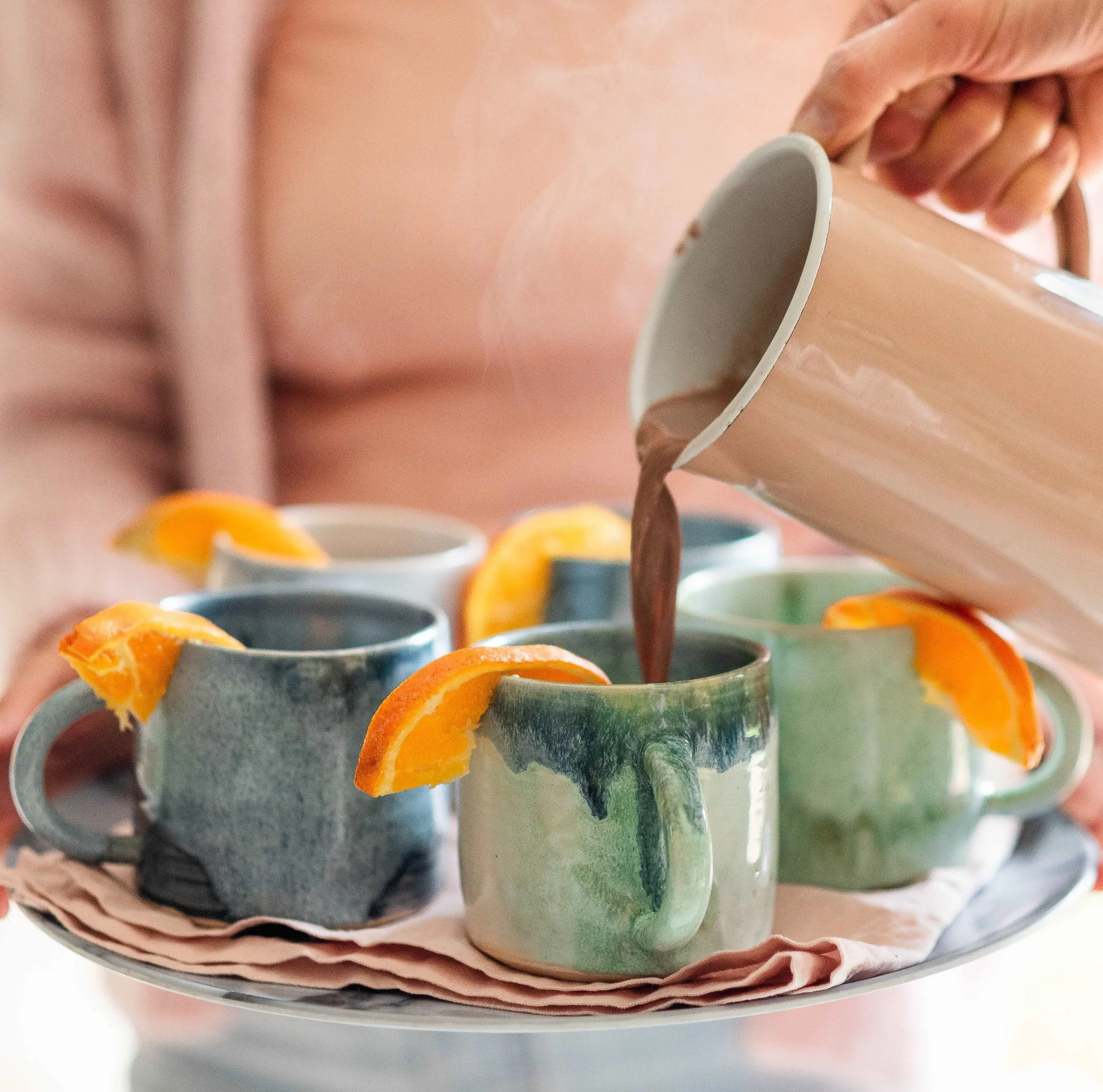
Fancy up | Hot chocolate
It might be difficult to improve on a good thing, but that shouldn’t stop you trying
No autumnal walk is complete without a hot chocolate at the end of it. We fell a bit in love with the recipe for Spiced Hot Chocolate by Lia Leendertz in our November issue’s ‘Nature’s Table’ pages. You can find it on page 14. And we were inspired to hunt around for other ways to make a hot chocolate a bit fancier. Here are a few ideas…
Things to stir in...
Butter and rum
Gingerbread syrup and a cinnamon stick stirrer
A dollop of peanut butter
Peppermint essence with a candy cane stirrer
A shot of espresso and maple syrup
Irish cream whisky
Dried lavender (steep in the milk beforehand)
A dollop of ice cream (any flavour, added at the end)
Chai spice and vanilla extract
Grated orange zest
A pinch of cinnamon and cayenne pepper
And a few things to sprinkle on top…
Good old marshmallows
Crushed nuts
Dessicated coconut
Smashed up boiled sweets (butterscotch works well)
Cake decorating sprinkles
Chocolate chips
Your favourite biscuits, crushed
Blackberry coulis and cream
Chopped fudge pieces
Cinnamon and brown sugar
Buy this month's The Simple Things - buy, download or subscribe
More from our November issue…
More hot chocolate ideas…

Photography: Jonathan Cherry
Yarn Bomber's Toolkit
Psssst! Considering moonlighting as a guerilla knitter? Over here… We’ll sort you out
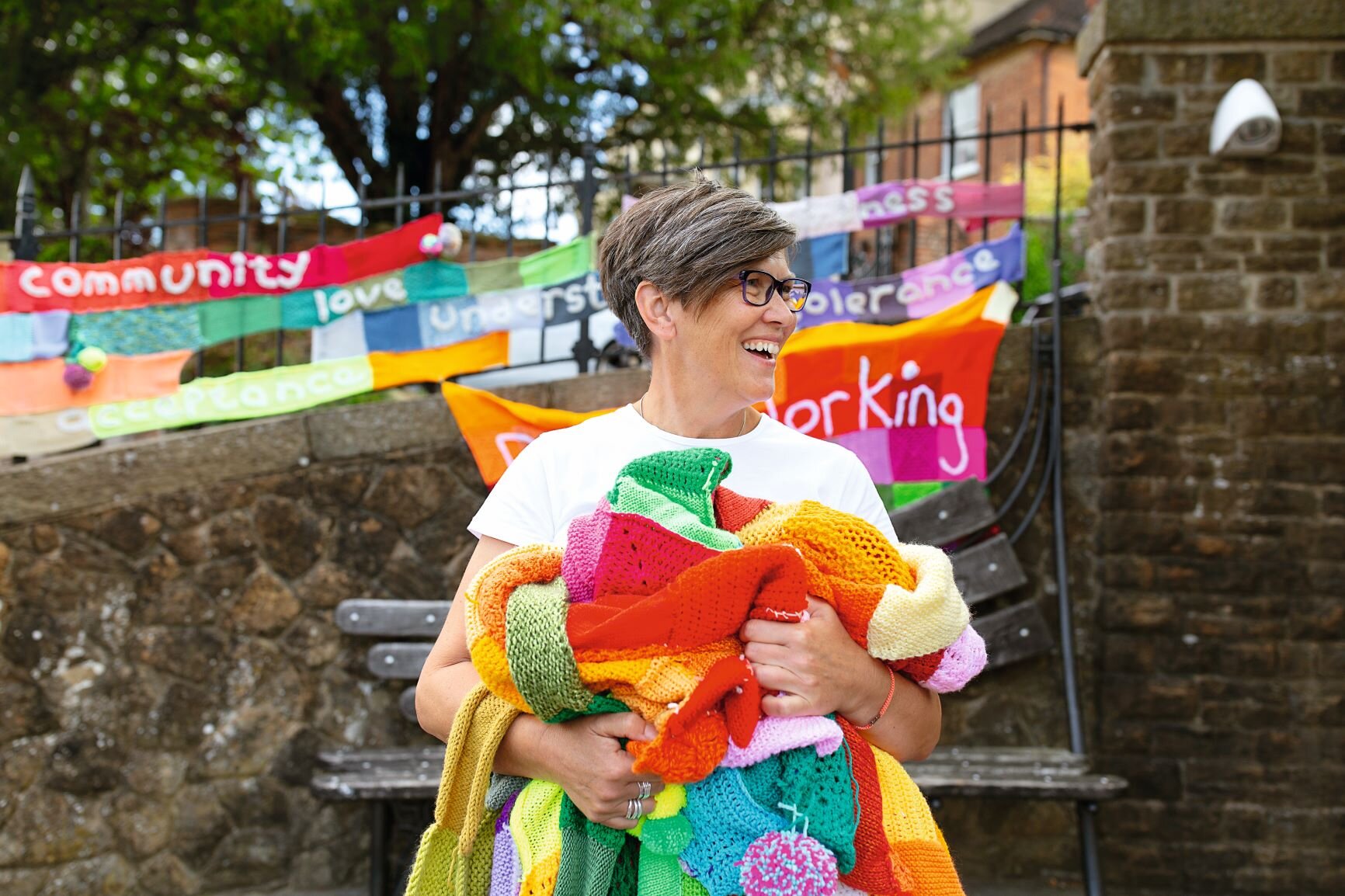
We met some rather marvellous yarn bombers for our ‘Modern Eccentrics’ pages in our November issue. The women in question have been yarn bombing their home town of Dorking in Surrey with colour and style for several years. You can read all about them from page 76.
Yarn bombers (aka guerilla knitters) use their craft to make political points, raise money or awareness for charities and sometimes just to make people smile or think. If you’re inspired to do some yarn bombing of your own, you’ll need a few bits and bobs to get you going.
Here’s a guide to what you need for your Yarn Bombing Toolkit before you head out under cover of darkness with your knitting.
The permission of the owner/local council (and in lieu of that, the cheek of the devil and a winning smile should the police arrive).
A head torch so you can shine a light on your work hands free.
Sturdy, waterproof shoes (you never know what you may have to climb on or through). Also hand wipes, as you never know what you may inadvertently put your palms in either.
A raincoat in case of showers.
A hat to keep you warm (and to pull down to hide if your neighbours drive past).
A floral silk scarf or knitted corsage to give off the impression of being a mild-mannered woman who’s vanishingly unlikely to interest the long arm of the law.
A small first aid kit, just in case.
Your knitted ‘installation’.
A map of the local area so you know where you’re going and can beat a hasty retreat if that seems best.
Spare yarn and a large needle for stitching your piece in place.
Wire and garden ties (like you’d use for tying back in the garden).
A good pair of scissors and a pen knife (if you’ve never used that thing for getting stones out of horses’ hooves, now may be its time to shine).
A camera to take some shots of your finished work.
A strong sense of mischief.
A Thermos of tea to warm you up and toast your hard work afterwards.
A fulsome apology and some nice biscuits to offer if you should happen to be asked to move on.
Buy this month's The Simple Things - buy, download or subscribe
More from our November issue…
More crafts that might change your life…


![Jason[1].jpg](https://images.squarespace-cdn.com/content/v1/53f32bfbe4b0cf69a8daaab1/1602932524753-ZOJ8U4N0C3PT2Q01W7L4/Jason%5B1%5D.jpg)
Sponsored post | Jason Haircare
Hair and skincare experts JASON share their hair care tips for the colder months
Whilst we often think about how the colder weather affects our skin and change products accordingly, can you say the same about your hair? Hair can also be affected by the winter weather, we just don’t feel it like we do our skin. Read on to discover more.
Firstly, the low humidity in the cooler months can dry our hair out. The dryness in the air raises the cuticle, zapping out moisture and leaving hair looking and feeling dry, as well as brittle and prone to breakage. Extreme environmental elements can also contribute to this: moving between the cold outdoors into centrally heated homes and offices dries hair out and can lead to the dreaded frizz. To minimise these extremes, it is best to don an extra layer and only resort to turning the heating on if you really have to. Using a humidifier can help keep moisture in the air (as well as your hair!).
What we eat plays an important part in our hair health too. As the temperature drops our diet may not always be as complete and balanced as in the summer months. Winter finds us craving carbs, stodge and comfort food over healthy salads and fruits. This can leave our hair looking dull and feeling lacklustre. For great hair, ensure you are eating a protein-rich diet. Biotin has been identified as an important ingredient for hair growth, and can be found in a variety of foods but only a few contain particularly rich sources of it, including raw egg yolk, liver & leafy green vegetables such as Swiss chard.
Other external factors which may affect your hair health include:
Pollution, which damages our hair the same way it does our skin. If you live in the city, you might want to consider wearing a hat or scarf to protect hair from exposure.
Over-use of products, which over time can build up, causing dullness and adding dead-weight to hair. When looking for products, look for natural and organic types formulated with botanicals and free from harsh chemicals that may strip your hair’s natural oils. If you are a daily hair washer, try to reduce the frequency of washes, start by going to every other day and see where you end up. The fact is, many of us wash our hair too frequently and this upsets the balance.
Over-styling, which can cause dryness and frizz. In the winter months particularly, try to limit use of heated styling devices and go for more natural looks - curls created with plaits and pins, natural waves and more up-dos.
Finally, make sure you are using the right hair care products for your hair type. New and improved reformulations with clinical testing from JASON mean that you can be sure that your hair is being given the best possible care. JASON is inviting you to see the results for yourself and join their JASON Hair Care Challenge. As an introductory offer, you can buy the shampoo and get the conditioner free till 15th November. You will also be automatically entered into a prize draw when you share your results with the opportunity to win a year’s supply of JASON hair care products. Click here to discover the new formulas and find the right products for your hair to get started on your #JASONHairChallenge !
From our November issue…
Sponsored post | Seasonal Snuggles
As the temperature drops, thoughts turn to staying snug and towards the magic of the season

BLACKDOWN SHEPHERD HUTS
Curl up with a hot chocolate knowing that a cosy winter can be depended upon with a Blackdown Shepherd Hut. A calming space to just sit and listen to the crackle of the log fire and to feel the warmth weave through the hut as the sheep’s wool insulation wraps its toasty arms around the walls. Whether you’re after an additional family space, a garden retreat or something quirky for your dream business, these hand-crafted luxury huts offer you a sanctuary to escape to and to tune back into yourself. Find out more at blackdownshepherdhuts.co.uk.

INTERNATIONAL ELF SERVICE
Each December, daily magical letters mysteriously appear, ready for children to find and discover what the Elves are up to in the North Pole. Stunning, hand-illustrated, personalised, eco-friendly letters from International Elf Service: Gold Award-winning Advent Calendar, with new adventures every year. Bring Christmas magic into your home and create precious childhood memories. Magical Letters. Inspired by children. Delivered by grown-ups. Enter SIMPLYMAGICAL20 at checkout for 20% off. Internationalelfservice.com.

EUROSTOVE
With winter just around the corner, there’s no better way to combat the chill than to cosy up in front of the mesmerising flicker of a stove fire. The Nestor Martin Harmony range of wood and multifuel stoves, available from Eurostove, offer both comfort and the latest in combustion technology. They burn efficiently and already conform to the forthcoming Eco Design directive, due to come in to effect in 2022. Available in a range of sizes, they’re the ideal addition to any room. For more information on Eurostove’s full range, visit eurostove.co.uk

BORN PEACEFUL
At this time of year, the Danish concept of Hygge is never more appealing. There’s no direct translation into English, but it’s the idea of feeling happiness, joy, contentment, warmth and tranquillity, like when you’re cuddled up with a loved one in front a roaring fire, or perhaps soaking in a candlelit bath. Born Peaceful’s Hygge blanket can help achieve this state of cosiness with its beautiful yoga and relaxation blanket. Made from ultra-soft non-pilling fleece and finished with wool whip stitch, it features the brand’s dove design and thoughts on the true meaning of hygge. To find out more, visit bornpeaceful.com.

Sponsored post | Yorkshire Tea
As the nights draw in and the days get colder, one of the most comforting things is to wrap your hands around a warming drink. Yorkshire Tea have three speciality brews to cheer you this winter.
Toast & Jam Brew is the newest member of the Yorkshire Tea family, in a bright pink box that is guaranteed to cheer your kitchen. Perfect for mornings, it is a strong breakfast blend with a smattering of toasty, jammy flavours to give the start of your day a lift. But it is equally good any time, especially when you come in from the cold.

Biscuit Brew in its golden box is a tea that tastes like biscuits – because good things happen when those two flavours combine. It's a magical mug of malty goodness that won’t get crumbs on your jumper but will put a smile on your face.

Bedtime Brew is a decaf tea with a difference. We’ve crafted a special blend that doesn’t lose its flavour when we remove the caffeine. Blended with vanilla and nutmeg to make it extra cosy, it is a tea you can happily drink before bedtime.
At the heart of each is the Yorkshire Tea blend, a proper brew, pure and simple. Great quality with loads of flavour. Every day, we taste up to a thousand teas sent to us by growers from around the world to make sure everything is just right.
We blend them together, layering the complimentary flavours of 10-20 different teas to create a uniquely balanced and consistent brew. Then we add a bit of Speciality Brew magic, to produce teas that will warm and cheer you.
All of our products are 100% carbon neutral, from tea bush to supermarket shelf, too.
For more information on our speciality brews, please visit .yorkshiretea.co.uk/our-teas. Toast & Jam Brew is currently exclusive to Asda, but look out for it alongside Bedtime Brew and Biscuit Brew in all good supermarkets later in the year .

From our October issue…


Photography by @designermumetc
Potted Histories | The Kilner Jar
Kilner jars are a staple of the nation’s larders. We thought we’d lift the lid on their history
The Kilner company was originally established as a bottle manufacturer, with the Kilner Glassworks being founded by John Kilner in 1842 in Thornhill Lees, West Yorkshire, making bottles and apothecary items. The company passed to Kilner’s four sons on his death and continued to be hugely successful, even accepting an award at The Great Exhibition in 1862 for innovation in glassmaking.
But in 1871 the company was taken to court over the coal smoke that billowed from its chimneys, polluting the neighbouring land. The judge ruled that ‘no man has the right to interfere with the supply of clean air.’ The factory was forced to close temporarily in order to convert to gas furnaces but managed to get back on its feet, even investing in new mechanisation as the end of the century loomed.
It wasn’t until 1900 that Kilner produced its first jar with its famous patented vacuum seal, still recognisable to bottler and preservers today. But in the first decades of the 20th century, competition in the industry saw Kilner suffer and eventually in 1937 the company went bankrupt and the patents and were sold to United Glass Bottle Manufacturers.
Despite the business leaving the hands of the Kilner family, the jar itself went from strength to strength. In the 1960s the first Kilner jars with metal discs and screw bands were introduced and in the 1970s replaced with a less attractive but very practical plastic screw band.
In 2000 the Rayware Group bought the patent, design and trademark for the original Kilner jar and today the range includes everything from infusion jars to make-and-take Kilners for picnics, and specially designed tops for every job from butter-churning to spiralizing.
So next time you’re bottling tomatoes or packing up your salad lunch, consider that you’re screwing the lid onto a Victorian miracle and 120 years of glassmaking history.
In our October issue, we’ve curated a few pages of photographs of lovely larders, including the one above by @designermumetc.
Buy this month's The Simple Things - buy, download or subscribe
More from our October issue…

Things to make and put in jars…


Playlist | Going Underground


Photography: Unsplash
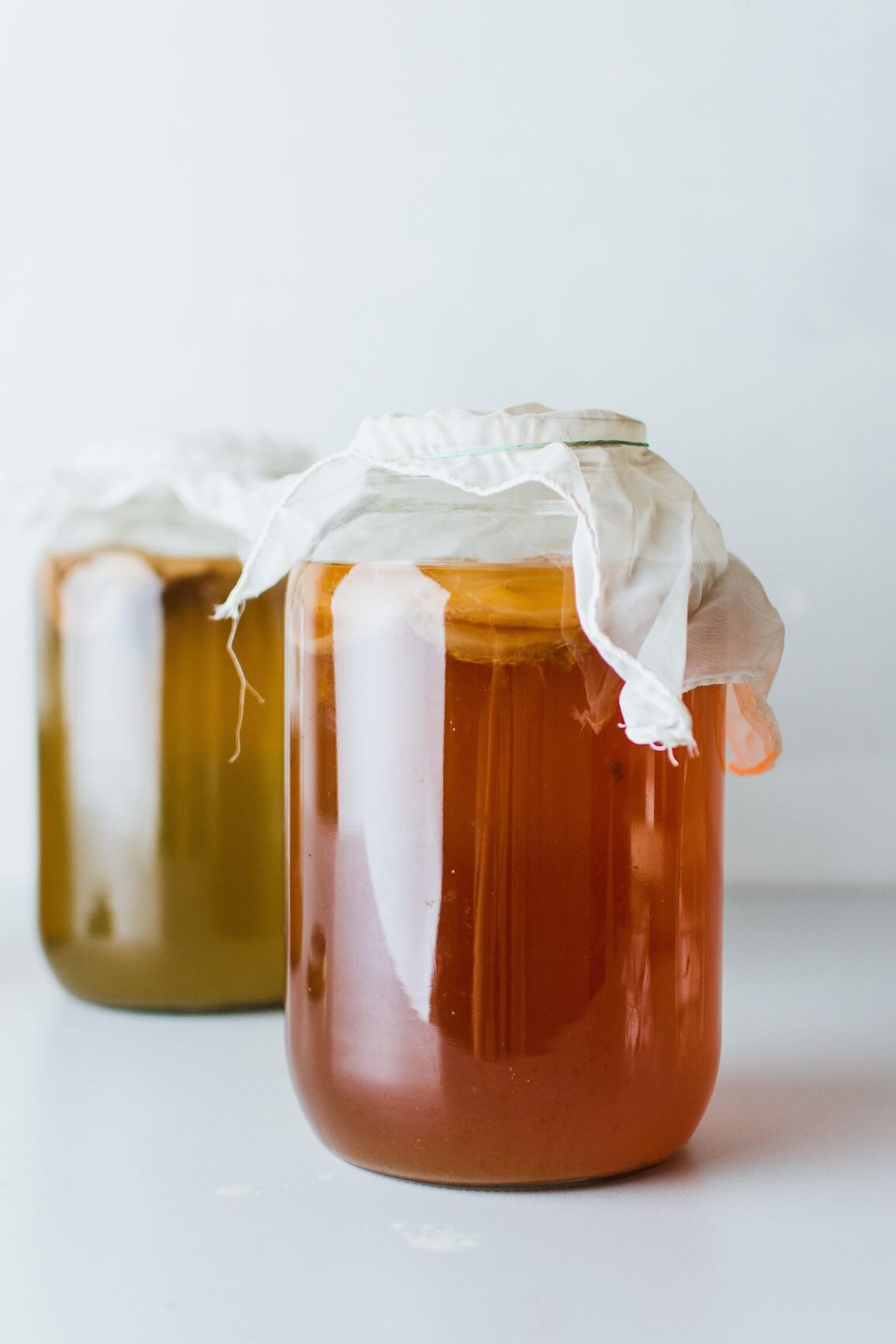
Recipe | Kombucha
Tea’s good for so much more than a cuppa and a sit down. Try this simple and healthful kombucha
You will need:
2 organic green tea bags
2 organic black teabags
200g granulated sugar
1 medium scoby and starter water (you can make your own or buy them here happykombucha.co.uk/collections/kombucha-scobies)
2.5 – 3ltr glass jar
Tightly coven cloth (a tea towel will do)
Elastic band
How to make
1. Add 1.8 litres of water in a saucepan and bring to the boil.
2. Remove from the heat and add the sugar. Stir to dissolve then add the teabags and allow to cool.
3. Once cooled, remove the teabags, without giving them a squeeze, and pour into your glass jar.
4. Stir in the starter water then carefully add the scoby with clean hands. Leave a 5cm gap at the top then place the cloth over the top and secure with an elastic band.
5. Ferment for 7-days at room temperature, out of direct sunlight, but not in a cupboard as it needs air. The scoby may float around and a new one will form at the top and the two may join together, this is just part of the fermentation process.
6. After 7 days start tasting your kombucha daily by pouring a little into a cup. When the taste is the right mix between tart and sweet (this can take up to 10 days) the kombucha is ready. Remove the scoby and pour the kombucha into smaller bottles
Cook’s note: To add flavours you can add fruit, herbs and spices for secondary fermentation. Simply add the fruit to your kombucha, leaving it for several days before drinking before decanting into bottles. This will keep in the fridge for up to three months.
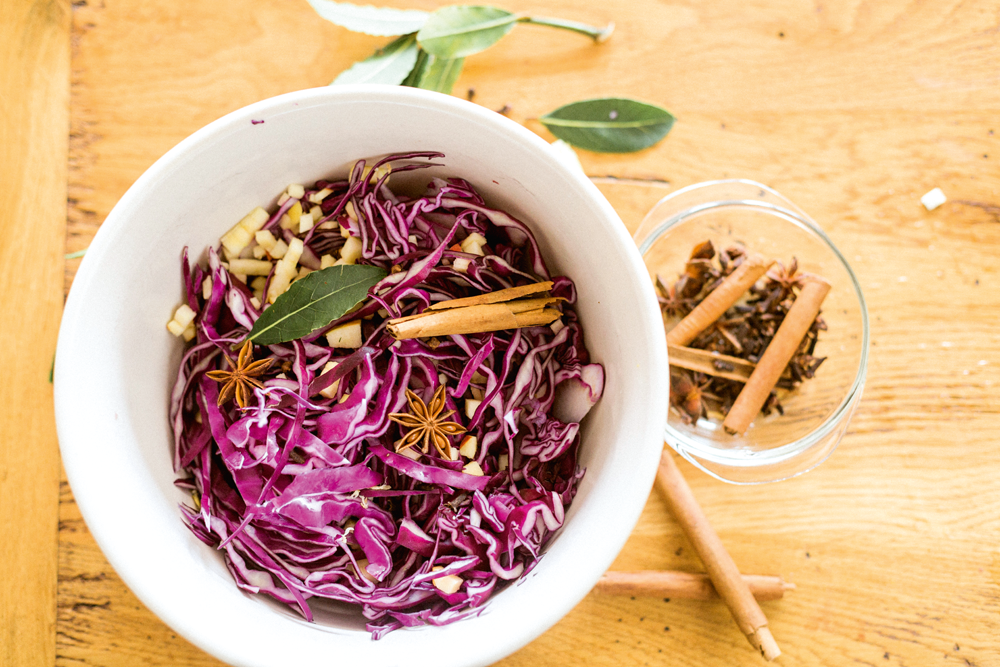
You can find a recipe for Kombucha chutney, as well as lots more ‘Magical Pickles’ in our November issue. The recipes by Rachel de Thample, from her book Fermentation: River Cottage Handbook No.18 (Bloomsbury) include Sea Shanty Fennel, Honey-Fermented Carrot Jam, Fermented Ketchup and Smoky Beetroot Kimchi.
Buy this month's The Simple Things - buy, download or subscribe
More fermenting and pickling…

More from our November issue…
Featured


Competition | Win a £300 skincare treat
We’ve teamed up with family-run business Q+A to give you the chance to win a year’s skincare supplies
One of the things we love about Q+A products is that they take the guesswork and mystique out of skincare. Every tube, jar or tub comes clearly labelled with a practical checklist so you know exactly which skin type and skincare concern it benefits. Plus there’s handy info on the active ingredients we all want to learn more about.
Formulated with care and in small batches at its family-run site in Norfolk, Q+A focuses on high-quality natural ingredients that are known to give noticeable results – from ginger root to seaweed peptides. The company is proud, too, to consider its environmental impact at every level.
Recently Q+A has launched its natural beauty range with high-street retailer Holland & Barrett. We think it’s a great match in terms of green beauty. Both Q+A and Holland & Barrett place considerable importance on sustainability, sourcing as much as possible within the UK to create new products that will benefit you as much as the earth. This partnership means you’ll now find Q+A at more than 700 UK Holland & Barrett stores.
To celebrate the launch, Q+A is giving away a year’s worth of skincare to three lucky readers. With the entire range of 13 products to choose from, delivered when you need them straight to your door, this is one not to miss. Awarded in the form of a £300 Q+A voucher, the choice on what you spend it on is yours. Opt for staples such as Holland & Barrett’s bestselling Hyaluronic Acid Facial Serum or Collagen Face Cream, or something new like 100% natural Liquorice Lip Oil.
How to win
For your chance to win one of three £300 Q+A vouchers to spend online at qandaskin.com, enter by clicking on the button below by the closing date of 4 November 2020. and answer the following question:
Q. Where are Q+A’s small batch skincare products made?
Terms and conditions
The competition closes at 11.59pm on 4 November 2020. A winner will be selected at random from the correct entries received and notified soon after. The winner cannot transfer the prize or swap it for cash. The voucher can be used only at qandaskin.com. Details of our full terms are on page 127 of the magazine and online at icebergpress.co.uk/comprules
Buy this month's The Simple Things - buy, download or subscribe
More from our October issue…
Illustration by Jennie Maizels
Nature studies | Fly Agaric Toadstools
Get to know this familiar fungi a little better…
These pretty red toadstools with white spots have graced the pages of many a fairytale and greetings card, but spotting a real one in the wild is pretty special. Here are a few facts you might not know about these magical mushrooms…
They are mycorrhizal, meaning they form a mutually beneficial relationship with the tree that hosts them.
They’re most commonly found in forests that are home to birch or pine trees.
Fly Agaric take their name from the fact that they attract and kill flies. They used to be mixed with milk and left out in dishes to kill flies.
The toadstools are also hallucinogenic. One of the effects of eating them is a distortion in one’s perception of size. Lewis Carrol made a nod to this in his depiction of the toadstool in Alice in Wonderland, in which the caterpillar tells Alice that eating from one side of the mushroom will make her grow bigger and the other side will make her grow smaller.
The Fly Agaric often featured on Victorian Christmas cards as a symbol of good luck.
Reports of human deaths from eating Fly Agaric are very rare, but all the same, we would advise against trying it.
You can find out more about Fly Agaric at The Woodland Trust’s website.
And if you’ve been inspired, why not learn to draw one of these beautiful shrooms yourself, like the ones above? In our October issue we have a drawing workshop by Jennie Maizels, founder of Sketchbook Club. You can find a tutorial on how to draw toadstools and other autumnal things by Jennie on page 22. Jennie has run Sketchbook Club from her home and online for five years. For all the kit you need to get started, including paints, pencils and paper, visit: jenniemaizels.com and head to Jennie Maizels’ Sketchbook Club YouTube Channel for supporting ‘How to’ videos for these projects. You can also follow Jennie on Twitter and Instagram at @jenniemaizels.
Buy this month's The Simple Things - buy, download or subscribe
More from our October issue…
More nature studies…



Cake facts | root veg baking
We love a cake. We love root veg. Root veg cake are simply double the joy
We are firm believers in always having a cake in, here at The Simple Things. Our October Cake in the House page has a recipe for this deliciously moreish Beetroot Chocolate Cake from Abel & Cole., who, happily, know a thing or two about root veg, too. You can find the recipe on page 25. Root veg definitely do something magical to a cake, adding both natural sweetness as well as moist texture. Here are a few more root veg that translate well into cake form.
Parsnips
Always pairs well with apples, as well as smoky syrups such as maple.
Parsnip and maple syrup cake by Darina Allen
Carrots
All nuts, but particularly walnuts) love a carrot. They pair well with oranges, too.
Carrot cake with ginger and walnuts by Nigella Lawson
Beetroot
Beetroot’s natural partner is dark chocolate which is an excellent, slightly piquant foil to beetroot’s earthiness. A creamy frosting also does the job beautifully.
Red Velvet Beetroot Cake by Lakeland
Sweet potatoes
Sweet ingredients like maple syrup and chocolate complement sweet potatoes, as do spices such as cinnamon, cloves and ginger.
Chocolate and sweet potato loaf cake by Waitrose
Potatoes
Traditionally, potatoes are paired mainly with savoury foods but they’re great at taking on flavours, too, and are a good vehicle for citrus flavours in a cake.
Gluten free lemon drizzle cake by BBC Food
Buy this month's The Simple Things - buy, download or subscribe


