Listen to more playlists:
Featured
Blog
Taking Time to Live Well
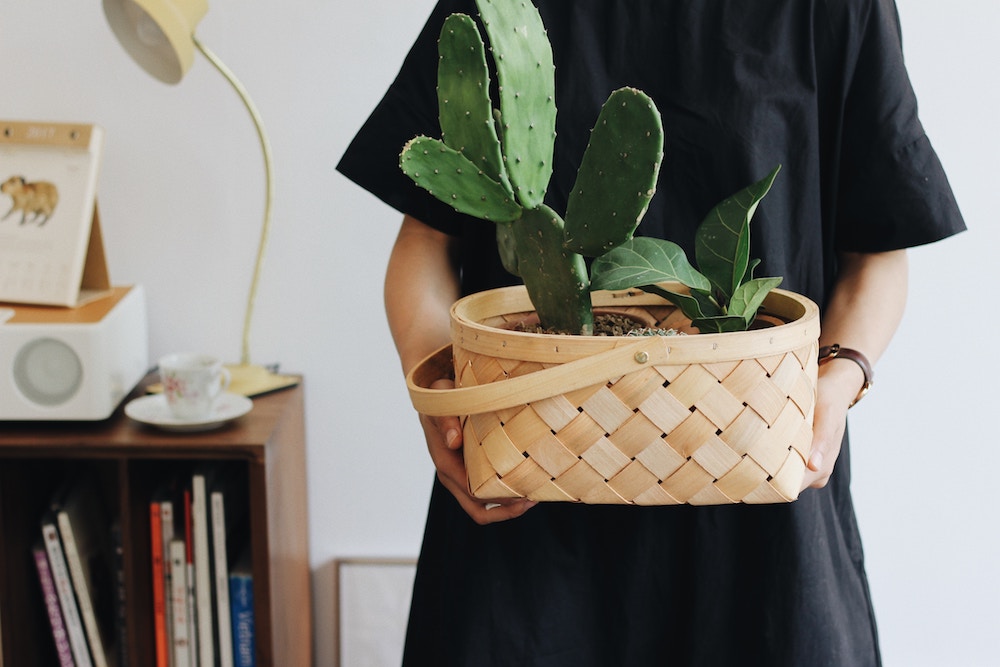
Make your plants pretty as a picture
You will need:
An old picture frame
Thin plywood
Screws and a drill
Chicken wire
Compost mixed with horticultural grit or sand
Dibber
Succulents: try a mix of hanging plants and rosettes
1 Remove any glass from the frame and replace with chicken wire.
2 Fashion a box frame to fit on the back of the frame using the plywood and attach.
3 At the bottom of the box, drill holes to allow for drainage.
4 Fill the box with compost mix.
5 Create holes between sections of the wire mesh, adding one of your plants into each hole.
6 Leave to stand for a few weeks to bed in before hanging, so that your plants don’t fall out!
Tasty, filling and pleasingly wholesome. The fact that you can prepare this Bircher muesli the day before only adds to your sense of smug satisfaction
Serves 4
200g gluten-free oats
200ml coconut milk
100ml apple juice
1 tbsp chai seeds
1 tsp honey, plus extra to drizzle
30g raisins, plus extra to serve
1⁄2 tsp ground cinnamon, extra to dust
2 apples, coarsely grated
1 tbsp mixed seeds (sunflower, flaxseed, linseed and sesame), to serve
1 In a bowl, place the oats, coconut milk, apple juice, chai seeds, tsp of honey, raisins and 1⁄2 tsp of cinnamon. Mix thoroughly, cover and leave overnight in the fridge.
2 When ready to serve, divide the Bircher into bowls, top with grated apple, raisins, cinnamon, mixed seeds and a good drizzle of honey.
Photo by Lizzie/Unsplash
Image: Getty
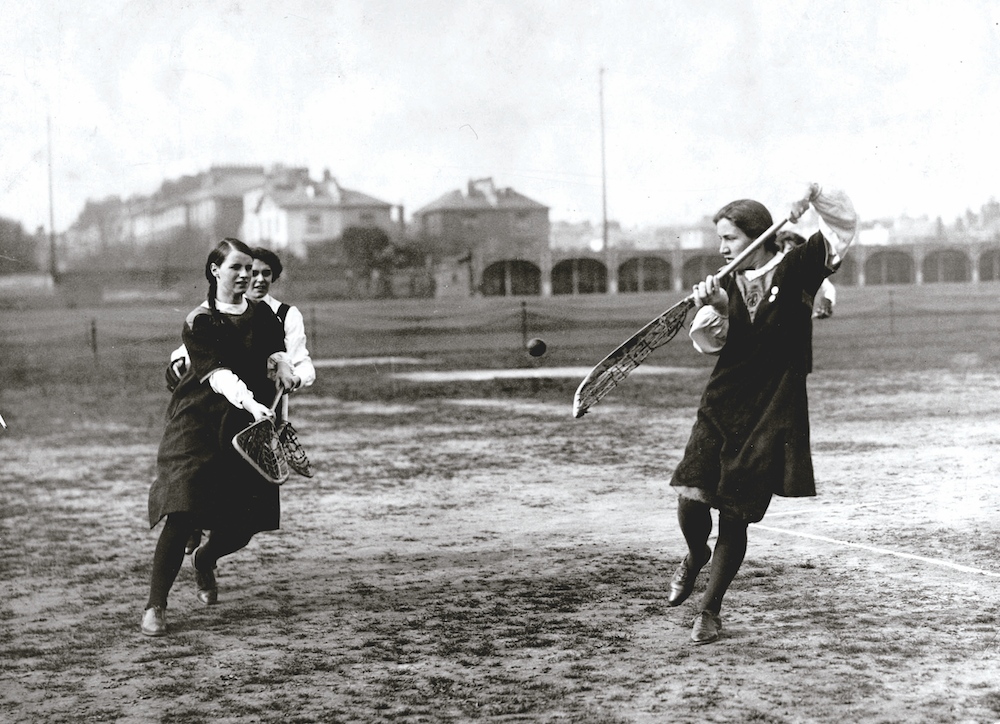
The lacrosse and midnight feasts of boarding school novels are far removed from real life for most of us. So why does our love of such girlhood fiction endure?
On page 86 of September’s The Simple Things, we look at the school run of days gone by - from The Worst Witch to the Chalet School.
Here, we outline how to build your own Malory Towers. Our fictitious boarding school primer sets out the jolly necessary ingredients
Must be flawed but only to a small extent. Will either start off hating the school (see the O’Sullivan Twins and Elizabeth, The Naughtiest Girl in the School) or will be desperate to please but have to work to overcome said character flaw (see Darrell and her oft-referenced hot temper).
The most disliked girl in the school will usually have committed a crime so heinous as to scoff an entire box of chocs in bed or be secretly working class and ‘put on airs and graces’. See Pauline at St Clare’s who is ‘outed’ as working class when her mother visits and is mistaken for a school cook – the shame... Basically, being cowardly, nouveau riche or a little plump is equal to being Carlos the Jackal in boarding school land.
Usually has short hair and is ‘as brown as an acorn’ (to make clear her love of the outdoors). May well have 16 older brothers.
Will have a ‘drawl’ which grates on the other girls and probably aspirations of becoming
a Hollywood actress. Usually is also lazy and dislikes PE.
Tends to be ‘dark’ to denote some sort of European exoticism. Will have a hilarious accent and mispronounce words to the delight of her peers who all have English
as a first language and consider themselves superior in this respect.
Generally all headmistresses are solid and kind. Miss Grayling of Malory Towers, particularly so.
Usually identical to ensure maximum confusion and top japes.
Probably has ‘sparkling eyes’ to show their good-humoured mischief and a tuck box full of fake dog poo, invisible string and itching powder.
Must be of an artistic bent, for example, skilled in music or painting. Being academic is merely expected.
Photograph: Lottie Storey
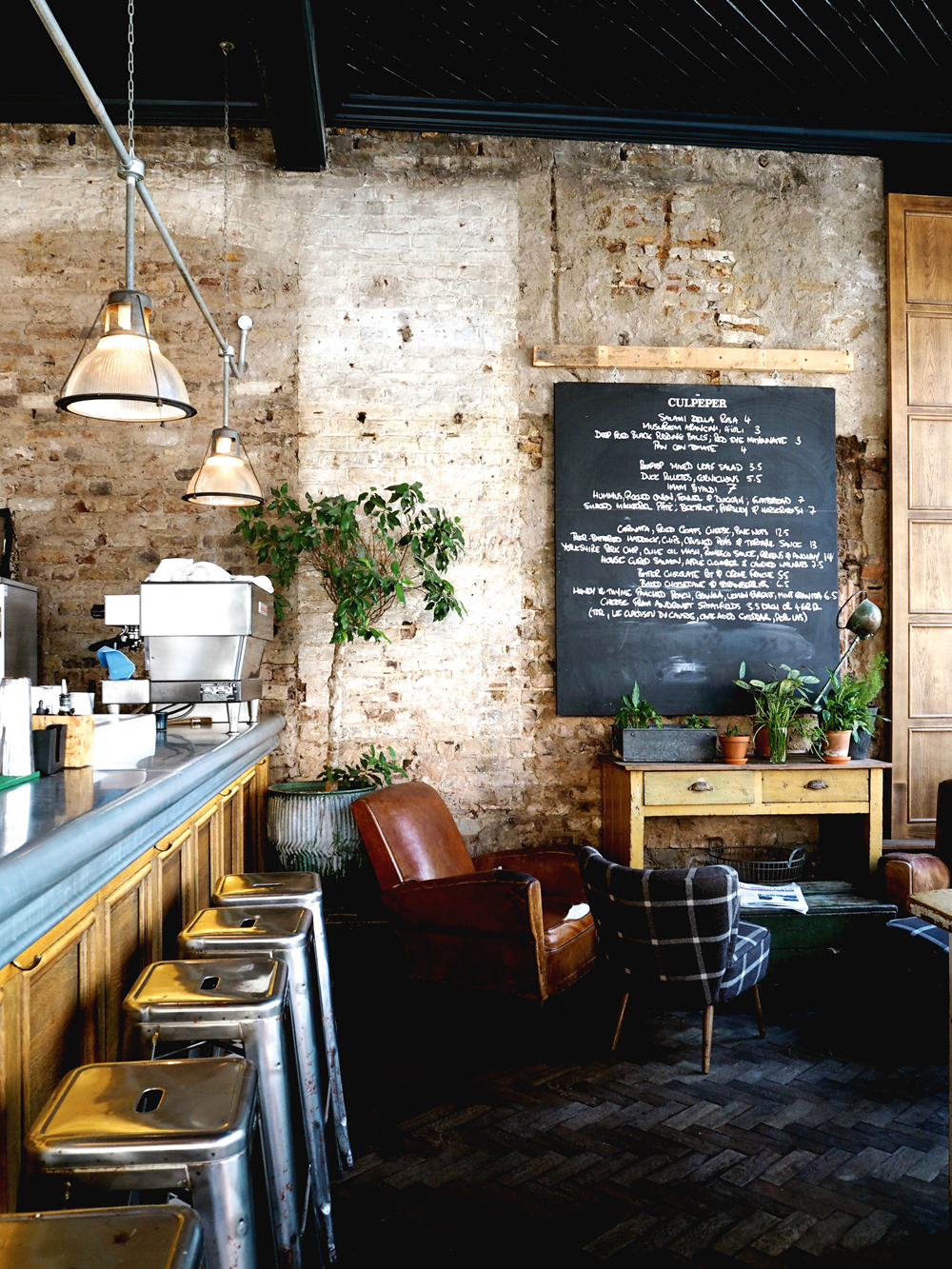
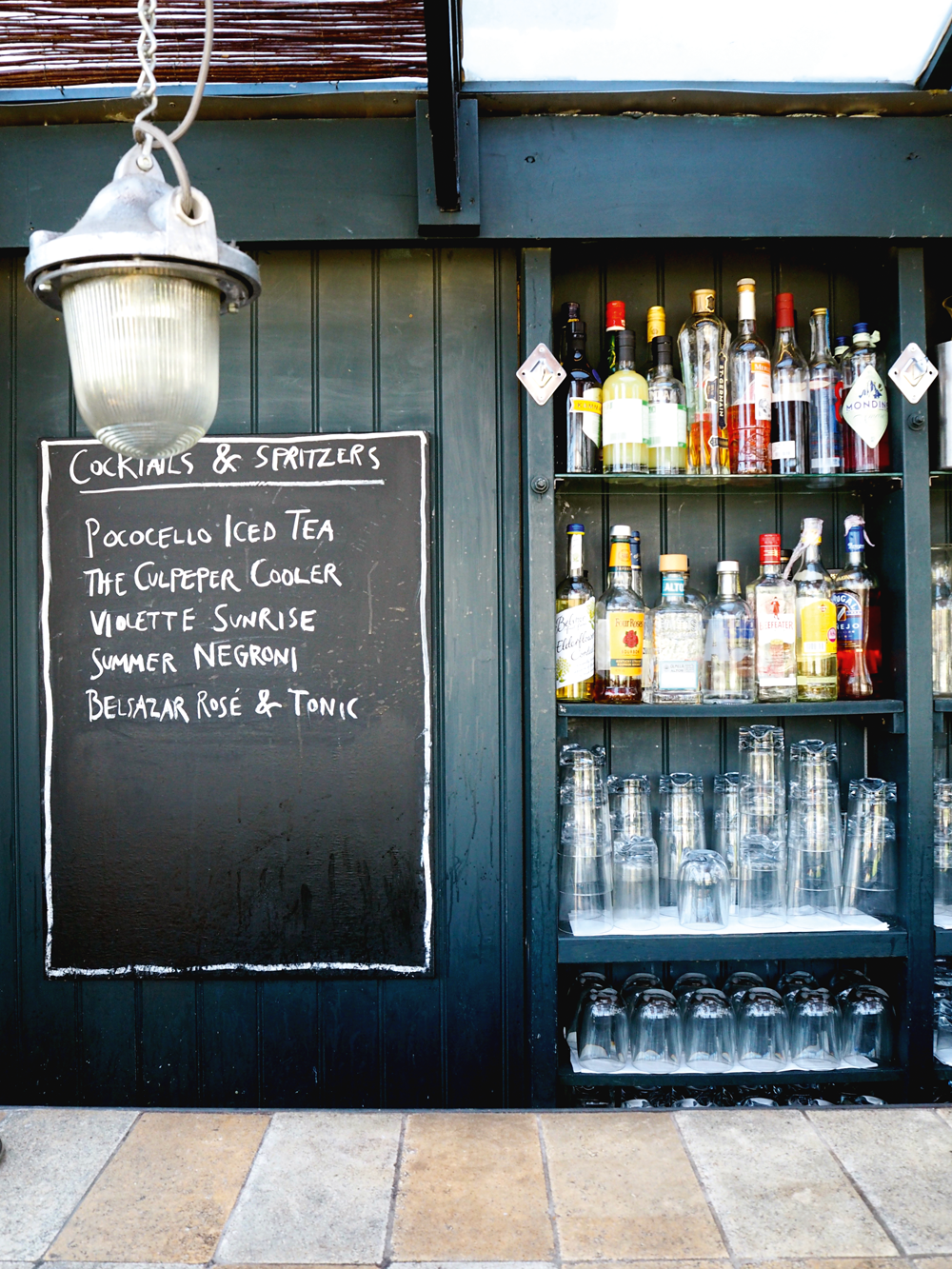
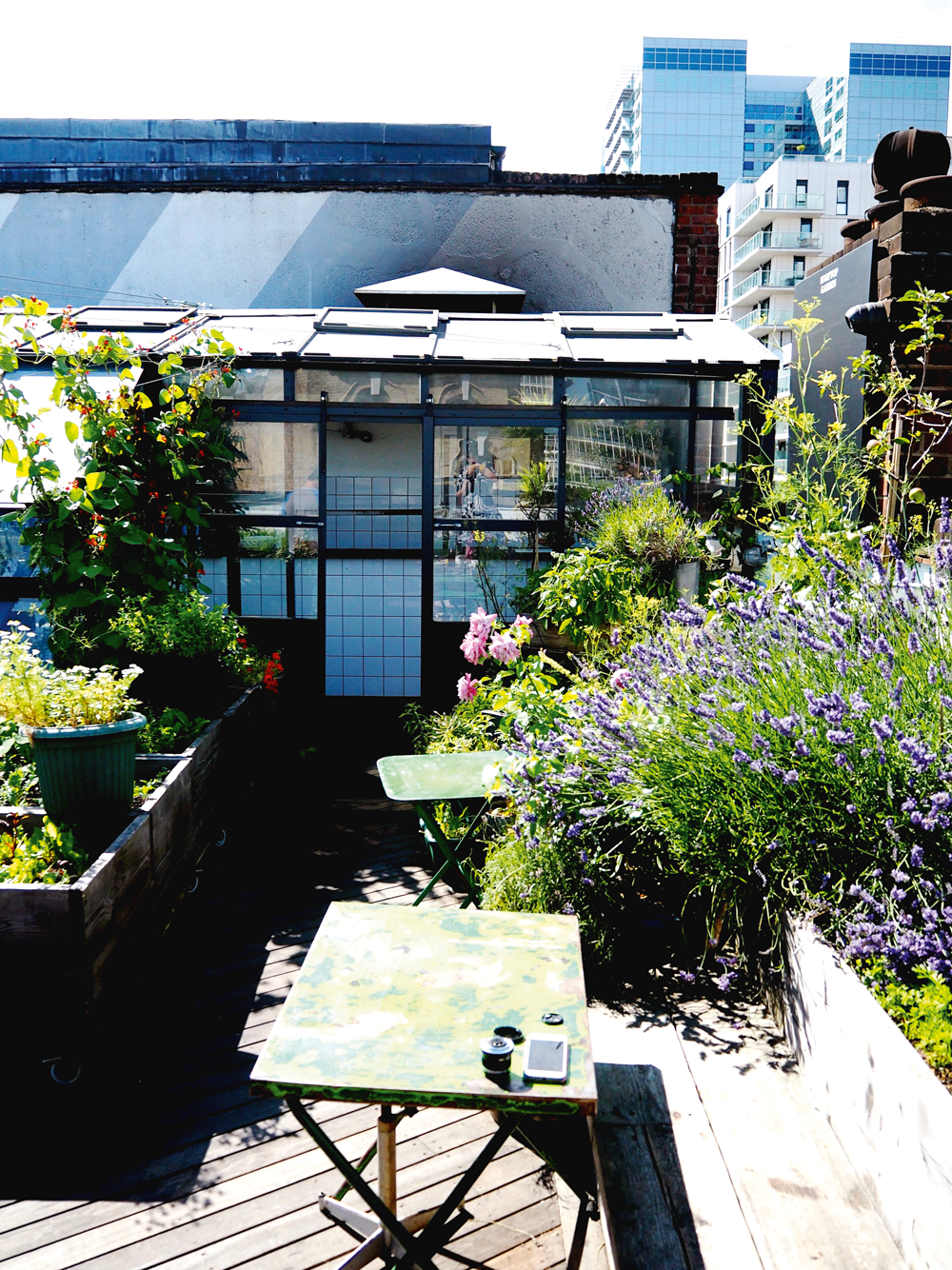
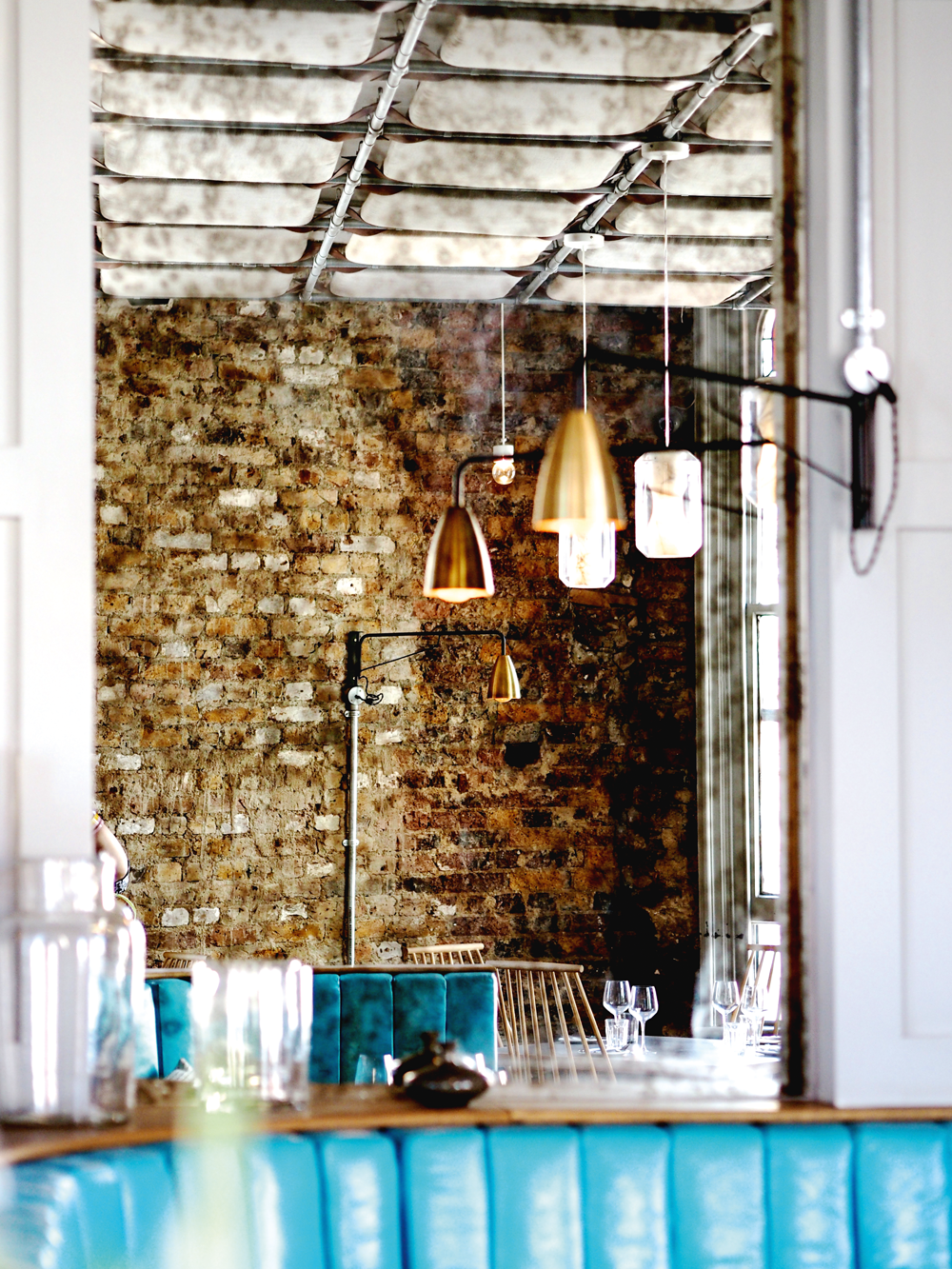
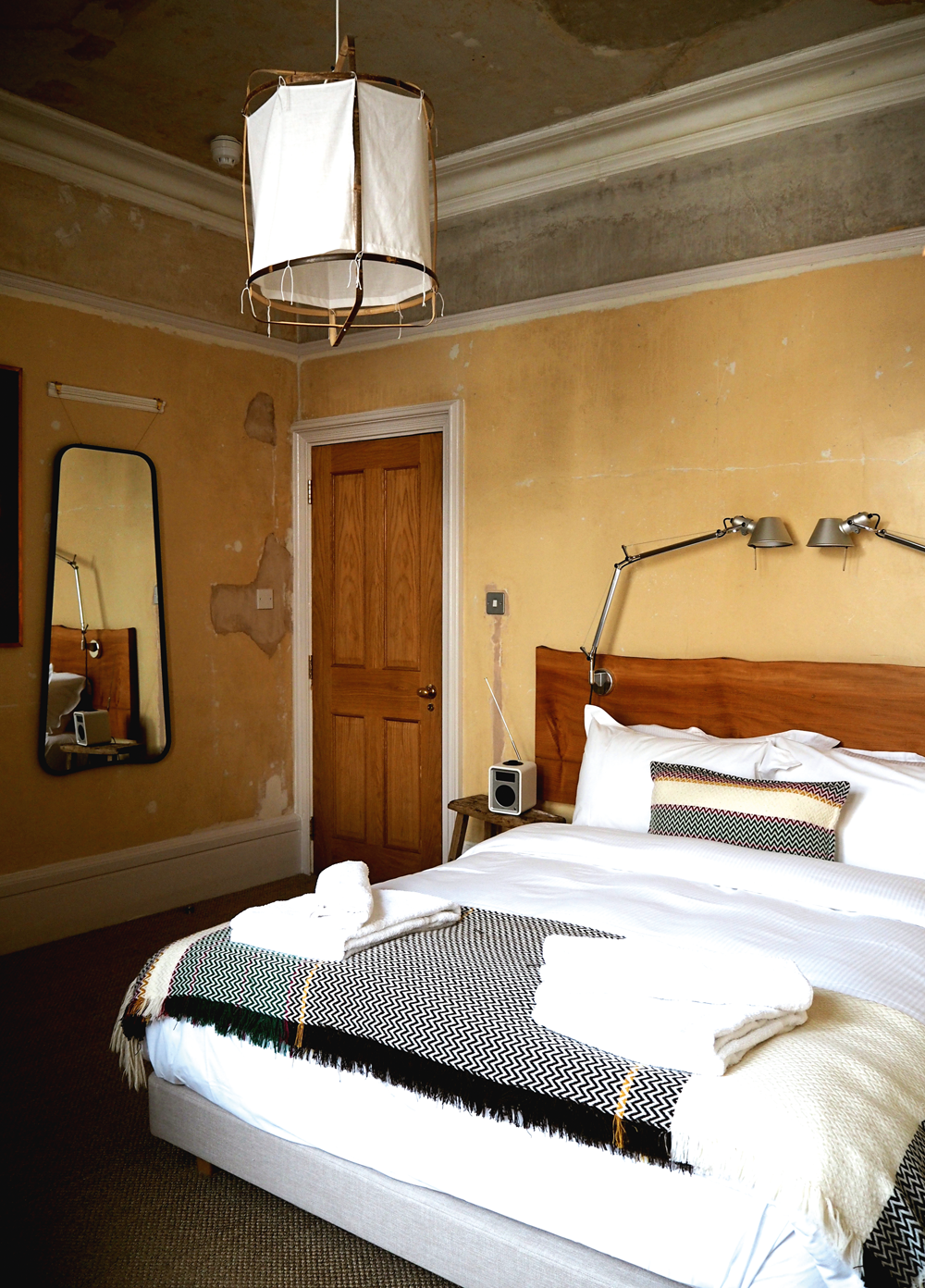
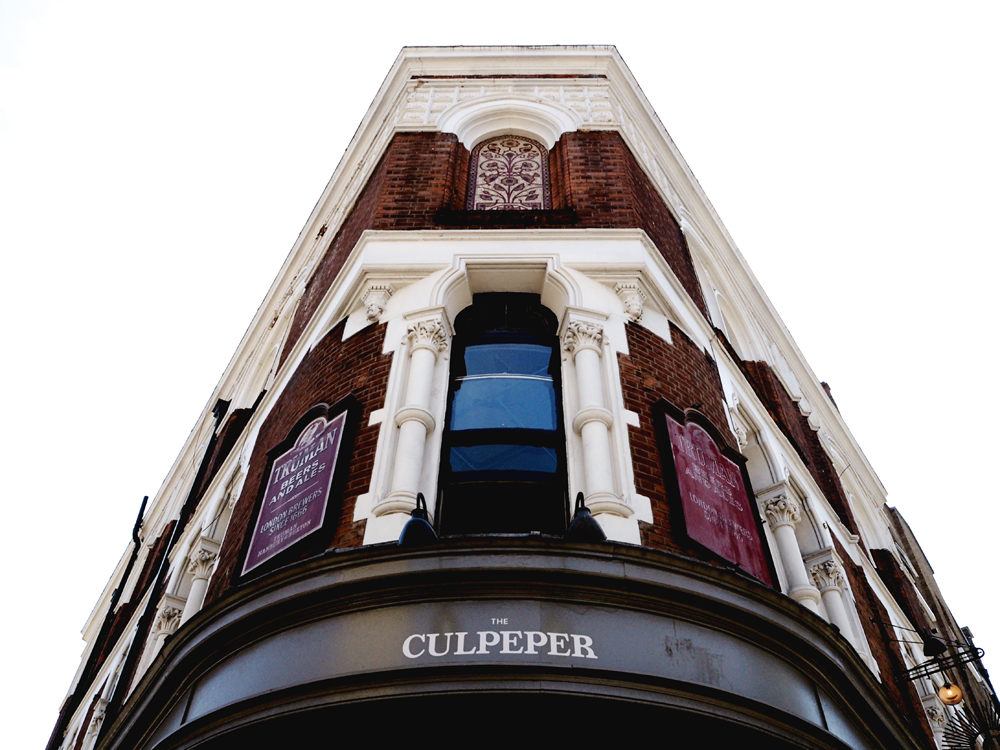
See, do, stay, love the UK. This month: Lottie Storey heads to The Culpeper, London - much more than a pub with rooms
Our regular travel series comes from online UK travel guide This is Your Kingdom, whose handpicked contributors explore favourite places, special finds and great goings on.
You can read about one we love each month in The Simple Things – turn to page 62 of the September issue for more of this urban adventure – and plenty of others at thisisyourkingdom.co.uk.
Lottie Storey is The Simple Things’ digital editor and a contributor to thisisyourkingdom.co.uk. Find her on Instagram @lottie_storey and her Bristol-based travel and lifestyle blog, oysterandpearl.co.uk.
Photography: Nassima Rothacker
If you’re in need of a good night’s sleep, the essential oils in this bath soak will leave you feeling extra relaxed, while the naturally therapeutic salts will soothe muscles and comfort irritated skin. Aaaaah. That’s better...
Makes 700g (enough for a week of baths)
600g Epsom salts*
75g sea salt
160g bicarbonate of soda
20 drops lavender essential oil
10 drops peppermint essential oil
Mix all the ingredients together in a small bowl and then tip them into a jar or another airtight container. The salts can be stored for up to three months. When you come to use them, pour about 100g into the bath while the water is running. Use your salts as often as you like. For a
truly luxurious experience, sprinkle a few flower heads into the bath.
* Epsom salts (magnesium sulphate) have been used for their therapeutic effect on aching joints and muscles for over a century. Used with potassium- and iodine- rich sea salt, these minerals are absorbed directly into the skin and will also help soothe dermatitis and any inflammation. Avoid using if pregnant.
From The Art of the Natural Home by Rebecca Sullivan (Kyle Books).
Photography: Susanna Blåvarg
This dish can step up to any occasion – late-night dinners, impromptu guests, hangovers – you name it. Just pop it all in a pan and in 15 minutes you’ll have a delicious meal
Serves 4
500g dried spelt spaghetti (wheat pasta is also fine here if you prefer)
500g cherry tomatoes, chopped
1 onion, thinly sliced
A large handful of fresh spinach
2 garlic cloves, thinly sliced
A handful of black olives
2 sprigs of fresh basil
4 tbsp olive oil
1 tbsp dried oregano
1⁄2 tsp chilli flakes
1 litre vegetable stock
A handful of freshly grated Parmesan cheese, to serve
1 Place all of the ingredients in a large saucepan and cover with 400ml cold water. Place a lid on it and bring back to the boil.
2 Remove the lid, reduce the heat, simmer and cook for 10 mins, stirring occasionally until the liquid has reduced to a silky sauce.
3 Serve straight away with lashings of Parmesan cheese.
Recipe from Milly’s Real Food by Nicola Millbank (HarperCollins).
Photography: Andrew Montgomery
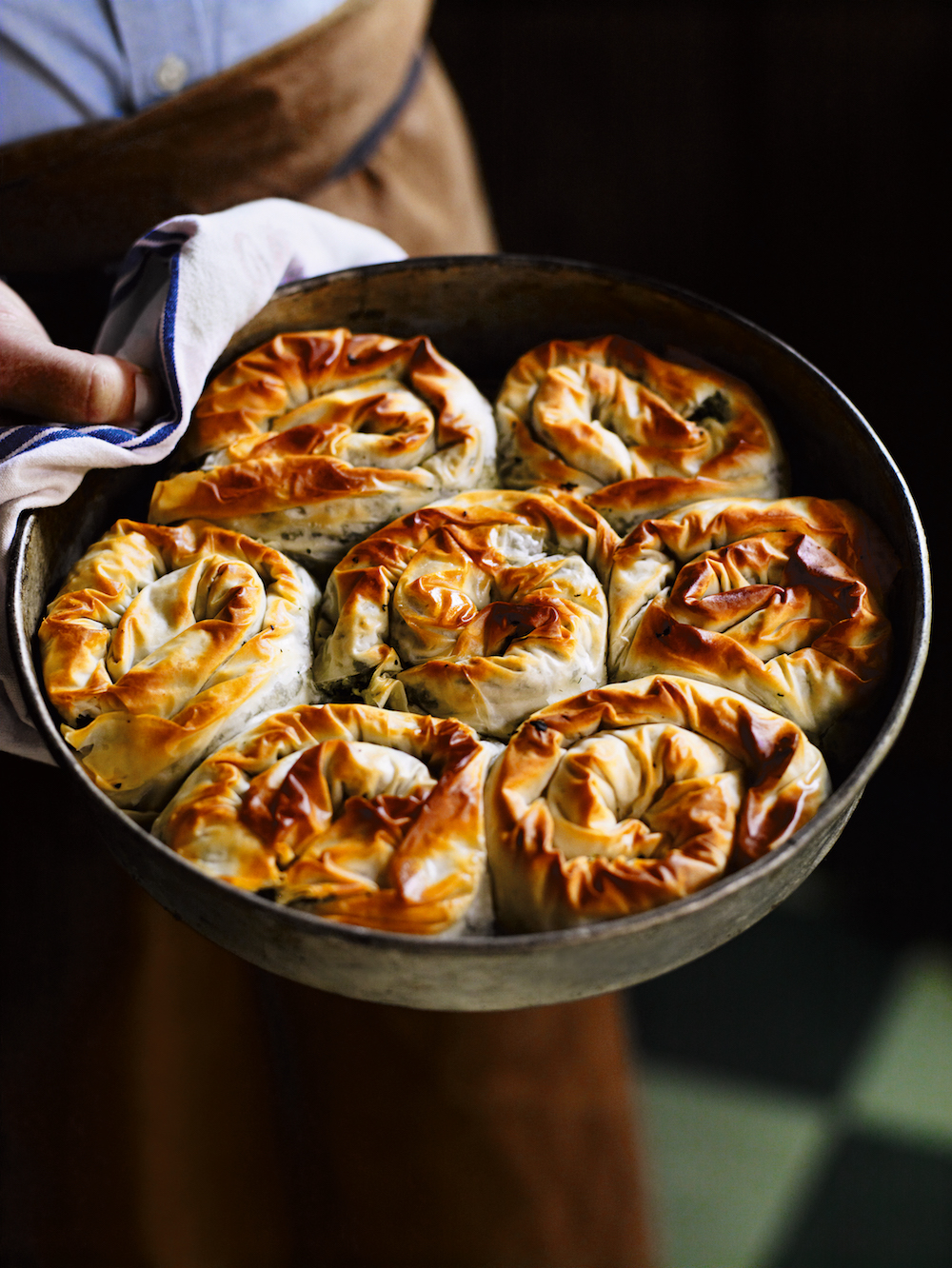
Eke out summer with these Turkish spinach and feta pastries. Rolled in this unusual way they look even more impressive
Makes 6–8
Oil, for greasing and brushing
350g/12oz fresh spinach or Swiss chard leaves, rinsed
Good handful of flat-leaf parsley, chopped
100g feta cheese, crumbled
1⁄4 tsp salt
1 x 350g packet of filo pastry
1 Preheat oven to 180C/Fan 160C/350F. Oil a shallow, round cake tin, approx 30cm in diameter.
2 Lightly cook the spinach and parsley in a lidded pan with just the water that is left clinging to the leaves after washing. When the leaves have wilted, drain them through a sieve and leave them to cool. When they are cool to the touch, give them a good squeeze to get rid of any remaining water. Once completely cold, mix them with the feta and salt and set aside.
3 Unroll a sheet of filo pastry. Spoon a little of the spinach mixture down one long edge, then roll it up like a cigar. If it splits or seems a little fragile, roll another sheet of filo around it. (Take care not to do this too tightly or it will split again during the cooking process.) Coil the cigar into a ‘snail’ shape.
4 Repeat this process until you have made 6–8 ‘snails’, then arrange them neatly (sides touching) in the prepared pan. Brush with oil and bake for 40 mins or until golden brown.
Cook’s note: You can freeze the cooked greens and parsley mixture if you have a glut of fresh veg and use it throughout the year.
Recipe from The Great Dixter Cookbook by Aaron Bertelsen (Phaidon Press).
Photo by Giulia Bertelli on Unsplash
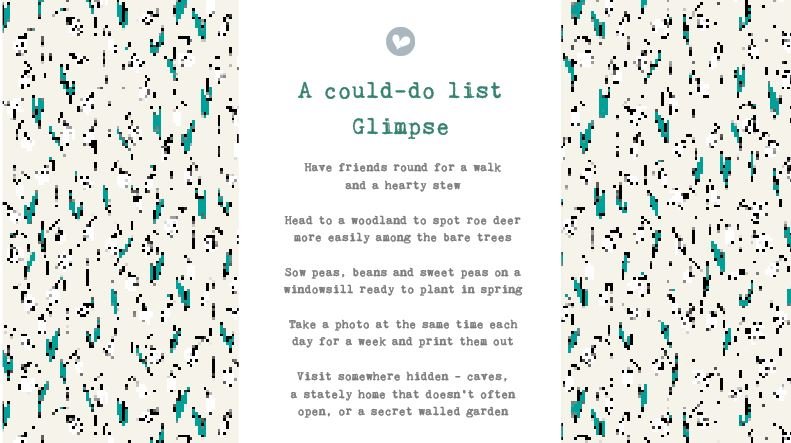
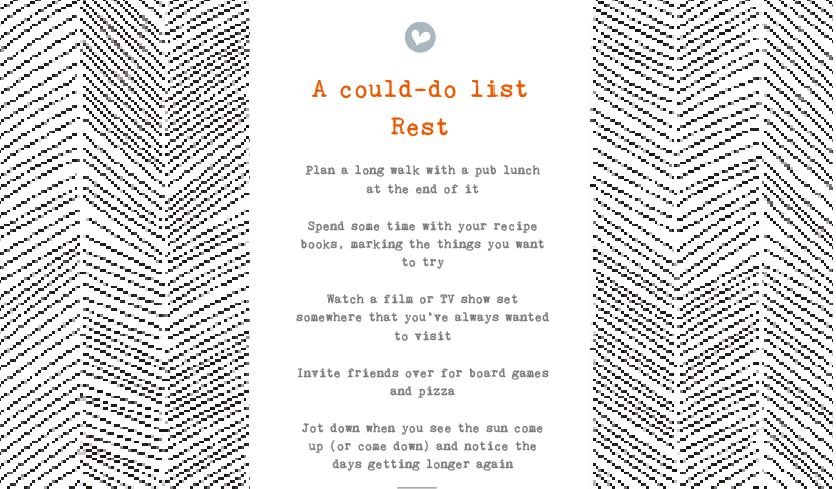
Things you might want to do this month (no pressure!)
What would you add? Come over and tell us on Facebook or Twitter.
Image: Getty
In this months The Simple Things, come with us through the winding streets, sunny squares and cool canals of Venice
There’s no better way to get to the heart of a city than through the people who live there. Every month, we ask someone, clearly in love with their city, to take us on a personal tour and tell us what makes it so special. You may feel inspired to visit one day or to rediscover the charms of a city closer to you, but for now just sit back, relax and enjoy some armchair travel.
This month, Iris Loredana takes us on a tour of her city, Venice.
How long have you lived in the city?
I grew up in Venice and went to university here. I’m passionate about my city, I did my thesis on ecology and the urbanisation of the Venetian Lagoon. I currently live and work in both Venice and Vienna.
Tell us what makes your city unique.
One thing is the light, which you can’t help noticing even on a rainy day. It’s a kind of translucent light that changes rapidly, as does its shimmering reflection on the water, making Venice look like she’s wearing a different dress several times a day. In late summer the sun’s rays immerse the buildings in brilliant sparkles.
What’s it like in September?
Warm and calm. Venice sits in the midst of a vast lagoon and this large water basin stores warmth. This means that summer lasts a little bit longer here. In late summer (we call September ‘summer with a bonus’), the colours become sharper. Early autumn is called ‘Canaletto season’ because the Venetian painters used to benefit from this mesmerising light and clear skies. It’s a great time of the year to go for long walks. The scent of the summer flowers is strong because the heat has abated. On a bright September morning you’ll notice the scents of wisteria, blossoming for the third time and oleander growing in the campi (squares) with its irresistible vanilla-lemon balm fragrance.
Tell us about the light and colours of your city.
In September, the early morning light has a rose gold hue. This colour is accentuated by the red brick façades and many buildings in town that are painted in rosso Veneziano (Venetian red). Towards noon, the sky turns 2 cobalt blue, shifting to emerald by late afternoon. If you’re lucky, your September evening sky will glow rose, pink and dark gold intermingled with light blue.
Turn to page 54 of September’s The Simple Things for more of Iris’s Venice secrets or look out for My City in every issue (and search previous posts here).
Iris Loredana founded website and blog La Venessiana: The Fragrant World of Venice, along with her grandmother, Lina, in 2015. They write about life in the Lagoon, and the city’s private homes, kitchens and secret gardens. Find them at lavenessiana.com.
Image: Urbanara
There are certain items in your home that are like good friends: they always cheer you up. This month, we feel the love for the bookshelf on page 112 of the September issue.
It’s an undeniable fact that a bookshelf improves a room. The addition of a row of books, no matter how small, instantly adds warmth, colour and personality. Novelist Anthony Powell knew this when he entitled the tenth book in his ‘Dance to the Music of Time’ series Books do Furnish a Room. Any house without at least one bookshelf feels empty and unloved, and its owner risks the danger of looking like someone with a sketchy, suspicious identity. Nosing around other homes lined with a bookshelf or two, on the other hand, can reveal much, and is as irresistible as poking around a vinyl collection once was.
The bibliophile
Organises their books according to category, chronologically, or alphabetically by author’s names, like a bookshop.
The aesthete
Arranges their books in colour bands: all books with colour co-ordinated spines are grouped together. Not especially handy when actually looking for a book however.
The would-be librarian
Houses books in bookcases that line walls or even entire rooms, which can then be called ‘the library’ or ‘the study’ with justification.
The curl-up-with-a-good-book loafer
Sits and reads on a wet afternoon in a designated armchair by a window next to a shelf of books.
The interior designer
Intersperses objects, plants and photographs in front of books. Shelves can then be treated as ‘decorative installation’ with displays changing according to whim.
Turn to page 112 of September's The Simple Things for more, including our pick of bookshelves to buy, make or hack.
Recipes by Lia Leendertz, images by Kirstie Young
Gentle hints of aniseed in both the shortbread and apple granita show off fennel at its grown-up best
Fennel is just as comfortable in sweet settings as it is in savoury, and its aniseed flavour adds a sophisticated note to this grown-up dessert.
Makes 12 servings/biscuits
700ml cloudy apple juice
Juice of lemon
100g granulated sugar
1 head (or 2 tbsp) fennel seeds for the shortbread
150g soft salted butter
70g golden caster sugar, plus 2 tbsp for sprinkling
150g plain flour, plus extra for dusting
70g rice flour
2 tbsp fennel seeds
Cook’s note: The granita is easy to make, but you should ideally make the liquid and leave it to cool the day before you’re going to turn it into granita. Freeze early on a day when you’ll be in the kitchen a lot, as it needs a little attention periodically.
1 Pour the juices and sugar into a saucepan and gently heat until the sugar is dissolved. Add the fennel seeds and bring to the boil, then simmer for a few mins. Remove from the heat and leave to cool completely.
2 Sieve into a plastic container with a lid and transfer to the freezer. Set a timer for two hours, then remove from the freezer and use a fork to break up the frozen edges and stir them into the centre.
3 Set a timer to repeat hourly, breaking up the ice crystals each time, shortening the timer to every half hour once it really starts to freeze. The more times you do this, the more snowy it will become, but even a few stirs will create a good result.
4 To make the shortbread, cream the butter and sugar together until fluffy, then add the flours, fennel seeds, and a pinch of salt. Mix together roughly, then use your hands to bring the mixture into a dough.
5 Roll out onto a floured surface, cut into rounds, and place onto a baking sheet covered with baking parchment. Prick all over with a fork, then chill in the fridge for at least 30 mins.
6 Preheat oven to 180C/Fan 160C/350F. Take the shortbread out of the fridge and sprinkle over 2 tbsp caster sugar. Bake for 20–25 mins until the colour of pale straw, then remove from the oven and leave to cool, transferring to a rack when they have hardened a little. Serve a small bowl of granita with a shortbread biscuit.
The turn of the year is never more marked than in September, bringing an enjoyable sense of purpose about the place. It’s a time of ‘things to plan and do’ and ‘things to want and wish for’ but this needn’t just be about the shiny and the new. Proudly homemade harvest projects and vintage shopping are seasonal pleasures too. If September is the new January, take a moment to embrace nostalgia and melancholy among the resolutions and getting stuff done. Happy new year.
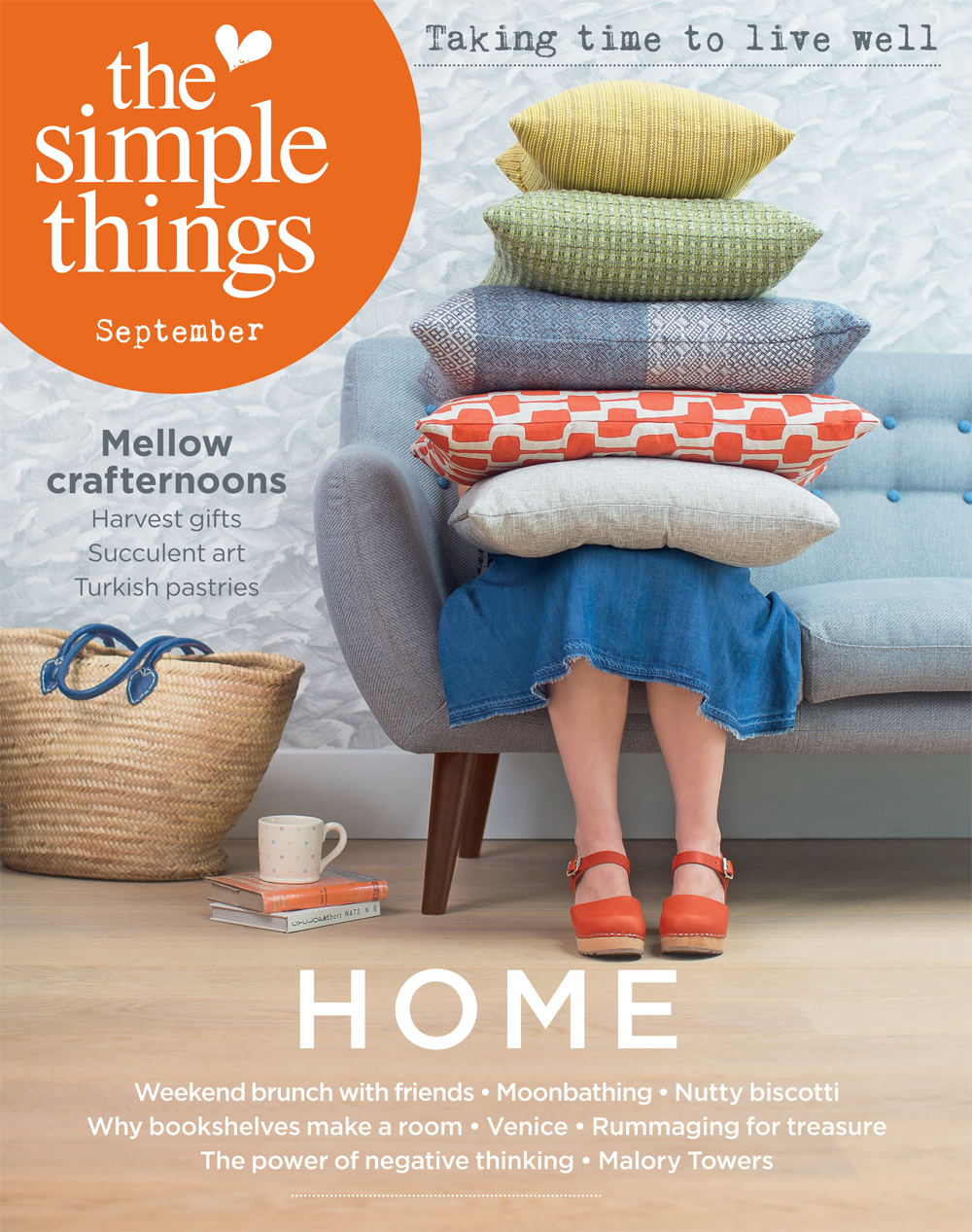
Get hold of your copy of this month's The Simple Things - buy, download or subscribe
View the sampler here, buy back issues or try our sister mag, Oh Comely
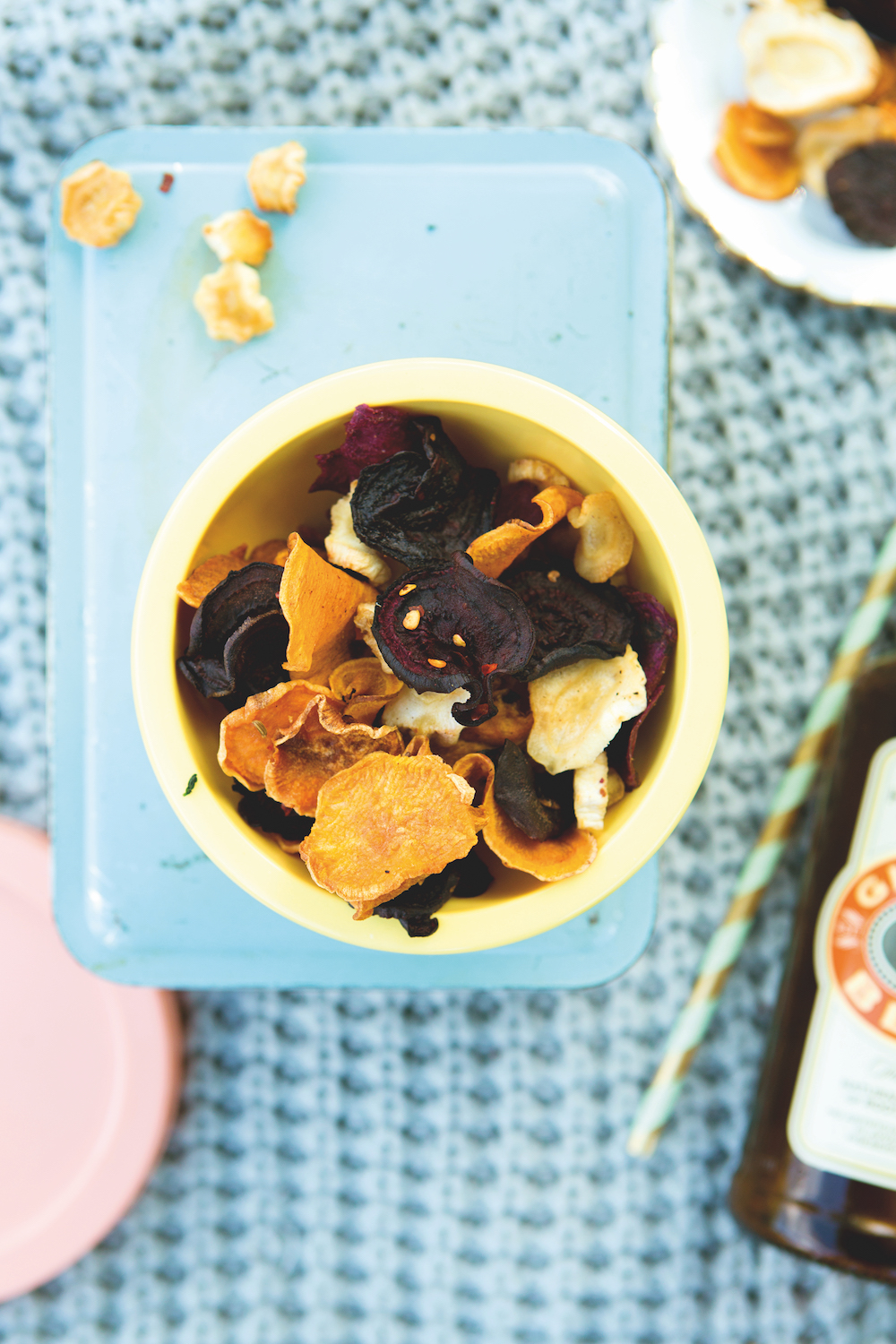
Sweet roots turned into a wonderfully crunchy snack
Serves 6
3 large parsnips
3 large beetroots
3 large sweet potatoes
Vegetable oil
Sea salt
1 tbsp fennel seeds
1 Preheat oven to 150C/Fan 130C/ 300F. Line 4 baking sheets with baking parchment (or if short of space or trays, cook crisps in batches).
2 In a small bowl, mix 3–4 tbsp of vegetable oil, the fennel seeds and a good grind of salt. Lightly brush the baking parchment with the oil mixture. Set aside.
3 Use a mandolin or vegetable slicer attachment on a food processor or, failing that, slice all the vegetables as thinly as possible. Use kitchen towel to pat slices dry.
4 Place the vegetable slices on your baking sheets, making sure they don’t overlap. Then lightly brush the crisps with the oil mixture.
5 Bake for 1 hour; after an hour, remove the parsnips, returning the beetroot and potatoes to the oven for another 30 mins. Cool on a rack, and store in an airtight container.
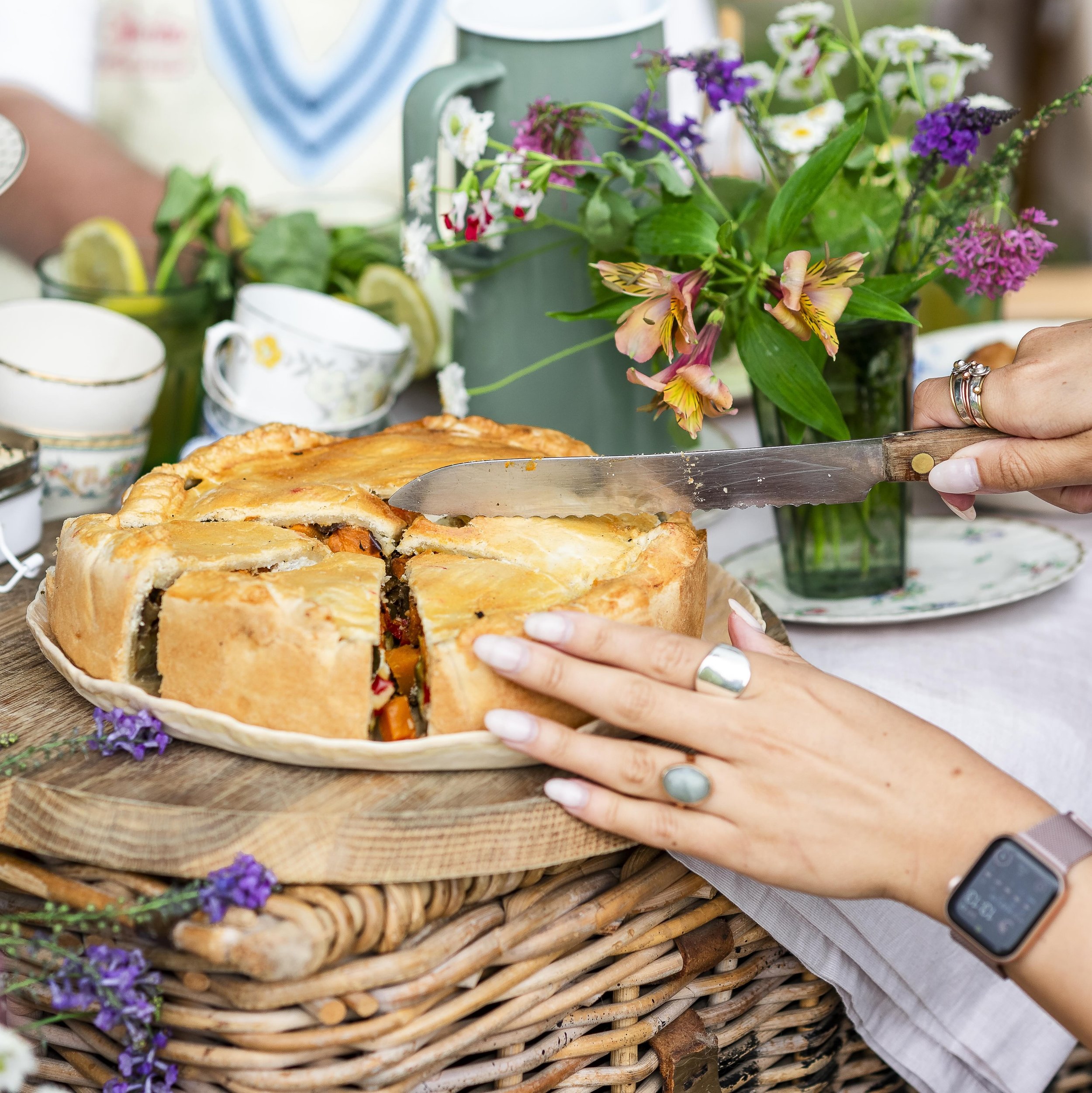
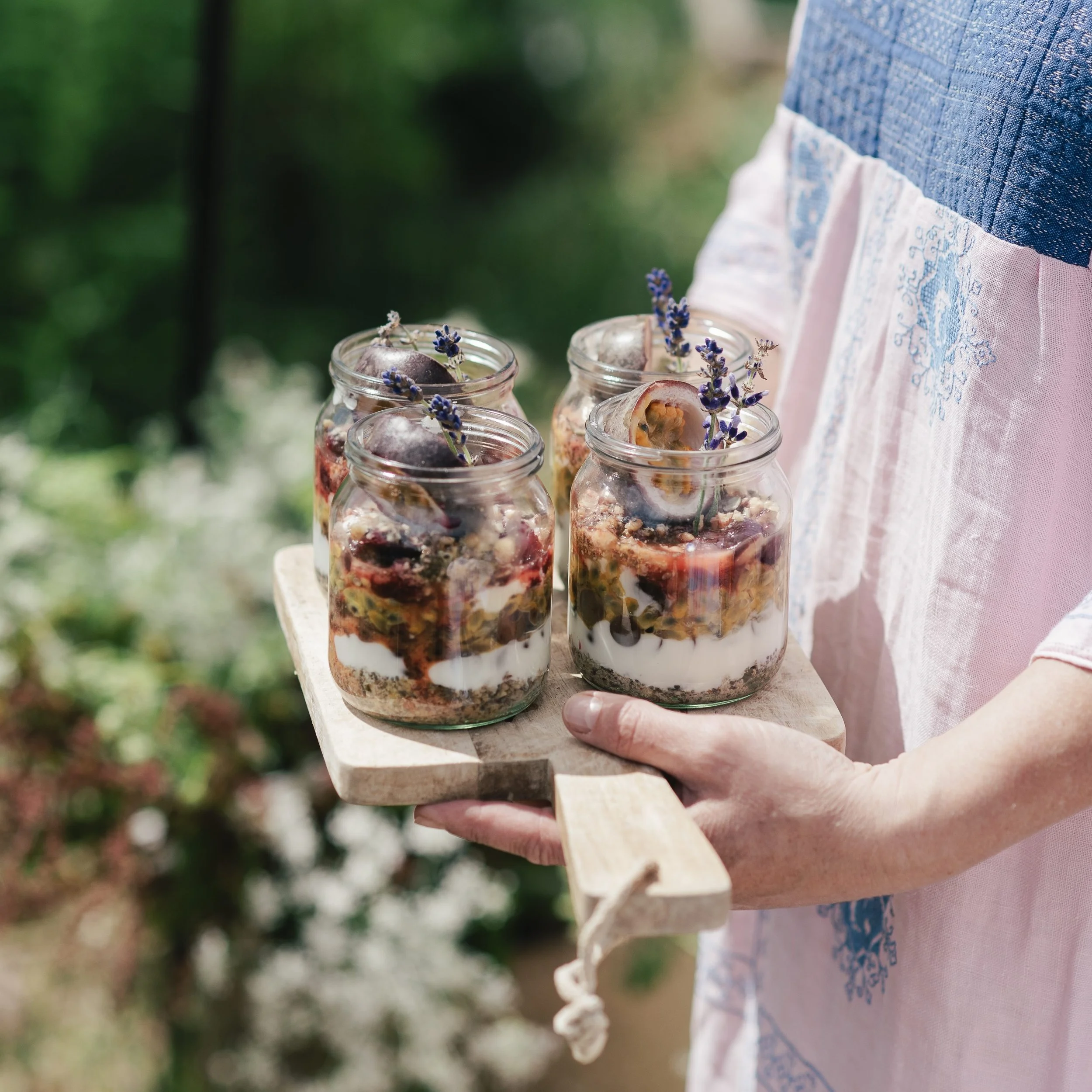
Turn to page 24 of August's The Simple Things for more of our picnic in the park menu, including:
Image: Getty
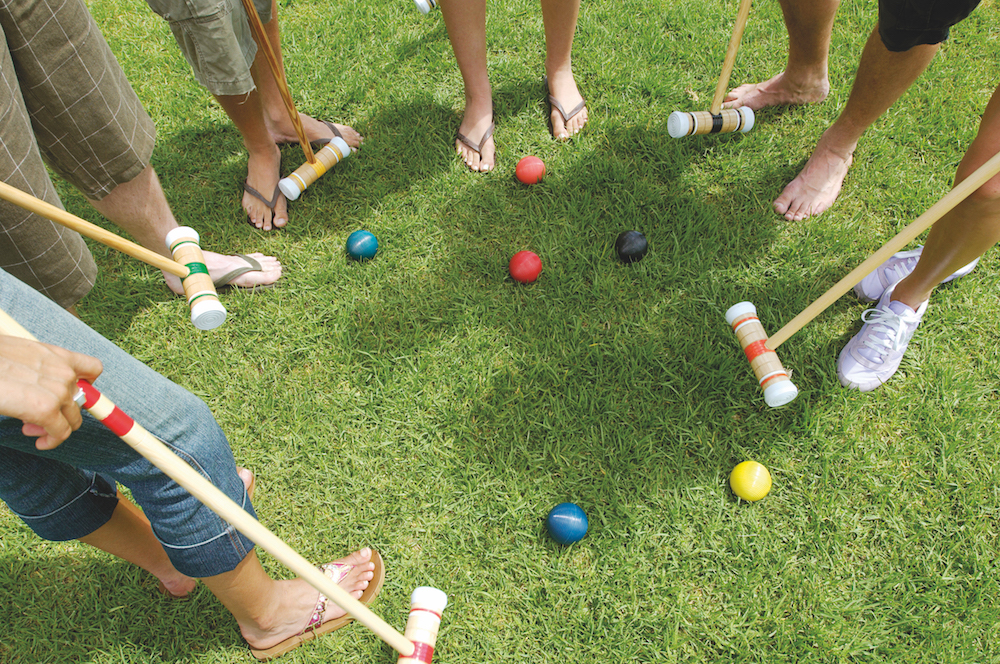
There is little more English than a game of croquet – flamingos and hedgehogs optional. Or for an outdoor game that allows for standing about with a pastis in one had, Pétanque is your pastime
CROQUET
A cross between bowls, billiards and marquee erection, croquet is the feminist’s friend, being the first outdoor sport to allow women and men to play on an equal footing. It’s also an unusual game in that seemingly no one knows the rules, but because whacking balls through hoops with a mallet is such fun, nobody really cares. It’s a game long associated with the upper classes, and you can turn any old patch of grass into the sweeping lawn of a moneyed Victorian simply by having a friend run forward, urgently wave a piece of paper and call “Miss! News from
London, miss”. Remember, period-detail- lovers, attitudes to animal welfare were rather different in Lewis Carroll’s time and, today, use of live flamingos and hedgehogs is generally frowned upon.
PÉTANQUE
Derived from boules, a game traceable back to coin throwing in ancient Greece; Romans refined the concept to aiming at a target and the modern sport began to take shape. Pétanque itself only arrived in 1907, when rheumatic boules ace, Jules Lenoir, could no longer run and throw. Instead, he suggested this: stand inside a circle with both feet on the ground and toss hollow steel balls as close as possible to a small wooden ball, or cochonnet. In contrast to the rolled, lawn-requiring British bowls, this throwing technique makes it the ideal game if your local open space is a little on the uneven side. Indeed, gravel or hard dirt is the customary playing surface. For extra Francophone authenticity, liberally punctuate play with exclamations of “Bof!”, “Très bon!”, “Merde!”, etc.
Turn to page 71 of August’s The Simple Things for more games, including toe wrestling, ping pong and crazy golf.
Worries and doubts have their up-sides. They could even help you feel happier…
Negative thoughts – worries, doubts and irritations – are like weeds. Despite our best efforts to think positive, look on the bright side, or be grateful for what we have, they still spring up. But what if the reason they are so persistent is that they serve a purpose and are even sometimes useful? According to an increasing number of experts, it’s time we stopped demonising negativity. It could help you feel happier.
Turn to page 78 of September’s The Simple Things for more on the power of negative thinking, including how to harness its power plus a fear-setting exercise.
The TED talk below explores the hard choices - what we most fear doing, asking, saying - and how they are very often exactly what we need to do. How can we overcome self-paralysis and take action? Tim Ferriss encourages us to fully envision and write down our fears in detail, in a simple but powerful exercise he calls "fear-setting." Learn more about how this practice can help you thrive in high-stress environments and separate what you can control from what you cannot.
After a summer holiday, little feels as good as coming back home.
Listen to our homecoming songs playlist now
Illustration: Joe Snow
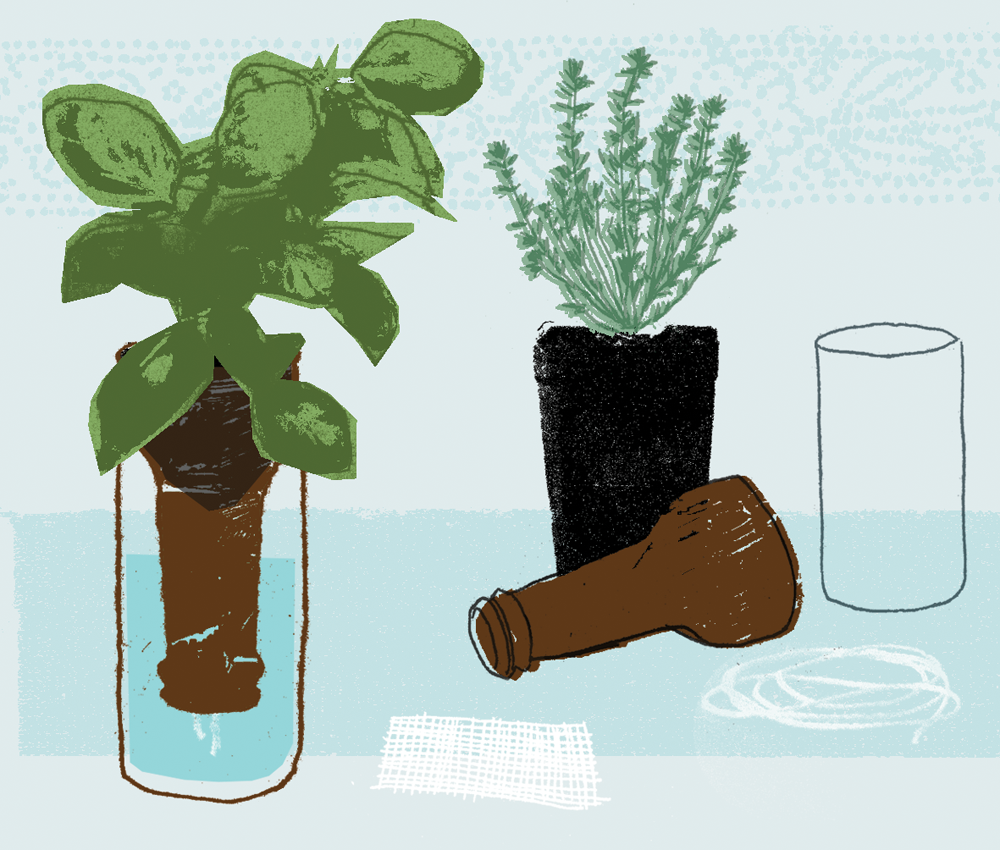
Don’t let water go to waste: it can add moisture and nutrition for your plants
Get around water scarcities. Re-use cooking water. Take out whatever you’ve been cooking and let the water cool to room temperature.
Add nutrients. Whatever you’ve cooked will mean that the water has extra nutrition for plants. For example, starches from pasta and potatoes, calcium from hard boiled eggs or iron from spinach. Just avoid using water that’s been salted.
Kill weeds. Or don’t let your water have time to cool after boiling, and (carefully!) tip it over areas with weeds.
We celebrate slowing down, enjoying what you have, making the most of where you live, enjoying the company of of friends and family, and feeding them well. We like to grow some of our own vegetables, visit local markets, rummage for vintage finds, and decorate our home with the plunder. We love being outdoors and enjoy the satisfaction that comes with a job well done.