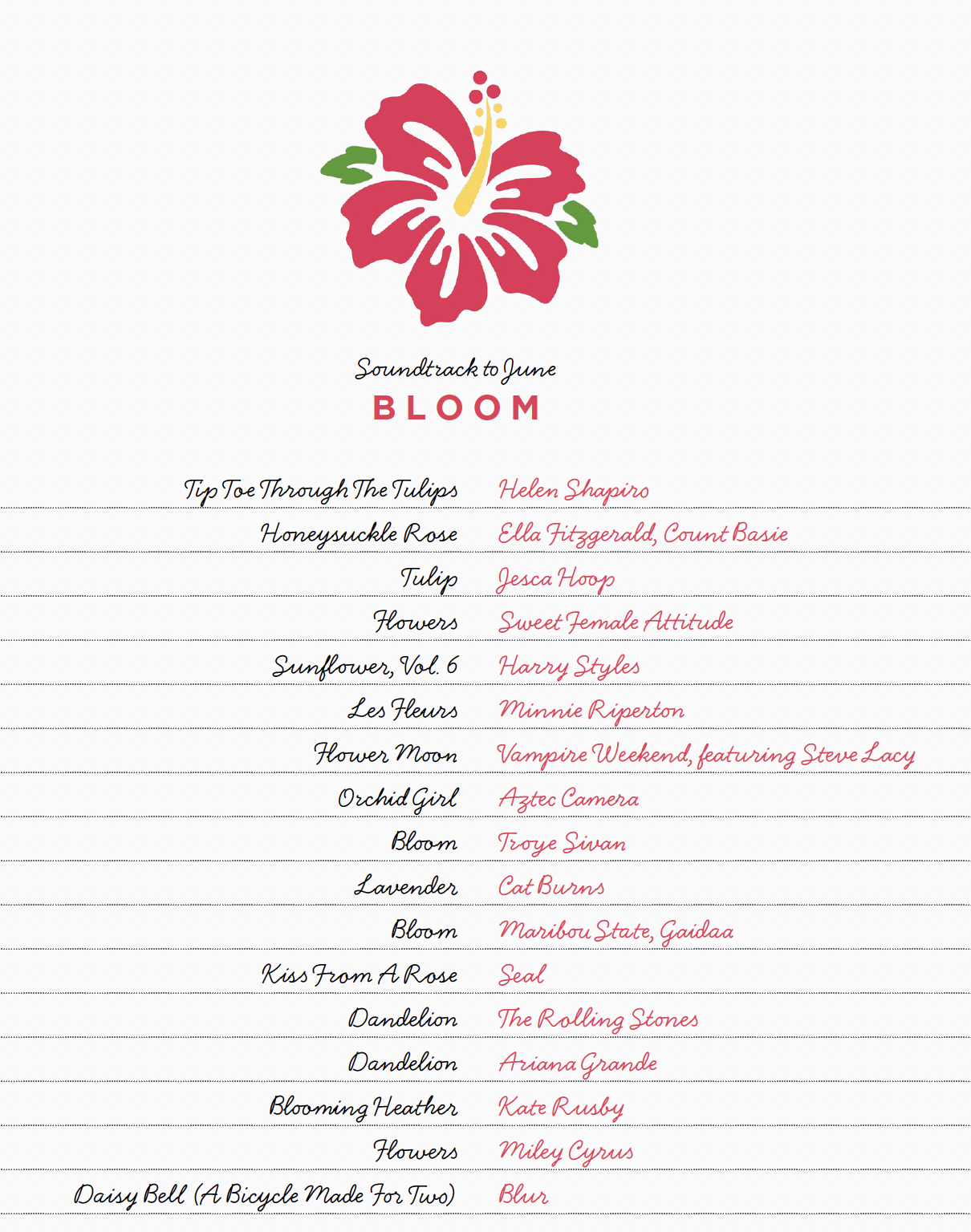
Our latest playlist accompanies our June BLOOM issue – have a listen here.
You can have a browse of all our playlists here.
DJ: Frances Ambler
Image: Adobe Stock

Blog
Taking Time to Live Well
DJ: Frances Ambler
Image: Adobe Stock
Our latest playlist accompanies our June BLOOM issue – have a listen here.
You can have a browse of all our playlists here.

Photography by Alamy
In our March issue, we look at outings where you can see flowers en masse. Here are a few poets who were inspired by the sight of hosts of golden daffodils, bluebells, heather and more.
Wordsworth’s Daffodils
We’ll start with the ‘daddy’ of flower carpets. “Continusous as the stars that shine and twinkle on the Mily Way, They stretch’d in never ending line along the margin of a bay. Ten thousand saw I at a glance, Tossing their heads in sprightly dance.” Wordsworth was wandering (lonely as a cloud) around Glencoyne Bay in Ullswater with his sister Dorothy when he spotted the daffs that were to inspire one of the most famous poems of all time.
Browning’s Snowdrops
Always here early in the year and then gone so fast, Robert Browning’s snowdrops in ‘The Lost Mistress’ are all about the fleeting magic of those carpets of little white bells, using them as a metaphor by which to compare his neverending love: “For each glance of the eye so bright and black, Though I keep with heart’s endeavour, Your voice when you wish the snowdrops back, Though it stay in my heart forever.”
Stevenson’s Heather
Robert Louis Stevenson’s ‘Heather Ale’ is all about the dark magic of an ale brewed from heather and the magical sight of the carpets of blooms that made them. “From the bonny bells of heather They brewed a drink long-syne, Was sweeter far than honey, Was stronger far than wine.” The flowers, the ale and the legend are all intertwined in mystical fashion in this celebration of the wildness of the heather flower.
Anne Bronte’s Bluebells
Bronte views the bluebells not in carpets but each as its own little person: “A fine and subtle spirit dwells In every little flower, Each one its own sweet feeling breathes With more or less of power.” The sight of one amongst a carpet of other flowers brings back to her memories of childhood and deep, and slightly disturbed, feelings.
If you’ve been inspired to wander among the daffodils, too, turn to page 58 to read our feature, ‘Show Time’ by Cinead McTernan, in our March issue.
Buy this month's The Simple Things - buy, download or subscribe
Photography by Ali Allen
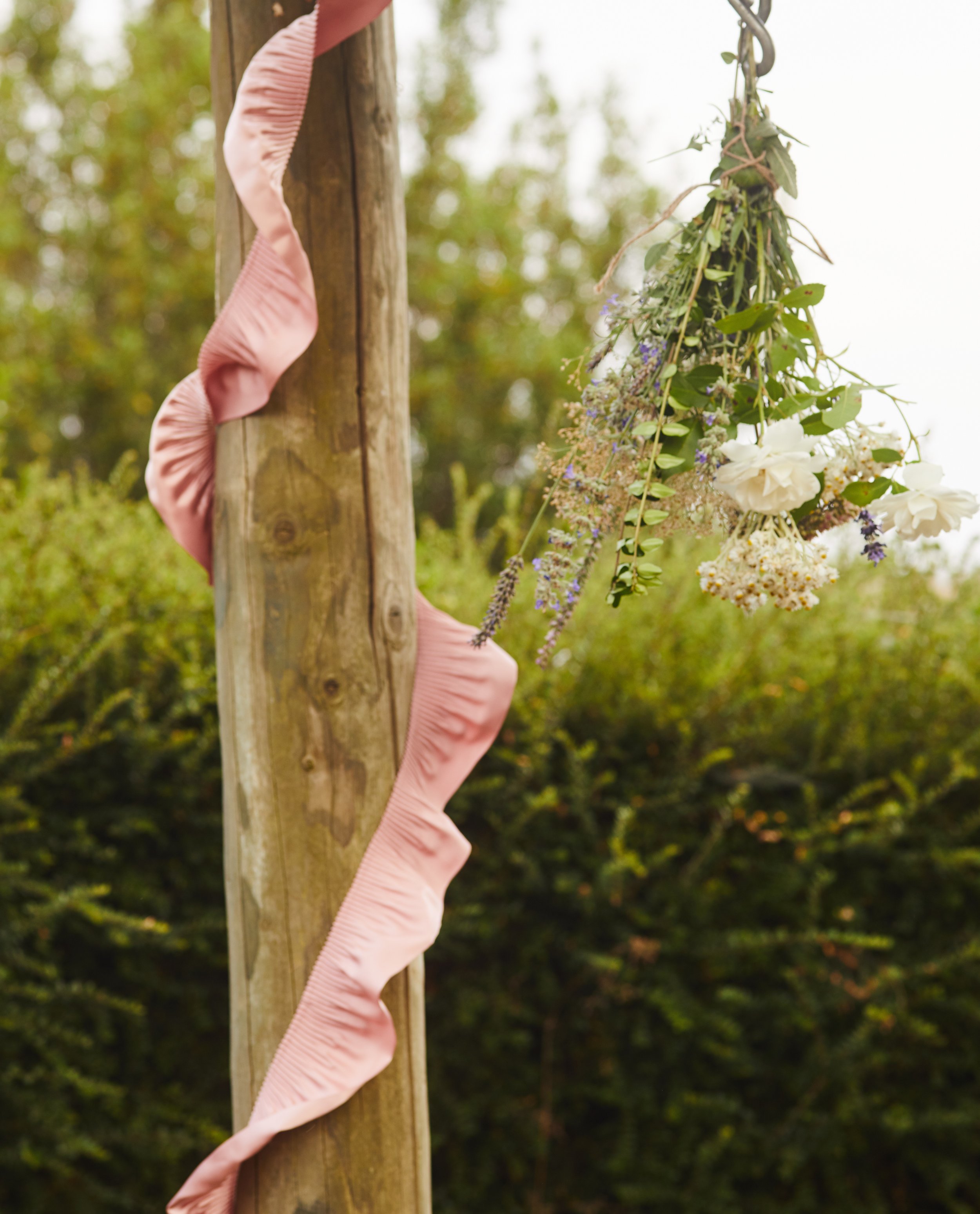
A posy always gives us a little boost, whether we’re giving or receiving. Who doesn’t love a little bunch of blooms, after all?
Next time you tie up a little bunch of garden flowers for a friend, spare a thought for people of Medieval times, who carried ‘nosegays’ (a small posy to make the nose happy) of flowers and herbs, to combat the natural stench of the medieval street. It was also believed that posies might ward off plague and other diseases.
Thankfully, for posies and for humanity, life in general was to become gradually more sweet smelling. By Victorian times, posies were enormously popular, both for covering up bad Victorian odours (it took them a while to get the sewers sorted) and also as a decorative item. They were often known as ‘tussie mussies’, a ‘tussie’ being a nosegay and a ‘mussie’ being the moss packed around the flowers to keep them moist. Posy holders also became popular, allowing the small, fragrant bunches of flowers to be easily portable. They could then be held, modestly, in a young lady’s hand or pinned to a lapel to allow for easy inhalation at infragrant moments.
At the same time, ‘the language of flowers was evolving. What with the Victorians' aversion to wearing their hearts on their sleeves, being able to say it with flowers rather than words, made things a bit easier. They would send particular flowers, or colours of flowers, in posies in order to convey certain messages.
If you’d like to send someone a message in a posy, too, here are a few ideas.
1. Sweet peas - thank you for a lovely time.
2. Daffodil - the sun is always shining when I’m with you.
3. Chrysanthemum - you’re a wonderful friend.
4. Azalea - take care of yourself for me.
5. Daisy - I’ll never tell.
6. Hydrangea - thank you for understanding.
7. Narcissus - stay as sweet as you are.
8. Zinnia - thinking of an absent friend.
9. Violet - let’s take a chance on happiness.
10. Monkshood - beware; a deadly foe is here. (Well, you never know).
If you’re feeling inspired to work with flowers, you might like to create a midsummer floral crown, like the one pictured below. There are instructions for making one on the Gathering feature in our June issue, which is in shops now. The ‘Gathering’, a Swedish-inspired Midsummer Feast by Rachel de Thample, also contains recipes for Cold Cucumber Soup with Summer Flowers, Roast Beetroot Salad with Crispy Capers, Meadowsweet and Strawberry Snaps, Homemade Pickled Herring with Fennel, Pommes Anna with Dill Sour Cream, Rye Knӓckerbröd with Caraway and a Swedish Midsummer Strawberry Cake. If working with flowers truly captures your imagination, you may even want to explore florist jobs, where creativity and nature combine beautifully. Or for more floral fun, turn to our Almanac pages, where we have an idea for making an indoor or outdoor flower wall hanging for a summer supper with friends.
Buy this month's The Simple Things - buy, download or subscribe
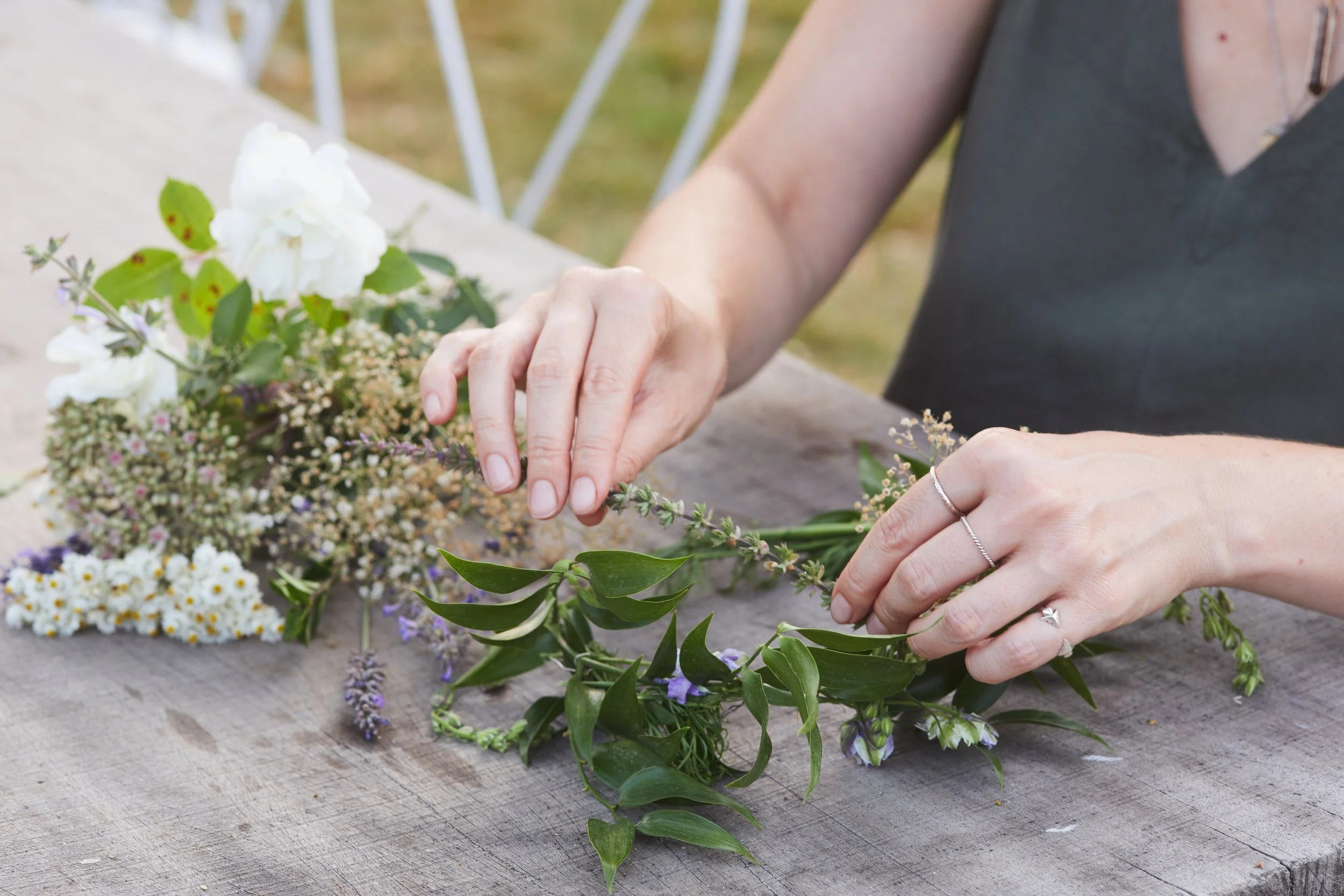
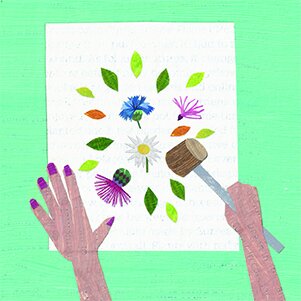
Illustration by Christina Carpenter of Plant Paper Scissors.
An edgy twist on the gentler art of flower pressing, pounded flower art is a chance to create something beautiful while also getting a bit of exercise and working off any latent aggression that you’d not realised you were holding on to.
You’ll need a collection of flowers – the more colourful the better. Flowers from your own garden are lovely, but you can always cheat and buy a bunch that you like. You’ll also need a sheet of watercolour paper, a paper towel and a mallet. If it turns out really well, you might want a picture frame, too.
Pick the flower heads from the stems and lay them face down on the watercolour paper, arranged in an attractive pattern. Place the paper towel on top of them, then take your mallet and pound the petals into the paper, beginning at the outside and working inwards, but avoiding the polleny centres, which don’t look so pretty pounded. The colours and shapes of the petals should ‘take’ onto the watercolour paper beneath, leaving a lovely pattern.
Peel off and discard the paper towel and flowers, then admire (or frame) your handiwork.
This project is from our July Almanac pages, which have lots more seasonal things to note and notice, plan and do each month.
Buy this month's The Simple Things - buy, download or subscribe

Photography: Kirstie Young Styling: Lottie Storey
Whether you’re going to San Francisco or not, now is the time of year to be wearing flowers in your hair for sure.
This easy make is just one of the ideas for things to do with Jasmine from our July Heart, Body and Soul feature. Once you’ve crowned yourself Queen of Summer, you might like to whip up the jasmine body butter and even use the flowers in some cookery to make jasmine tea and honey chicken or tofu skewers, or the dark chocolate and orange tart with jasmine cream.
But first things first; let’s get that garland made.
Tendrils of jasmine, with their star shaped flowers, lend themselves for use in a garland that you can wear in your hair or hang on your wall.
You will need:
Several strands of flowering jasmine
Scissors or secateurs
Floral wire
1 Snip off any broken leaves or petals from your jasmine strands.
2 Find your most robust strand and wrap it around the crown of your head to get a rough size for your garland. Take it off your head and wrap some wire around the ends
to secure.
3 With the remaining strands, continue to wrap the garland in both directions covering up or tucking in the ends of the strands where you can, using a small twist of wire to fasten. Keep going until you have a garland that pleases you!
Maker’s note: The circle can be whatever size you like, but for a garland to wear it will need to be around 25cm diameter or go large for a jasmine wreath to hang on the wall.
Buy this month's The Simple Things - buy, download or subscribe

Photograph: Narrative
Lift up your chins and we’ll tell you how it’s done
Remember holding a buttercup under your friends’ chins to see if they liked butter? We can’t help thinking that a more accurate way to ascertain this may simply be to offer them a slice of bread and ask if they want it buttered or not, but that would be less fun, if more scientific.
There is some science at play here though. If you want to know why buttercups really shine a yellow light on your neck, here it is:
It’s all about attracting pollinators. The vibrant yellow shade of the buttercup comes from pigments in the surface layer of the petals. If you look closely you’ll see that they also seem to be heavily glossed, an effect created by layers of air just below the surface of the petals, which reflects the light back. So when you hold one under your chin, it will shine a little yellow light onto your skin. The brighter and glossier the buttercup and the sunnier the day, the more likely you are to ‘like butter’.. The way buttercups seem to glow and light up the lawn is actually unique in the plant world. No other plant reflects colour and light in quite the same way.
Now we’ve ruined that bit of summer-flower-related magic for you, we feel we ought to make amends. Here’s a little blog we published a while ago about the story behind playing ‘he loves me, he loves me not’ with daisies. Daisy, daisy, give me your answer do, indeed.
From the blousy paper daisies on the front cover to our buttercups in the house, pictured above, the new June issue is chock full of floral fun. We hope it brings a little cheer to you, too.
Buy this month's The Simple Things - buy, download or subscribe

Photography: Emma Harris
Ever said, ‘Hello, Petal’ to a bunch of dahlias? You’d have been incorrect!
We featured this fabulously blousy bunch of dahlias in our September issue and were inspired to find out a bit more about dahlias. As well as learning that the Aztecs grew dahlia tubers as a food crop, we were most fascinated to learn that each ‘petal’ is actually called a ‘floret’ (yes, like broccoli) and is a flower in its own right.
So all those colourful petals are not petals at all but individual flowers. Suddenly that bunch of dahlias seems even more like excellent value for money!
Read more about Dahlias in our September issue, on sale now.
Buy this month's The Simple Things - buy, download or subscribe

Kangaroo paw, also known as Anigozanthos, is native to Australia and has a paw-like structure, hence the name. It’s now available in shades of silver and pale pink though it’s best known in its fiery colours of ochre, amber, red and rust.
The flowers work well in a mixed arrangement due to their stiff structure. Kangaroo paw is also good in mini bouquet-style buttonholes as its native climate means it can last all day without water.
Photography and flowers: Ellie Marlow, Catkin & Pussywillow, Winchester railway station (catkinandpussywillow.com)

Don’t be afraid of the dark: adding a touch of gothic horror to your garden can be smart, dramatic and not at all spooky
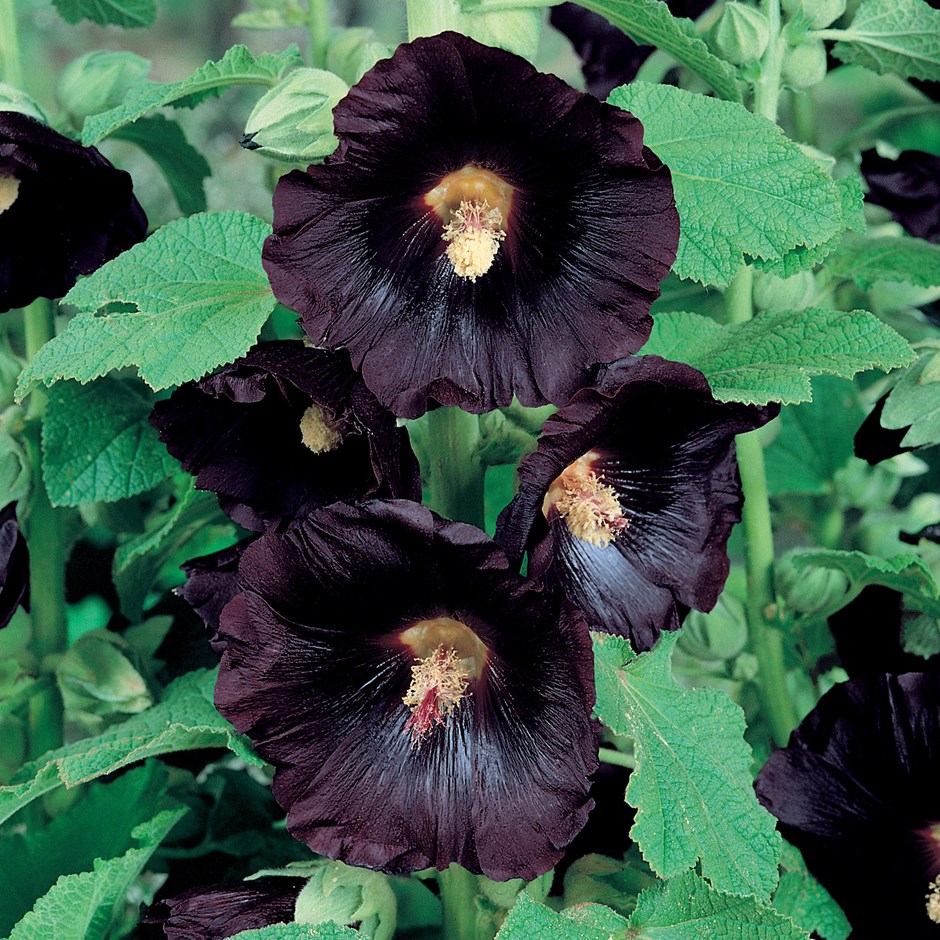
Tall, stately hollyhocks are a staple of the traditional English cottage garden. Subvert their easy charm by choosing the mysteriously dark variety, ‘Nigra’, with its glossy velvety petals. Available from crocus.co.uk.
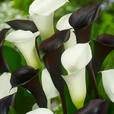
Sending their silky maroon spathes out from speckled green leaves, these arum lilies add an exotic flavour to patio containers. They also make elegant and long-lasting cut flowers.
From jparkers.co.uk
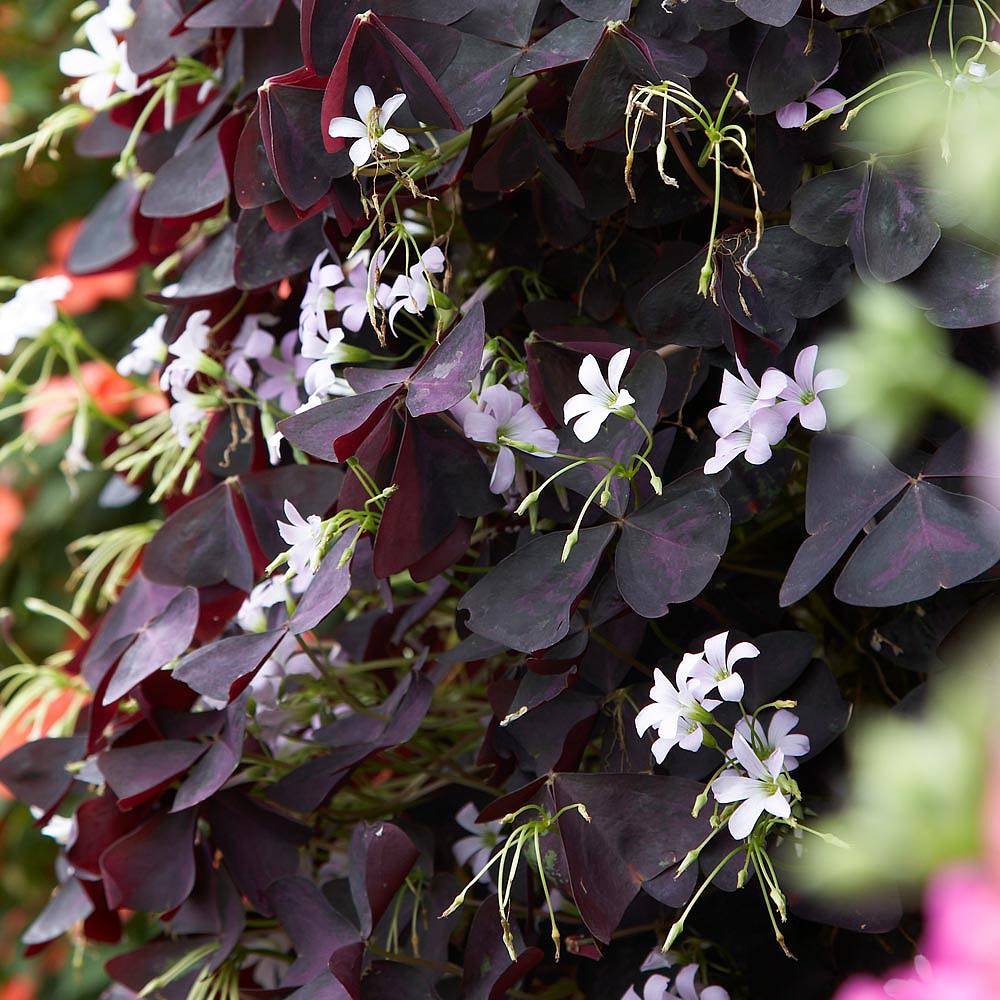
The purple-leaf false shamrock is ideal in a conservatory or on a sunny windowsill. It’s lovely to look at, its deep-plum leaves folding themselves up at night.
From thompson-morgan.com.
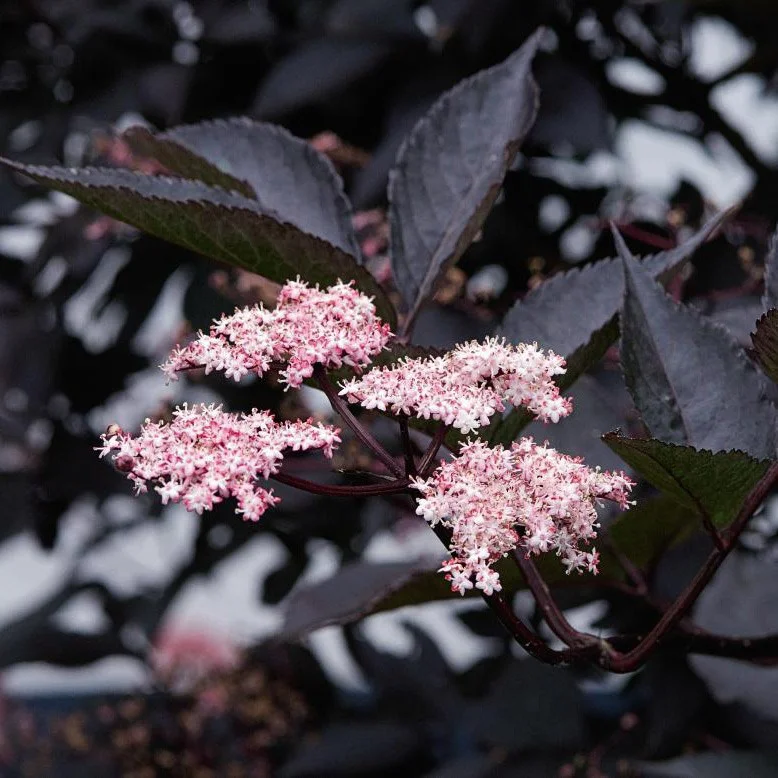
A stunning variety of our native elder. Umbels of pale-pink flowers stand out against its dark lace leaves in summer, and you’ll be rewarded with deep, glossy berries come autumn.
Available from crocus.co.uk.
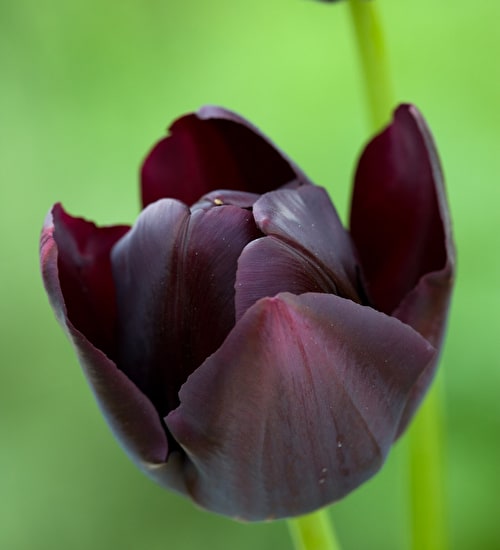
These graceful tulips make a bold statement in the garden, in pots or borders. Plant the bulbs over the coming weeks to enjoy their deep velvet blooms in spring. They also make excellent cut flowers.
Available from sarahraven.com.
Turn to page 113 of October’s The Simple Things for more black gardens.
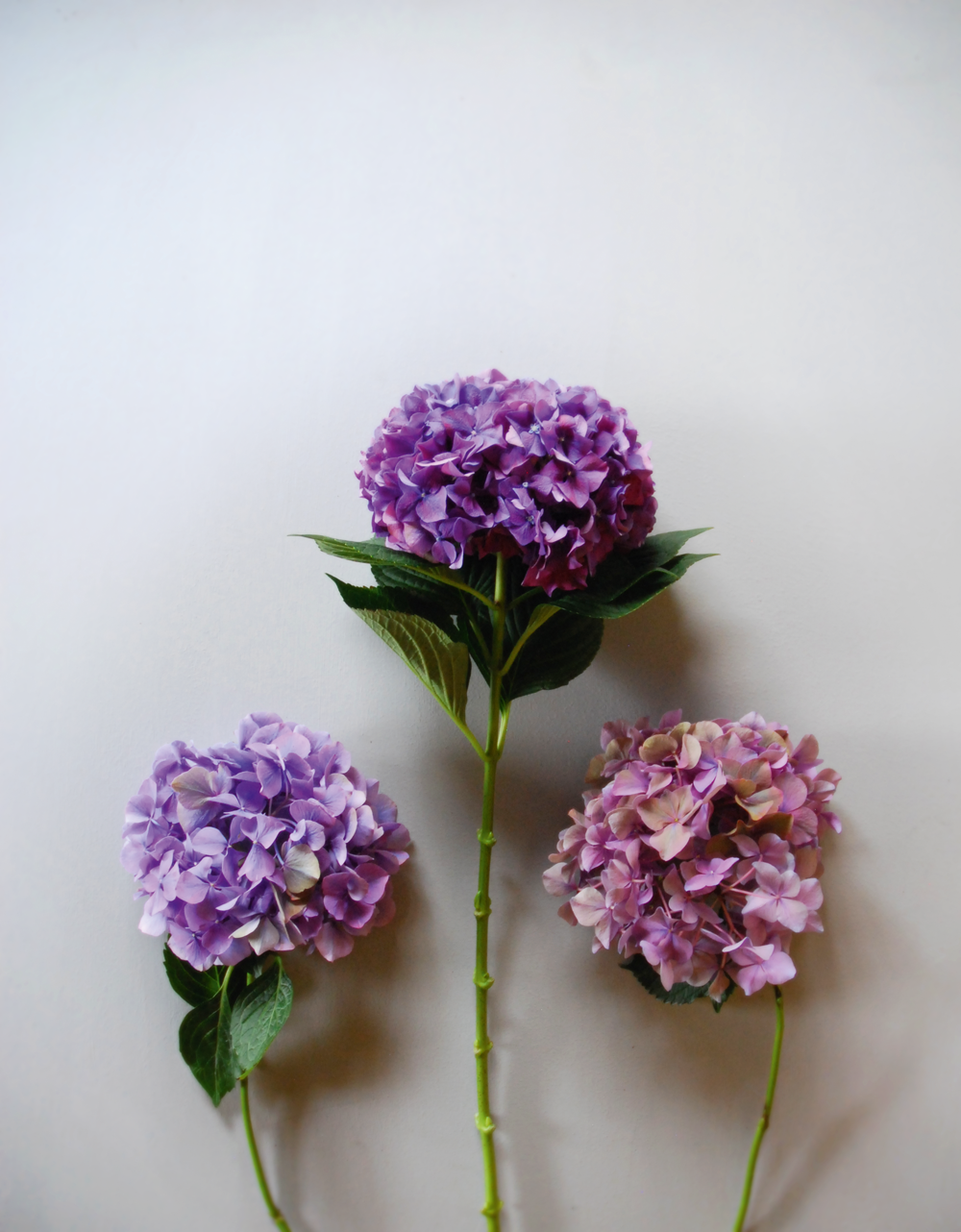
The mophead blooms of the hydrangea look as good in a vase as in the border.
“They may not be the cheapest cut flowers,” says Ellie Marlow, florist at Catkin & Pussywillow, “but they work well either as statement arrangements or single stems in bud vases. As their name suggests, they are thirsty blooms and like a lot of hydration. Should they droop, dip the stem into boiling water for a minute. That will revive them.”
Photography and flowers: Ellie Marlow, Catkin & Pussywillow, Winchester railway station (catkinandpussywillow.com)

A day spent learning a new skill is mindful and mind full (in a good way) living. This month, Rebecca Frank learns flower arranging.
As somebody who loves flowers but knows little about picking or assembling them, I signed up for a summer vase workshop to learn more about the types of flowers and gain confidence in my artistic ability. India, the young, passionate founder of Vervain Flowers, is based on the farm and nursery in Worcestershire, where she grew up and now grows the majority of flowers for her wedding business and workshops.
We start with a garden tour while India explains her informal and intuitive style of floristry, love of garden roses and irises (“I know they only flower for a few days, but when they do, it gives me the best feeling so I grow them anyway!”). Our classroom is a large barn filled with buckets of the prettiest summer blooms in unusual varieties and shades, from deep purples to apricot, all freshly cut and ready for us to play with. After India has demonstrated, we set to work – a ceramic bowl from a local potter has been provided in which to create our own display.
I fiddle around for ages creating a shape with my foliage before moving on to the fun and slightly nerve-wracking bit of choosing and adding my flowers. The beauty of the plants and the focus required soon distract me from what everybody else is doing and I become completely absorbed. After a Mediterranean-style lunch in the garden, we head back to tweak and photograph our displays and to admire each other’s work.
I come away keen to grow more of the flowers that I love, both for my house and garden, and with the liberating attitude that – whether I really know what I’m doing or not – I can always just give it a go.
Seasonal vase classes cost £185 and are suitable for any level of experience. One-to-one classes are also available; vervainflowers.co.uk.
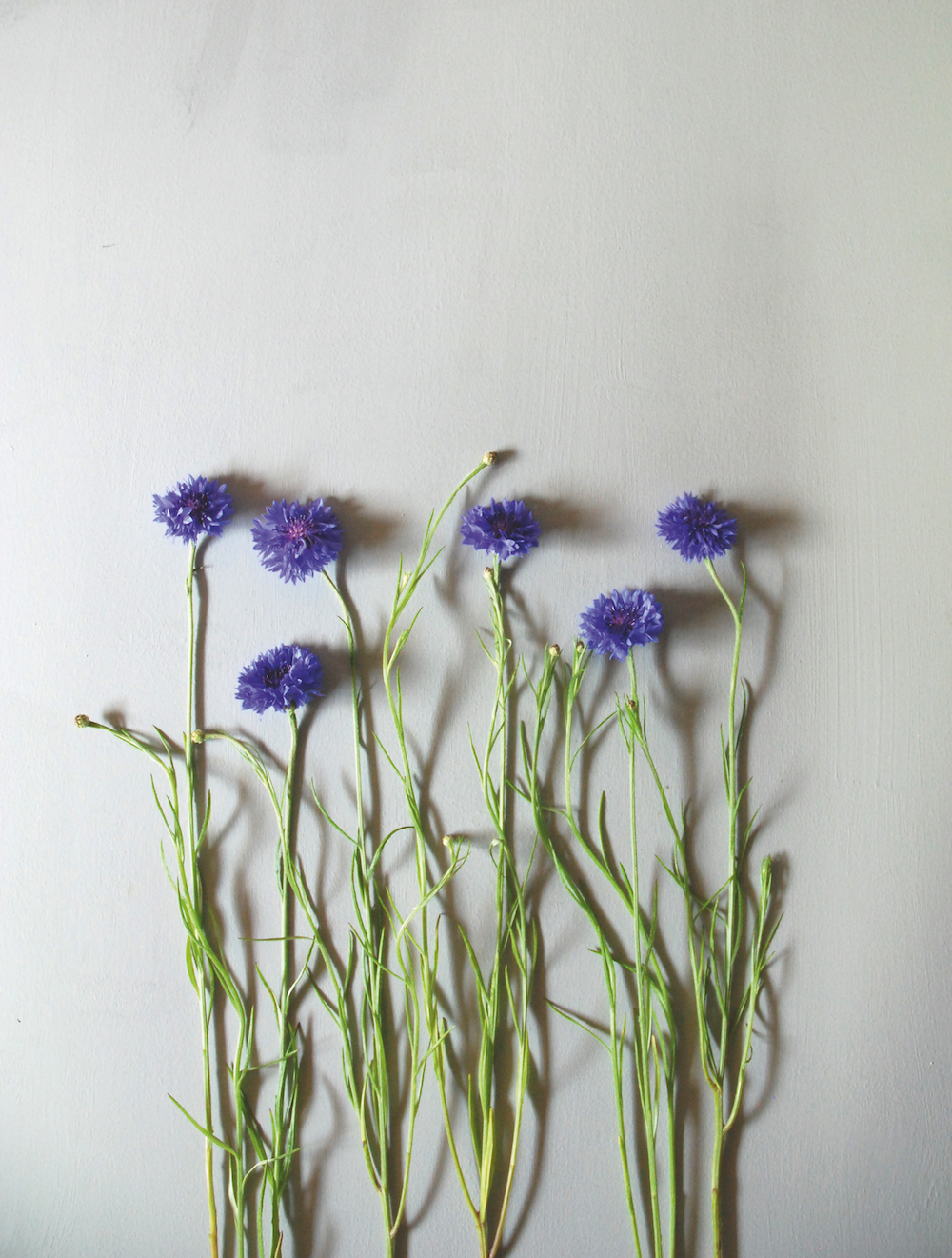
With pretty ruffs of cobalt blue* petals, cornflowers bring a little wildflower- meadow magic into the home.
“They work brilliantly as a cut flower, either alone or mixed with other British garden flowers like dahlias,” says Ellie Marlow, florist at Catkin and Pussywillow. “For anyone planning a late summer wedding, they also make beautiful buttonholes and flower crowns.”
*Although don’t be limited to just blue: there are also white, pink, red and purple varieties.
Photography and flowers: Ellie Marlow, Catkin & Pussywillow, Winchester railway station (catkinandpussywillow.com)

With its tangle of spiky foliage, Nigella (Love-in-a-Mist) is the quintessential cottage garden plant. “Nigella lends itself well to meadow- style jar arrangements, small posies and wedding bouquets,” says Ellie Marlow, florist at Catkin & Pussywillow. “The dried seed pod is beautiful, too, and looks great matched with autumn colours when summer has passed.”

The towering spikes of delphiniums (aka larkspur), at their best in June, make ideal cut flowers. Easy to look after, they will last for up to seven days in a vase.
“They are best displayed en masse in a tall vase,” says Ellie Marlow, florist at Catkin & Pussywillow. “Or with other strong blooms like hydrangea or peonies for a gorgeous summery bunch.”

Small and dumpy and suitable for small posies of delicate flowers: lily of the valley or forget-me-nots, say. A pretty addition to a bedside table, especially when making guests welcome in the spare room.
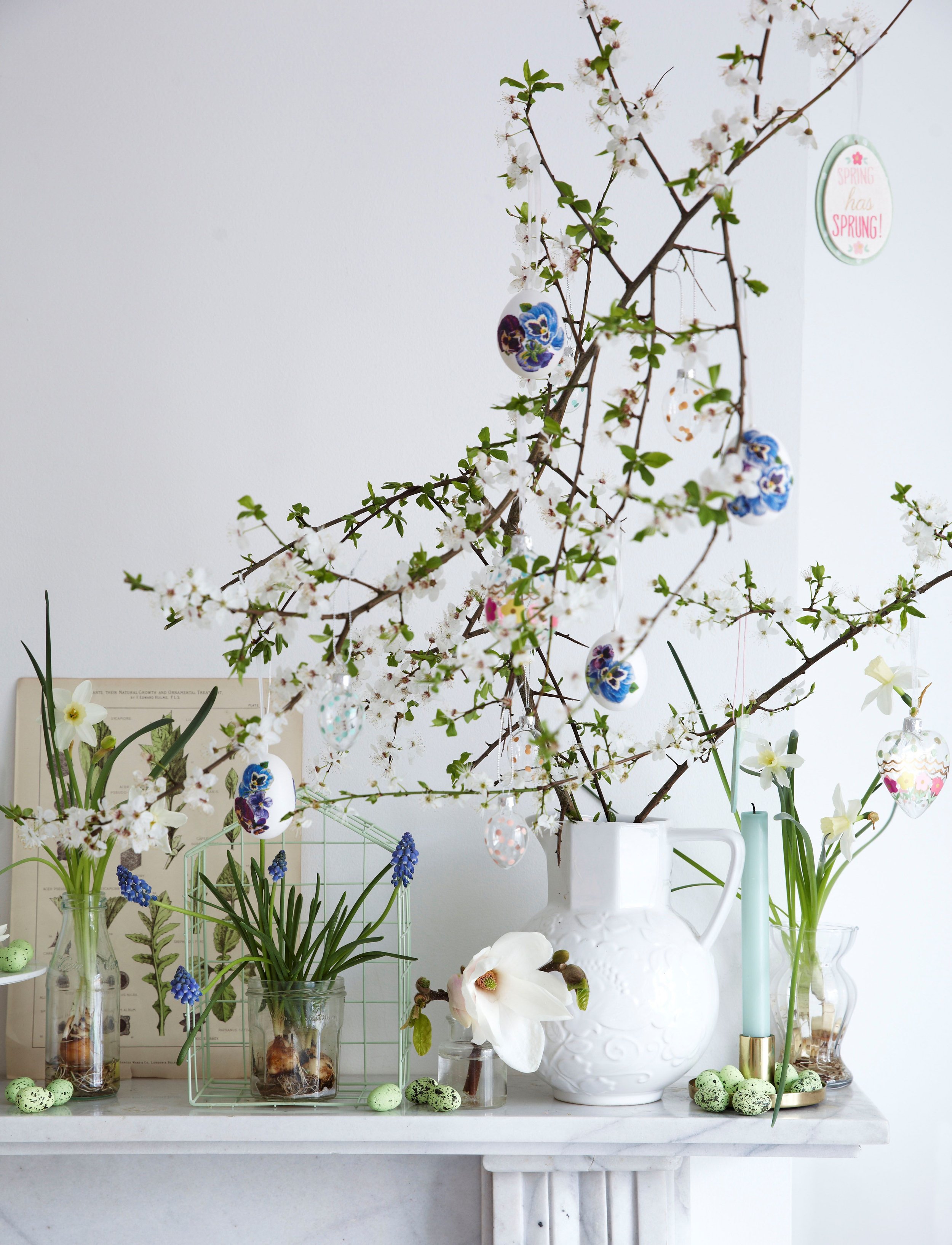
A large jug with a wide opening – either vintage or new (John Lewis’s Croft collection has a plain white Luna jug, £25) – is lovely filled with branches of blossom or twigs festooned with catkins. The country cottage/ farmhouse table vibe, right there.
These come in a variety of widths but are always tall – 28–40cm usually – and elegant. Suits long-stemmed blooms with height like dahlias or gladioli. Flowerheads just about popping over the rim look foolish.
Use to show off an attractive specimen: a peony head perhaps, or a chrysanthemum mop. A single tulip looks equally good, though, especially as it twists and lengthens.
Just the thing for handfuls of wildflowers – buttercups, daisies, grasses – arranged casually for maximum naturalness. A twist of raffia or string at the rim adds to the effect

It's not difficult to fill your house with something flowery all year long. It just takes a little planning and imagination.
On page 106 of May's The Simple Things, Francine Raymond shares her productive small garden in Kent, including this guide to a year-round cut flower guide.
January
Indoor bulbs planted in October come into their own. This is the time to enjoy narcissi, hyacinths, cymbidium orchids and amaryllis.
February
Flowering cherries, sweet box, daphne, helebores and mahonia are fragrant additions to the home. Pussy willow, hazel and birch twigs add interesting structure to any vase.
March
I snip branches of pear before the buds burst: the warmth of the house brings them into leaf and bud.
April
Time for tulips. I like to display them in a row of little glass bottles or bunched together in a crate.
May
One of my favourite plants, auriculas, flower now. They can be brought indoors and displayed on a windowsill out of direct sunlight.
June
Sweetpeas flower in abundance this month. I keep picking to ensure there are plenty of blooms.
July
Lavender is at its headiest now. Once bees have finished with the flowers, I clip off the stems and put them in a big basket.
August
Succulents are at their best in August. I put pots of sempervivums and sedums on the kitchen table.
September
Now is the time to forage hedgerows for berries to display. A few sloe branches and some rosehips add extra colour.
October
I grow pumpkins for decoration, then pile them high in the porch and festoon them with Virginia creeper.
November
I press the heart-shaped leaves of cercis between sheets of paper; and dry seedheads and flowers for festive decorations.
December
I take cardoon heads and little pumpkins and turn them into nightlight holders.
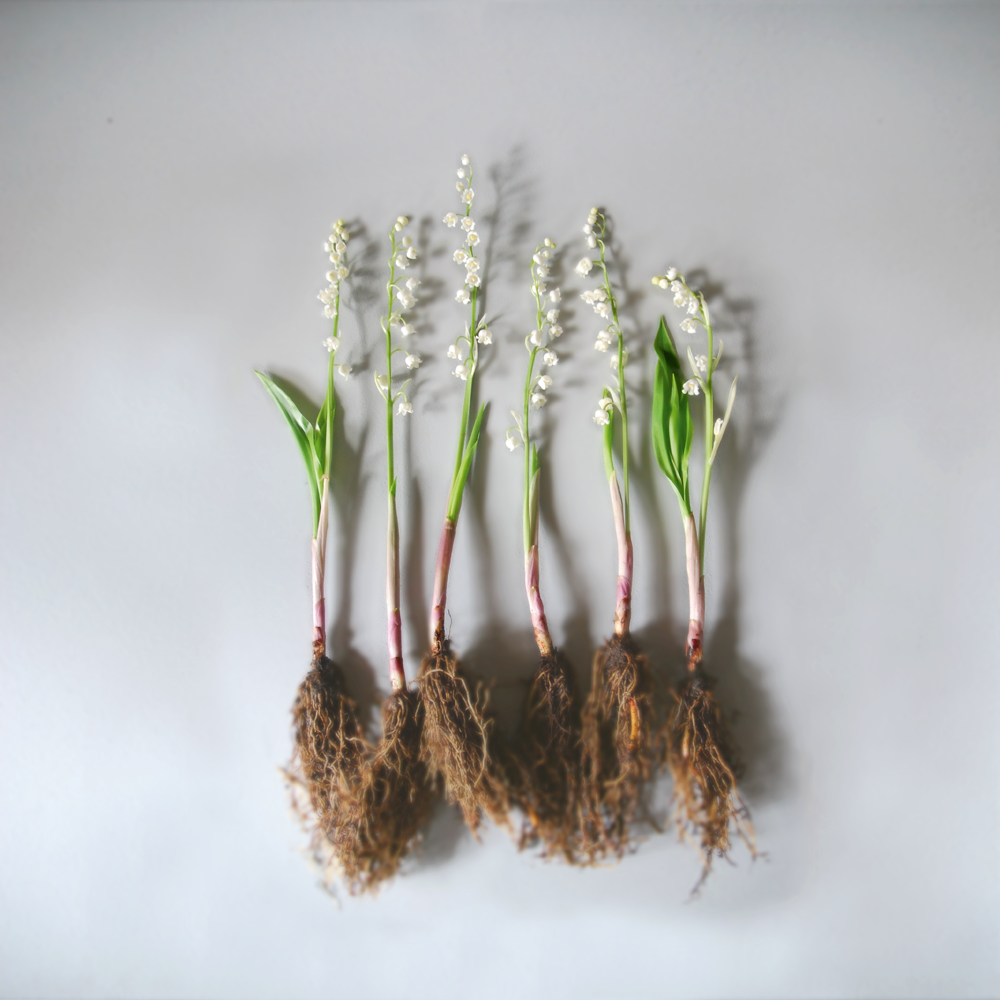
With delicate, nodding blooms, lily of the valley is a popular choice for brides. Which doesn’t mean the rest of us shouldn’t enjoy them in the house. Their ephemeral nature means they won’t last long as cut flowers, however.
“Keep them out of sunlight in a miniature mixed posy or as a single bloom in a votive holder,” says Ellie Marlow, florist at Catkin & Pussywillow. “Or dig up and display with roots intact in a slim, glass, bud vase.”

Here's an idea: turn a tired area of your garden into a cutting-flower patch and you'll be picking blooms all summer
If you don’t have green fingers, start with long-lasting perennials and shrubs from your local nursery or garden centre. A trio of scented ‘Gertrude Jekyll’ roses underplanted with pincushions of astrantia, daisy-like echinacea, and the foliage of bronze fennel all make good picking and will supply dozens of fragrant bunches. While autumn is the time for planting daffs and tulips, spring is good for getting gladioli and allium bulbs in the ground, as well as dahlias, with their stunning cactus and anemone shapes.
For everyday bunches of loveliness, sow sweet peas. They’re easy to grow, and so benevolent with their blooms, you can pick every day of summer. There’s a wide range of colour, too. Build a hazel or bamboo wigwam for them to twine around and plant at the base of each strut. As seedlings appear, encourage them to clamber onto the frame with twine. Tender seedlings are a gift to molluscs, so sprinkle some wildlife-friendly slug pellets, too.
Turn to page 118 for more cutting patch advice, including how to do the groundwork, growing from seed and how to arrange your blooms.
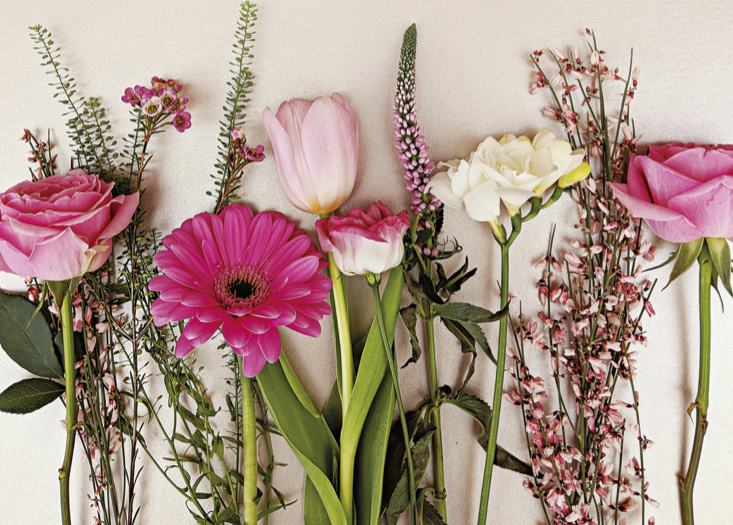
Every day, all over the UK, Bunches prompts moments of happiness with its hand-tied bouquets and gifts.
What started as a stall in a shopping centre has turned into an online business, still family-owned, delivering long-lasting fresh flowers with as much care for customers as the company has for its blooms.
Care is at the heart of Bunches’ business model, too. Each year, 10% of its profits go to charitable projects. Flowers are chosen to minimise environmental and ethical toll, sourcing blooms from suppliers who support the Fair Flowers, Fair Plants initiative, and using wholly recyclable packaging. Bunches doesn’t believe in hidden costs either – all bouquets include free delivery.
For a chance to win a beautiful, hand-tied bouquet every month for a year, worth £400, enter below before the closing date of 9 May 2018.
Reader offer: Bunches is also offering readers 20% off all orders until 30 April, using offer code SIMPLE20 - visit bunches.co.uk. The only things you can’t use it with are monthly flower gifts and Flowers for a Year.
Terms & conditions: You can redeem our reader discount at Bunches until 30 April 2018. The offer excludes monthly flower gifts and Flowers for a Year. Our competition prize is a hand-tied bouquet of Bunches’ choosing, delivered to you each month for a year. You can’t transfer the prize or swap it for cash. The winner will be selected at random from all correct received entries after the closing date of 11.59pm on 9 May 2018. Full competition terms and conditions are on page 129 and at icebergpress.co.uk/comprules.

Image: Unsplash
For an uplifting dose of warmth and colour head to Kew Gardens’ Thai-inspired orchid festival inside the Princess of Wales Conservatory. A magnificent display of orchids among the sights and sounds of Thailand provides a welcome reprieve from the British winter.
10 February–11 March.
kew.org
Marvel at the first signs of spring during a snowdrop walk at Rode Hall, Cheshire. With around 70 varieties of this much-loved flower, it can’t fail to make you feel optimistic.
rodehall.co.uk
If you want a glimpse of spring, look out for
the National Trust Valentine’s Day Flower Count. Last year, Saltram in Devon had the highest number of flowers on 14 February (176 blooms) for the second year running. Gardens in the South West are usually the furthest ahead in the UK.
nationaltrust.org.uk
We celebrate slowing down, enjoying what you have, making the most of where you live, enjoying the company of of friends and family, and feeding them well. We like to grow some of our own vegetables, visit local markets, rummage for vintage finds, and decorate our home with the plunder. We love being outdoors and enjoy the satisfaction that comes with a job well done.