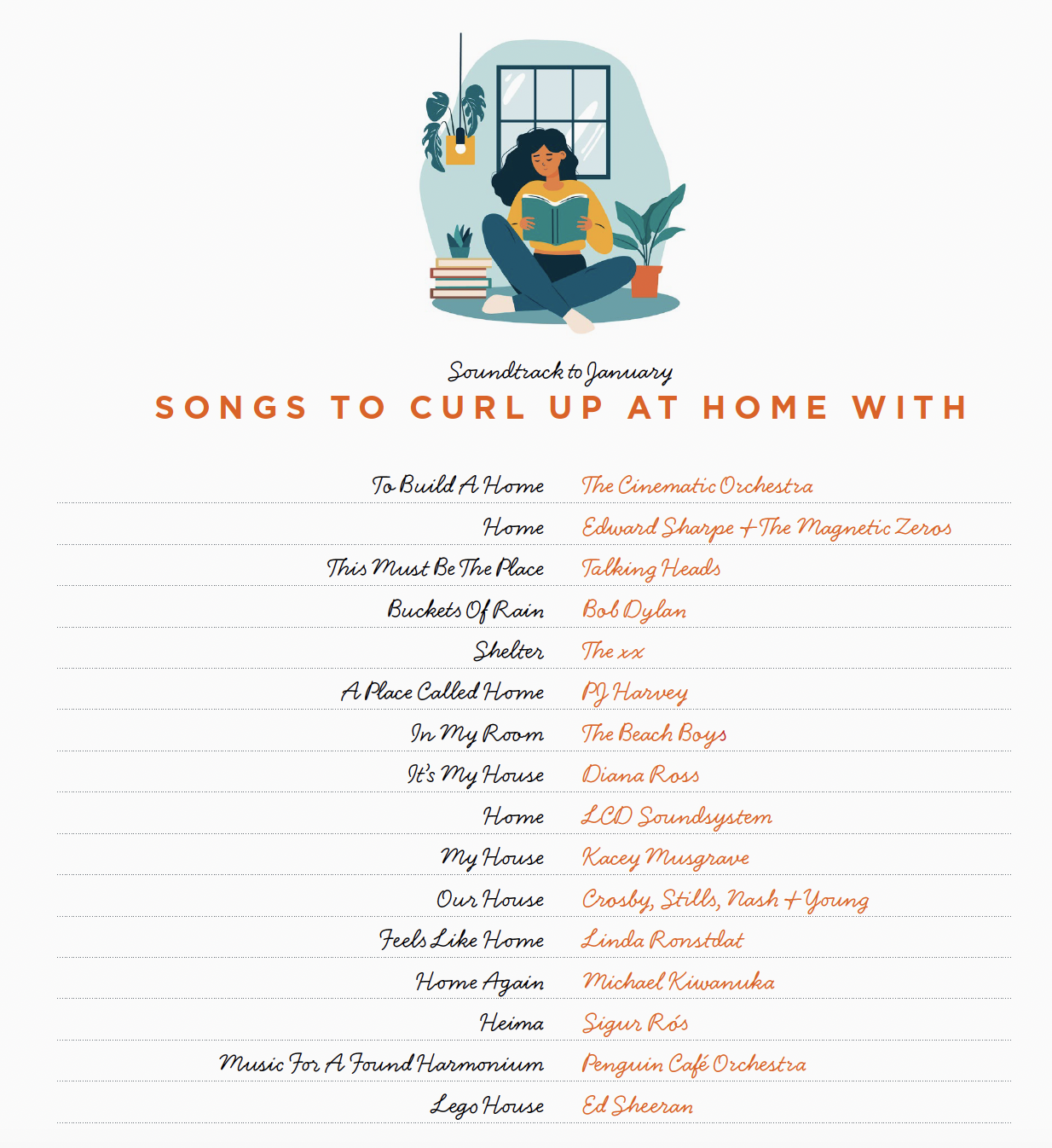
DJ: Clare Gogerty Illustration: Anneliese Klos
Listen at thesimplethings.com/blog/makemesmileplaylist
More from our Playlists DJ…
Featured

Blog
Taking Time to Live Well

DJ: Clare Gogerty Illustration: Anneliese Klos
Listen at thesimplethings.com/blog/makemesmileplaylist

Illustration: Zuza Misko
We take a look at some famous amphibious creatures
1. Jeremy Fisher
The daddy of fictional frogs - Beatrix Potter’s dear little amphibian who wore a read coat (a frog coat presumably) and had a near miss with a trout while catching minnows for a dinner party to which he’d invited his good chums Isaac Newton (a newt) and Mr Alderman Ptolemy Tortoise.
2. Kermit the frog
This muppet must be the most famous of all frogs worldwide. With his endearingly skinny legs and rubbery mouth, he lives a much more ‘Hollywood’ life than most of his fellow fictional frogs. But as he’s often said, it’s not easy being green. He uses his fame to good ends though. Here he is taking the ice bucket challenge [https://www.youtube.com/watch?v=Mmax3yEZX58] in 2014.
3. Frog from ‘Frog and Toad’
Arnold Lobel’s fictional friends, Frog and Toad, enjoy simple adventures together such as flying kites, cleaning their homes and providing short stories for early readers. Lobel’s daughter Adrianne has suggested that Frog and Toad were a little more than friends (now we’re wondering about Jeremy Fisher’s chums, too…) and were in fact the beginning of her father coming out. Lobel himself said they represented different parts of himself (the squatter brown part and the leaner green part, perhaps?)
4. The Frog Prince
The tale dates back to Roman times but the best known version is by The Brothers Grimm and tells the story of a princess whose ball is rescued from a well by a frog on the promise that he can be her constant companion. Against her better judgement she is forced by her father to hold good on her promise, but loses her temper with the frog and hurls him against a wall. Whereupon he turns into a prince and they live happily ever after. Note the lack of a kiss in this story; all that schmaltzy nonsense was added much later.
5. Oi Frog!
A recent entry but this is one frog sure to become a classic. The first in a series of rhyming books by Kes Grey and Jim Field features a bossy cat who tells Frog he must sit on a log because frogs sit on logs. He can’t sit on a stool (mules sit on stools), he can’t sit on a sofa (gophers sit on sofas) and so on. Frog objects to sitting on a log (“They’re all knobbly and give you splinters in your bottom”) but Frog’s day gets worse when he asks what dogs sit on… (no spoilers here but it’s a heck of an ending).
Get hold of your copy of this month's The Simple Things - buy, download or subscribe

Photography: Nina Olsson
Cakeformation you need to know
Carrot cake - that unlikely yet winning combination of cake and vegetable. With its natural sugars and ability to bring delicious moistness to any dry ingredients, it’s perhaps not such an unlikely idea at all, but we salute the person who first dug up a carrot and then went renegade with the flour, eggs and sugar.
No one is entirely sure when carrot cake was first invented but food historians think it is likely to be a descendant of carrot puddings, which were eaten in Medieval Europe. By the 16th and 17th centuries, carrot pudding was being served either a savoury side dish or a sweet pudding with an egg custard. This would have been baked inside a pastry tart, like a pumpkin pie, and served with a sauce. Other versions may have been steamed, more like a plum pudding, and served with icing, so you can see how the carrot pudding edged slowly but surely towards cake.
The exact point at which pudding morphed into cake no one is sure but it was certainly during World War Two that carrot cake as we know it today became popular. As Britain was urged to ‘dig for victory’ carrots were in much more plentiful supply than sugar, which was rationed, and they had the double benefit of being both a sweetener and a bulking agent in a cake. We imagine a slice went down very nicely with a strong cup of tea during a tedious afternoon in an air-raid shelter, too.
In our March issue, we have a recipe for the Chai Carrot Cake with rose and lime icing pictured above from Feasts of Veg (Kyle Books). Recipes & photography by Nina Olsson.
Get hold of your copy of this month's The Simple Things - buy, download or subscribe

Illustration from Little People, Big Dreams: Ada Lovelace by Isabel Sanchez Vegara. Illustrations by Zafouko Yamamoto.(Quarto)
Answer: because of their mothers
If you thought you were rubbish at maths at school then (a) You weren’t - maths, as the subject of our March issue’s ‘wisdom’ feature, Hannah Fry, says is hard for everyone. Mathematicians just stick with it because they know it’s worth it. And (b) If you still think you were rubbish at maths, for goodness’ sake don’t tell any of the young women in your acquaintance.
Educators have long held that telling children that their elders and betters were bad at maths is bad for their mathematical confidence, but it’s now becoming increasingly clear that girls feel they are somehow ‘not the best’ at maths.
So to put us all right. enter, stage right, Ada Lovelace, mathematician extraordinaire, And what, you may well ask, led to this very clever young lady’s amazing work in the fields of science and maths. Why, it was clearly her dear old mum.
Ada was the daughter of Lord Byron and Anabella Milbanke. You might think any wife of Lord Byron’s would be a poetic, flimsy, fainting sort of lady. You would be wrong. Milbanke’s great love was mathematics. And she was darned if her husband’s mimsy ways with poesie were going to bend her daughter’s mind.
From the age of four, the young Ada was tutored in maths and science, which would have been highly unusual for a girl at the time. Ada designed wonderful boats and flight machines, studied the anatomy of birds and the science of materials and later moved on to consider the possibility of powered flight. “I have got a scheme” she wrote to her mother, “to make a thing in the form of a horse with a steam engine in the inside so contrived as to move an immense pair of wings.”
She was married, at 19, to the aristocrat William King, and bore three children. But that was no reason for Ada to hang up her academic ephemera.
Her mentor, Mary Somerville, introduced her to one Charles Babbage, who became a lifelong friend and referred to Ada as ‘the enchantress of numbers’. She, in turn, was enchanted by Babbage’s ‘analytical engine’, the first computer. Babbage asked her to work more with the “machine she understood so well” and she went on to create what we now know to be the first computer programmes.
Thank heavens her mother never told her she was rubbish at maths!

Would you like to learn more?
You can read the full interview with mathematician Hannah Fry in our March issue. And if you’d like to read more about Ada Lovelace herself, you might like Little People, Big Dreams: Ada Lovelace by Isabel Sanchez Vegara. Illustrations by Zafouko Yamamoto (Quarto).

SPONSORED POST
Unlock your creativity by designing an ‘Outside the Box’ Bloom & Wild letterbox this March
Bloom & Wild are calling all creatives who want to join their high-profile packaging portfolio to submit their designs for the brand’s well-loved letterbox (see images). The chosen winner will receive a commission of £2,500 and have their box seen by thousands of Bloom & Wild’s customers.
Over the years, Bloom & Wild have collaborated with brands and designers to create beautiful boxes for their bestselling letterbox flowers. Some of the big brands they have worked with include Liberty London, Boden, Mother of Pearl and Peggy & Kate.

Creativity is at the heart of the brand and they’re excited to begin the search for a new, up-and-coming designer to create the next pattern for the letterbox.
This Summer Bloom & Wild is opening the brief to UK designers from any background, at any stage in their life, who want a chance to design our next letterbox. The theme for our range is ‘Summer Brights’. Featuring vibrant cerise and coral tones, the flowers across this range are joyful, energetic and bold.

Send a mood board via Bloom & Wild’s competition page that demonstrates your box-design concept. You can include a rationale to understand where your ‘Summer Brights’ idea came from plus examples of previous work you have done to demonstrate your style.
We’ll ask the winning designer to roll their idea out across the outside and inside of the box, plus the finer details. For example, the sticker and ribbon around the flowers’ cellophane and a matching gift card for customers to add at checkout.
To submit your work head to www.bloomandwild.com/outside-the-box where you can upload a digital mood board, a scan of your sketchbook or whatever works for you.
We’ll announce the judges’ favourite entries on Monday 8th April 2019. The winner of this competition will be commissioned to the value of £2,500 by Bloom & Wild to turn their idea into a box pattern for the July/August ‘Summer Brights’ collection. This also includes an original piece of design for the box outer and inner, plus suggestions for a sticker design and ribbon pattern/colour and a gift card cover design or designs (at A6 spec) that ties into your theme and can be selected by our customers at checkout so the packaging sits as a set.
The deadline is midnight on Sunday 31st March 2019 to submit your entry. Terms and conditions can be found on Bloom & Wild’s competition page.


Photography: Alamy
Simple and such fun: here’s how to play properly
Pooh Sticks, the game that’s made for anyone who just can’t help but pick up sticks in the forest, and is best played with a big crowd of friends, was originally invented (by Pooh himself, obviously) all alone and using pine cones. But Pooh had such larks dropping pine cones of the bridge in the Hundred Acre Wood and rushing to the other side to watch them come through, he shared it with all his friends.
If you wish to play on the actual bridge Pooh and friends used, you’ll need to head to Ashdown Forest in East Sussex, on which A.A. Milne based the books. The bridge itself is a footbridge which crosses a tributary of the Medway in Posingford Wood. It’s a lovely day out and - pro tip - if you fancy a Little Smackerel Of Something, the nearby village of Hartfield has a cafe named Pooh Corner with cakes a plenty and plenty of Milne memorabilia, too.
Pooh Corner’s owner Mike Ridley wrote a little booklet with the rules of Pooh Sticks in back in 1996 to mark the 70th anniversary of Winnie-the-Pooh. It’s rather charming and we think every spring picnic to somewhere near a river needs a copy of these rules in order to play Pooh Sticks Properly (A.A Milne capitals intended). So here they are:
First, you each select a stick and show it to your fellow competitors. You must agree which stick is which - or whose, as it were.
Check which way the stream is flowing. Competitors need to face the stream on the side where it runs in, under the bridge (upstream). Note: If the stream runs out, from under the bridge you are standing on the wrong side! (downstream).
Choose someone to be a Starter. This can be either the oldest or the youngest competitor.
All the competitors stand side by side facing upstream.
Each competitor holds their stick at arms length over the stream. The tall competitors should lower their arms to bring all the sticks to the same height over the stream as the shortest competitor's stick.
The starter calls, 'Ready - Steady - Go!" and all the competitors drop their sticks. Note: the stick must not be thrown into the water*.
At this point in the game all the players must cross to the downstream side of the bridge. Please take care - young players like to race across. Remember, other people use bridges and some of them have vehicles or horses.
Look over the edge of the bridge for the sticks to emerge. The owner of the first Stick to float from under the bridge, is the winner.
Remember: Falling into the water is SAD (Silly And Daft)!
*Eeyore apparently suggests dropping it ‘in a twitchy sort of way’ but we think doing so might risk disqualification.
In our March issue, which is in shops now, our Outing feature, In Search of Spring, looks more closely at Pooh Sticks (and how to win) as well as other days out for those seeking spring.
Get hold of your copy of this month's The Simple Things - buy, download or subscribe
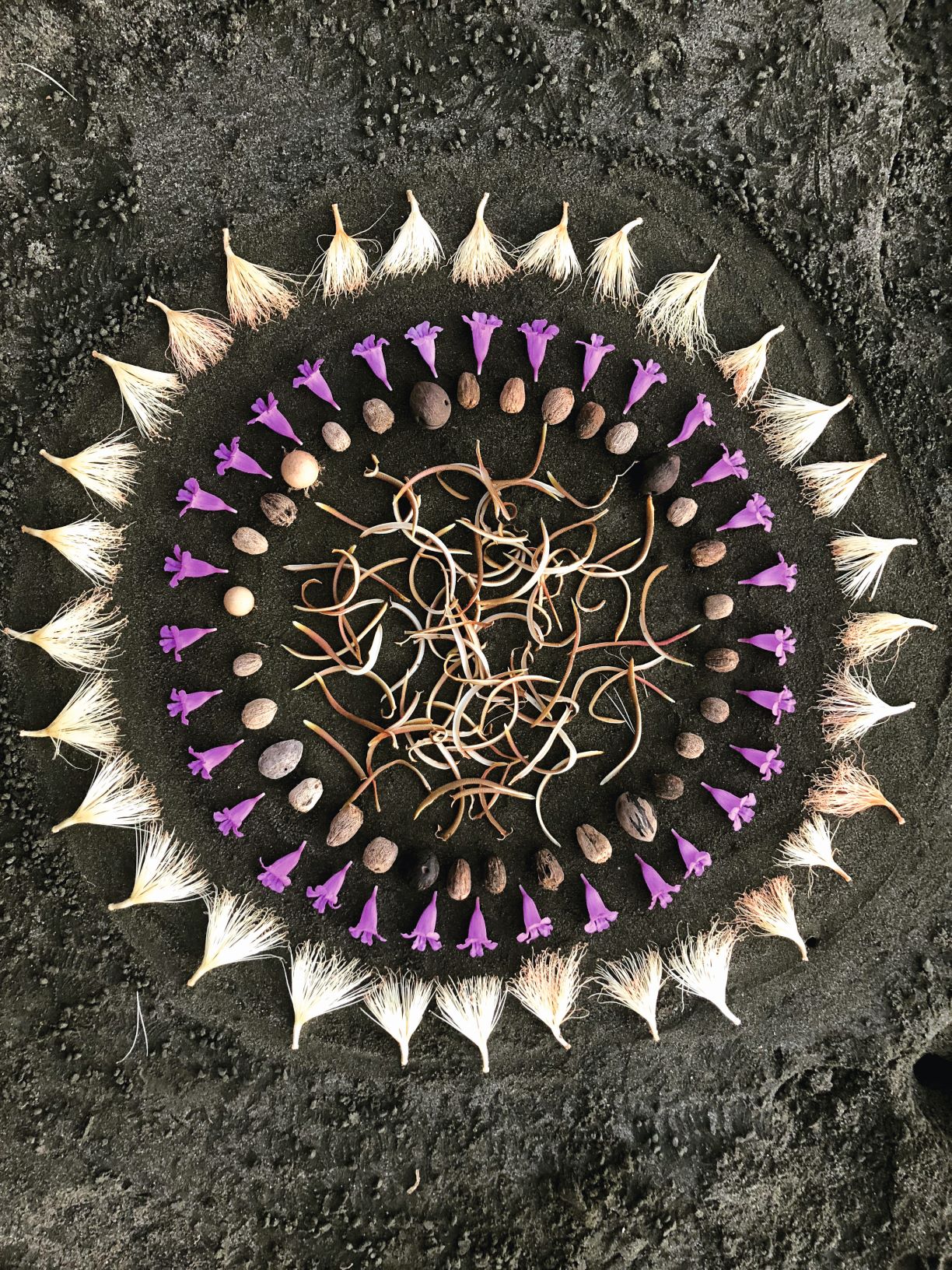
Photography by @coloursofmyday
In our March issue, we’ve looked at mandalas so we thought we’d get to know a little more about one of their most famous fans
TST: Hi Carl <pats couch>. Take a seat and make yourself comfortable. We’ve a few questions for you that might help you achieve a sense of selfhood (more on that later). Let’s get started. Tell us about your childhood.
CJ: I was born on 26 July 1875 in Kesswill in Switzerland. My father, Paul, was a Protestant clergyman but was lapsing by the moment. My mother, Emilie, suffered from very poor mental health, and when I was three, had to leave us to live temporarily in a psychiatric hospital. Now that I mention this, I wonder if perhaps this had some influence on my career as an adult. Ha! Funny the things that come out in therapy, eh? I was alone a lot as a child, having no brothers or sisters, but I wouldn’t say I was lonely. I enjoyed observing the many adults around me and learning from them. In fact, I believe I was always happiest when alone with my own thoughts. I say ‘alone’. Obviously, I always had my sense of self to chat to, as well...
TST: Well, quite. What was your education like?
CJ: I attended my local village school but my father also taught me Latin at home. The village school wasn’t all that if I’m honest. I was a keen student and interested in many aspects of science and the arts. It was expected that I would follow my father into a career in religion. But that hadn’t worked out so well for the old man himself, it seemed pretty clear. So I decided to study medicine and went to Basel University to study in 1895 and in 1902 I received my medical degree from the University of Zurich. Later, I decided to specialise in psychology and went off to study in Paris… Is this all strictly relevant?
TST: No, but it’s nice to have some context. Let’s move on to affairs of the heart…
CJ: I met the great love of my life, Emma Rauschenbach in 1903. We married and had five children together. As well as being my wife, and bringing up my children, she was my scientific co-worker for many years. You could say I kept her pretty busy. We were together until her death in 1955…
TST: Do help yourself to a tissue. They’re on the table. Let’s talk more about your work life. How did you come to be a psychologist?
CJ: While studying in Zurich I worked as an assistant to Eugen Bleuler, who you may now know as one of the pioneers in the study of mental illness. During this time, I and a few others, worked on the ‘association experiment’ which looked at groups of subconscious ideas in the mind (I tend to call the mind ‘the psyche’. It sounds much posher don’t you think?). I digress… The unconscious associations or ‘complexes’ can bring about anxiety or other inappropriate emotions. Around this time, I read Sigmund Freud’s Interpretation of Dreams which confirmed all my beliefs on complexes. Sigmund, it must be said, had a filthy mind and thought everyone was subconsciously thinking about sex most of the time. Lord! You could barely peel a banana without the man having something to say about it. I was more interested in mysticism and ‘higher things’. But that didn’t stop us becoming firm friends. For a while.
TST: So the friendship ended badly?
CJ: It did. One of my greatest sadnesses. Things were so rosy when we met in 1907. It was widely thought that I would continue Siggy’s work when he died (he was older than me, as well as more filthy-minded, you know). But it was not to be. Our temperaments and beliefs were too different. When I published Psychology of the Unconscious in 1912, Siggy took the right hump. I had deigned to disagree with some of his dearest beliefs and principles. The friendship limped on for a while but he shut me out of his in-crowd. It was no real loss to me, professionally. I’ve always worked better alone. And anyway, I was sick of his disgusting double-entendres. It was like living with Benny Hill.
TST: So where did life take you after Freud?
I launched myself into some deep self-analysis, hoping to discover my ‘true self’. I lived for a while among primitive tribes, everywhere from Mexico to Kenya, and travelled the world, studying various belief systems in hopes of discovering more about the archetypal patterns that inform the self. I brought back with me many fine ideas, one of which was that of using the mandala to discover one’s selfhood. If I’d known the darn things would be all over Instagram one day, I might have left them where they were. Still, I’m pleased to see their popularity has brought so many people a little peace in a busy world.
If you’re interested in mandalas, and would perhaps like to create one of your own, pick up a copy of our March issue, in shops now.
Get hold of your copy of this month's The Simple Things - buy, download or subscribe

Photography: Cathy Pyle Recipes & styling: Kay Prestney
How to really make a meal of it…
As we sit over French toast, fruit salad, yoghurt, pastries and fancy eggs of a Saturday morning, we often find ourselves thinking ‘Brunch is a genius idea. Who thought of that?’ Well, we’ll tell you…
It was the English writer, Guy Beringer, who, well acquainted with the weekend hangover, decided Saturdays and Sundays needed moulding more sympathetically to the average carouser of 1895.
Empathetic to the party-goer who, on being roused late morning, might not wish to partake of a heavy lunch, he instead proposed, in his essay entitled ‘Brunch: a plea’ that we partake of a more hybrid meal that took in some of the light components of breakfast - pastry, tea and the like - alongside more hearty lunch-type fare for those up to it. He even had the bright idea of making cocktails a part of the meal for those who like their dog a little more hairy in the mornings.
He also made clear that it should be a sociable occasion, ideal for dissecting the events of the night before: “Brunch is cheerful, sociable and inciting. It is talk-compelling,” he wrote.
The following year, Punch magazine gave more detail and even differentiated brunch from ‘blunch’, reminding its readers: “The combination-meal, when nearer the usual breakfast hour is ‘brunch’ and when nearer luncheon is ‘blunch. Please don’t forget this.” As if we would!
In our February issue, our ‘Gathering’ feature is a spring weekend brunch. Here’s one of the recipes from the spread, a spring vegetable frittata. For the rest of the menu, buy our March issue, in shops now
Spring frittata
Serves 6
1 tbsp coconut oil
1 onion, finely chopped
1 garlic clove, finely chopped
100g baby spinach
150g frozen peas
8 free range eggs
100ml semi-skimmed milk
Fresh herbs (we used thyme, basil and sage)
50g wild rocket, to serve
1 Melt the coconut oil in a frying pan over a medium heat and add the chopped onion and garlic. Fry for 3–4 mins until they soften.
2 Add the spinach (washed and drained) and frozen peas to the pan and stir for 3–4 mins until the spinach is starting to wilt and the vegetables are mixed in with the onion and garlic.
3 Whisk the eggs and milk in a large jug or bowl, and season with salt and pepper to taste. Pour into the frying pan and mix to evenly distribute the vegetables. Sprinkle fresh herbs on top and cook over a medium heat for approx 15 mins, or until you can easily slide a spatula underneath.
4 Heat the grill to a medium heat and place the frying pan under for approx 10 mins, checking at intervals to make sure the top doesn’t burn, until it is a golden colour and the egg is cooked.
5 Leave to cool before covering the frying pan with a large plate and tipping it upside down to release the frittata on to the serving plate. Sprinkle with more fresh herbs and some wild rocket to serve.
Get hold of your copy of this month's The Simple Things - buy, download or subscribe
Whether you're talking blackberries, raspberries, gooseberries or more exotic varieties, now is the time to think about planting out soft fruit bushes – it's easier than you think and the results are SO delicious!
Read More
Photography: Catherine Frawley
Please enjoy our back page chalkboard message and a seasonal haiku
From overnight bakes to wild walks, to indulging in the art of bathing, we hope you’ve enjoyed our Soothe issue this month. Here’s to lighter, warmer days to come.
We’ve penned a haiku in homage to February. Do share your own below (5, 5, 7 syllables, remember). We’ll send a lovely book to the author of our favourite haku.
Last days of winter,
Only twenty-eight, at least.
Thanks, February.
Get hold of your copy of this month's The Simple Things - buy, download or subscribe

Copycat Art Scratcher by Erik Stehmann
Science explains what the rest of us have long suspected (they can’t help it)
You heard it here first. Cats are simply scientifically awkward. They probably quite enjoy being awkward, let’s be honest, but if they didn’t enjoy it they’d be difficult and annoying anyway. It’s in their genes, you see.
Take that irritating propensity for curling up in your delivery box, or hat, or dainty shoe… Her face might well say ‘stuff you and stuff your dainty shoe (and the horse you both rode in on)’ but in fact the reason they delve into weird nooks and crannies is that small prey often hide in these spots in the wild. It also helps them avoid predators. In the wild, cats are as much hunted as they are hunters.
This is just one of the observations made by Dr Tony Buffington in his Ted Ed video for Ted Talks.
Dr Buffington also explains why cats climb on top of fridges, doors and any other point from which they can lethally scalp you: they’ve naturally evolved to use their muscles and balancing skills to their advantage and, from up high, they have a better view of potential predators and also can spot any potentially tasty lunch more easily. Once that would have been a juicy rodent, these days, it adds a frisson to spotting their bowl of Felix.
But why are they so intent on destroying your best rugs and furniture? Plenty of good reasons actually: sharpening claws, stretching leg muscles… ripping up a rug also alleviates stress, according to Dr Buffington.
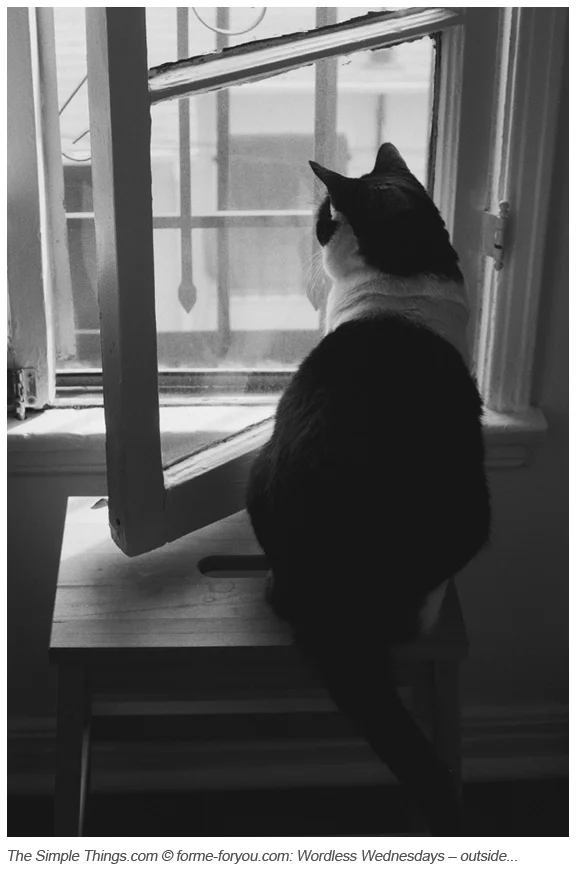
So, what’s the scientific explanation for why cats sit at the back door looking outside with pleading eyes, meowing insistently until you open the door… and then just sit there like a rock? Oh that? Yeah, that’s just because they hate you.
If you like your cats awkward you might like the feature in our February issue. We have an extract from
Pet-tecture: Design for Pets (Phaidon Press), a collection of inspiring and surprising homes and play areas for pets of all shapes, sizes, breeds and species.
Get hold of your copy of this month's The Simple Things - buy, download or subscribe

Become a master of a new art in a few short hours
There’s something so satisfying about learning a new skill. Especially when you get to take home something really cool at the end of it.
We were thrilled to go along to Joanna Corney of Lume Lighting’s lampshade-making workshop at her pretty Hove studio this weekend and learn some of her trade secrets with a group of The Simple Things readers.

As well as learning the art of ‘rolling the drum’ and how not to get double-sided lamp tape stuch to one’s hair, we also bonded over the pros and cons of slubby fabrics and the divisive nature of pom-pom braid. And we had a very lovely lunch, too.
Everyone created something completely different to take home to delight their families and astound their friends. Here’s Simple Things blog editor Iona Bower’s lampshade in situ.
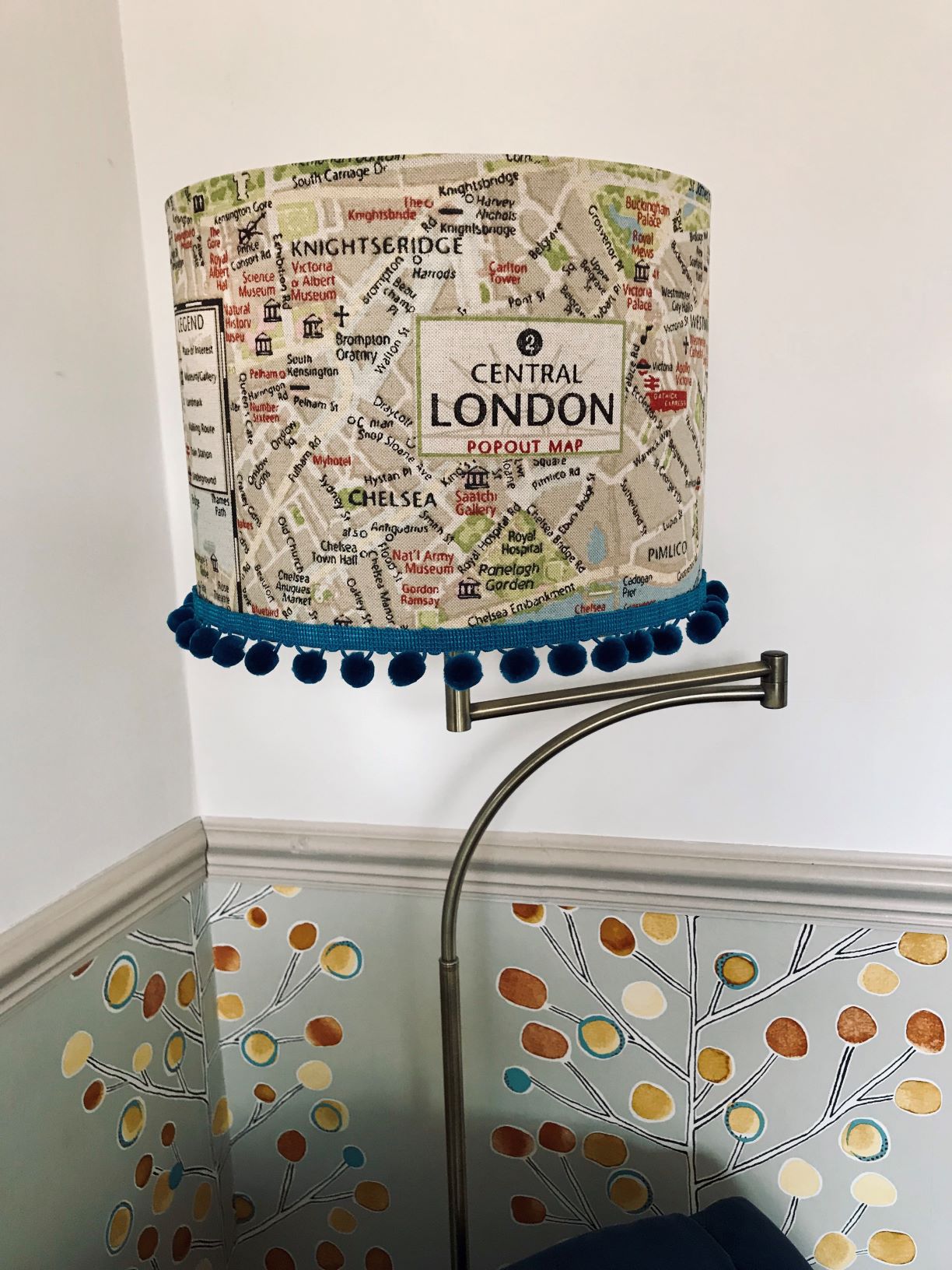
If you’d like to attend one of Joanna’s courses (she also runs a rather lovely looking fairylights workshop, we may have noticed) you can visit her website or to buy one of her own creations visit the shop. We recommend the courses though. Joanna is hiding some serious baking skills under a bushel. We’re going back for more cake, too.
We’ll be running more workshops in conjunction with makers all over the country. Look out for similar upcoming events in the magazine.
Get hold of your copy of this month's The Simple Things - buy, download or subscribe

Photography: Sarah Maingot
The science that explains why baths are for geniuses
There’s nothing like stepping into a hot bath to spark a little creativity. And none has done so with such clear success as Mr Archimedes, the Ancient Greek mathematician and inventor. As he stepped into his bath one day, he saw the water level rise and cried “Eureka!” (“I’ve got it!”); he had realised that the displacement of the water would allow an irregular object’s volume to be accurately measured, a task hitherto impossible.
This theory of displacement is not to be confused with Archimedes’ principle (he was a busy chap, was Archimedes), which says that the upward force on a body immersed in fluid is equal to the weight of the fluid that the body displaces. Yes, that one’s a bit trickier.
We digress. So pleased with himself was Archimedes that, word has it, having yelled “Eureka!” he ran naked into the streets of Syracuse to tell others of his findings. We imagine a damp, naked men shouting about physics received much the same response in Ancient times as it would now, namely a fixed nodding smile and a slow backing away.
But he is not the first person to have had a great idea while in the bath. In our February issue, Suzanne Duckett celebrates the act of bathing in all its forms, as well as some of the great minds that have used the bath as a place in which to formulate great ideas…
Agatha Christie The crime novelist told her architect she wanted a big bath, with a ledge, so she could dream up new plots while eating apples and drinking tea.
Winston Churchill The former prime minister would take two daily hot baths to de-stress from the pressures of leading the country during the Second World War. He often dictated from his bath to his secretary who would sit outside the bathroom with a portable typewriter on her lap.
Freddie Mercury The lead singer of Queen wrote ‘Crazy Little Thing Called Love’ while taking a bath in a hotel room in Munich.
Arianna Huffington The billionaire businesswoman takes a nightly bath before bed with Epsom salts and candles. “It’s my ritual to wash away the day,” she says.
You can read more on the art of bathing in the February issue, on sale now. The feature is taken from Bathe: Rediscover the Ancient Art of Relaxation by Suzanne Duckett. Photography by Sarah Maingot. (Bonnier Books)
Get hold of your copy of this month's The Simple Things - buy, download or subscribe
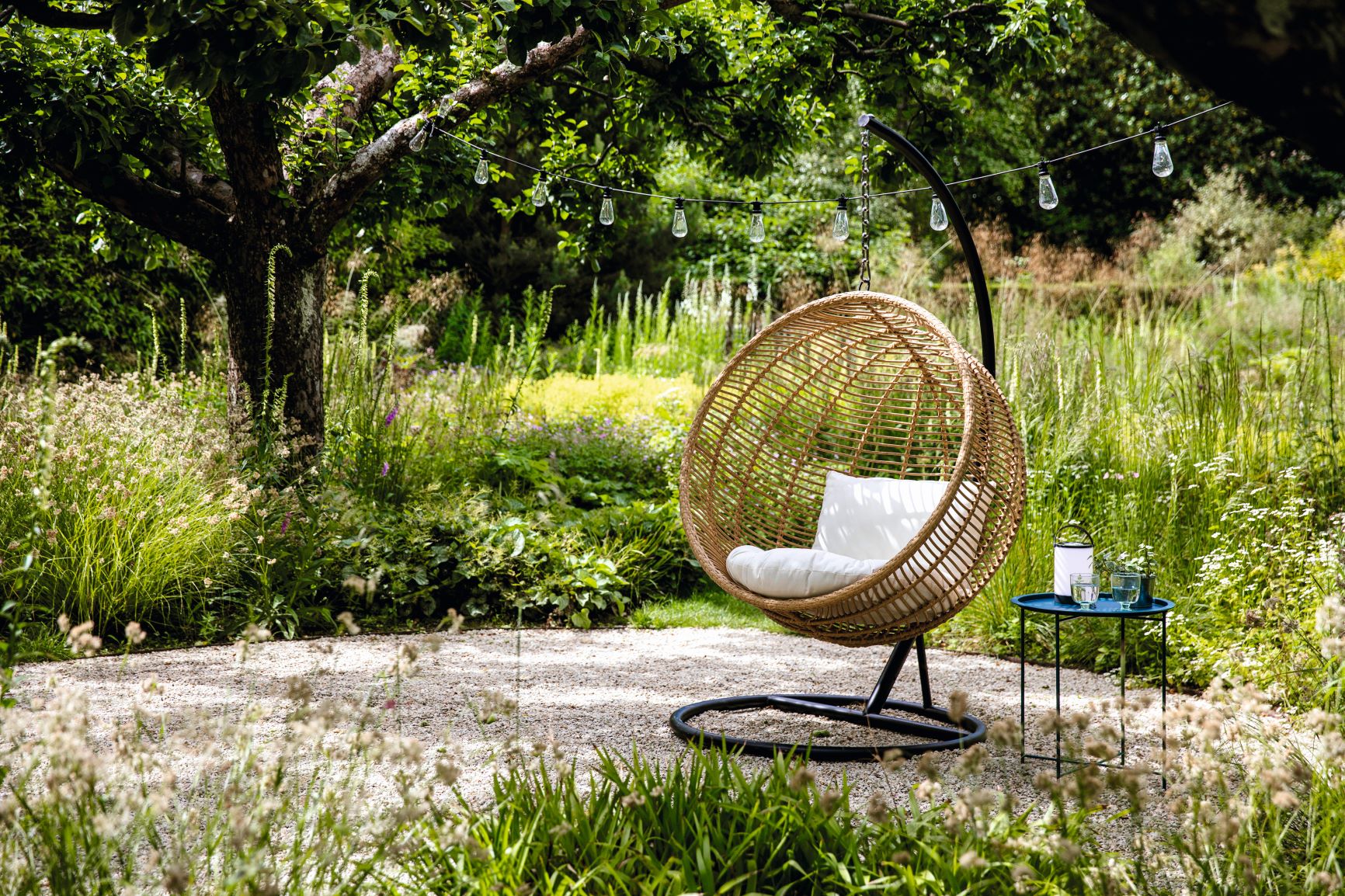
Enter for a chance to win this prize to bring spring to your home or garden
Days are starting to get a little longer and brighter, and our thoughts are naturally turning to spending time outside in the fresh air again. As eager as we may be to fling open doors and windows, fully fledged picnic and barbecue season is still a way off. However, Garden Trading has just the answer for bridging that seasonal gap.
The new Garden Room collection for spring encourages blending indoor and outdoor living, introducing a sense of flow from home to garden. Style wise, there’s more than a nod to the past, with macramé accessories and cane furniture bringing a retro 1970s feel to the collection, along with leafy greens, natural materials and woven textures. An update to Garden Trading’s popular all-weather nest chair is a shining example.
YOUR CHANCE TO WIN
A great blend of modern and nostalgic, the new hanging nest chair looks as at home in a living room or conservatory as it would in an orangery. And with its PE bamboo base, it’s safe to find it a home in the garden, too. Wherever you choose to keep it, this prize is set to become your favourite perch for a little time out all spring and summer long. Discover the full spring collection at gardentrading.co.uk.
HOW TO ENTER For your chance to win a hanging nest chair worth £350 from Garden Trading, click the button below to answer the folliowing question:
Q: Garden Trading’s macramé accessories and cane furniture bring a retro feel to the collection. But from what decade in particular?
Closing date: 10 April 2019.
TERMS AND CONDITIONS
The competition closes at 11.59pm on 10 April 2019. A winner will be selected at random from all correct entries received and notified soon afterwards. The prize cannot be swapped for cash or exchanged. Details of our full terms are on page 129 and online at icebergpress.co.uk/comprules.

DJ: Clare Gogerty Illustration: Anneliese Klos
Listen at thesimplethings.com/blog/morningplaylist

Photography: Ryland Peters & Small
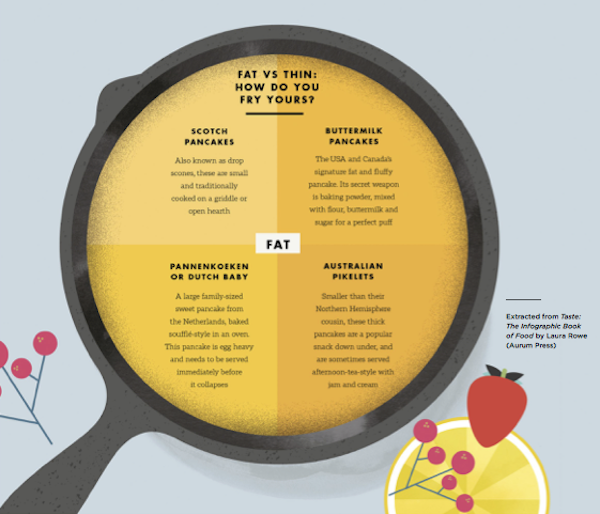
Shop-bought houmous comes in many flavours. This roasted carrot version is brilliant with savoury pancakes.
Serves 8
500g carrots, peeled and roughly chopped
1 tbsp olive oil
200g chickpeas
1 small garlic clove, crushed
Squeezed juice of 1/2 lemon
3 tbsp extra virgin olive oil
1⁄4 tsp ground cumin
1 Preheat oven to 180C/Fan 160C/Gas 4 and line a roasting pan with baking parchment.
2 Place the carrots, olive oil, salt, pepper and 1 tbsp of water into the prepared pan, cover with foil and roast for 40 mins until tender. Set aside to cool.
3 Drain the chickpeas, reserving 3 tbsp of their liquid. In a food processor blitz the carrots, chickpeas and reserved liquid, garlic, lemon juice, olive oil, cumin and some salt and pepper until smooth.
4 Serve, spread on the turmeric pancakes you can find in the February issue of The Simple Things, topped with seasonal raw veg, herbs and salad.
Recipe from Modern Pancakes (Ryland Peters & Small).

Book cover: Puffin Books
Losing yourself in a good book is one of life’s great pleasures… rediscovering an old one is pure joy
In our March issue, to celebrate World Book Day, some of The Simple Things’ staff have talked about their favourite childhood books.
We’d love to hear about the books that have stayed with you since childhood, too - why you loved them, whether you have reread them as an adult, and what it was about them that made them so special. Please share your Malory Towers memories, Narnia nostalgia and Roald Dahl reminiscences with us in the comments below.
To whet your appetite, here’s our Blog Editor, Iona Bower’s choice:
The Borrowers
by Mary Norton
Read by Iona Bower (blog editor) aged seven
Who, when they are small, could fail to love a story about little people lording it over big people? I was completely rapt by this tale of tiny folk who lived beneath the kitchen floor, making use of the everyday items of ‘human beans’ and repurposing them: cotton reels to sit on, matchboxes for chests of drawers… to this day I’d still love a living room decorated with giant paper made from sheets of handwritten letters.
The book’s a proper thriller, too; I devoured the second half in more or less one go. It’s also a tale that never ages. Published in 1952, read it now and you’d swear it was an allegory for the current refugee crisis. I’ve read it as an adult, and what struck me was the very complex narrative structure for a children’s book. It has a framed narrative (which I credit for my later obsession with Wuthering Heights). It’s told by someone called ‘Kate’ but you’re never sure if that is her name, and she’s recounting a story by Mrs May, who is in turn recounting
her brother’s story of meeting the borrowers. Still with us? Good. Because the story ends halfway through the book. The rest is mere conjecture.
And that’s what I love about it. You know nothing. It’s a huge leap of faith but no one reads The Borrowers (even the gut-wrenching twist of a last line, which I won’t reveal) and doesn’t ‘just know’ they are real. My son read it at the same age. I knew he’d finished it when he came thundering downstairs demanding: “Are there more Borrowers books? It says in the back that there are. Are the borrowers real? Are they ok?” And I said, “I don’t know. You’d better read the others and decide.” The Borrowers is a book that makes readers. Give that Mary Norton a medal

Photography: Stephanie Graham
The secrets of a good drizzle cake
Lemon drizzle is the nation’s favourite cake apparently (40% named it as their favourite).
This is according to a survey last year by the prosaically named Protein Times, but we won’t quibble. In some ways it’s no surprise.
Lemon drizzle is definitely a crowd-pleaser; there’s just nothing to dislike about it. Dry-fruit deniers and icing detesters have no quarrel with a drizzle, and it’s traditional, too. We note that (new-fangled) Red Velvet cake achieved a meagre 15% in the same survey.
The other good thing about a drizzle (of any flavour) is its simplicity. It’s a good bake for a seasoned cake-maker to impress with as well as a fine place for a beginner baker to start. And with a few semi-pro tips you can achieve a very pleasing result.
So what’s the secret of a great drizzle cake?
If you want your drizzle to really penetrate the cake, use a small skewer to make holes evenly across the top of your cake before drizzling the drizzle. Alternatively you can leave the skewer in the drawer and have the drizzle as more of an ‘icing’ on top.
Always pour the drizzle over while the cake is still warm so that more of the flavour is absorbed.
And don’t remove it from the tin once drizzled until it has completely cooled and set.
Our favourite tip - replace any milk in the recipe with limoncello. It’s what they do in Campania, and they’re never wrong about anything food related.
In our February issue, on sale now, we have a rather lovely looking passion fruit drizzle (pictured above) on our Cake in the House page. The recipe is from The Tin & Traybake Cookbook by Sam Gates (Robinson).
Get hold of your copy of this month's The Simple Things - buy, download or subscribe

Image: Thomas Hafeneth/Unsplash
We’re marking National Random Acts of Kindness Day today. We all need to look out for each other. Here are a few little things that can make somebody’s day.
Phone someone for a chat
Remember birthdays and don’t just text, send a card
Leave a note, even when you’ve not much to say
Set an extra place at the table for someone on their own
Give a homegrown bag of veg or posy of flowers...
...or simply offer your time and a slice of cake
What would you add? Tell us at over on Facebook or Twitter or in the comments below.
This blog was first published in June 2017 but we’ve shared it again for National Random Acts of Kindness Day.
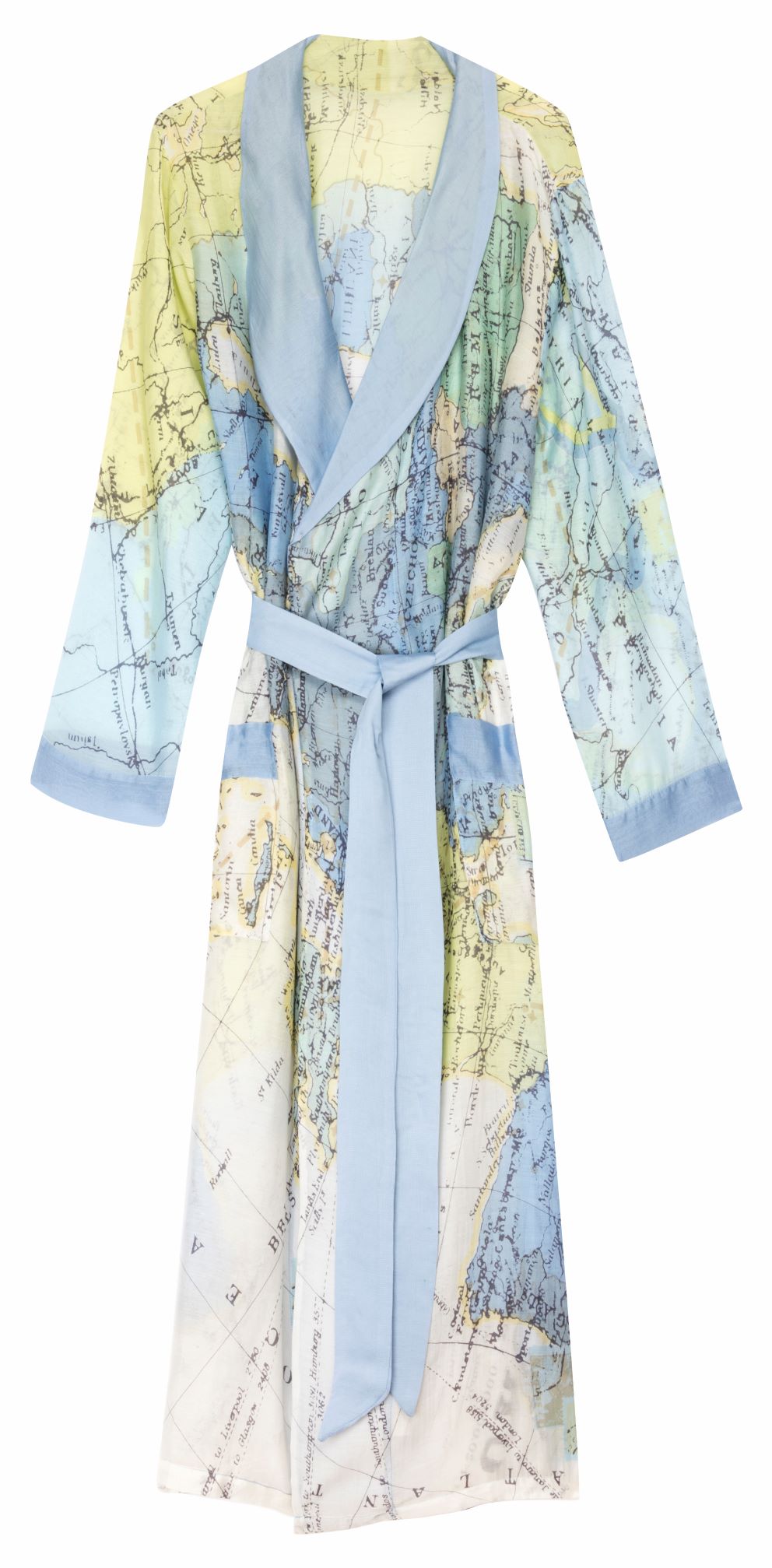
Gown from onehundredredstars.co.uk
A look at what’s slovenly and what’s sophisticated in this wardrobe hinterland
For an item of clothing that is all about casual relaxation, the dressing gown hasn’t half come in for a lot of criticism over the last few years. From etiquette experts telling us that it’s terribly bad form to come down to breakfast in one when staying with friends to shoppers and school-gate mothers being ‘shamed’ for wearing them out of the house. But they are rather cosy and comfy aren’t they? And a bit glam too. So when is it acceptable to don a dressing gown?
The clue is in the name, really, it’s intended to be put on between getting out of bed and getting dressed (or indeed, getting undressed and getting into bed). But surely it’s possible to stretch that definition a little? If one returns from work on a blustery and difficult day and wants to get into pyjamas before dinner (as 14% of us do according to a 2017 survey by the department store, Liberty) surely a dressing gown over the top is advisable on a chilly winter’s evening?
In fact, far from being a sign of bad breeding, wearing the right sort of of dressing gown may be a sign that one knows what one is about. It’s all down to the right lounge wear at the right time. So here’s a brief rundown.
Dressing gowns
Beginning as ‘banyans’ in the early 18th century, and beloved of terribly posh men both at home and in the office. Banyans were intended to be a comfier, loose-fitting coat for when a formal jacket was too restrictive, and men would stride around the home or the office in silk or satin banyans looking slightly exotic. These days we’d advise you think twice about a banyan, particularly the short, silky kind (imagine the static). If you really must, gentlemen in particular should take care that they are (ahem) securely tied. And also that they aren’t open to the waist, revealing a chest rug. This sort of look should be left to Burt Reynolds, and only Burt Reynolds.
A nice cotton dressing gown in summer, or a deliciously fleecy thick one in winter, with either buttons or a tie fastening though, is a boon on Sunday mornings. And we don’t care what etiquette dictates, it’s the only thing to wear while enjoying toast and marmalade over The Archers omnibus. Do put some clothes on if you pop to the shops, though.
Bath robes
You can of course don a dressing gown after a bath but we think a bath robe, made of towelling, and therefore properly absorbent, is best for a bit of post ablution lounging. A nice fluffy white one gives you the feeling of being in a posh hotel, which is always lovely. If you are in a posh hotel, remember bath robes stay in your room, unless you are going to the spa or pool. They should never be worn to breakfast. And never stowed away in one’s luggage. Buy your own.
Housecoats
At one stage, the terms ‘house coat’ and ‘dressing gown’ were almost interchangeable. Both are lounge wear of a sort, but a housecoat is generally work-related and designed to protect the clothes under it while you’re doing chores. Wear it while polishing the family silver (or even unblocking the sink); this garment is all about practicality.
Lounge wear
From ‘house trousers’ to ‘lounge vests’, there’s a wide range of lounge wear (that is clothes designed specifically for relaxing around the house in) on the market now. The White Company is the purveyor of some of the finest in our opinion. What you want is muted colours, soft fabrics and plenty of elasticated waistbands. Lounge wear items should be beautiful enough to accept unexpected guests in but comfy enough that you could drift off for a nap on the sofa in them at any moment. Think of them as a sort of modern-day smoking jacket, but without the filthy habit.
We would like to make clear that onesies do not count as lounge wear. In fact, they don’t really count as ‘clothes’ at all unless you are under ten. Sorry.
In our February issue’s Miscellany, we’ve picked three of our favourite dressing gowns, including the one pictured above, the Europe Map Gown, £69.95, onehundredstars.co.uk.
Get hold of your copy of this month's The Simple Things - buy, download or subscribe
We celebrate slowing down, enjoying what you have, making the most of where you live, enjoying the company of of friends and family, and feeding them well. We like to grow some of our own vegetables, visit local markets, rummage for vintage finds, and decorate our home with the plunder. We love being outdoors and enjoy the satisfaction that comes with a job well done.