

How to buy a camper van
The camper van is so much more than a vehicle to sleep in, says motorhome lover Martin Dorey who shares his tips on buying one.
Have you got your heart set on a camper? Congratulations. I look forward to waving to you on the road somewhere. But first ask yourself a few questions about why you want one and what you want to do with it.
Do you want to own a classic? Is it to travel the world (or even a bit of it)? Is it to camp in a little more comfort? Will it carry what you want to take with you? How many do you need to be able to sleep? Two is easy, more then four is trickier – and remember, kids get bigger.
Firstly, set a budget as it will decide everything from age to the interior, the condition and mileage and comes back to the ‘why’ question. It’s worthwhile totting up the running costs, too. You could consider alternatives to a VW and bear in mind that imported vans from dry places like Australia and South Africa are often rust-free and right-hand drive, too.
Rent before you buy to make sure a camper is really for you, before you spend thousands. Then go to as many big dealers, motorhome retailers, VW festivals and conventions as possible. Nose about in as many vehicles as you can, to check layouts, seating arrangements and budget, and try to identify the vehicle that’s just right for you. There’ll be one, all you have to do is find it.
Serial camper van owner Martin Dorey is author of The Camper Van Bible and his latest book, Take the Slow Road: Scotland (both Bloomsbury). You can get signed copies at martindorey.com.
More from the August issue:
Featured


More summer holiday ideas:
Featured


Eat better service stations
Anyone who despairs of shoddy motorway service station food and the appalling provisions available in petrol stations throughout the land should know there are alternatives. And they are handily listed in the glove-box sized The Extra Mile: Delicious Alternatives to Motorway Services, which proffers motorway by motorway suggestions of off-piste cafés, tearooms, pubs, farm shops and delis around the country.
Try these for starters:
M4: The Bell at Ramsbury, Wiltshire, SN8 2PE
A Georgian era coaching inn off junction 14 of the M4, on the edge of the Marlborough Downs, The Bell offers seasonal food and drink drawn from the local Ramsbury’s estate’s own brewery, distillery and smokehouse.
M5: Court Farm Shop, Cheltenham, GL52 7RY
With a ridge of the Cotswoldian Cleeve Hills as a backdrop, Court Farm Shop started life as a roadside egg shop but has blossomed into a purveyor of local produce. Two thirds of its wares are sourced within a 30-mile radius, and the farm’s own livestock is the basis for acclaimed burgers, sausages and meatballs. A hop from junction 11.
M11: Shelford Deli, Cambs, CB22 5LZ
Off junction 11, the Shelford Cafe-Deli serves up delectable homemade sandwiches, salads, cakes, pizzas, ice-cream, coffee and much else beside – all with a contemporary twist – that have made it beloved of foodies far beyond those simply stopping by off the motorway. Its assets also include a sunlit garden with a wendy house to play in.
M6: Whale Tail Café, Lancaster, LA1 IXN
A Mecca for vegetarians and vegans, this caff, off junction 34, is famed for its meat-free breakfasts, and cakes that are ‘masterful examples of alternative baking’. Ingredients where possible are free trade and organic.
Foodie pitstops taken from The Extra Mile: Delicious Alternatives to Motorway Services by Alastair Sawday and Laura Collacott (Printslinger)
Turn to page 68 of August's The Simple Things for more detours worth making.
More from the August issue:
Featured
More summer holiday ideas:
Featured

Illustration: Kavel Rafferty
How to build your own camp stove
Impress your neighbours (that will be the squirrels then) with this simple campsite DIY
You will need:
Large rocks or green logs
Spade (optional)
Tinder, such as as dry leaves or grass
Dry twigs for kindling
Dry firewood
Grill
Water to hand
Pick a spot at least 3m from anything flammable and on exposed earth. Create a keyhole-shaped border from large rocks or green logs. Dig a shallow pit within main hole. Now assemble your fire. Tinder goes in the middle. Kindling is next: try a teepee or stacking method. Once it’s going, add your firewood – try to spread it out evenly. After the flames have died down, use the resulting coals to cook food (rake coals from the pit to the square section for more even heat). Lay a grill on top of the stones and get sizzling!
More from the August issue:
Featured
More camping:
Featured


Ice cube aftersun
Not for your G&T but to apply to sunburnt skin, these clever DIY cubes are natural coolers
The soothing anti-inflammatory properties of chickweed and aloe mean these cubes are also good for easing the symptoms of rashes or bites, too.
Chickweed & aloe cooling cubes
100g fresh aloe vera gel (see method) or pre-mixed aloe vera gel
2 handfuls of fresh chickweed (see below)
1 If you’re making fresh, slice the gel from the inner aloe leaves, taking care to discard the inner green and yellow leaf lining. Measure the gel (you need 100g).
2 Put the gel into a blender with the chickweed and blitz until combined.
3 Spoon into ice cube trays and freeze until solid (the cubes will keep for up to a year in
the freezer).
4 To use, apply a frozen cube to the affected area as and when required.
Notes about chickweed: The plant has numerous tiny white flowers and is recognisable by a single line of hairs that grows up the stem between each leaf node and swaps over to a different side after each leaf. Chickweed works wonders for itchy or inflamed skin. Simply squeeze the fresh juice from the plant directly onto the skin to soothe nettle stings, skin rashes and eczema.
Recipe from Handmade Apothecary by Vicky Chown & Kim Walker (Kyle Books).
More from the August issue:
Featured
More home remedies:
Featured


*David Austin® fragrant, repeat-flowering English roses
We’re offering readers of The Simple Things 10% OFF every time you order with us before 30 September 2018, quoting code SP6.
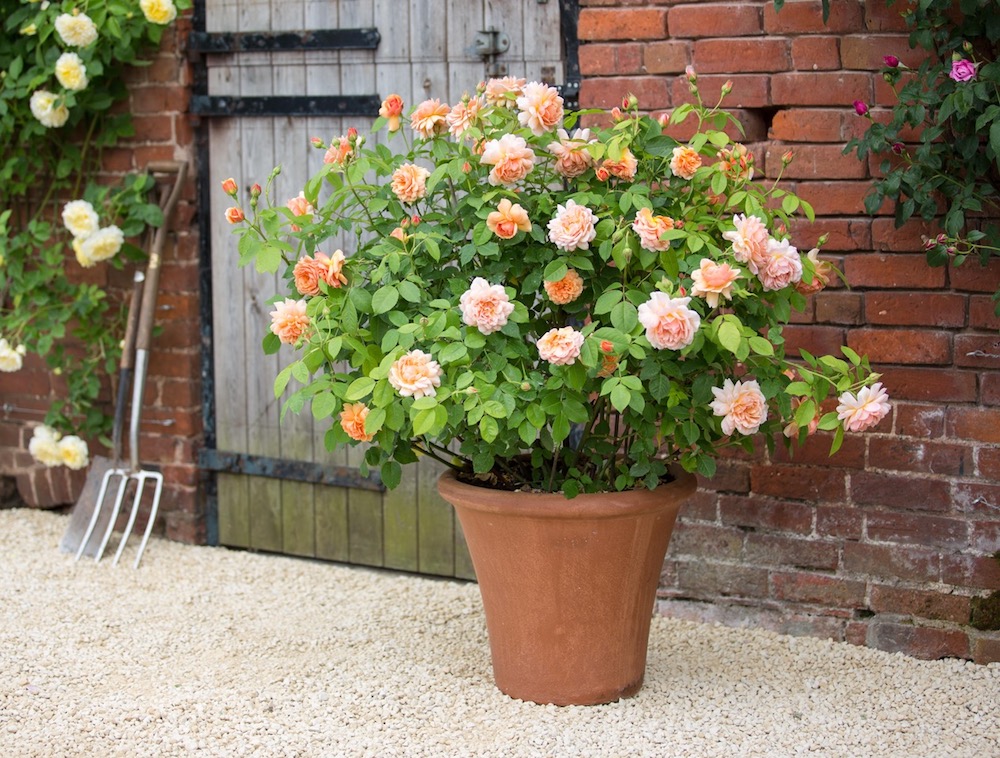
David Austin’s English Roses combine exceptional beauty and delicious fragrances with outstanding health, reliability and vigour. Flowering in flushes throughout the summer, they will transform your garden whether planted in a traditional rose border, a large container or in a mixed cottage garden style planting. For help selecting your roses, contact our rose experts.
Visit: www.davidaustinroses.co.uk
Call: 0800 111 4699
More from the August issue:
Featured
Nest | Cornflowers
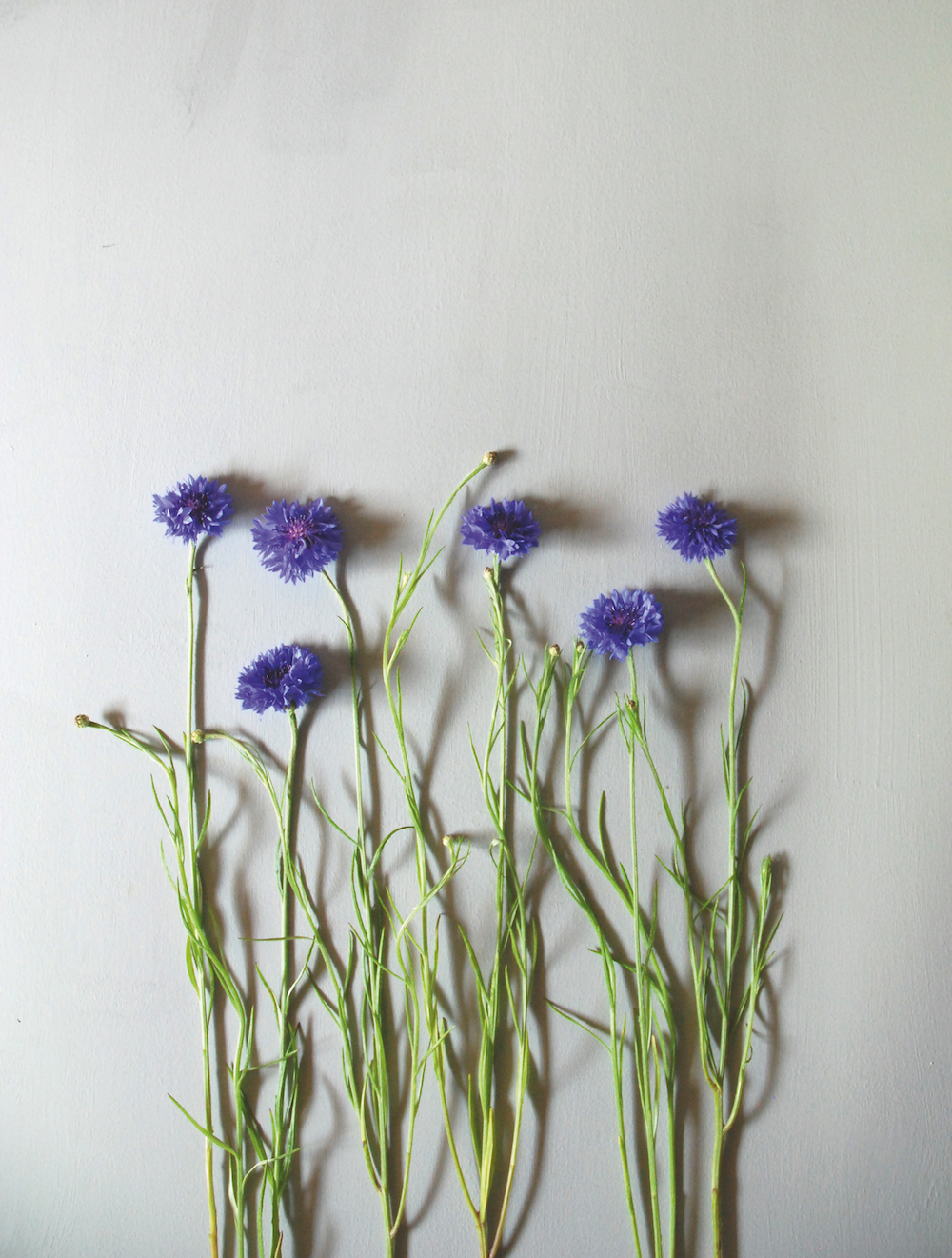
With pretty ruffs of cobalt blue* petals, cornflowers bring a little wildflower- meadow magic into the home.
“They work brilliantly as a cut flower, either alone or mixed with other British garden flowers like dahlias,” says Ellie Marlow, florist at Catkin and Pussywillow. “For anyone planning a late summer wedding, they also make beautiful buttonholes and flower crowns.”
*Although don’t be limited to just blue: there are also white, pink, red and purple varieties.
Photography and flowers: Ellie Marlow, Catkin & Pussywillow, Winchester railway station (catkinandpussywillow.com)
More from the August issue:
Featured
More plants:
Featured


Photography: Clare Winfield
Recipe | Wild blackberry & rose petal sponge
Using Black Forest flavours to delicious effect, this ice-cream cake is a seasonal treat on
a sunny summer’s day
Make the most of early blackberries with this magnificent sponge. An unusual recipe that results in the lightest cake, which both looks and tastes enchanting
WILD BLACKBERRY & ROSE PETAL SPONGE
Serves 6–8
Melted butter, for greasing
140g plain flour, plus extra for dusting
3 organic eggs
225g granulated sugar
1 tsp baking powder
Pale pink rose petals, fresh or crystallised for the filling
110ml whipping cream
2 tsp icing sugar, plus extra for dusting
1⁄2 tsp rosewater (optional)
225–350g wild blackberries
1 Preheat oven to 190C/Fan 170C/Gas 5. Brush two 20.5cm cake tins evenly with melted butter and dust with flour (lining the base with a circle of greaseproof paper will make removal easier, too).
2 Separate the eggs. In a food mixer, whisk the yolks with the sugar for 2 mins, then add 75ml water. Whisk for 10 mins until light and fluffy.
3 Sift the flour and baking powder into the mousse in batches. Whisk the egg whites until they hold a stiff peak. Gently fold them into the fluffy base.
4 Pour into the prepared cake tins and bake for about 20 mins until the centre is firm and the edges begin to shrink from the tin edge. Remove the cakes from the tins and cool on a wire rack.
5 Whip the cream, then add the icing sugar and a few drops of rosewater (if using).
6 Sandwich the cold sponges together with the whipped cream and the blackberries. Dust a little icing sugar over the top of the cake. Sprinkle with fresh or crystallised rose petals.
Recipe from Grow, Cook, Nourish by Darina Allen (Kyle Books).
Cake in the House is our monthly recipe feature - get a cake recipe every month in The Simple Things!
More from the August issue:
Featured
More Cake in the House recipes:
Featured


*National Allotment Week with Nature's Path
ORGANIC CEREAL PIONEER NATURE’S PATH IS SUPPORT THIS MONTH’S NATIONAL ALLOTMENT WEEK. HERE’S WHAT IT’S ALL ABOUT
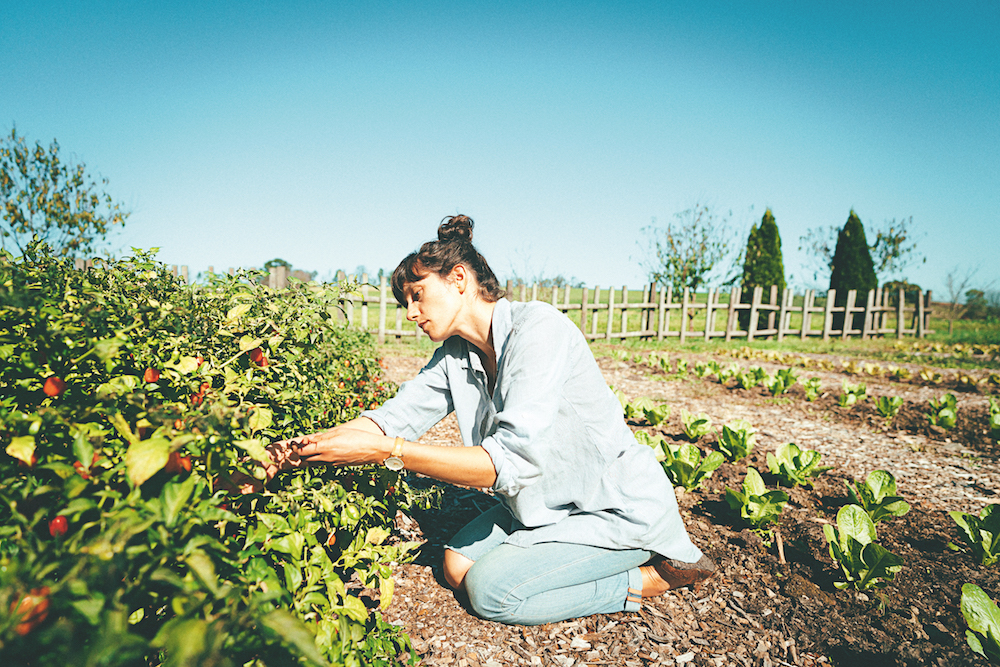
Nature’s Path, the organic gluten-free cereal pioneer, is a champion of the outdoors. In fact, its guiding ethos is ‘Always leave the earth better than you found it’, something that’s shared by anyone with a love of gardening. The company’s commitment to the environment is rooted in sustainability and it is an active supporter of community and urban gardening initiatives. It also maintains a large garden at its HQ – with produce distributed among its staff.
APPRECIATING PLOTS
That’s why the family firm is pleased to be supporting this year’s National Allotment Week, 13–19 August. Organised by The National Allotment Society, National Allotment Week celebrates allotment plots up and down the UK, encouraging everyone to explore what their local community can offer in terms of growing your own.
The week highlights the benefit of allotments – from getting active outdoors, to producing your own food, to meeting and socialising with a range of people locally. Vital for wildlife, these ‘green corridors’ also safeguard land that would otherwise be built on. Just one metre of land can support hundreds of different species.
GROWING FOR EVERYONE
This year’s theme is ‘Living and Growing’. It highlights the importance of growing your own food and bringing gardening into your life. And if there’s a waiting list for an allotment in your area? Don’t be put off. Without waiting lists, allotment authorities cannot assess demand, so it’s great to show as much interest as possible, so that more plots can be made available. And, in the meantime, even growing herbs on your windowsill or tomatoes in a hanging basket can help hone your horticultural skills.
For further details on National Allotment Week and allotments near you, visit nsalg.org.uk. To find out more about Nature’s Path, visit naturespath.com.

Nature’s Path organic gluten-free cereals are some of the most popular in the UK – including its biggest seller, Mesa Sunrise, a delicious cereal flake made with organic corn, flax, quinoa and amaranth. Or try the newly launched Superflakes. As the first organic sprouted grain, superfood cereal on the market, they are the ideal way to start your day. Mix in some home-grown strawberries or raspberries, add a dollop of yogurt and a drizzle of honey – and enjoy a delicious summer breakfast.
*Sponsored post
More from the August issue:
Featured

A could-do list for August
Things you might want to do this month (no pressure!)
Exercise when it’s cool in the mornings
Eat a little lighter this month
Write a postcard or letter once a week
Dive into deep water
Listen to live music
Flavour water with fresh fruit and herbs
Enjoy being idle
Write down three things you don’t know or understand and make finding out about them your goal for this month
What would you add? Come over and tell us on Facebook or Twitter.
More from the August issue:
Featured
More could-do lists:
Featured



Facti (facts about cacti)
Inspiring paper cuts, embroidery, jewellery and more, crafty cacti are showcased on page 112 of August's The Simple Things. But what about the real thing?
- The tallest cactus is Pachycereus pringlei, which can reach heights just shy of 20 metres; the smallest, Blossfeldia liliputana, is an easy-to- overlook 2cm diameter.
- Think you’re thirsty? A fully grown saguaro can take up to 2,500 litres of water in 10 days.
- Legend says that the Aztecs were told to settle where they spotted an eagle, carrying a snake, perched on a cactus. This spot became Tenochtitlán, now part of modern day Mexico City – and is visible on the coat of arms of the Mexican flag.
- In the wild, cactus plant can live from between 25 to 300 years. Less in the home, especially if you overwater – which is the biggest killer of domestic cacti.
- ‘Cacti’ is the Latin plural; ‘cactuses’ is the English plural. Pedants please note: dictionaries list both.
- They’re only native to North and South America, with one brave exception found in tropical Africa, Madagascar and Sri Lanka.
- All cacti flower: it’s just some only do it at night and, for some, the bloom only lasts a few days.
- Cacti feature in the cave paintings in Brazil’s Serra da Capivara. Seeds have also been found in ancient middens (waste dumps), in Mexico and Peru, dating from around 10,000 years ago.
More from the August issue:
Featured
More plants:
Featured

Fragrance glossary
On page 49 of August's The Simple Things, we enter the world of independent, small scale perfume makers. Flick through the feature for a handful of indie perfumers that are trying something different, and read on for our fragrance glossary.
Good to nose: Fancy fragrance-related words explained
Accord
This is where magic happens. A perfume’s accord is a blend of individual notes that lose their own identity to create an entirely new scent.
Ambergris
Made from a digestive secretion found in sperm whales (although much more likely to be synthetic today), ambergris, or amber as it is often called, is woody and sweet.
Base note
The deep, lasting scent of a perfume. It’s what you’re paying for, so make sure it lasts.
Chypre
In 1917, Coty launched their fragrance, Chypre, inspired by the island of Cyprus. It was so popular that it’s now the term used to describe woody and mossy scents.
Drydown
That lingering residue of scent that stays on your scarf for days.
Fougère
French for ‘fern’, this term refers to herbaceous plants – lavender, coumarin and oakmoss. It’ll make you think of the French countryside in the sunshine.
Gourmand perfumes
So good, you could eat them. These evoke the smell of food such as vanilla, honey and chocolate.
Middle note
The heart and dominant fragrance of the perfume – like the main film after the trailers.
Sillage
The glorious aerila trail of scent that a perfume leaves behind. We all want a perfume that does this, even though it’s not something you can smell on yourself.
Toilette
This is your everyday fragrance that’s a little easier to wear than eau de parfum.
Top note
The first burst of a fragrance, the moment it has been spritzed. This is what you smell in the shop, so hang out with your perfume for a while before you buy.
Vetiver
A green, mossy fragrance that’s often at the heart of a woody scent. Every perfume house has a vetiver perfume, and they are not all created equal, so shop around.
More from the August issue:
Featured
More food for thought:
Featured


Savour | August cover reveal
August is the slowest month, a chance to recharge. At home there are early finishes and afternoons spent idling, while being away brings its own r&r. A river picnic is something to savour – picking blackberries and eating ice-cream, too. Long car trips are rarely a pleasure but here also is a chance to embrace slow: leaving the motorway to explore, playing silly car games, or driving a camper van just for the joy of it. Savouring summer can involve making a journey in more ways than one.
Get hold of your copy of this month's The Simple Things - buy, download or subscribe.
View the sampler here, buy back issues or try our sister mag, Oh Comely
More from the August issue:


*Saffron | Why it’s Viridian’s Ingredient of the Year
Saffron, which comes from the stigmas of the delicate Crocus sativus flower, has a long history in traditional healing and as a culinary spice.
Cultivation and use of saffron dates back more than 3,500 years. Historical texts suggest Cleopatra, used saffron in her baths for its cosmetic properties. Egyptian healers used this spice for treating gastrointestinal ailments, and the Romans used it as a deodorizer.
However, in modern times its health properties have attracted considerable scientific interest. Chief among them are studies on its uplifting and antidepressant activity, trials on relieving symptoms of premenstrual syndrome and research into enhancing cognitive ability.
There are three main bioactive compounds in saffron: safranal - a major component responsible for its unique aroma, picrocrocin - responsible for saffron’s bitter taste and crocin - the coloured compound.
Did you know crocus sativus is native to Southwest Asia, but the most-prized saffron is cultivated in Iran? The flowers usually produce three stigmas which are gently hand-harvested in October, farm workers then carefully separate these rust red strands from the petals. It is this labour-intensive harvest that is responsible for its costly reputation. Indeed, weight-for-weight, saffron is more expensive than gold.
So, there is a lot more to this vibrant ancient spice than meets the eye.
Saffron is ethical vitamin company Viridian Nutrition’s Ingredient of the Year 2018.
*Sponsored post
More from the August issue:
Featured

Be more there
Ask people why they travel and not many would say their goal is to skim the surface of a foreign culture and take photos to share online while answering office emails. Yet, too often that’s the reality.
Before you go away next, consider whether you could travel more slowly and mindfully and with a little more integrity. The following ideas from Sara Clemence, author of Away and Aware (Piatkus), apply to any destination and budget. They will help you become a more considerate and respectful visitor, attentive to the people you meet and the places you see, travelling in a way that leaves your heart bigger and your mind broader.
Taper off
Try to extricate yourself from the stresses of daily life a few days before your trip begins. Consume less news, change your notifications, eliminate brainless browsing time. All this will make the transition into a mindful- travel mindset easier.
Schedule naps
A siesta is one of the simplest and most powerful indulgences. Naps boost imagination and alertness, reduce stress and improve health. Build them into your daily travel schedule to help your mind process all the new experiences of a trip – and just because naps make you feel good, too.
Embrace JOMO
JOMO (Joy Of Missing Out) is way better than FOMO. It’s letting go of being in the know, enjoying real connection instead of virtual approval, and focusing on yourself instead of everyone else. To achieve a state of JOMO, you might need to let yourself be uncomfortable, but remember that you’re probably not missing anything of any actual importance. And think of the power of saying no to endless doses of affirmation. To help, consider buying a new, basic phone that only lets you perform the simplest tasks – phone calls and texts. The old made new again.
More on page 88 of August's The Simple Things, including trying a new food everyday, making a holiday resolution and taking up a hands-on hobby.
More from the August issue:
Featured
More summer holiday ideas:
Featured
Games for the car
No phones, no headphones and definitely no death by I-Spy: our five fun and portable pastimes can make road trips a lot more pleasurable
Pub cricket
Difficulty level: Easy
What you’ll need
A route in Britain where you’ll pass plenty of pubs.
How to play
In this British institution of a driving game, count legs on pubs to score ‘runs’. One player ‘goes in to bat’ or, in other words, looks out for pubs. At each pub passed, count the number of legs implied by the sign and score that many runs. So, ‘The Bull and Last’ would be 4 runs for the bull’s four legs, ‘The William Shakespeare’ would score 2, and ‘The Fox and Hound’ would score 8. For plurals, such as ‘The Cricketers’, assume there are two of them unless it specifies otherwise. So for this pub, you’d score 4 runs.
Pass a pub with the words ‘Arms’ or ‘Head’, you’re out!
Note down the score before play passes on to the next batsman.
Turn to page 74 of August's The Simple Things for four more car games.
More from the August issue:
Featured
More summer holiday ideas:
Featured

Photography: Nassima Rothacker
Recipe | Banana split
This retro sundae recipe uses no-churn ice-cream that can be whipped up in no time, and happens to be vegan, too. Tuck in and let those childhood summer memories come flooding back.
Serves 2–4
Vegan
9 frozen bananas
3 tbsp plant milk of your choice 1 vanilla pod, scraped
4 strawberries
2 tbsp cacao powder
to serve
Bananas, sliced vertically
Chocolate sauce*
Cherries
Coconut flakes
1 Start by making the ice-cream. You have three flavours here: vanilla, strawberries and chocolate. Separate the bananas into three clusters, one for each flavour.
2 In a blender, start with the vanilla flavour by adding the bananas, 1 tbsp of plant milk and the vanilla. Once blended, store in a bowl and keep in the freezer until needed. Do the
same with the other two flavours, blitzing and blending them separately, and transferring to separate bowls to freeze.
3 Now you’re ready to assemble. Arrange the banana slices into pretty bowls or dishes, and top with one scoop of each ice-cream and drizzles of chocolate sauce, finishing with a cherry and coconut flakes. Serve immediately.
* Cook’s note: If you fancy making your own chocolate sauce, there’s a recipe here.
Recipe from Happy Food: Fast, Fresh, Simple Vegan by Bettina Campolucci Bordi (Hardie Grant).
More from the August issue:
Featured
More chocolate recipes:
Featured


My walking boots by Abigail Mann
What I treasure | My walking boots
It’s strange to think that my most treasured possession is a pair of boots that are so actively ignored when I don’t need them. Usually, accidental steps in hidden bogs that cause stagnant water to seep inside is the reason for their being left in the boot of the car. Always with a pledge of a deep clean and oil, but so often exchanged for a brisk bash in the car park to get rid of the biggest clods of mud before the next walk.
These boots are older than I am. Worn in for 15 years by my mum and then passed down to me, the tricky size five-and-a-halfs have been moulded to fit from a constant cycle of damp fields, sea salt and mossy woodland paths. The laces have grown plump and awkward, sometimes stubbornly immovable through rusting eyelets and the promise of drying them out after long walks.
When I was seven or eight, I plodded alongside Mum, who wore them then, on the farm we stayed at every year; a little girl who held onto her mother’s little finger. I’d pull the grass seeds from their husks and scatter them like chicken seed. When I was ten, these boots would run away from the waves and dry with a sea salt line when we didn’t escape the swash in time. When camping, they held my tiny feet as I fetched water but couldn’t be bothered to pull on my own shoes, instead shuffling across the heath to a tap, sloshing the kettle all the way back until half of what was collected remained.
They took us through summers spent in Herefordshire: soles worn from two decades of pushing down on spades and forks to lift onions – and from standing for a photo in front of the same spot of a pine forest, year after year; a family tradition that saw my brother and I grow tall with the saplings. They were mine after new waterproofing deemed Mum’s leather boots second best. Yes, they always let the water in; yes, they barely support my ankles, but they bear the marks of a love of the outdoors that bloomed in the hills of the Brecon Beacons and along the shores of North Norfolk. They’ve taken me up mountains and down valleys when
I couldn’t afford boots of my own.
The ritual of wearing thick hiking socks and sliding into Mum’s walking boots is a kindred moment. I always send her a picture of wherever me and the boots have been; a digital scrapbook that continues the photo albums stored on the family bookshelf. They are the anticipation and adventure that pulls me away from concrete and carpet. Well used. Well loved. Irreplaceable.
We’d like to know what you treasure - whether it’s a sentimental artefact, a person, a place or something else. Tell us in 500 words what means a lot to you - email thesimplethings@icebergpress.co.uk
More from the July issue:
Featured


More What I Treasure posts:
Featured


Think | Sixth sense
Natural navigator Tristan Gooley explains how sixth sense can help us appreciate the world around us
It’s possible to achieve a level of outdoors awareness that, although once common, is now so rare that many would label it a ‘sixth sense’. This is the practised ability to draw conclusions from all of the evidence presented to our senses almost without thinking. It is not mysterious but expert intuition, a honed ability to join the dots offered by our senses to complete a fuller picture of our environment. Once you know how, it is easy to sense direction from stars and plants, forecast weather from woodland sounds, and predict the next action of an animal from its body language – instantly.
At the most basic level, we have not entirely lost these skills. Imagine you wake in a room that is perfectly dark, thanks to heavy curtains, and hear a cockerel crowing outside. It may not take any conscious thought to appreciate that it is growing light outside. The dog’s bark at the usual time tells us that the postman is arriving. But these examples are infantile compared to what our minds are capable of outdoors. But how do we know it is retrievable? Because a few individuals have held on to these skills; indigenous tribespeople, expert hunters and fishermen...
I have sat with Dayak tribespeople in Borneo as they explained that a deer would appear over the brow of a hill, and was amazed moments later when my eyes met those of a muntjac in the predicted spot. After careful discussion it became clear that the Dayak were subconsciously tuned to the relationship between the salt on a rock, the bees, the water, the time of day and the clearing in the forest, all of which suggested deer would come to lick salt at that time.
Remnants of this ability can be found in our relationship with domesticated animals. When you’re walking a dog in a city park, it’s fairly easy to tell from the way it turns whether the person approaching from behind has a dog with them or not. Time spent enjoying this way of experiencing the outdoors helps us to begin rebuilding our lost sixth sense. And if we make this a regular part of our outdoors experience, we soon find that our brain takes over, forging shortcuts and allowing us to draw conclusions without conscious thought. We sense a dog behind us, and we sense that the weather will be fine tomorrow. It is only a small leap from that to sensing what we will find round a corner or what an animal will do next.
For the past few years, I have been researching ways we can develop this sense. Central to this are the ‘keys’, a collection of patterns and events in nature worth our attention. We notice a shape in a tree or cloud and pair that with its meaning and very soon we don’t have to think it through – we just sense the meaning. In the same way, we can watch animals and learn to appreciate the key stages in their body language. It is unbelievably satisfying to be able to predict what a squirrel or robin will do next.
To get started, try playing ‘Grandma’s Footsteps’ with a bird on a lawn. Notice how you can take a few steps towards your bird when its head is down and it’s pecking. But if you try this when its head is up, it flies off. Practise this simple little game a few times and you’ll have learned your first ‘key’ - I call it ‘The Peek’. Add a few more keys and you’ll soon be predicting not just when the bird will fly off, but the tree it will fly to and what it will do when it gets there.
Very little in our surroundings is random and, with a little practice, we can learn to sense things that we may find astonishing. Understanding how and why this happens opens a new, and very old, way of experiencing our environment. It is a more radical experience of the outdoors than has been common for centuries.
Tristan is author of Wild Signs and Star Paths: the Keys to our Lost Sense (Sceptre). Read more at naturalnavigator.com.
More Think posts:
Featured
More from the July issue:
Featured

Photography: Kirstie Young
Plum cordial
Rich, fruity and jewel coloured, this makes a ridiculously pretty pink drink when diluted with fizzy water (or with a measure of gin and a splash of soda)
If you think you will get through 700ml in no time, there is no need to add the citric acid or to sterilise the bottle, as it will keep in the fridge for several weeks.
Plum cordial
Makes 700ml
1kg plums
250ml water
1 heaped tsp citric acid
600g granulated sugar per litre juice
YOU WILL NEED
A muslin or jelly bag
A funnel
A 700ml bottle and stopper, both sterilised
1 Put the plums and water into a large saucepan and bring to a simmer. Continue to simmer until the plums soften and start to fall away from the stones, and use a wooden spoon to squash them to help to release as much of the juices as possible.
2 Tip everything into a jelly bag- or muslin-lined colander, and leave to drip into a saucepan for a few hours or overnight. Resist squeezing, as this will cloud the juice.
3 Measure the juice into a clean saucepan and add 600g of sugar per litre, and the citric acid, if using. Put the pan over a low heat and stir until all of the sugar is dissolved. Pour into the sterilised bottle and seal. It will keep for 3–4 months, stored somewhere dark and cool.
Turn to page 42 for more of our staple foods feature on plums from Lia Leendertz.
More from the July issue:
Featured
More preserving recipes:
Featured