The Simple Things

Taking time to live well
  • Home
  • Subscribe
  • SHOP
  • Newsletter
  • About
  • Work with us
  • Home
  • Subscribe
  • SHOP
  • Newsletter
  • About
  • Work with us

Blog

Taking Time to Live Well

  • All
  • Chalkboard
  • Christmas
  • Competition
  • could do
  • Eating
  • Escape
  • Escaping
  • Fresh
  • Fun
  • gardening
  • Gathered
  • Gathering
  • Growing
  • Haikus
  • Interview
  • Living
  • Looking back
  • Magazine
  • magical creatures
  • Making
  • Miscellany
  • My Neighbourhood
  • Nature
  • Nest
  • Nesting
  • outing
  • playlist
  • Reader event
  • Reader offer
  • Shop
  • Sponsored post
  • Sunday Best
  • Think
  • Uncategorized
  • Wellbeing
  • Wisdom

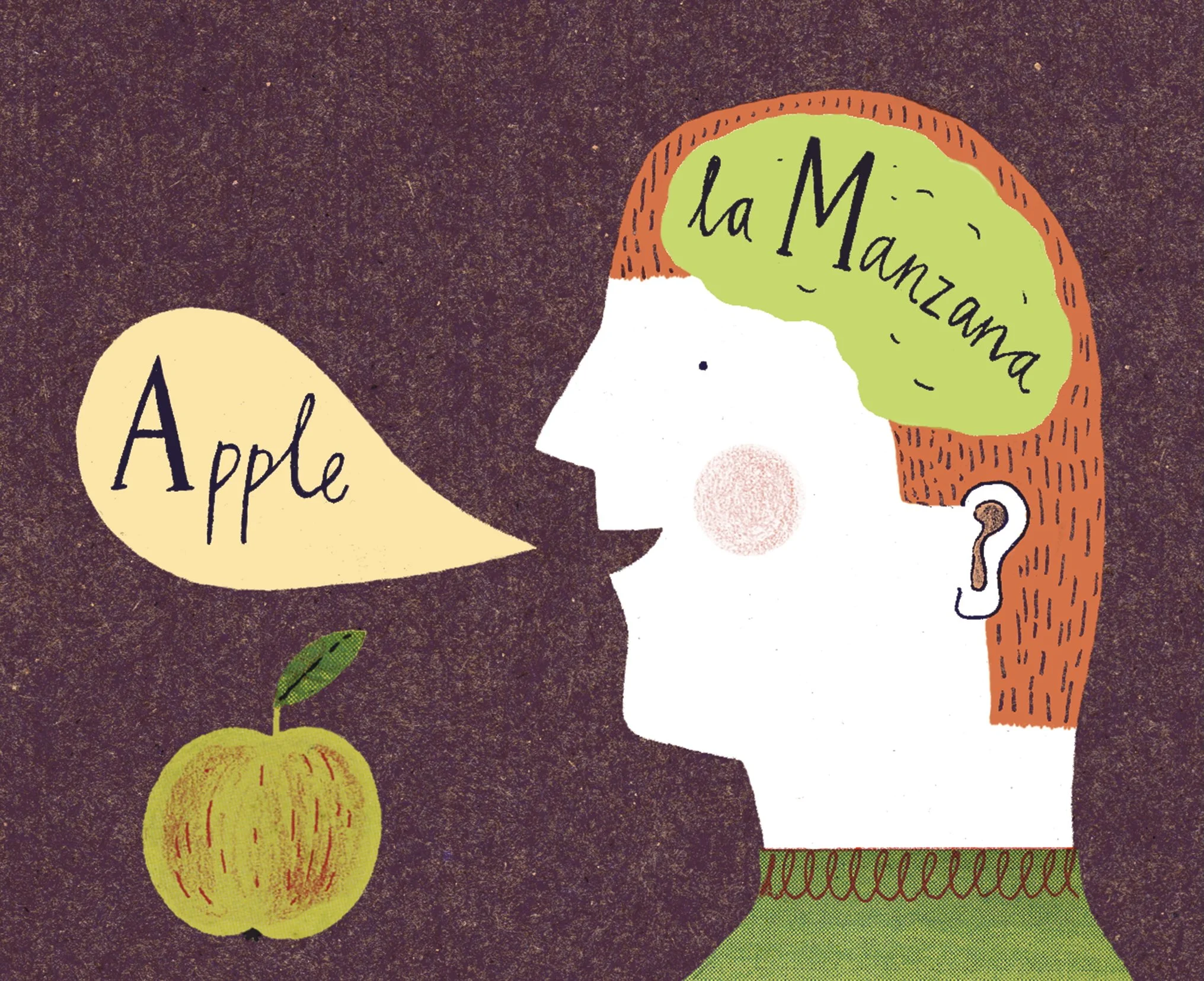
Illustration by Harriet Russell

Learn | 'Just for Fun' Languages

David Parker March 12, 2026

Learning a little about a language can enhance a holiday abroad or help you connect with new friends or family. But sometimes it’s nice to learn something ‘just for fun’. Here are a few languages you can learn in order to impress, amuse or just look a bit quirky next time you are required to list your hobbies.

Ancient languages

Dead languages are not for the faint-hearted. Many are the school students who have nodded along sagely to the ditty: “Latin is a language as dead as dead can be. First it killed the Romans and now it’s killing me.” 

But if you fancy yourself as a bit clever and have a curious mind, it can be really fun. Many will have letters or whole alphabets that are new to you. Some may even have hieroglyphs to learn. Despite its reputation, Latin is actually one of the easiest dead languages to learn. There are many books and online courses out there to sign up to and you’ll probably find a local adult education centre that runs courses if you want to learn alongside others. 

Other dead or ancient languages to consider giving a go are: Old English, Old Norse, Sanskrit, Biblical Hebrew or Classical Chinese. 

Very niche languages

Starting close to home, Cornish is a great language to learn. It’s been almost critically endangered at points but thanks to apps and websites like GoCornish, is seeing a bit of a resurgence. Apart from sounding very impressive when on holiday there, it also will allow you to understand Modern Cornish music, a mix of pop and traditional Cornish folk songs. If you’re not familiar with it, it’s worth a listen. 

Greenlandic is a little-spoken language that’s fun to learn because of its polysynthetic nature, meaning the words are composed of many parts which may have independent meaning but cannot necessarily stand alone. 

Indigenous languages such as Noongar, spoken in a small corner of Western Australia, are fascinating to learn and have the additional benefit of helping to keep a language (and sometimes an entire culture) alive. 

Or perhaps try Breton, Belarusian or Basque. 

Constructed languages

Also known as ‘con-lans’, these are languages that were intentionally created, rather than having developed organically over time. The most famous example is Esperanto, created in the late 19th Century to be a universal second language. There are only around 10,000 fluent speakers but it’s thought up to a million understand ‘enough to get by’. 

Not-your-usual languages

Languages that don’t feature ‘written or spoken’ words as we know them actually number many more than you might think. Most obviously there are the various sign languages and BSL (British Sign Language) is very easy to access and learn via britishsign.co.uk. Then there are computer languages and codes, of course. 

But did you know there is a language constructed entirely of whistles? Silbo Gomera is a language that includes vowels, consonants and has its own system of grammar but is made only by whistling. It is spoken on the island of La Gomera in the canaries where for years its inhabitants announced, births, deaths, weather events and village gossip in this way across its steep valleys and difficult terrain. Despite there being other methods of communication now, schoolchildren of La Gomera still learn it today to stop it dying out. 

Quipus, meanwhile, were used by the Inka Empire to record data, records and stories using a system of knots made on coloured threads or strings made from llama hair. Once the message was made they could be sent by runner to the intended recipient. 

Made-up languages

Many well-known books, films and TV series include made-up languages from Elvish in Tolkien’s literary world to some of the words used in JK Rowling’s Harry Potter universe. Strictly speaking, these are all constructed languages (see above) but are completely pointless in the real world. However, there’s a lot of joy to be had in the completely pointless. On the language app, Duo Lingo, you can currently learn Dothraki (from Game of Thrones) or Kling-On (from Star Trek). Now: ghojchoH! (begin learning!) 


If you’d like to learn more about how learning a new language can improve your wellbeing, you might enjoy our feature ‘More Than Words’ in our March issue, by Rebecca Frank.

Buy this month's The Simple Things -buy, download or subscribe

More fun for language-lovers…

Featured
Harriet Russell wellbeing languages.jpg
Mar 12, 2026
Learn | 'Just for Fun' Languages
Mar 12, 2026
Mar 12, 2026
Ducks My Plot.jpeg
Apr 1, 2025
Language | Learn to speak 'Duck' abroad
Apr 1, 2025
Apr 1, 2025
Getty Crosswords.jpg
Jul 9, 2024
How To | Solve Crosswords
Jul 9, 2024
Jul 9, 2024

More from our blog…

Featured
April Get Lucky playst.png
Mar 18, 2026
Playlist | Get Lucky
Mar 18, 2026
Mar 18, 2026
Lazy Susan 1.jpeg
Mar 18, 2026
Competition | Win one of four garden benches from Lazy Susan
Mar 18, 2026
Mar 18, 2026
Weleda 1.jpeg
Mar 18, 2026
Competition | Win a Nourishing Skin Food Bundle from Weleda
Mar 18, 2026
Mar 18, 2026
In Think Tags issue 165, language, learn something new
Comment

Language | Learn to speak 'Duck' abroad

David Parker April 1, 2025

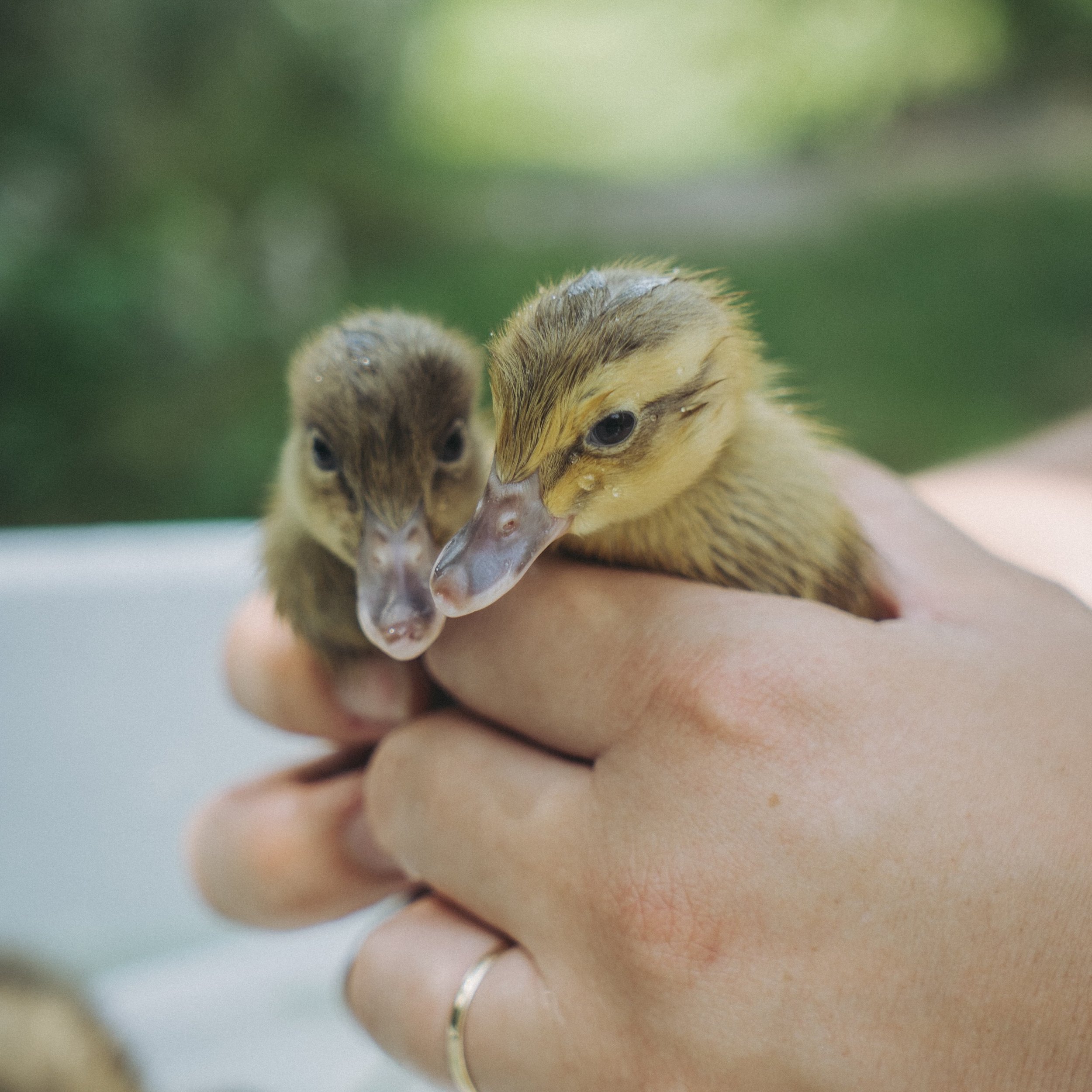
Photography: Ramona Jones

If it walks like a duck and quacks like a duck, as they say… chances are it’s a duck. But what if you’re in another country and it DOESN’T quack like a duck at all? Animal noises must surely sound the same the world over (though who’s to say if they aren’t speaking French or Spanish at the end of the day?) But interestingly, their sounds are represented differently across the globe. Why is that? 

Language learning app, Duo Lingo has a few answers: “The language you speak shapes which sounds you hear, and how you imagine animals sounding when they make noise. So the way a language represents the noise a pig makes can tell us about what sounds exist in that language and how they form words. For example, in English, the noise a pig makes (oink!) contains the sound combination [ɔɪ], reflecting that this is an acceptable combination of sounds in English, as in the word oil. But not all languages have those two particular vowels, and even if they do, they might not be allowed to be combined that way. In Polish, the noise a pig makes is chrum, where the first sound is sort of between a "k" and a "h"—a sound that doesn't exist in English! (And maybe if we had it, we'd think pigs were saying chrum, too.)”

So that’s pigs sorted. Let’s back to ducks. We’ve done a quick sweep across the globe and translated ‘Quack quack’ into a few different languages, so when you’re next on your travels you’ll know exactly what to say if a duck greets you! 

Welsh - Cwac cwac

French - Coin coin

German - Quak quak

Danish - Rap rap

Dutch - Kwak kwak

Finnish - Kvaak kvaak

Italian - Qua qua

Ukrainian - Kakh kakh

Latvian - pēk pēk

Icelandic - Bra bra

Bulgarian - Na na

Romanian - Mac mac

Mandarin (presumably Mandarin Ducks?) - 嘎嘎 (gā gā)

We couldn’t get enough of ducks in our April issue. The cover features some very fluffy ducklings, you can meet some ducks in our ‘My Plot’ pages and our ‘Magical Creatures’ feature looks at ducks this month, too. The issue is on sale now. The ducklings above belong to Ramona Jones, whose garden features in our My Plot pages this month. Her book Growing (Ebury Press) with additional photography by Aaron Gibson, is out now.

Buy this month's The Simple Things - buy, download or subscribe

More wonderful words…

Featured
Harriet Russell wellbeing languages.jpg
Mar 12, 2026
Learn | 'Just for Fun' Languages
Mar 12, 2026
Mar 12, 2026
Ducks My Plot.jpeg
Apr 1, 2025
Language | Learn to speak 'Duck' abroad
Apr 1, 2025
Apr 1, 2025
Getty Crosswords.jpg
Jul 9, 2024
How To | Solve Crosswords
Jul 9, 2024
Jul 9, 2024

More from our blog…

Featured
April Get Lucky playst.png
Mar 18, 2026
Playlist | Get Lucky
Mar 18, 2026
Mar 18, 2026
Lazy Susan 1.jpeg
Mar 18, 2026
Competition | Win one of four garden benches from Lazy Susan
Mar 18, 2026
Mar 18, 2026
Weleda 1.jpeg
Mar 18, 2026
Competition | Win a Nourishing Skin Food Bundle from Weleda
Mar 18, 2026
Mar 18, 2026
In Fun Tags language, ducks, nature
Comment

Photography by Anna Pande

How to | Speak Like a Glaswegian

Iona Bower September 22, 2023

In our September issue, we visited Glasgow in our My City pages. If you were inspired to a visit yourself, here’s a little primer on how to speak like a true Weegie while you’re there. 

Awa' an bile yer heid
Meaning: ‘Go away and boil your head.’ Or get lost, take a hike, etc etc. 

Baltic

Meaning: Cold (etymology fairly obvious, and Glaswegians know a thing or two about the cold, so if THEY say it’s Baltic out there, we believe them.)

Bampot

Meaning: Idiot, probably derived from the English word ‘barmpot’, a pot for storing yeast.

Coupon

Meaning: Face, likely from the French ‘couper’, meaning ‘to cut. It’s thought French soldiers in battle referred to decapitated heads of the enemy as ‘coupons’, and that somehow filtered through to the streets of Glasgow, 

Hee-haw

Meaning: Nothing. The sound a donkey would make, or a loud laugh. As in “how much is in your wallet?” “Absolute hee haw!”

Wean

Meaning: child, as in a baby who would be weaned off the breast. 

Scunnered

Meaning: Disgusted. From the old Scots ‘skunnyr’ meaning to flinch or shrink back from. 

Piece
Meaning: a sandwich or slice of bread. As in a ‘jeely piece’ (jam sandwich). A piece referred to a piece of bread but it came to mean a sandwich, too. Not that a true ‘piece’ is not a tidily cut-up sarnie but a couple of slices of bread, stuffed with filling that probably falls on your top as you eat it. 

Haud yer wheest

Meaning: shut up. Wheesht once existed in English as ‘whisht’ and both simply mean ‘shush’. 

Greet

Meaning: To cry, coming from the Old English ‘gret’. A ‘greetin’ face’ is a cry baby.


You can read all about Anna Pande’s Glasgow in our armchair travel pages, My City, in our September issue.

More from My City…

Featured
Glasgow My City.jpg
Sep 22, 2023
How to | Speak Like a Glaswegian
Sep 22, 2023
Sep 22, 2023
When in Rome.jpg
Mar 28, 2023
Travel | When in Rome
Mar 28, 2023
Mar 28, 2023
downtown Reykjavík 3.jpg
Nov 12, 2022
Think | Why We Want More Icelandic Things
Nov 12, 2022
Nov 12, 2022

More from our September issue…

Featured
Swim Pond.jpg
Sep 23, 2023
Project | Build a Garden Swimming Pond
Sep 23, 2023
Sep 23, 2023
Glasgow My City.jpg
Sep 22, 2023
How to | Speak Like a Glaswegian
Sep 22, 2023
Sep 22, 2023
Bath spa .jpg
Sep 21, 2023
Wellbeing | UK Spa Towns
Sep 21, 2023
Sep 21, 2023
In Fun Tags issue 135, My City, Glasgow, language
Comment
Featured
 MARCH ISSUE   Buy  ,   download  or  subscribe   Pre-order a copy of  our new Homebird bookazine   Buy  Flourish Volume 4 , our wellbeing bookazine Order our  our new Celebrations Anthology   See the sample of our latest issue  here   Listen to  our
Feb 27, 2026
Feb 27, 2026

MARCH ISSUE

Buy, download or subscribe

Pre-order a copy of our new Homebird bookazine

Buy Flourish Volume 4, our wellbeing bookazine
Order our our new Celebrations Anthology

See the sample of our latest issue here

Listen to our podcast – Small Ways to Live Well

Feb 27, 2026
Join our Newsletter
Name
Email *

We respect your privacy and won't share your data.

email marketing by activecampaign
facebook-unauth pinterest spotify instagram
  • Subscriber Login
  • Stockists
  • Advertise
  • Contact

The Simple Things is published by Iceberg Press

The Simple Things

Taking time to live well

We celebrate slowing down, enjoying what you have, making the most of where you live, enjoying the company of of friends and family, and feeding them well. We like to grow some of our own vegetables, visit local markets, rummage for vintage finds, and decorate our home with the plunder. We love being outdoors and enjoy the satisfaction that comes with a job well done.

facebook-unauth pinterest spotify instagram