The Simple Things

Taking time to live well
  • Home
  • Subscribe
  • SHOP
  • Newsletter
  • About
  • Work with us
  • Home
  • Subscribe
  • SHOP
  • Newsletter
  • About
  • Work with us

Blog

Taking Time to Live Well

  • All
  • Chalkboard
  • Christmas
  • Competition
  • could do
  • Eating
  • Escape
  • Escaping
  • Fresh
  • Fun
  • gardening
  • Gathered
  • Gathering
  • Growing
  • Haikus
  • Interview
  • Living
  • Looking back
  • Magazine
  • magical creatures
  • Making
  • Miscellany
  • My Neighbourhood
  • Nature
  • Nest
  • Nesting
  • outing
  • playlist
  • Reader event
  • Reader offer
  • Shop
  • Sponsored post
  • Sunday Best
  • Think
  • Uncategorized
  • Wellbeing
  • Wisdom

Photography by Ali Allen

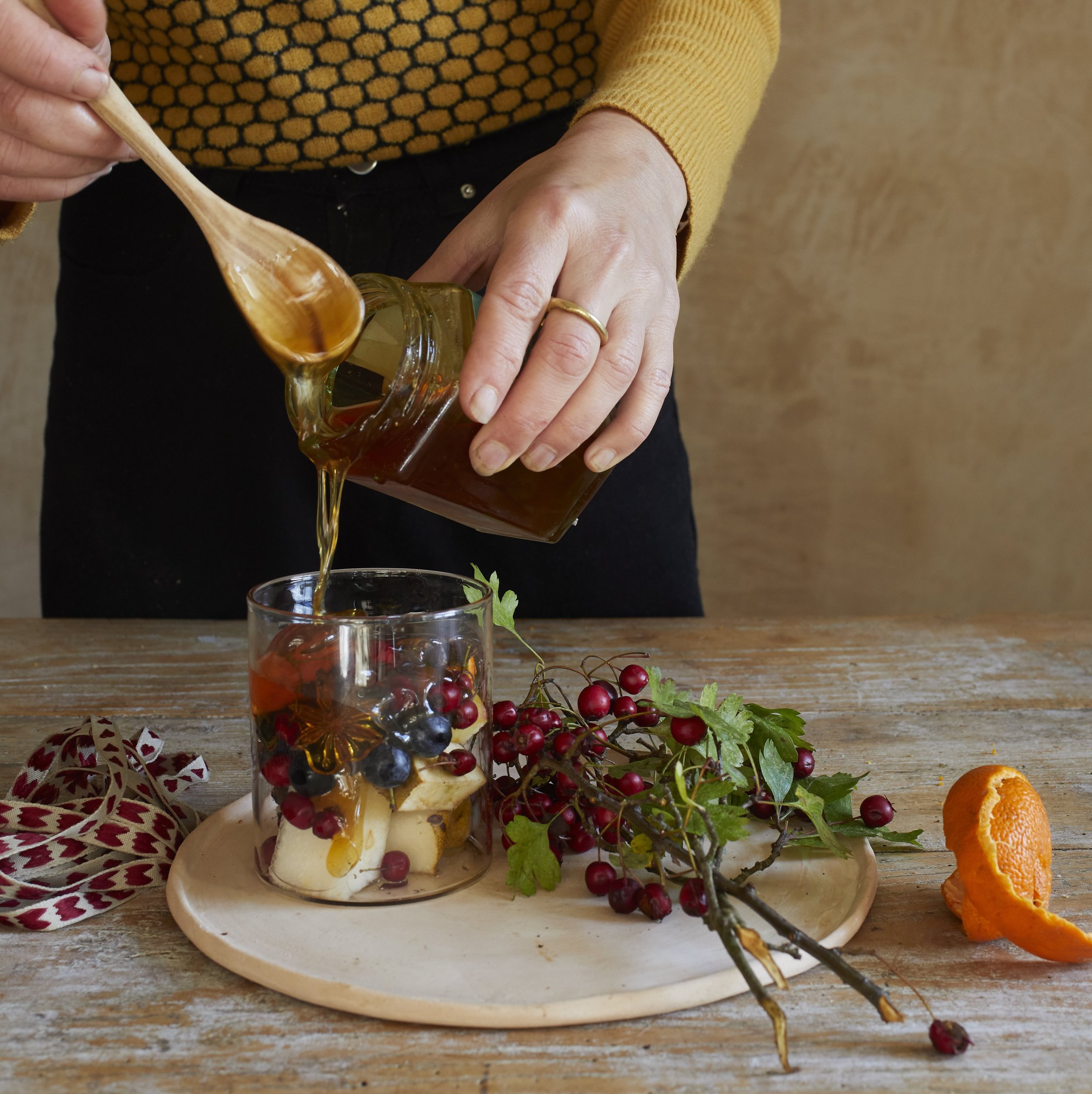
Recipe | Honeyed Hedgerow Syrup

David Parker November 14, 2026

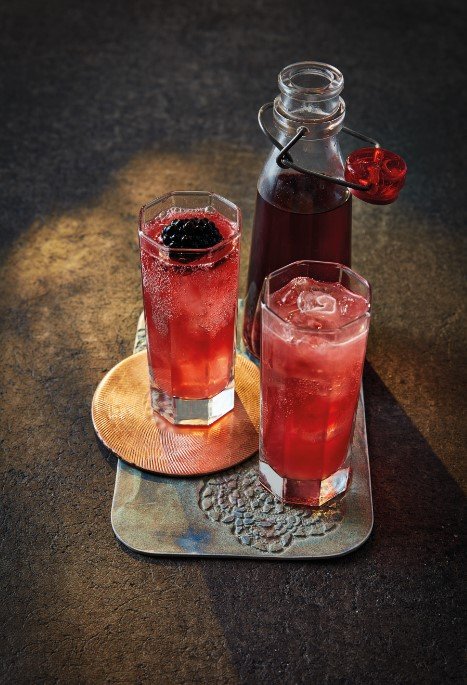
The sloes, rosehips and hawthorn berries are out in full force now but you can also make this syrup earlier in the year in blackberry season

MAKES 1 SMALL BOTTLE

75g hedgerow fruits (sloes, rosehips, hawthorn berries)

75g honey

2 tbsp freshly squeezed citrus juice (lemon, orange, clementine, lime)

1 Mix the fruits, honey and juice in a jar. Ensure there’s a bit of headroom at the top, you don’t want the jar completely full.

2 Secure with a lid and ferment at room temperature for at least 2 weeks, shaking or stirring it every few days during this period. It will keep at room temperature for up to a year. When ready to serve, strain the mixture. It’ll store in a bottle at room temperature for up to a year.

Cook’s note: Allowed to ferment until Christmas, this gorgeous concoction will not only taste incredible as the ideal base for cocktails and mocktails, or as a decadent rosy-hued syrup for desserts, it’ll also give you a nourishing boost ahead of cold and flu season.

This recipe was taken from our Home Economics feature, Stir-up Sunday, from our November
issue, which features projects to share and store, including Christmas Puddings, Truffles,
Chutneys, an Anglo-Indian Glutney, Winter Kraut, Sloe Gin and Ginger Beer. The recipes are by
Rachel de Thample.

More from our November issue…

Blog
Hedgerow syrup.jpg
November 14, 2026
Recipe | Honeyed Hedgerow Syrup
November 14, 2026
Read more →
November 14, 2026
Shepherd.jpg
November 10, 2026
Careers | Could I be a Shepherd?
November 10, 2026
Read more →
November 10, 2026
Pooh.png
November 8, 2026
Life Lessons | From the Hundred Acre Wood
November 8, 2026
Read more →
November 8, 2026

More hedgerow recipes…

Blog
Hedgerow syrup.jpg
November 14, 2026
Recipe | Honeyed Hedgerow Syrup
November 14, 2026
Read more →
November 14, 2026
Hedgerow Switchel.jpg
August 22, 2026
Tipple | Hedgerow Switchel
August 22, 2026
Read more →
August 22, 2026
Hedgerow Fizz.jpg
September 7, 2024
Tipple | Hedgerow Fizz
September 7, 2024
Read more →
September 7, 2024
In Making Tags issue 173, hedgerow, syrup
Comment

Photograph by Suzy Bennett, from the book Artisans of Dartmoor

Careers | Could I be a Shepherd?

David Parker November 10, 2026

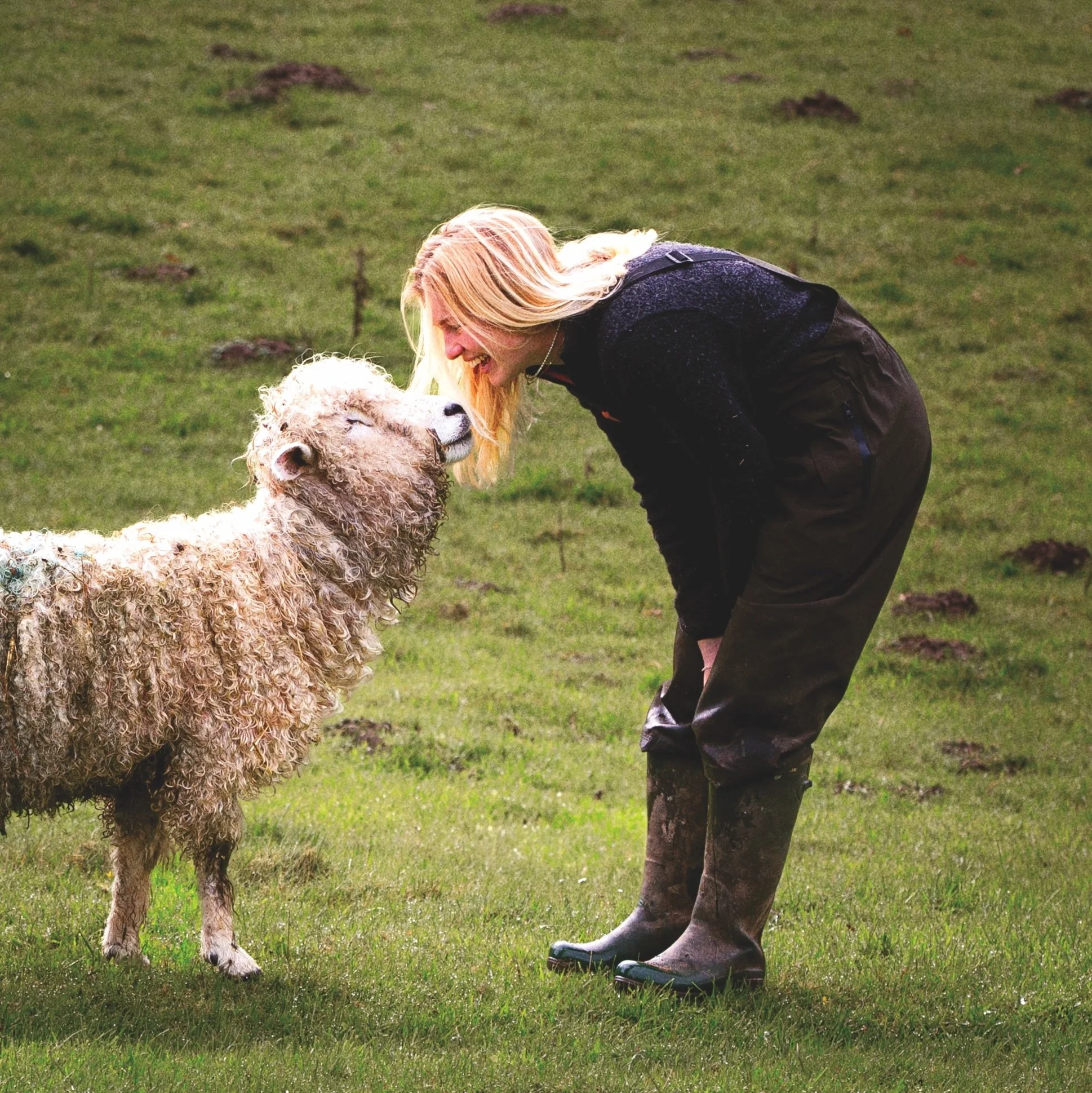
If you fancy yourself as Little Bo Peep… you might want to have a career rethink. Here are some of the skills and characteristics you need to become a shepherd

1. High tolerance for bad weather

Could you dig an animal out of the snow in minus 40-degree wind chill? Carry sodden bales of hay miles across fields in driving rain? Or cope with shearing a wriggling sheep in 35-degree heat? Sheep never stop so you need to be ‘outdoorsy’ to say the least. If you’re already a bit weather-beaten, so much the better. 

2. Speed and agility

Most jobs as a shepherd begin ‘first catch your sheep’ so you’d better be fast. Chase it into a catch pen first, or you will find yourself dashing comically around a field and possibly drawing an amused crowd. Once in a small pen, the job is easier as there’s nowhere much for the sheep to go. Cup one hand around the sheep’s jaw and place the other on its neck. If a sheep has its head up it’s easier to control. You can grab a back leg to help you get a purchase on its head if you need to. A shepherd’s crook can be used if you need a longer ‘reach’. We were surprised too! Turns out they’re not just used in panto!

3. Excellent observation skills

One of the main tools a shepherd has for managing her flock is known as Body Condition Scoring. It means looking at an animal and being able to size up its health and nutritional status, but it’s much more than a visual check. Most of the information is gleaned by rubbing your hands along the backbone, ribs and loin to feel for fat and muscle. A bit like a pat-down at the airport. But woolier. And more aggressive.

4. Not being scared to be hands on

If you thought the Body Condition Scoring was a bit personal, wait till they tell you what other jobs you might have to get hands on with. But first you have to get the animal into a compliant position by ‘tipping’ her. You start with the sheep in a standing position, then put her on her rump. From there, jobs like giving vaccines and ear tagging are a lot easier. NOT ‘easy’, we hasten to add. Just less terrible. 

5. A strong stomach

Sheep poo really is the least of your worries. Once you have tied string around a womb prolapse bare-handed you’ll feel differently about a) your lunch. And b) other nasty jobs like unblocking a drain. 

6. Patience. Lots of it

Like the Supremes said, you can’t hurry sheep. OK, that was ‘love’ but the principle is the same. Sheep work on their own timeframe, particularly during lambing season. You will spend many hours standing in a field, but even on days when nothing much is happening, you learn so much from standing in that field. Watching your sheep is how you get to know them and know what their ‘normal’ is, so it’s always time well spent. If you’re the sort of person who works to a timetable, don’t work with sheep. 

7. A big heart and also a hard heart

To handle sheep you need to love them, each and every one of them, for their funny ways and quirky personalities. By the time you’ve stayed up all night with them in a hail storm because they’re ill, sat with them while they laboured bravely in lambing season, and teared up as you’ve seen their babies into the world, you’ll love them like your own children. And then you need to know when it’s time to call the vet one day and say goodbye as they are seen off over the woolly rainbow. And after that you just have to pick yourself up and get on with the next job. Because there are more sheep that need you and will break your heart into pieces all over again. 

In our November issue we meet some of the artisans from Dartmoor, including a pair of rare-breed sheep farmers, Flora and Lewis. Turn to page 78 to read all about them.

More fun from the farm…

Blog
Shepherd.jpg
November 10, 2026
Careers | Could I be a Shepherd?
November 10, 2026
Read more →
November 10, 2026
sheep.jpg
November 16, 2021
How To | Shear a Sheep
November 16, 2021
Read more →
November 16, 2021
Sheep from Adventures of the Yorkshire Shepherdess  by Amanda Owen Pan Macmillan photography by  Ian Forsyth.jpg
July 7, 2019
Tutorial | herding sheep
July 7, 2019
Read more →
July 7, 2019

More from our November issue…

Blog
Hedgerow syrup.jpg
November 14, 2026
Recipe | Honeyed Hedgerow Syrup
November 14, 2026
Read more →
November 14, 2026
Shepherd.jpg
November 10, 2026
Careers | Could I be a Shepherd?
November 10, 2026
Read more →
November 10, 2026
Pooh.png
November 8, 2026
Life Lessons | From the Hundred Acre Wood
November 8, 2026
Read more →
November 8, 2026
In Nature Tags issue 173, sheep
Comment

Original illustrations: Copyright © E.H.Shepard LLP / Estate of E.H.Shepard and HarperCollins Publishers Limited

Life Lessons | From the Hundred Acre Wood

David Parker November 8, 2026

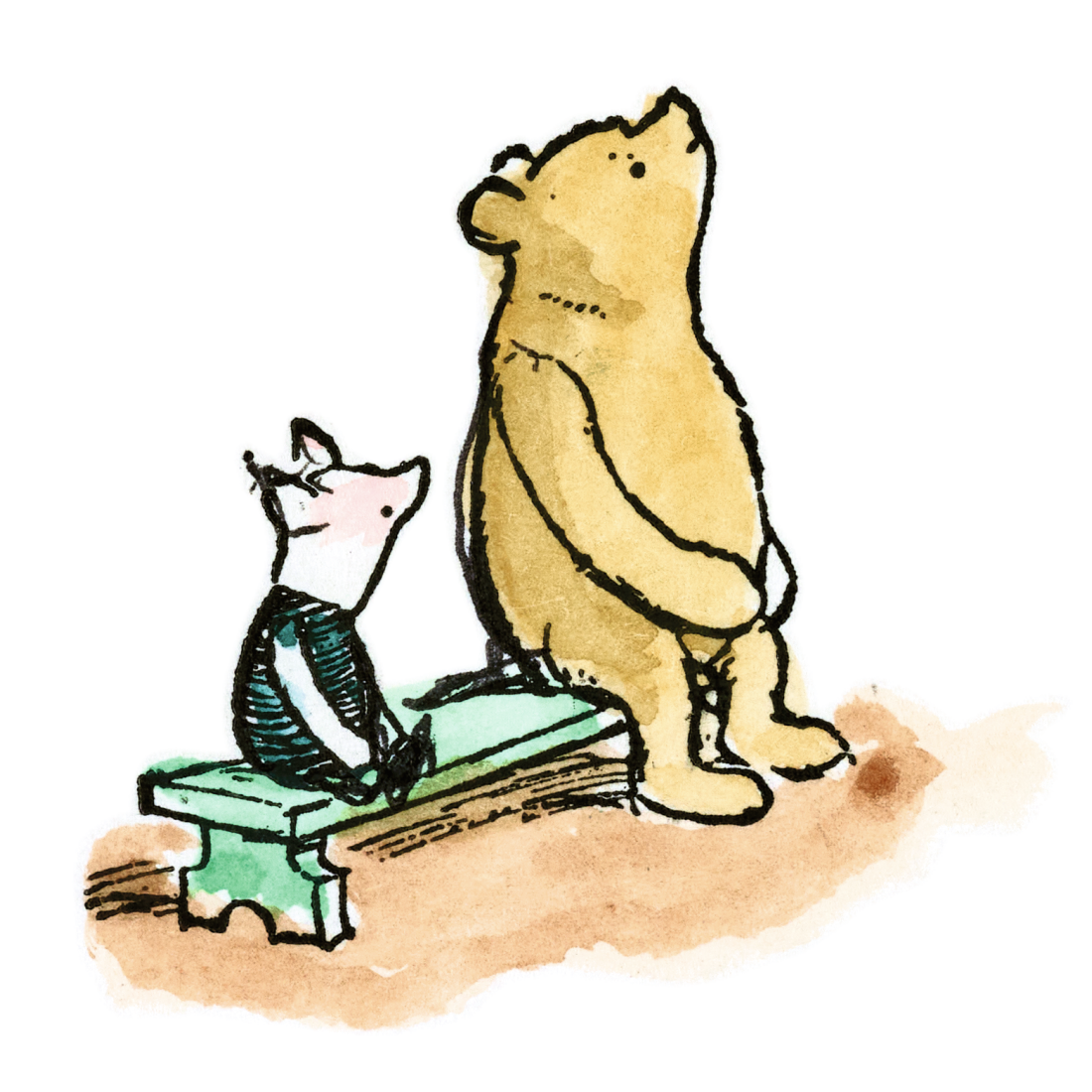
This year marks the 100th anniversary of the publication of the first Winnie-the-Pooh book and to mark it, we’ve learned some life lessons from our favourite Hundred Acre Wood friends.

Practise the art of quiet optimism, like… Winnie-the-Pooh

A closet philosopher, Pooh has his moments of self-doubt, and while he may be described as ‘a bear of very little brain’, he regularly makes the sort of insightful comments that just lift your soul a little. Simon Beecroft, author of The Disney Winnie The Pooh Centenary Book (DK), points out that “Pooh approaches the world with curiosity and trust, often reminding readers of the value of simple joys.” In chapter four of The House At Pooh Corner, Milne tells us: ‘The sun was so delightfully warm, and the stone, which had been sitting in it for a long time, was so warm, too, that Pooh had almost decided to go on being Pooh in the middle of the stream for the rest of the morning.” What a life!

Pooh also uses his gentle optimism to encourage others around him. Here he is, comforting Piglet in chapter eight: “‘Supposing a tree fell down, Pooh, when we were underneath it?’ ‘Supposing it didn’t,’ said Pooh, after careful thought.”

In a world where we could worry all day long that bad things might happen, like Pooh, try thinking simply: ‘but maybe they won’t.’

Take pleasure in home-making like… Kanga 

There are notably no adults among the Hundred Acre Wood crew, but Kanga (and her joey, Roo) represent the parental love that is otherwise missing from the stories. Kanga is a maternal presence for all the other characters, while Roo’s stories demonstrate the value of security: knowing where your roots are, but still reaching out to grow. 

“Kanga is kind and calm, with a quiet strength. She is also practical and nurturing, always looking out for Roo’s safety and well-being,” notes Beecroft.  

Milne tells us in The House at Pooh Corner: “Now it happened that Kanga had felt rather motherly that morning, and Wanting to Count Things - like Roo’s vests, and how many pieces of soap there were left, and the two clean spots in Tigger’s feeder.” 

These are important things Never underestimate the pleasure that pottering, ‘counting vests and soap’ and making our homes feel like a nest, can bring. Like Kanga and Roo, when your home is comforting and orderly you’ll want to head out for more adventures… if only for the pleasure of returning to the safety of home once more.  


Enjoy simple pastimes like… Eeyore 

Eeyore is generally pictured as the ‘gloomy’ one, which he is in many ways, but what people often miss is the way in which the donkey’s low expectations allow him to enjoy what he has.  

Simon Beecroft points to “Eeyore’s birthday, in chapter six of Winnie-the-Pooh, when he is given an empty honey jar by Pooh and a burst balloon by Piglet. [This] illustrates the interactions between the characters, highlighting their well-intentioned efforts, the unforeseen consequences of those efforts, and Eeyore’s ability to take pleasure in unexpected outcomes!” 

While Pooh and Piglet worry that their gifts are not what they might have been, Eeyore is delighted to discover simply that he has ‘a pot to put things in’ and a burst balloon that can be put in the pot. Milne tells us: “But Eeyore wasn’t listening. He was taking the balloon out, and putting it back again, as happy as can be.” 

Eeyore expects little from life, but when your pleasures are simple (such as a thistle crushed by the weight of a friend’s bottom), there are plenty of pleasures to be found. 


Bounce back like… Tigger 

In a world where it feels as if we are constantly told to ‘be more resilient’, we can learn from Tigger’s boundless enthusiasm. His resilience is about pure joy, rather than strength in the face of adversity and he meets each new challenge with excitement. When we first meet him in The House at Pooh Corner, we learn that “Tiggers like everything!” Tigger gamely tries honey (but “Tiggers don’t like honey”), then haycorns (but “Tiggers don’t like haycorns”) and even Thistles. You’ve guessed it – “too hot!” Tiggers don’t like thistles. Tigger simply tries whatever is on offer, has enough self-knowledge to happily declare that he doesn’t like it and moves on to try the next thing with the same unimpeded energy. 
Later in the book, Rabbit announces his intention to ‘unbounce’ Tigger. “There’s too much of him,” Rabbit complains. But suddenly the idea of him being ‘unbounced’ feels very sad indeed. And in the end the lesson that is learned is not learned by Tigger at all. Rabbit learns that being ‘bouncy’ can be a wonderful thing... “And the small and sorry Rabbit rushed through the mist at the noise, and it turned into Tigger; a Friendly Tigger, a Grand Tigger, a Large and Helpful Tigger, a Tigger who bounced, if he bounced at all, in just the beautiful way a Tigger ought to bounce.” We all need a Tigger in our lives. 

You can read life lessons from some of the other characters, including Piglet, Rabbit and Owl, in our November issue.

Buy this month's The Simple Things -buy, download or subscribe

More lessons to learn from children’s books…

Blog
Jessica Benhar-Little red riding hood-1200 dpi.jpg
October 21, 2023
Create | Fairytale Story Starters
October 21, 2023
Read more →
October 21, 2023
RoaldDahl2.jpg
September 9, 2023
Life Advice | From Roald Dahl
September 9, 2023
Read more →
September 9, 2023
Famous Five.jpg
September 24, 2022
Quiz | Which member of The Famous Five are you?
September 24, 2022
Read more →
September 24, 2022

More from our blog…

Blog
Wellbeing Stocksy.jpeg
November 24, 2026
Wellbeing | Giving Well
November 24, 2026
Read more →
November 24, 2026
Cranberrry Muffins.jpeg
November 21, 2026
Recipe | Cranberry & Orange Muffins
November 21, 2026
Read more →
November 21, 2026
Stocksy Wellbeing.png
November 17, 2026
Wellbeing | A Problem Shared
November 17, 2026
Read more →
November 17, 2026
In Fun Tags issue 173, books, life lessons
Comment

Photography by Catherine Frawley

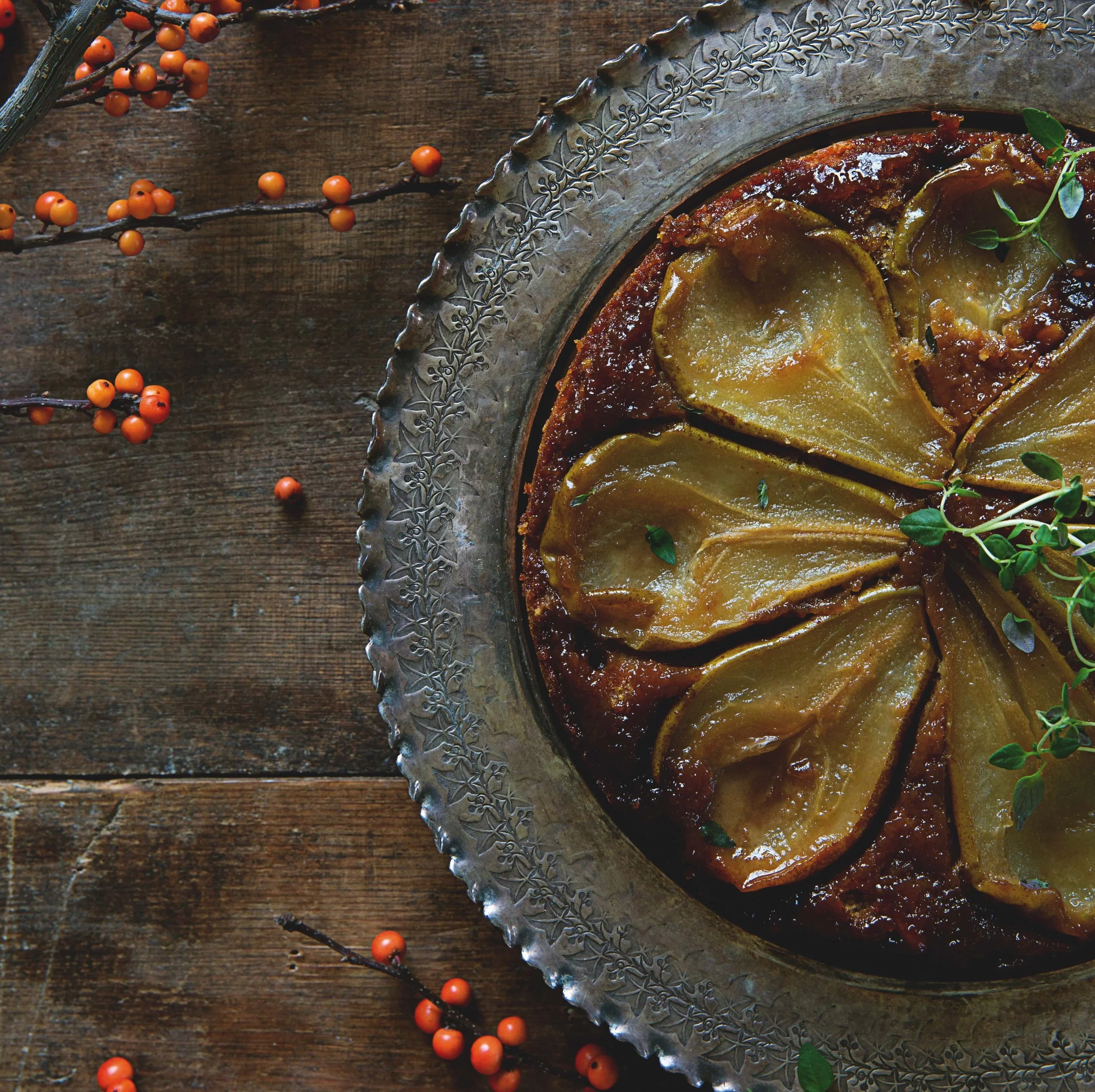
Recipe | Upside-Down Pear Cake

David Parker November 7, 2026

A topsy-turvy cake that makes the most of the season’s pears, turning them into a slice of afternoon joy.

Serves 8-10

3 tbsp unsalted butter

50g dark brown sugar

4 tbsp orange juice

4 ripe medium pears, halved lengthways and cored

For the sponge:

120g unsalted butter, plus extra for greasing

200g golden caster sugar

150g plain flour, plus extra for dusting

2 tsp baking powder

½ tsp bicarbonate of soda

½ tsp ground cinnamon

3 eggs

60ml buttermilk

30g walnuts, roughly chopped

1 In a pan, heat the 3 tablespoons of butter and brown sugar until melted, then stir in the orange juice. Add the pears, cut-side up, and cook gently for 3-4 mins more.

2 Grease a 25cm cake tin and dust with flour. Remove the pears from the syrup and arrange, cut-side down, in the tin. Gently bubble the syrup for a further 5 mins, or until reduced, then pour over the pears. Cool in the fridge.

3 Preheat the oven to 180C/Fan 160C/Gas 4. Meanwhile, in a large bowl, cream together the butter and caster sugar until light and fluffy. Add the flour, baking powder, bicarb, cinnamon and a pinch of salt. Combine fully before adding the eggs, one at a time, mixing well before each new addition. Stir in the buttermilk and walnuts.

4 Pour the cake batter over the pears, then transfer the tin to a baking tray, in case the syrup leaks. Bake for 30–40 mins, or until a skewer inserted into the centre comes out clean.

5 Once baked, remove the cake from the oven and allow it to cool in the tin, before inverting it onto a cake stand or serving platter. This is delicious served warm with plenty of vanilla custard.

Recipe & photography by Catherine Frawley.

This cake featured on our November issue’s front cover. Buy this month's The Simple Things -buy, download or subscribe

More cakes for your tin…

Blog
Pear Cake.jpeg
November 7, 2026
Recipe | Upside-Down Pear Cake
November 7, 2026
Read more →
November 7, 2026
20230609_Every_Last_Bite_Rosie_Sykes_Quadrille_Amazing_Chocolate_Coconut_Squares_017_Patricia_Niven.jpeg
February 8, 2025
Cake | Chocolate Coconut Squares
February 8, 2025
Read more →
February 8, 2025
December 28, 2024
Recipe: Slow Orange Poppy Seed Cake
December 28, 2024
Read more →
December 28, 2024

More from our blog…

Blog
Wellbeing Stocksy.jpeg
November 24, 2026
Wellbeing | Giving Well
November 24, 2026
Read more →
November 24, 2026
Cranberrry Muffins.jpeg
November 21, 2026
Recipe | Cranberry & Orange Muffins
November 21, 2026
Read more →
November 21, 2026
Stocksy Wellbeing.png
November 17, 2026
Wellbeing | A Problem Shared
November 17, 2026
Read more →
November 17, 2026
In Fresh Tags issue 173, cake in the house, pears
Comment

Photography: Anneliese Klos, Adobe Stock

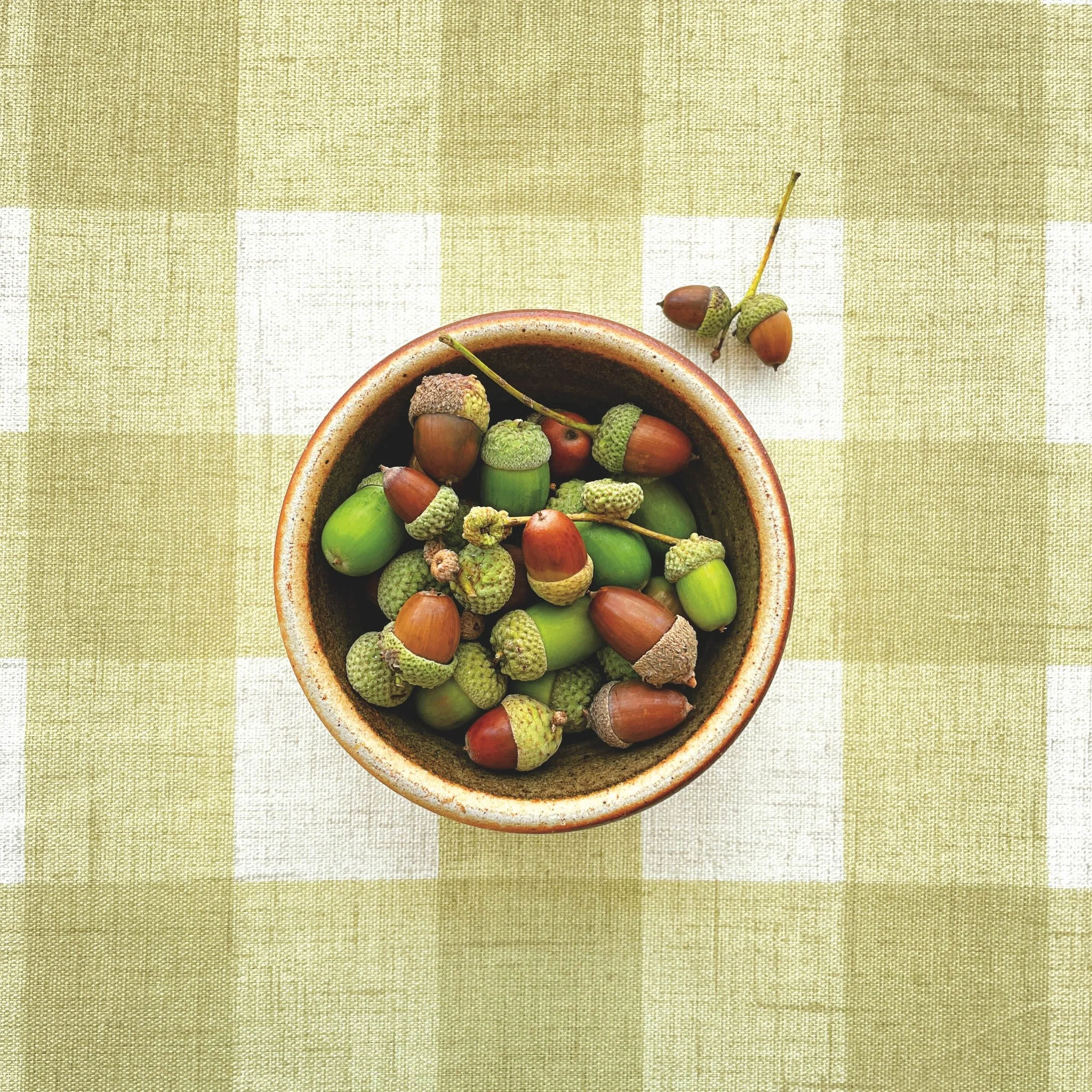
Make | Acorn Projects

David Parker November 3, 2026

Acorns are everywhere! Here are a few things you can make with them this autumn

Ink

Break up acorn caps in a pestle and mortar. Soak in water overnight. Drain and simmer covered in water for an hour. Filter through a muslin or coffee filter. Find full instructions in issue 160 of The Simple Things. 

Dye

Cover acorn nuts with cold water and steep for 24 hours. Simmer in water on a low heat for 20 mins. Discard the acorns then put your fabric into the liquid and leave overnight. Rinse and hang to dry. Find complete instructions for this make on page 15 of the November issue. 

Coffee

Ripen green acorns in a paper bag before boiling them for 30 minutes. When cooled, remove shells, cut the acorns in half and blitz in a food processor. Spread the tiny pieces on foil on a baking tray and roast at 200C for 30 mins. Grind in a coffee grinder and use as any coffee. 

Flour

Shell brown acorns and soak overnight to release the bitter tannins. Drain and then blend the acorns with fresh water to the consistency of a thick milkshake. Put in a jar in the fridge. Each day the acorns will settle to the bottom and you can pour off the water on the top and refill with clean water. Repeat for five days. Strain the mixture through a muslin then spread the wet flour on a baking sheet and dry it in a very low oven for a day. Once dry, blitz in a blender and store in a clean airtight jar.

Floating candles

Place clean, dried acorn caps cup side up in a bowl of rice to keep them steady. Melt some beeswax according to the instructions. Pour it carefully into the acorn cups. Once slightly dry, press in a cotton wick (try craft shops for these and the wax). Once completely dry, float in a bowl of water for safety and light. 

Wreath or garland

Make an autumnal wreath by using a hot glue gun to attach acorns in their cups to a wreath base. Decorate with a ribbon or fairy lights and hang from your front door. You can paint the acorns first if you prefer but they look lovely in their natural state. 

Find more inspiration in our feature ‘Gathering Acorns’, in the November issue. It’s taken from Gathering Days: A Collection Of Things Foraged And Found by Ellie Evelyn Orrell (Calon, University of Wales Press)

Buy this month's The Simple Things -buy, download or subscribe

More natural makes for autumn…

Blog
Conkers.jpeg
October 17, 2026
Fun | Conker Records
October 17, 2026
Read more →
October 17, 2026
Scented pinecones.jpg
November 24, 2024
Make | Scented Pinecones
November 24, 2024
Read more →
November 24, 2024
Natural Watercolours.jpg
March 3, 2024
Make | Natural Watercolours
March 3, 2024
Read more →
March 3, 2024

More from our blog…

Blog
Wellbeing Stocksy.jpeg
November 24, 2026
Wellbeing | Giving Well
November 24, 2026
Read more →
November 24, 2026
Cranberrry Muffins.jpeg
November 21, 2026
Recipe | Cranberry & Orange Muffins
November 21, 2026
Read more →
November 21, 2026
Stocksy Wellbeing.png
November 17, 2026
Wellbeing | A Problem Shared
November 17, 2026
Read more →
November 17, 2026
In Making Tags issue 173, acorns, autumn makes
Comment

Fun | People Who Did Their Best Work In Bed

David Parker November 1, 2026

Photograph by Rachel Bottomley

If you find it hard to get out of bed in the morning, perhaps you’re doing it all wrong. Here are ten famous people and characters who did some of their best work in bed.

Ernie and Bert (Sesame Street)

These two puppets shared a home and bedroom, in which they had single beds, each displaying their initial. Most of their most famous scenes took place in these beds where their escapades, from Ernie dropping cookie crumbs in Bert’s bed, to Bert putting up with Ernie’s ever louder attempts at drowning out the sounds of a dripping tap, helped teach pre-schoolers the value of compromise and getting along.

The Grandparents (Charlie and the Chocolate Factory)

Charlie Bucket’s four grandparents, Grandpa Joe, Grandma Josephine, Grandpa George and Grandma Georgina, share one bed in Charlie’s parents’ house and have done for 20 years. They exist entirely in that one bed, enjoying Charlie’s visits and living vicariously through him… until Charlie wins the golden ticket and Grandpa Joe immediately and miraculously leaps out of bed, despite his apparent immobility. So in fairness, they didn’t get a lot done but it’s a pretty iconic bed… possibly even magical!

Truman Capote

Best known for In Cold Blood and Breakfast at Tiffanys, Truman Capote did all his writing lying down, with coffee and a cigarette always to hand. He described himself as “a completely horizontal author” and always wrote the first and second drafts of his novels lying down surrounded by pillows before typing them up on a typewriter - also in bed. 

John Lennon and Yoko Ono

OK, probably not Lennon’s ‘best’ work, but he and Yoko certainly made their bed in the Amsterdam Hilton famous when they took to it for a week in March 1969 in a non-violent protest for peace and an end to the Vietnam war. It was such a success that just two months later they did it all again in the Queen Elizabeth Hotel, Montreal. At the end of the second bed-in, they made a spontaneous recording of ‘Give Peace a Chance’, right there in room 1742.

Tracey Emin

Possibly her most famous installation, Emin’s ‘My Bed’ was originally installed in the Tate gallery in 1999 when it was shortlisted for the Turner Prize. The bed was one she had stayed in for four days, consuming nothing but alcohol during a dark time in her life, and infamously featured bloodied underwear, condoms and various other edgy detritus. Safe to say it was pretty divisive. It was at one stage owned by Charles Saatchi and sold at auction in 2014 for more than £2.5 million. While many feel it could be the most important installation ever to hit the art world, others were less impressed. When critics pointed out that “anyone could exhibit an unmade bed”, Emin said simply “But they didn’t, did they?”

Morecambe and Wise

Much like Ernie and Bert, some of the most loved skits from ‘The Morecambe and Wise Show’ featured Eric and Ernie sharing a bed. Eric Morecambe was at first said to be uncomfortable with the idea, but the writer of the sketches, Eddie Braben, convinced him to do it by reminding him that the tradition of comic partners sharing a bed had started with Laurel and Hardy. Morecambe agreed, reluctantly, but insisted on smoking a pipe throughout the scenes “for the masculinity”. 

Florence Nightingale

Proving that not being able to leave one’s bed is no indicator of being workshy, Florence Nightingale spent many years of her life bedridden, particularly after she returned from Crimea, having contracted disease. From her bed she wrote some 200 books, reports and pamphlets and 12,000 letters, driving reform for healthcare and military sanitation. 

Frida Kahlo

Following a near-fatal bus accident and many operations, which meant months at a time spent in bed, Kahlo’s mother set her up with a custom-made easel and mirror canopy to enable her to paint in bed. That famous bed featured in her painting ‘The Dream’ and became a central part of her work. Just a few months before her death, she was carried to the opening of her own exhibition in that four-poster, which she had decorated with pictures of her political heroes. Friends and fans encircled the bed and sang Mexican ballads with her till past midnight. Less than a year later she died in that same bed.

Edith Wharton

A famous ‘bed-writer’ Edith Wharton is said to have worked in bed because it enabled her to take off her corset, and therefore free her thoughts. It’s said she wrote mainly in the mornings, working in long hand on paper, and dropping each sheet on the floor for her secretary to collect and type up.

Mae West

Mary Jane (or Mae) West wrote several of her own screenplays, including ‘Diamond Lil’ from her bed and claimed her bed sparked her creativity. Known as a sex symbol and for her love of double-entendres, West famously declared that “Everybody knows I do my best work in bed.” 

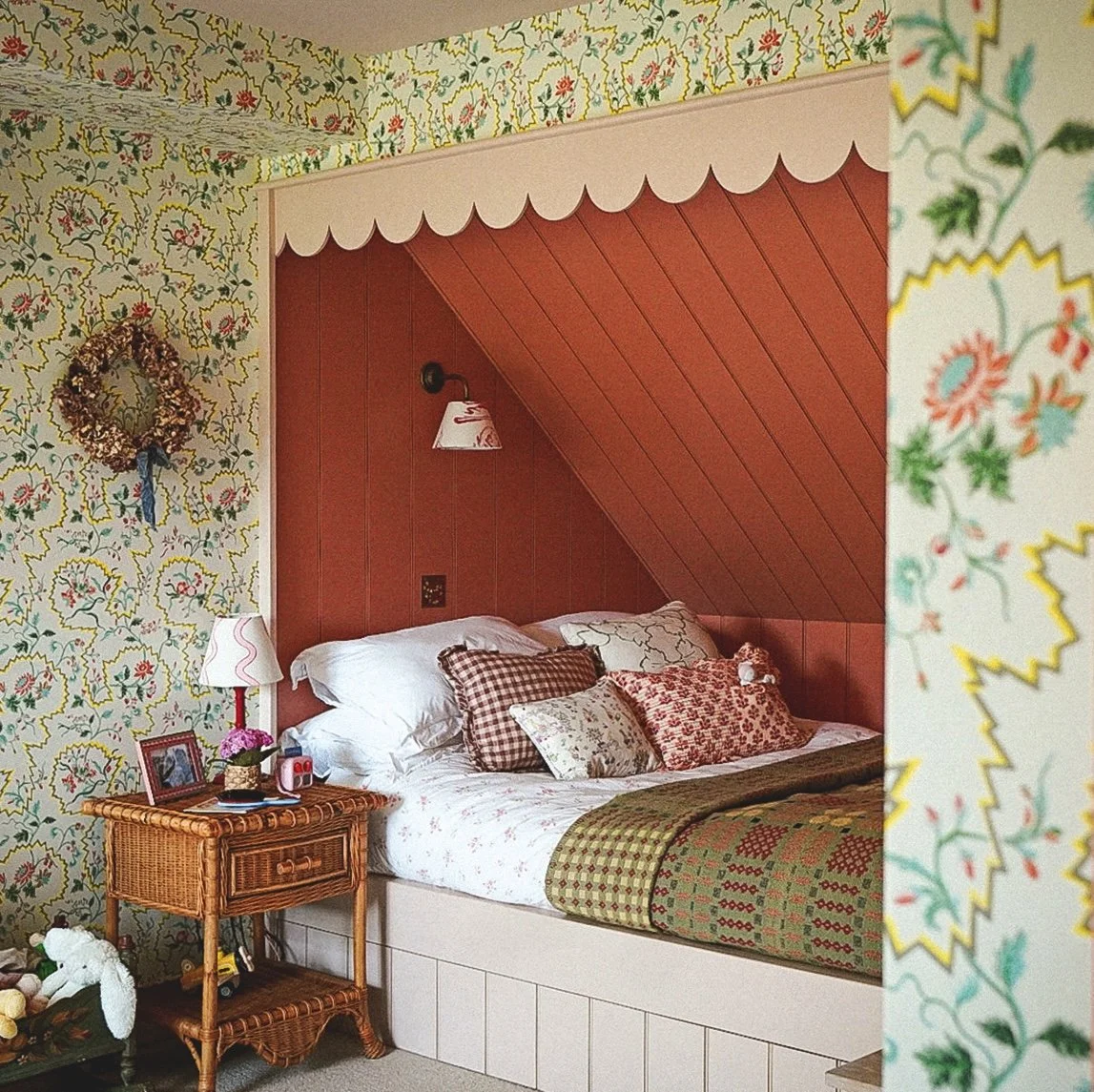
If you’re tempted to take to your bed for a day’s work - or even just enjoy a duvet day - you might enjoy our My Place pages this month, which focus on beautiful bed nooks, such as the one pictured above belonging to Rachel Bottomley.

Buy this month's The Simple Things -buy, download or subscribe

More from our blog…

Blog
Wellbeing Stocksy.jpeg
November 24, 2026
Wellbeing | Giving Well
November 24, 2026
Read more →
November 24, 2026
Cranberrry Muffins.jpeg
November 21, 2026
Recipe | Cranberry & Orange Muffins
November 21, 2026
Read more →
November 21, 2026
Stocksy Wellbeing.png
November 17, 2026
Wellbeing | A Problem Shared
November 17, 2026
Read more →
November 17, 2026

More things to enjoy about your bed…

Blog
bed nooks rachel.bottomley_DSC07333.jpeg
November 1, 2026
Fun | People Who Did Their Best Work In Bed
November 1, 2026
Read more →
November 1, 2026
Rachel Lees view from bed.jpg
February 5, 2022
How to | Have a Proper Lie-In
February 5, 2022
Read more →
February 5, 2022
HowHardDreams.png
January 15, 2018
How to interpret your dreams
January 15, 2018
Read more →
January 15, 2018
In Nest Tags issue 173, bed, my place
Comment

Photography by Alamy

Autumn | Capture the Moment

David Parker October 25, 2026

Autumn’s turning leaves are nature’s own fireworks display at this time of year. Just like any other firework display we want to record these brief spectacles to remind us of the beauty of the season. Here are a few ways to capture this briefest of beautiful moments outdoors…

Set yourself a photo challenge: choose a particular colour, or texture, and only snap images of that.

If you usually take landscape photos, try only taking close ups and vice versa.

Take a sketchbook with you: you might choose to do line sketches, or try and capture just the colours of the landscape without forms.

According to folklore, it’s lucky to catch a single falling leaf before it hits the ground. Why not try and catch your own?

Fill your pockets with fallen leaves and use them to make a firework-themed sun-catcher, arranging them in a clear frame so they catch the light.

Head out with a journal and make notes about the scene: what can you smell? What can you hear? Are the leaves actually gold, or are they a mix of amber and ochre? Write it as if you’re watching a firework display.

The ideas above are taken from our feature ‘Nature’s Fireworks’ in our November issue. You can read more about where and how to appreciate autumn colours from page 60.

Buy this month's The Simple Things -buy, download or subscribe

More ways to celebrate autumn…

Blog
Outing Alamy.jpeg
October 25, 2026
Autumn | Capture the Moment
October 25, 2026
Read more →
October 25, 2026
Conkers.jpeg
October 17, 2026
Fun | Conker Records
October 17, 2026
Read more →
October 17, 2026
October playlist.png
September 18, 2026
Playlist | Autumn twilight
September 18, 2026
Read more →
September 18, 2026

More from our blog…

Blog
Wellbeing Stocksy.jpeg
November 24, 2026
Wellbeing | Giving Well
November 24, 2026
Read more →
November 24, 2026
Cranberrry Muffins.jpeg
November 21, 2026
Recipe | Cranberry & Orange Muffins
November 21, 2026
Read more →
November 21, 2026
Stocksy Wellbeing.png
November 17, 2026
Wellbeing | A Problem Shared
November 17, 2026
Read more →
November 17, 2026
In outing Tags issue 173, autumn leaves, autumn
Comment

Photography by Ali Allen

Make | A Ginger Beer 'Starter'

David Parker October 24, 2026

This easy-to-make starter will set you off on your ginger beer brewing journey

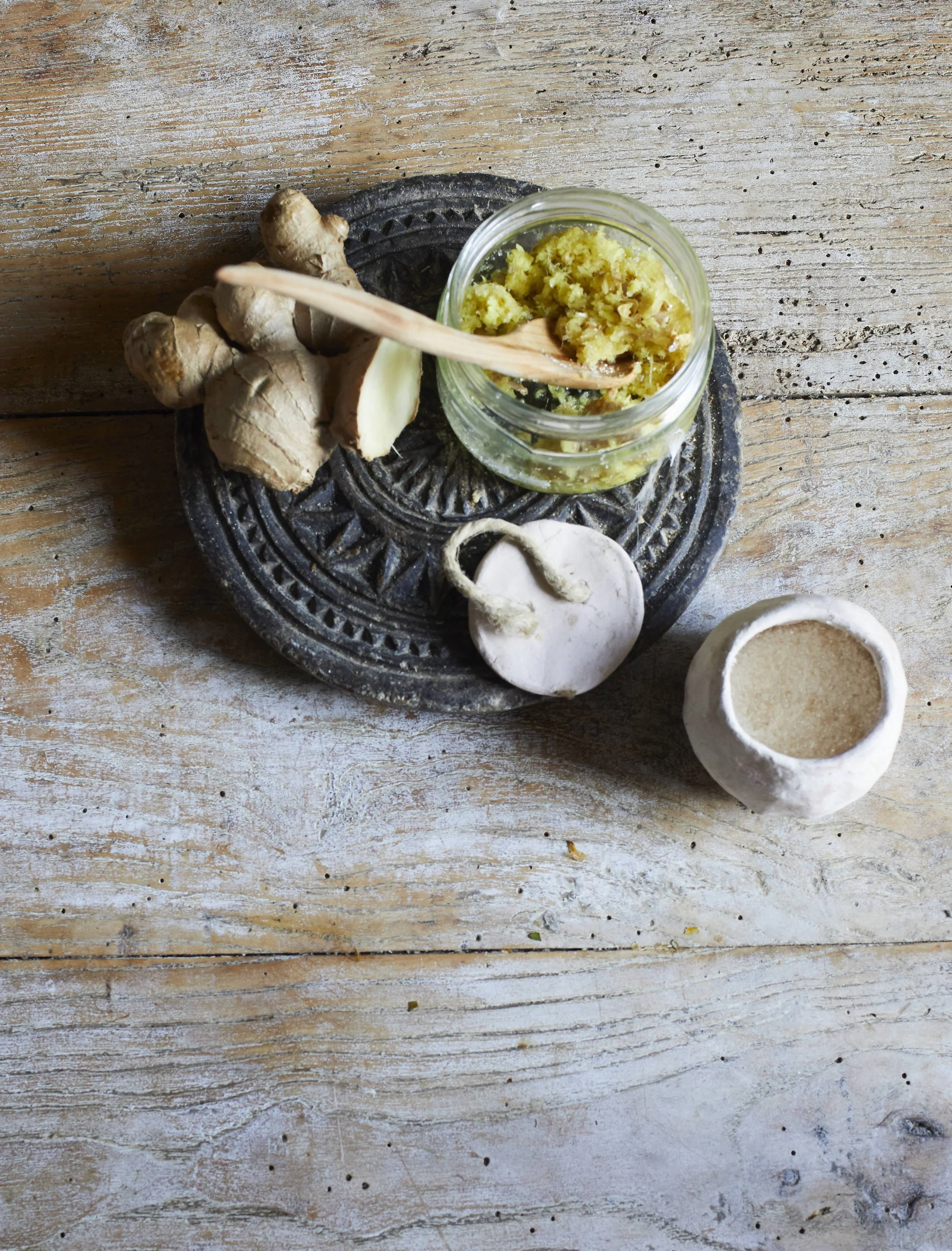
Root ginger has vivacious populations of yeasts and bacteria on its surface, which make for a thrilling bubbly brew. Surprisingly easy and satisfying, it takes about a week to ferment.

MAKES 6 TBSP OF STARTER

100g fresh ginger (ideally organic)
35g raw, organic caster sugar

1 Finely grate 1 tbsp fresh ginger, skin still on, into a small bowl. Add 1 tsp sugar and 1-2 tbsp filtered water and mix to a moist paste; it should not be too watery. Cover with a clean cloth and leave to ferment at room temperature for 1 day.

2 Uncover the bowl and add another 1 tbsp grated ginger, 1 tsp sugar and 1-2 tbsp water to the ginger paste.

3 Repeat for another 4-5 days, topping up your mix each day with the same ratio of ginger, sugar and water, until it starts to fizz a little – if you dip a spoon in you should hear a little snap, crackle and pop, and there will be bubbles. There should also be a ring of yeast on the base of the bowl. Once you have bubbles and yeast, your ginger bug is ready to use.

Cook’s note: It’s better to use organic ginger, as the chemicals involved in conventional farming tend to disrupt the natural balance of bacteria and yeasts on the surface of ginger.

Storing your ginger beer starter

Store your ginger bug, covered, in the fridge for up to 2 weeks between batches. If you plan to brew ginger beer regularly, keep a little bit of your ginger starter back and store it in the fridge until you’re ready for your next brew. Top it up with a paste of 1 tbsp grated ginger, 1 tsp sugar and 2-3 tbsp water to feed it, ready for brewing. You can do this before storing in the fridge, or a few days before brewing.

Once your starter is ready to use, you can make your own homemade ginger beer with the addition of only some sugar and water. Turn to page 43 of the November issue to find the instructions on how to make your finished ginger beer.

Making it fancy

If you want to get fancy you can make your ginger beer with different flavours. Try these additions…

Apple & rosemary (good for sore throats)

Plum & wood avens (or clove)

Pear & star anise

Lemon & thyme

Cranberry (or hawthorn berry) & cinnamon

The starter above is from our November Home Economics feature, ‘Stir-up Sunday’, which includes lots of recipes to share and store. The recipes are by Rachel de Thample and the photography by
Ali Allen.

Buy this month's The Simple Things -buy, download or subscribe

More drinks to make this autumn…

Blog
Ginger beer starter.jpg
October 24, 2026
Make | A Ginger Beer 'Starter'
October 24, 2026
Read more →
October 24, 2026
Hedgerow Fizz.jpg
September 7, 2024
Tipple | Hedgerow Fizz
September 7, 2024
Read more →
September 7, 2024
Hedgerow gin.jpg
September 30, 2023
Tipple | Hedgerow Fruits Gin
September 30, 2023
Read more →
September 30, 2023

More from our blog…

Blog
Wellbeing Stocksy.jpeg
November 24, 2026
Wellbeing | Giving Well
November 24, 2026
Read more →
November 24, 2026
Cranberrry Muffins.jpeg
November 21, 2026
Recipe | Cranberry & Orange Muffins
November 21, 2026
Read more →
November 21, 2026
Stocksy Wellbeing.png
November 17, 2026
Wellbeing | A Problem Shared
November 17, 2026
Read more →
November 17, 2026
In Fresh Tags issue 173, autumn drinks, ginger, food projects
Comment

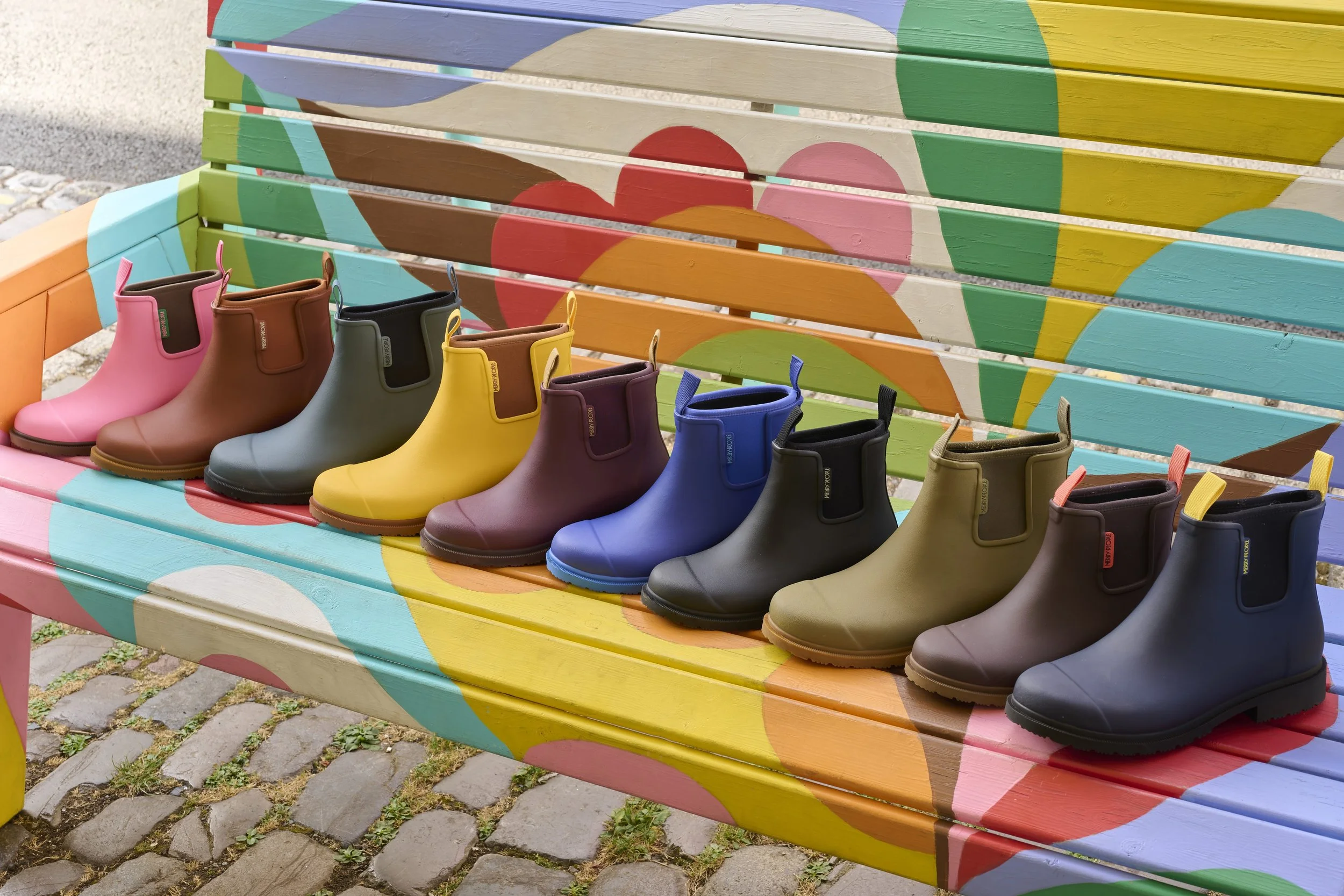
Sponsored Post | Meet the people at Merry People

David Parker October 19, 2026

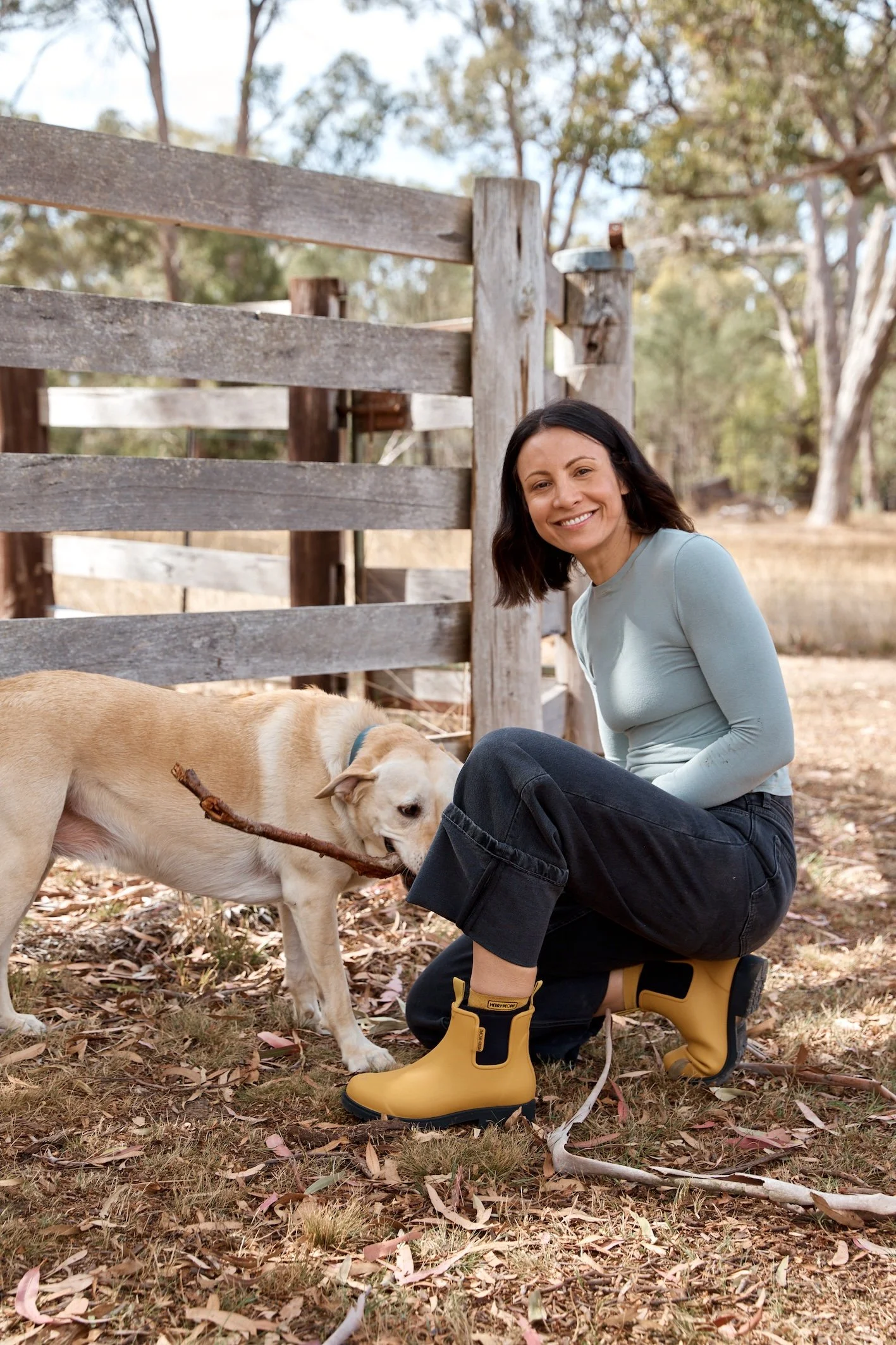
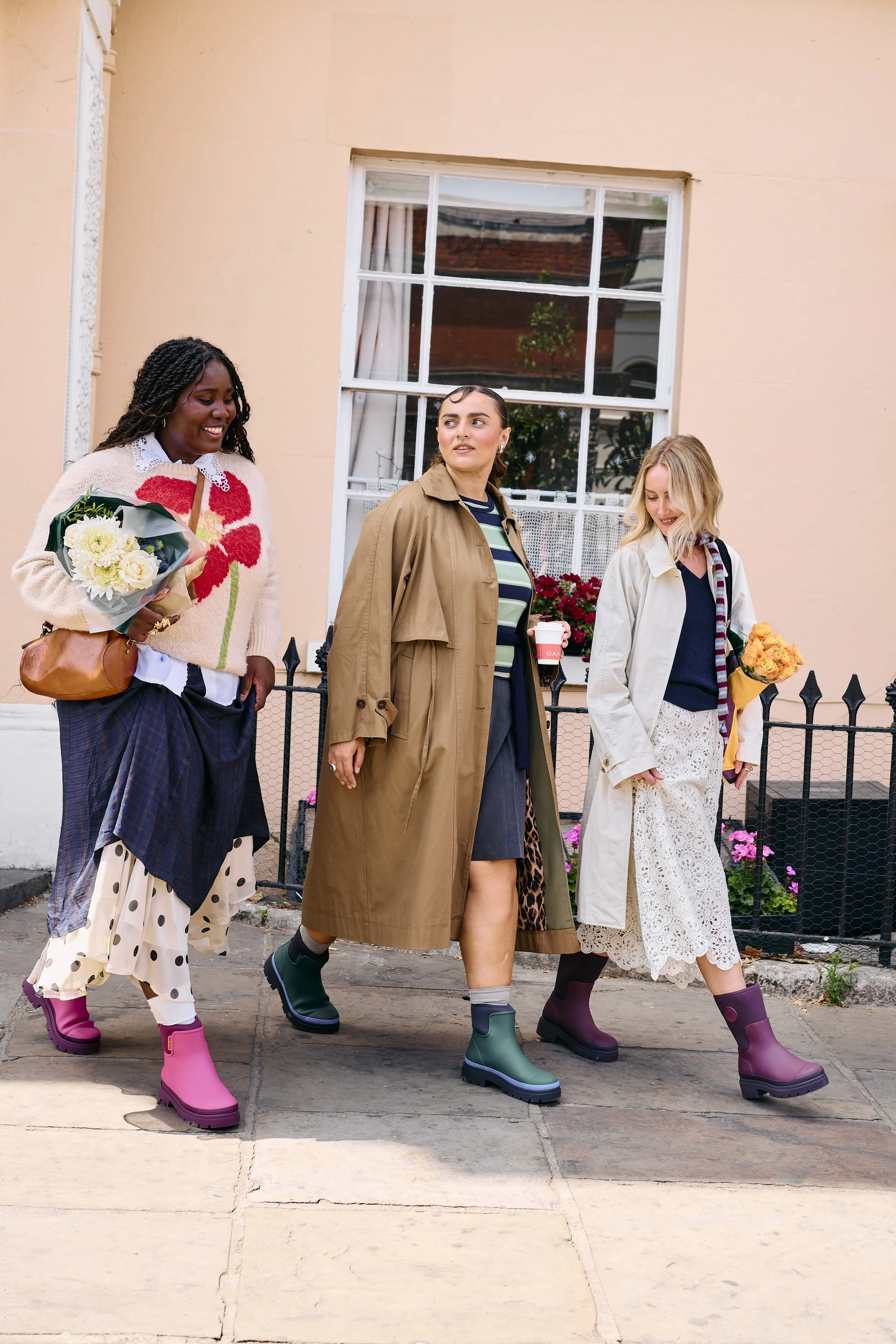
We meet Dani Pearce, founder and CEO of Merry People, in the UK to launch her latest collection, meet customers and brighten the every day with her joyful waterproof boots

Hi Dani, welcome to the UK. Tell us a little bit about Merry People

Thanks, we’re so excited to be over here, launching our latest boots. Merry People is an Australian brand that launched in 2014. We make stylish and colourful wellingtons – known as gumboots in Australia – that can be worn every day, from muddy country walks to the city-centre commute. No need to wait for the rain.

How did you come up with the idea?

I grew up on a farm in one of the wettest parts of Victoria, and lived in gumboots as a kid. However, the seed didn’t form until I was in my 20s and at a festival. At that point, gumboots in Australia were typically only made for children. It got me thinking whether there was a way to create something similar that was comfy, warm and waterproof, but with an on-trend silhouette so they could be worn as an everyday boot. There was also a gap in the market for an ankle boot. I remember opening my laptop, bringing up a blank Word doc and typing ‘Gumboot ideas…’

And Merry People was born?

Yes! Gumboots reminded me of my happiest childhood memories, pulling them on to get outside, whatever the weather. I wanted to build that positive, joyful feeling into my brand and the word ‘merry’ just felt right. I want to inspire people of all ages to pull them on and discover what makes them feel happy and alive, whether it’s being in the garden, getting creative, at a festival, walking the dog or at the park with the kids. I just want people to feel merry in them. We now have six styles of boot in ever-changing colours, plus sandals, kids’ boots and accessories.

So how did you turn your idea into reality?

It hasn’t always been easy. I felt really vulnerable at the start. I had a secure career in banking and many people thought it was too high risk, especially with no experience in fashion or business. However, I’d just come out of a relationship and while a lot of my friends were settling down and moving up the career ladder, I figured that I was young, free and wasn’t chained to a mortgage, so I ploughed all my savings into Merry People. I sketched out my ideas and made a solo trip to China to find a supplier.

Wow, you really jumped in with both feet!

Absolutely. During the early days, I travelled far and wide selling my boots at weekend markets. I had weeks where I would sell out and weeks where I didn’t sell a single boot. It was a roller-coaster and money was often tight, but I always believed in the brand. It’s been over 12 years of hard work, but it’s paid off. I now have a team of over 35 and Merry People is sold in Australia, the UK and the US. I think of Merry People as my first baby, but I’ve since become a mum of two and juggling the business with young children now feels extra rewarding.

You must be so proud

Totally. I’m so proud of my team and the brand that we’ve created together. I love the creative process and bringing new products to market, doing things the Merry People way, but we also strive to be as eco-conscious as possible. All our rubber is FSC certified and we surround ourselves with experts to help inform us on our environmental impact and where we can improve. For example, old boots are sold to support an Australian charity or they get chipped up for school mats. Most importantly, in almost 13 years, I’m proud that we have never gone on sale or discounted our boots, staying true to our values and providing transparency to our retailers.

What’s next?

We recently launched our Tully boot in chocolate and pink in a collaboration with Oliver Bonas in the UK, and we have a few more ideas up our sleeve to brighten up rainy days, so watch this space. But most of all, after a long work trip, what I’m really looking forward to is getting home to my kids and an extra big snuggle.

For more information and inspiration, visit uk.merrypeople.co or follow on Instagram at: @merrypeople

In Sponsored post Tags issue 173, sponsored story
Comment

DJ: Frances Ambler
Illustration: Anneliese Klos

Playlist | By the numbers

David Parker October 16, 2026

We make a playlist for each issue of The Simple Things, and for our November HEARTY issue, we’re doing it by the numbers.

You can give it a listen on Spotify here. Or have a browse of all our playlists here.

Our November HEARTY issue is on sale from 23 October. You can order a copy here.

In playlist Tags November, playlist, hearty, issue 173
Comment

Sponsored post | Room to Grow with Rhino

David Parker October 16, 2026

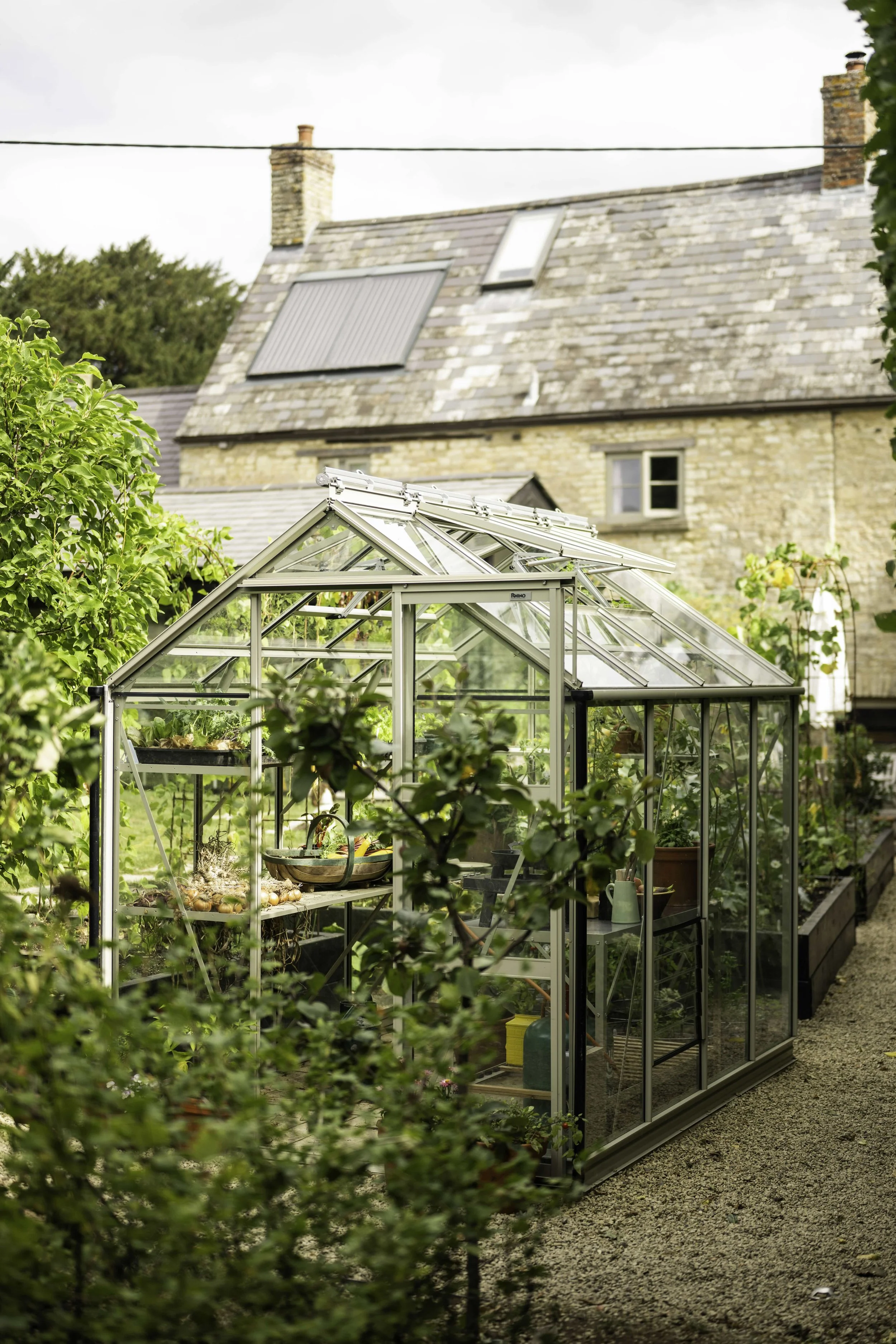
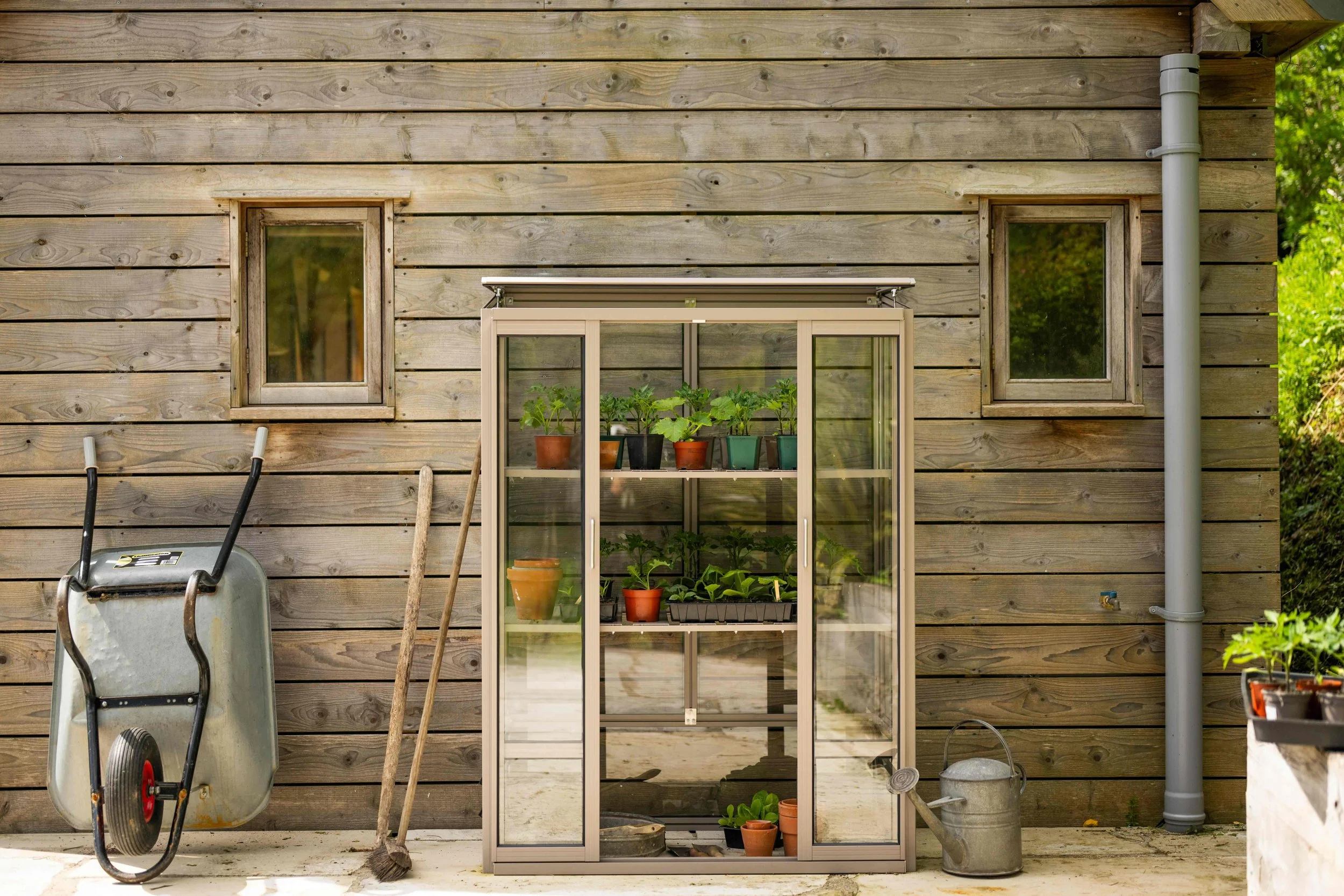
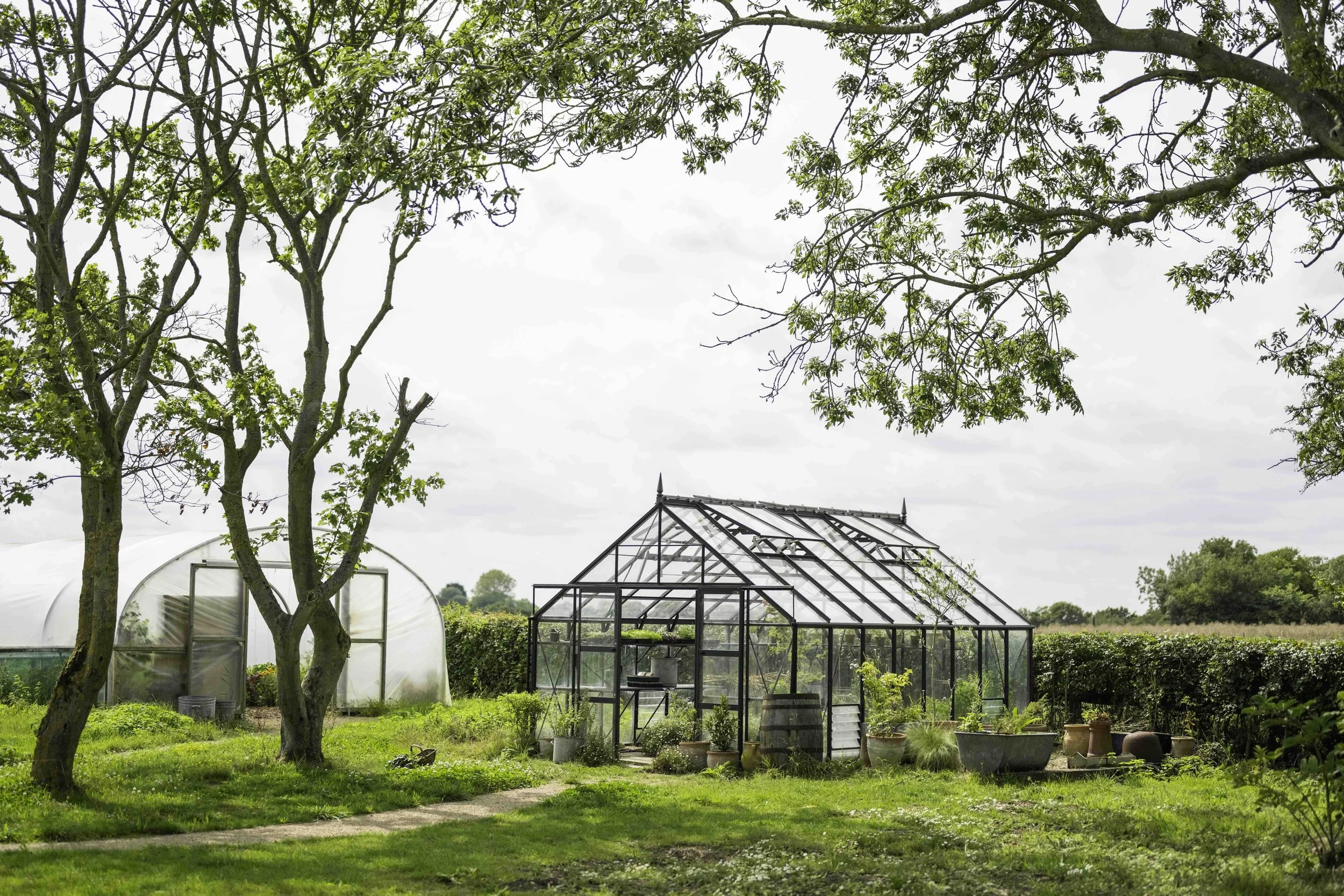
Rhino greenhouses are built to last, giving you a space to sow, grow, tend and enjoy your garden for years to come

As the year draws to a close, now is the time to do a little garden housekeeping in preparation for all the new planting to come. You can look back with pride on all your growing successes, as well as the lessons learned. If you had fruit, veg or plants that didn’t thrive as you’d have liked, perhaps a greenhouse is the answer, especially during the colder months. A Rhino greenhouse not only
looks beautiful but it can provide a space to nurture and grow your seedlings, sheltered from the wind, rain and frosts, meaning that you can look forward to a bountiful year of colour, flavour and satisfaction.

Designed and manufactured in Norfolk, Rhino greenhouses are made to be part of your garden for life. Built to last with a 25-year warranty, they’re a thing of beauty with solid aluminium frames and precision-engineering.

If you’re hankering after a Rhino greenhouse of your own, now is a great time to turn your dreams into reality. Whether you’re after something compact for a smaller plot or a serious growing space that you can really stretch out in, there’s an option to suit every garden size and growing ambition. Rhino greenhouses, designed and made by gardeners, for gardeners.

For more info, visit: rhinogreenhouses.co.uk, call 0800 6941929 or give Rhino a follow on Instagram at: @rhinogreenhouses

In Sponsored post Tags issue 173, sponsored story
Comment

Competition | Win a year's supply of Naked Paper

David Parker October 14, 2026

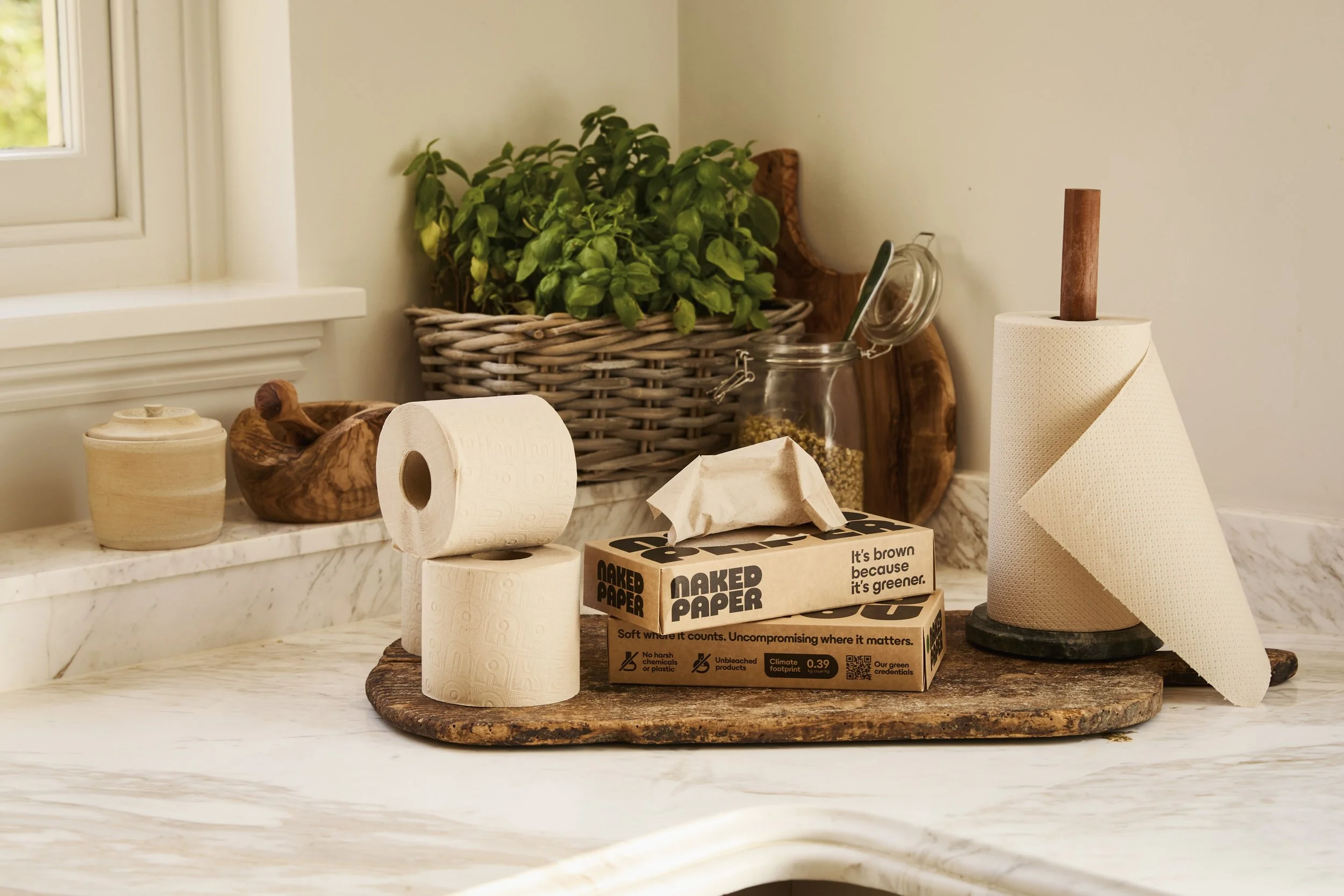
Naked Paper is making toilet paper that’s true to its natural colour, and you could win a year’s supply. It’s brown because it’s greener!

What if loo roll could be a little more thoughtful? Founded by Tom and Leila, Naked Paper started with a simple question: why is toilet paper white? The answer is because someone, somewhere, decided it should be. It’s bleached, processed and treated to achieve that pristine white look – not to make it any cleaner, but simply because that’s what we’ve come to expect.

So Naked Paper left it out. Its toilet paper is naturally brown because nature made it that way. No bleach. No harsh chemicals. No plastic. No fuss. Just thoughtfully made paper that is soft, uncompromising and does its job. Kinder to your bum and to the planet.

Naked Paper also makes other everyday essentials, including kitchen roll and tissues, in the same low-impact way. Sustainability runs through every part of the business, from the unbleached paper to the factory that makes it, which is completely fossil fuel free, running on the sun, wind and biofuel instead. In fact, Naked Paper was recognised with a King’s Award for Enterprise in Sustainable Development in 2025, showing it’s serious about doing things differently.

If you’d like to join this quiet revolution, then The Simple Things is giving one lucky reader the chance to win a year’s supply of loo roll, plus a whole lot more, while four runners-up will each receive a pack (24 rolls) of toilet paper. So enter today for your chance to enjoy paper, as nature intended.

For more info, visit uk.nakedpaper.com or follow on Instagram: @naked_paper

The prize

One lucky reader will win… • 4 packs of toilet paper (48 rolls per pack), in recycled or bamboo • 1 pack of kitchen roll (6 rolls), in recycled or bamboo • 1 pack of tissues (12 boxes), in recycled or bamboo • 1 roll cosy

How to enter

To win a year’s supply of toilet roll and other Naked Paper products, enter our competition by clicking on the button below and answering the following question by the closing date of 4 December 2026.

Q: Naked Paper is naturally what colour?

ENTER

Terms & conditions

The competition closes at 11.59pm on 4 December 2026. One winner and four runners-up will be selected at random from all correct entries received and notified soon after. Subject to availability. The winner cannot transfer the prize or swap it for cash. Details of our full terms and conditions are on p125 and online at: icebergpress.co.uk/comprules.

In Competition Tags competition, issue 173, live comp
1 Comment
Featured
 NOVEMBER ISSUE   Buy  ,   download  or  subscribe   BUY A CHRISTMAS GIFT SUBSCRIPTION  HERE   Order a copy of: Our first  Flourish Journal  – words to help you live well  Our Homebird bookazine    Flourish Volume 4 , our wellbeing bookazine  A Year
February 27, 2026
February 27, 2026

NOVEMBER ISSUE

Buy, download or subscribe

BUY A CHRISTMAS GIFT SUBSCRIPTION HERE

Order a copy of:
Our first Flourish Journal – words to help you live well
Our Homebird bookazine

Flourish Volume 4, our wellbeing bookazine
A Year of Celebrations – our latest anthology

See the sample of our latest issue here

Listen to our podcast – Small Ways to Live Well

Read more →
February 27, 2026
Join our Newsletter
Name
Email *

We respect your privacy and won't share your data.

email marketing by activecampaign
facebook-unauth pinterest spotify instagram
  • Subscriber Login
  • Stockists
  • Advertise
  • Contact

The Simple Things is published by Iceberg Press

The Simple Things

Taking time to live well

We celebrate slowing down, enjoying what you have, making the most of where you live, enjoying the company of of friends and family, and feeding them well. We like to grow some of our own vegetables, visit local markets, rummage for vintage finds, and decorate our home with the plunder. We love being outdoors and enjoy the satisfaction that comes with a job well done.

facebook-unauth pinterest spotify instagram