To mark Mother’s Day on 15 March, our latest playlist is dedicated to mothers, mums, moms and mammas.
Have a listen here.
We make a playlist for every issue of The Simple Things. You’ll find this in our March 26 PEEK issue, available to buy here.

Blog
Taking Time to Live Well

DJ: Frances Ambler
Image: Adobe Stock
To mark Mother’s Day on 15 March, our latest playlist is dedicated to mothers, mums, moms and mammas.
Have a listen here.
We make a playlist for every issue of The Simple Things. You’ll find this in our March 26 PEEK issue, available to buy here.
We hope you enjoy looking at our March nature table. If you go out hunting for daffodils taken down by the rain, wind-snapped blossomy twigs or other natural treasures, do take a picture of
your own nature table and share it with us. The nature table photograph below is by Alice Tatham, of The Wildwood Moth, who runs workshops on seasonal photography and publishes seasonal journal stories from Dorset.

Photography by Alice Tatham

Illustration by Christina Carpenter
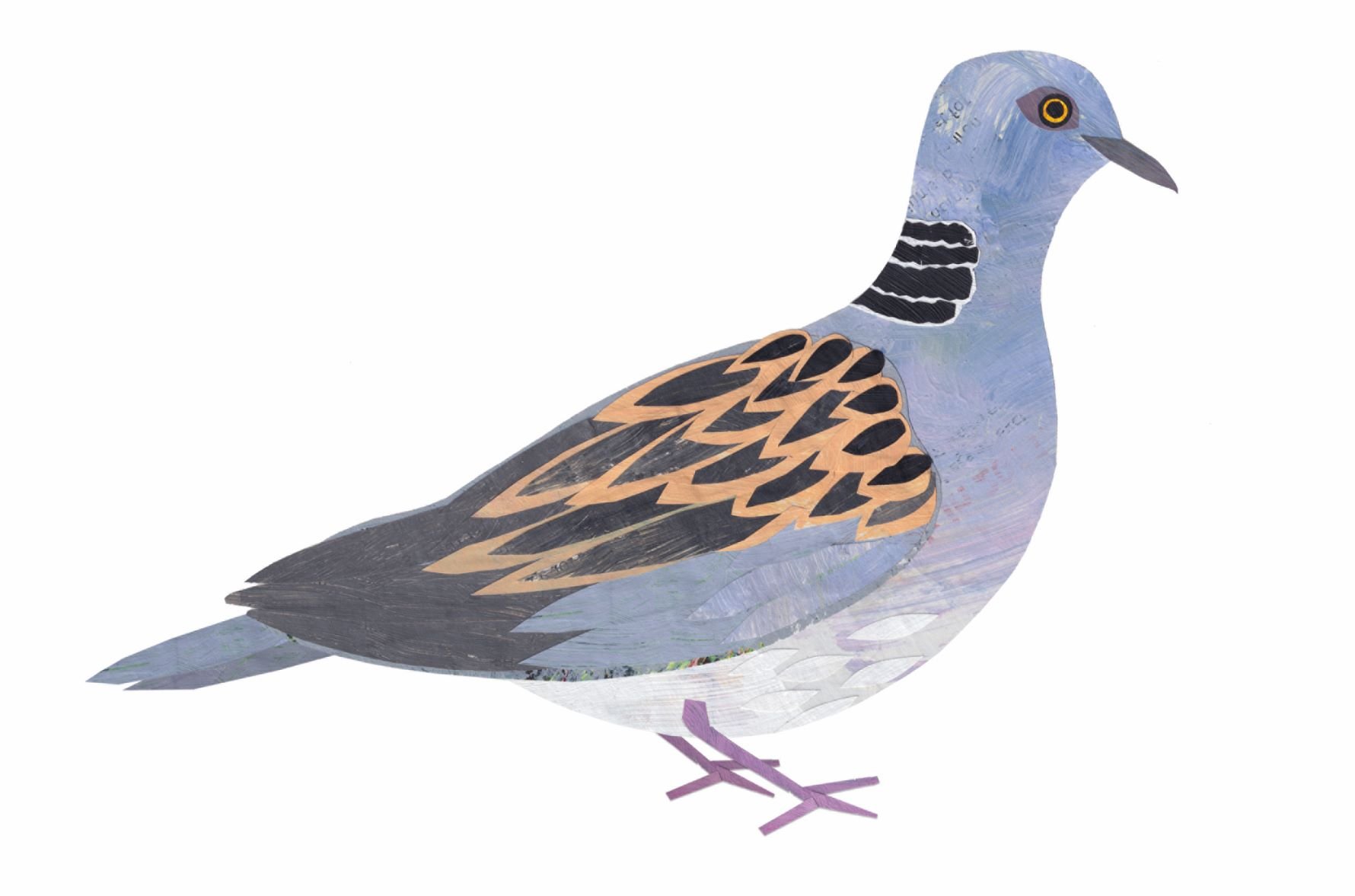
Cuckoos return from South Africa this month. Officially 14 April, St Tiburtius’ Day, is when you first hear cuckoo song. Traditionally, one writes to The Times on hearing the first cuckoo of spring, but you could write to us instead.
Look for: A grey head and bright yellow ring around the eye, dark grey plumage on top and barred feathers below, a little like a sparrow hawk. Some of the females are brown.
Spot them: Around the edges of woodlands and grasslands.
Listen for: Only the males ‘cuckoo’ – and you know what that sounds like. Females make a sort of bubbling sound.
Buy this month's The Simple Things - buy, download or subscribe
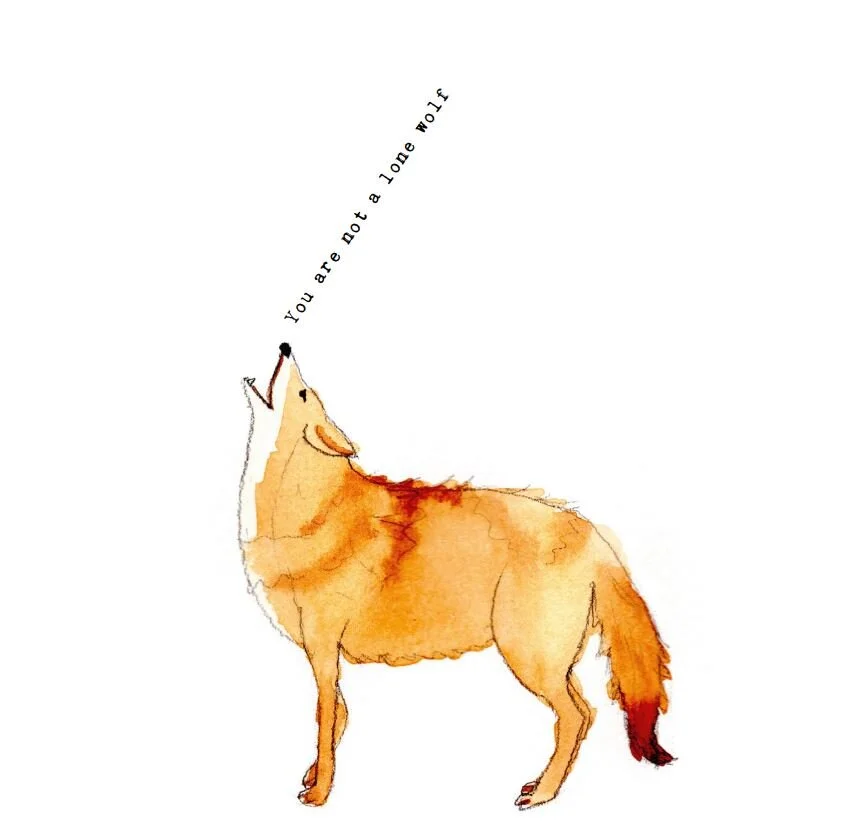
Taken from Be Wild Be Free by Amber Fossey (Harper Collins), artist and mental health expert who instagrams at @zeppelinmoon.
We’ve reached the end of our March ‘Balm’ issue. We hope you enjoyed reading it as much as we enjoyed making it.
Our April issue will be on shelves (and on your doormat too) if you order directly from us. In the meantime, we hope this gorgeous illustration by Amber Fossey cheers and comforts you a little.

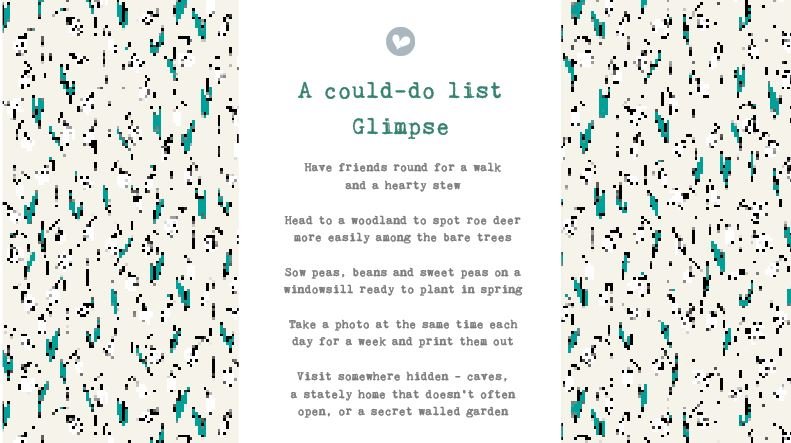
We hope you might find something here you’d like to do (but no pressure)
At The Simple Things, we’re all about finding the small pleasures in life and making the most of them.. Every month, we put together a ‘could-do list’ (because we don’t believe in ‘to-do lists’) of things y ou might like to do, see or think about. Feel free to choose on or two, do them all (though probably not all at once) or just read and enjoy the idea of doing them. Sometimes just thinking about things you could do is the most fun of all.
Whatever you do, or don’t do, have a very happy March!
Buy this month's The Simple Things - buy, download or subscribe

This playlist is compiled by Norwegian reader Katrine Wang. The direct translation of ‘vårdrypp’ is spring (vår) drip (drypp), meaning “the dripping from the roofs when snow is melting in spring.” This melting begins in March across Norway.
Stop, look and listen here.
Buy this month's The Simple Things - buy, download or subscribe

Looking for a new project this weekend? Each month, we publish a ‘veg box music’ idea, ingenious ways to make those edibles audible
Got some spare parsnips? Then you’re all set to try Blowin in the Roots. Don’t forget to send us photos of your band practice!
You will need:
4 or 5 parsnips (as many as you can hold in your hand comfortably)
Knife
Apple corer / drill
How to make:
1. Slice the skinny ends of the parsnips off at the point at which they are still of a good thickness – 1 or 2cm in diameter, let’s say.
2. Bore wide, cylindrical holes down into the parsnips using an apple corer or a drill. Make the deepest one as deep as the parsnip will allow without breaking through the other end, then repeat on the other parsnips, ensuring that each hole is progressively shallower than the last.
3. Finish them off by slicing across the top of the holes at an angle and hold them upright in a row, from deepest to shallowest, with the highest part of the parsnip closest to the face.
4. Blow diagonally across the parsnips down the same plane as they have been cut – the angle makes it easier to get a note.
Taken from Musical Experiments for After Dinner by Angus Hyland, Tom Parkinson, and illustrated by Dave Hopkins, is published by Laurence King. Available at.laurenceking.com.
Buy this month's The Simple Things - buy, download or subscribe

Photography: Sam A Harris
This light fruitcake, served traditionally for Mothering Sunday and Easter, and layered with marzipan might look innocent enough, but it is, in fact, steeped in mystery and intrigue.
Leaving aside the missing 12th marzipan apostle (that’s Judas, who betrayed Jesus and therefore is not deserving of a marzipan sphere in his name), there are other puzzles… Such as where Simnel cake got its moniker.
There are several stories. Are you sitting comfortably? Then take a slice of Simnel and we’ll begin.
One tale goes that the cake was named for Lambert Simnel, who invented it while working in the kitchens of King Henry VII as punishment for trying to usurp the throne. Simnel, a boy of ten, had been passed off as one of the two princes in The Tower, who were allegedly murdered by Richard III (so not a terribly convincing story, really). He turned out to be a much more convincing kitchen hand though and did so well he was eventually promoted to the position of Falconer by the King. However, we remain unconvinced that Lambert is the true King of Simnel cake. When you’ve made up a whopper like being heir to the throne of England, who’s going to believe you when you say you’ve invented a new cake, after all?
An even bolder story appears in Chambers’ Book of Days in 1867. This story says that the cake was invented by a couple by the name of Simon and Nelly (we expect you already have a hunch where this is going). They had set about making a cake to mark the end of Lent, using some leftover plum pudding from Christmas. Simon thought they should boil the cake and Nelly was convinced it should be baked. After a brief domestic disagreement they compromised, deciding to boil the cake first and then bake it. And this happy union of baking methods produced a cake that became named after both of them - the Sim-Nel cake. (We’d have gone for Nelsim, had we been young Nell… assuming, of course, that we believed this very tall tale).
The least charming, most tedious story, is probably the most believable. ‘Simila’ is Latin for the sort of fine, white flour that was used for these Lenten cakes, and it’s easy to see how Simnel would come from simila. We told you it was slightly tedious. There’s no arguing with Latin though (unlike Simon and Henry VII, who it seems were both up for a bit of a disagreement).
The rather fine Simnel cake pictured above is taken from Fitzbillies: Stories & Recipes From a 100-year-old Cambridge Bakery by Tim Hayward and Alison Wright (Quadrille) with photography by Sam A. Harris. You can find the recipe on p23 of our March ‘Blossom’ issue.
Buy this month's The Simple Things - buy, download or subscribe

Photography: Getty
Daunted by your garden? Try taking it five minutes at a time
We were really inspired by Laetitia Maklouf’s feature on ‘little by little’ gardening in our March issue - the concept of spending just five minutes in the garden each day. We’ve all been out doing our little-by-little jobs every evening as the days get longer and seeing a real change in our gardens already.
Here are a few ideas for jobs you can do in five minutes that will help add up to a beautiful outdoor space by the time summer’s here.
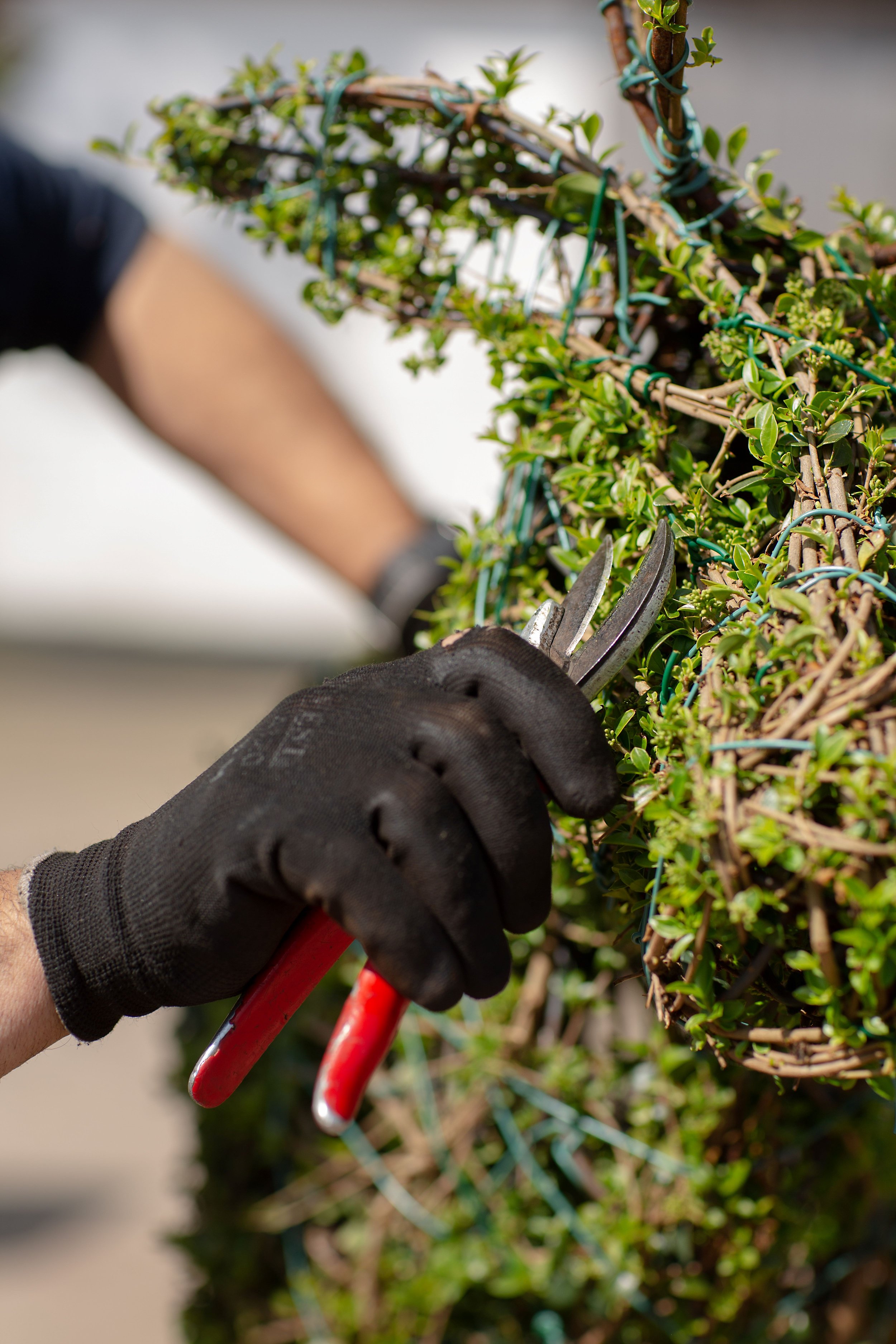
Weeding. Pop on your headphones, a podcast, a pair of gloves and tackle one small patch of earth, maybe just a square metre. Don’t get distracted by anything else, just concentrate on your patch.
Plant out forced bulbs. Have you got hyacinths languishing indoors? Don’t throw them away, try re-planting them outside.
Trim and tie down anything climbing before it comes into leaf and
Turn your compost if it needs it, or just tidy up your compost area so it’s easy to get to with food waste. This week is National Compost Week so there’s no time like the present.
Pop some pots of whatever is flowering at the moment by your front door so you can enjoy them every time you go in or out.
You can read all about Laetitia’s little-by-little gardening ideas on p102 of the March issue or in The Five Minute Garden: How to Garden in Next to No Time (National Trust Books).
Buy this month's The Simple Things - buy, download or subscribe

Photography: Jonathan Cherry
The best Sundays are those just spent just pottering in the garden or playing board games while the roast cooks. In our March issue, we’ve put together a Low and Slow menu that will help you do just that. Here are a few more ingredients we think you need to enjoy a Super Slow Sunday…
ALL the Sunday papers. Not just the one you normally buy; also get the one with the ridiculous headlines to laugh at and the one with the good crossword. We’re doing this properly.
A decent coffee and a cafetiere. Sunday isn’t slow enough if you have to stand up to refill your mug. A decent-sized cafetiere stationed near you will do it. Don’t put the milk back in the fridge thanks, just leave it there. Yes, you can leave those biscuits, too.
An enthusiastic dog. Because Sunday needs a good walk at some point, also, and when you get home, Sunday needs something warm to lie on your feet. If you don’t have a dog, set out in the woods wielding a stick as if you do own a dog, and put some bed socks on when you get home for a similar, but less hairy, effect.
A gin and tonic (or whatever your tipple is) for the prepping stage of lunch. Peeling spuds takes on a rather festive feel when you have something cold and fizzy in your hand.
A good board game for while the lunch is in the oven, whether it’s an old favourite or one you got for Christmas and haven’t played yet. Something you can get ridiculously invested in and over-competitive about is ideal.
Enough food to do leftovers too. We all know the best part of a Sunday roast is the secret scoffing of the cold potatoes out of the fridge at 6pm. If you’ve got enough leftovers to do Monday lunch too, so much the better, and it will bring a bit of weekend joy to your working day.
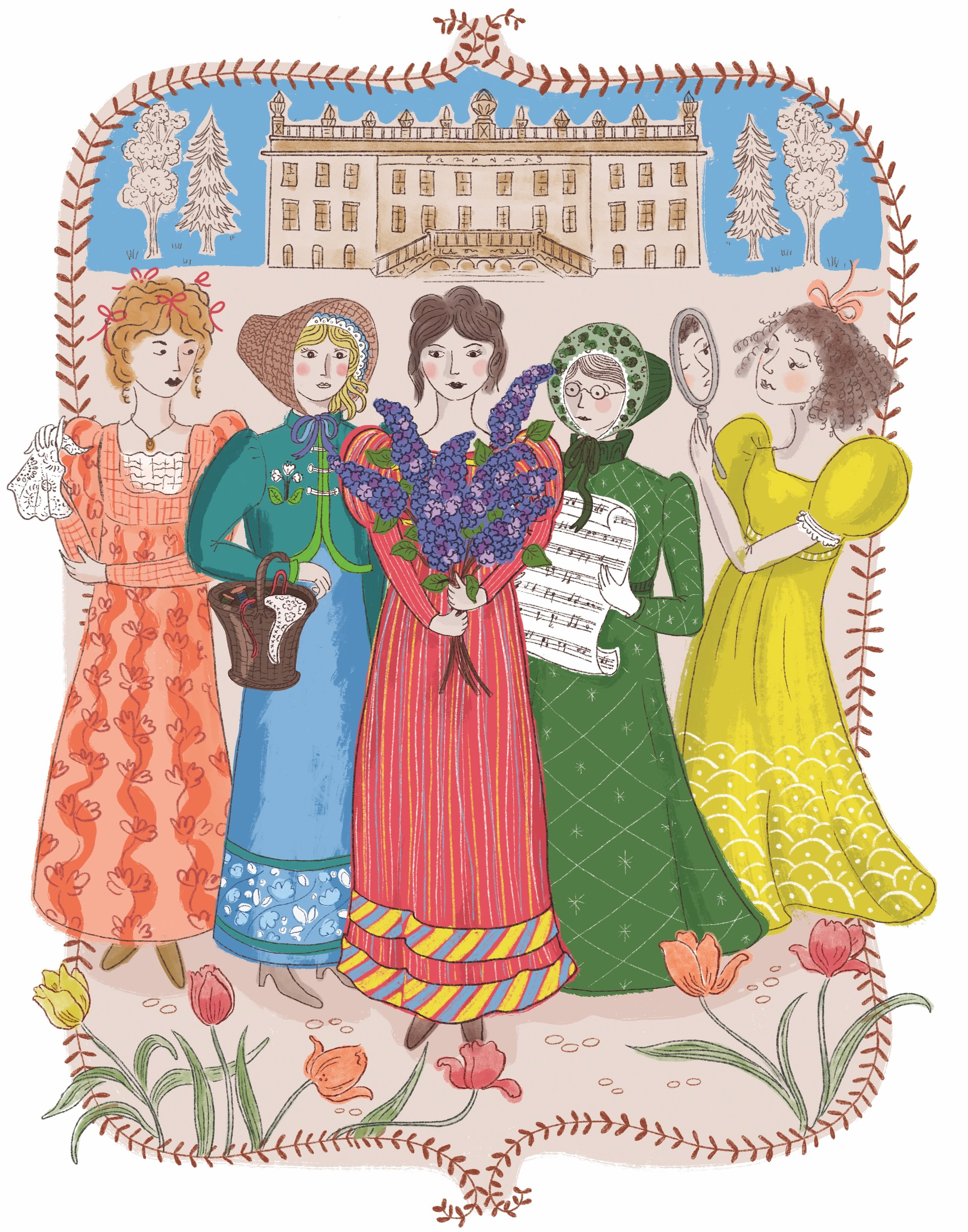
A costume drama on telly. Should be watched in your dressing gown with a cup of tea. If there’s nothing good on, dig out an old box set of the BBC’s Pride and Prejudice.
You can find our menu for Low Slow Sundays in our March issue, on sale now.
Buy this month's The Simple Things - buy, download or subscribe
.

Photography: Jonathan Cherry
Jewel-coloured grown-up jelly and creamy, sweet custard? We’re a trifle impressed!
These pretty little puds are part of our Low and Slow menu on our Gathering pages in the March ‘Blossom’ issue. The menu is intended to be cooked slowly so you can enjoy the day, either heading out for a walk or having a board games marathon - the ideal way to spend a Sunday. All parts of the meal are either ‘let it sing to itself’ dishes or ‘prepare ahead’ ideas, like these jelly and custard pots.
Pass the crossword and Scrabble, please. We’re very busy idling away the day.
Photography by Jonathan Cherry, styling Gemma Cherry, Recipes Bex Long.
Serves 6
Ingredients
800g rhubarb, cut into 1in pieces
80g caster sugar
5 gelatine leaves, soaked in cold water for 5 mins
500g custard – homemade or shop-bought
Handful of amaretti biscuits
To make
1 Place the rhubarb and sugar in a heavy bottomed pan over a low heat. Place a lid on the pan and allow the rhubarb to cook in the sugar until all of its juices have been released, stirring occasionally.
2 Pass the liquid and fruit pulp through a sieve and then strain the liquid through a muslin.
3 Once strained, transfer the liquid to a saucepan along with the soaked gelatine. Stirring constantly, gently heat until the gelatine has dissolved.
4 Pour the jelly into six small glasses and leave to cool, before transferring to the fridge to set overnight.
5 To serve, top each jelly with custard and sprinkle over some crushed amaretti biscuits.
You can find the rest of the Low and Slow recipes in our March issue, on sale now.
Buy this month's The Simple Things - buy, download or subscribe

Photography by Megan Westley
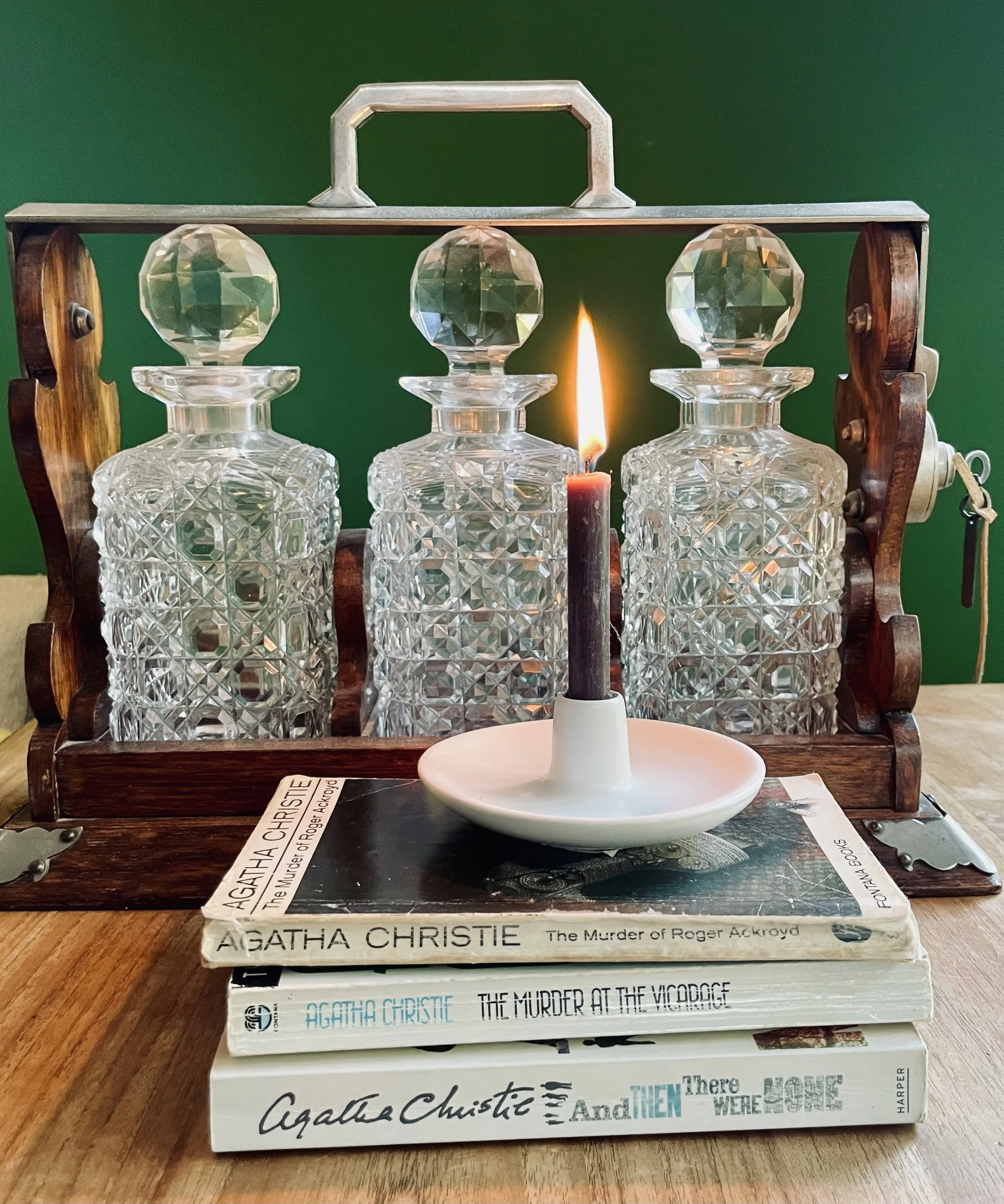
There’s plenty of strong advice we can take from Jane, one of our favourite fictional heroines, about the nature of love, finding inner resilience and more. But if you’ve no time for big changes here are a few simple things you can do to bring a bit more Jane into your life. With apologies to Charlotte Bronte.
Take up bird watching. It’s a relaxing diversion in times of crisis, particularly if your cruel cousins are being unkind. Losing yourself in Bewick’s History of British Birds is the best response and come Great Garden Birdwatch time in January, you’ll be pleased you spent the time so usefully.
Should you find yourself living at a charity school for girls, and your pitcher for washing your face is frozen solid in the morning, sprinkle a little rock salt on the surface to thaw it.
In times of distress, tea and seed cake is almost always a salve for the soul.
A sprained ankle, after a fall from a horse, perhaps, can be easily treated at home. NHS Direct prescribes rest, ice, compression and elevation. If the injured party can’t put weight on the ankle, offer assistance in walking home. Reader, I carried him.
You can remove the smell of damp dog from a rug by sprinkling the area liberally with baking soda and then Hoovering up the following day. Down, Pilot!
Noisy upstairs neighbours are a trial. Remember you can’t necessarily change their behaviour but you can change yours. Try to distract yourself and relax as much as possible before bedtime (perhaps with a cup of tea and some seed cake) to give yourself the best chance of dropping off, despite the din upstairs.
Candles can bring a relaxing atmosphere but if you’re going to have them in the bedroom make sure you don’t have long drapes around the bed. A simple divan looks cleaner and is less of a fire hazard.
If your house is larger than you need and expensive to heat, you can always consider closing off entire floors. Better still, think about downsizing to somewhere a little easier to maintain.
Never trust a fortune-teller arriving at your door unannounced during a party.
If you’re rather plain, don’t waste time and money on rouge and pearls, you can’t make a silk purse out of a sow’s ear, but you’re sure to have other talents to commend you to others. Perhaps potential suitors would like to hear your talk about British birds?
Fans of Jane Eyre shouldn’t miss our What I Treasure page in the March issue, in which Megan Westley tells us about her most treasured possession, the beautiful copy of Jane Eyre, pictured above.
Buy this month's The Simple Things - buy, download or subscribe

Photo by Siobhan Graham
Some suggestions on reading and where to read for bookish people
How much would you love a reading nook? Today is World Book Day and in our March issue, we’re celebrating this most overlooked of areas in the home, in the first of a new series we’ve called ‘My Place’. The series is all about those special little corners of our homes that mean the most to us but are often overlooked, from the bedside table to the view from the kitchen sink.
We found so many beautiful pictures of people’s reading nooks it was hard to choose which to feature but we loved this one above from Siobhan Graham (@thehalcyondaysofsummer). You can find the rest of the book nooks on p62 of our March ‘Blossom’ issue. There are lots of ideas for places and ways to create your own. Every home has room for one somewhere.
And once you’ve made a landgrab for space for your book nook and installed a comfy chair or large cushion and a lovely lamp, you’ll need a few books to read in it. We’ve picked five books for book lovers to get you started.
1. The Eyre Affair, Jasper Fforde
Literary Detective, Thursday Next, pits her wits against the evil Acheron Hades, who has stolen a first edition of Martin Chuzzlewit and killed a minor character, removing him from every printed edition, and now has his dastardly sights on Jane Eyre. One for lovers of classic fiction, fun… and dodos.
2.The End of Your Life Book Club, Will Schwalbe
The moving tale of how a man and his dying mother find a new common interest as her life draws to a close, choosing books to read and discuss together as they wait in hospital for her treatments.
3. The Shadow of the Wind, Carlos Ruiz Zafon
In mourning for his mother, Daniel, the son of an antiquarian book dealer, seeks solace in a novel by Julian Carax, The Shadow of the Wind. But when he tries to find other works by Carax he discovers that every book by him has been systematically destroyed and he may have in his hands the last remaining copy of the novel. If mystery and intrigue set in post-war Barcelona sounds up your literary alley, you’ll enjoy this.
4.The Year of Reading Dangerously, Andy Miller
If you’ve ever been embarrassed to admit you haven’t read a classic novel (or embarrassed to have fibbed about having read it) this will strike a chord with you. It’s a real account of the books Miller read in a year in which he decided to branch out and read all those books he felt he should have read. Witty, warm and with lots of reading inspiration for the rest of us.
5.Parnassus on Wheels, Christopher Morley
Published in 1917, you’ll read this short but totally delightful book in an afternoon, as you follow the adventures of spinster Helen McGill, who buys a bookshop on wheels (drawn by a horse called Pegasus) from a book-loving stranger and sets off with him around New England. If you enjoy it, there’s also a sequel - The Haunted Bookshop.
And if you have a special place in your home, we’d love you to share a picture of it with us. We’re looking for bathroom mirrors, kitchen sinks, bedside cabinets and more. Tag your photos #TSTmyplace on Instagram and you may even see your special place in your home featured in a future issue.
Buy this month's The Simple Things - buy, download or subscribe
Simple ways to get the best from a bunch of spring trumpets, in time for St David’s Day

Photography: Kirstie Young
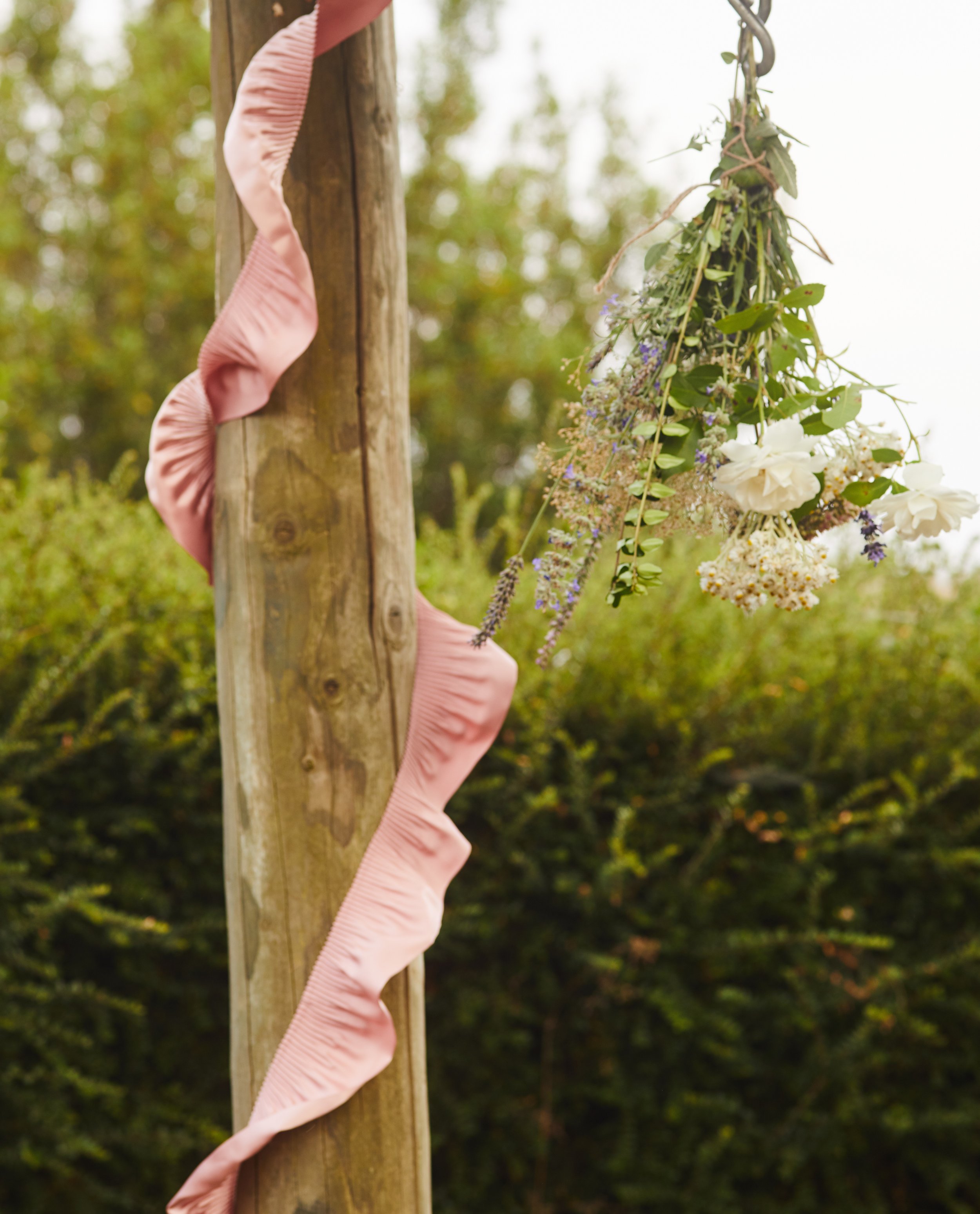
There’s little cheerier than a bunch of daffs. We’ve celebrated them (and a few tasty spring recipes, too) in our feature ‘Nature’s Table’ by Lia Leendertz in our March issue. Picking a few daffodils in the garden to bring indoors or even spontaneously throwing a couple of bunches in your shopping basket are one of spring’s greatest joys. Here’s how to make the most of them.
Learn from the Dutch and never mix daffodils with another type of flower. They’re thought to secrete a sap that kills other flowers off. You can get round this by placing them in a vase of water for half an hour or so by themselves first and then not retrimming the stems when you pop them in with other flowers. But frankly, who has time for this? And why not let them stand alone in all their daffodilly glory?
Despite their strong structural look, daffs have something a bit wild about them, so giving them a laid-back vessel to hang out in always suits them. A nice squat jug or a big teapot always looks jolly. Trim the stems down so they don’t sit too tall in the jug.
Change their water ever couple of days and keep it topped up. Daffs like a good drink.
If you’re using a taller, more traditional vase, you can give the flowers a ‘tidier’ look by tying them with twine and letting them bunch up together on one side, rather than spend the coming week trying to keep them evenly spaced around all sides of the vase. If the empty space on the other side of the vase bothers you, pop a couple of large, ornamental pebbles in with the tied posy.
If the whole ‘arranging’ bit is too stressful, break them up. A row of jam jars, each with a single daffodil in has a rustic look that suggests you just flung them there by accident (rather than spent all morning finding enough empty jam jars at the back of the cupboard). It looks very effective, at any rate.
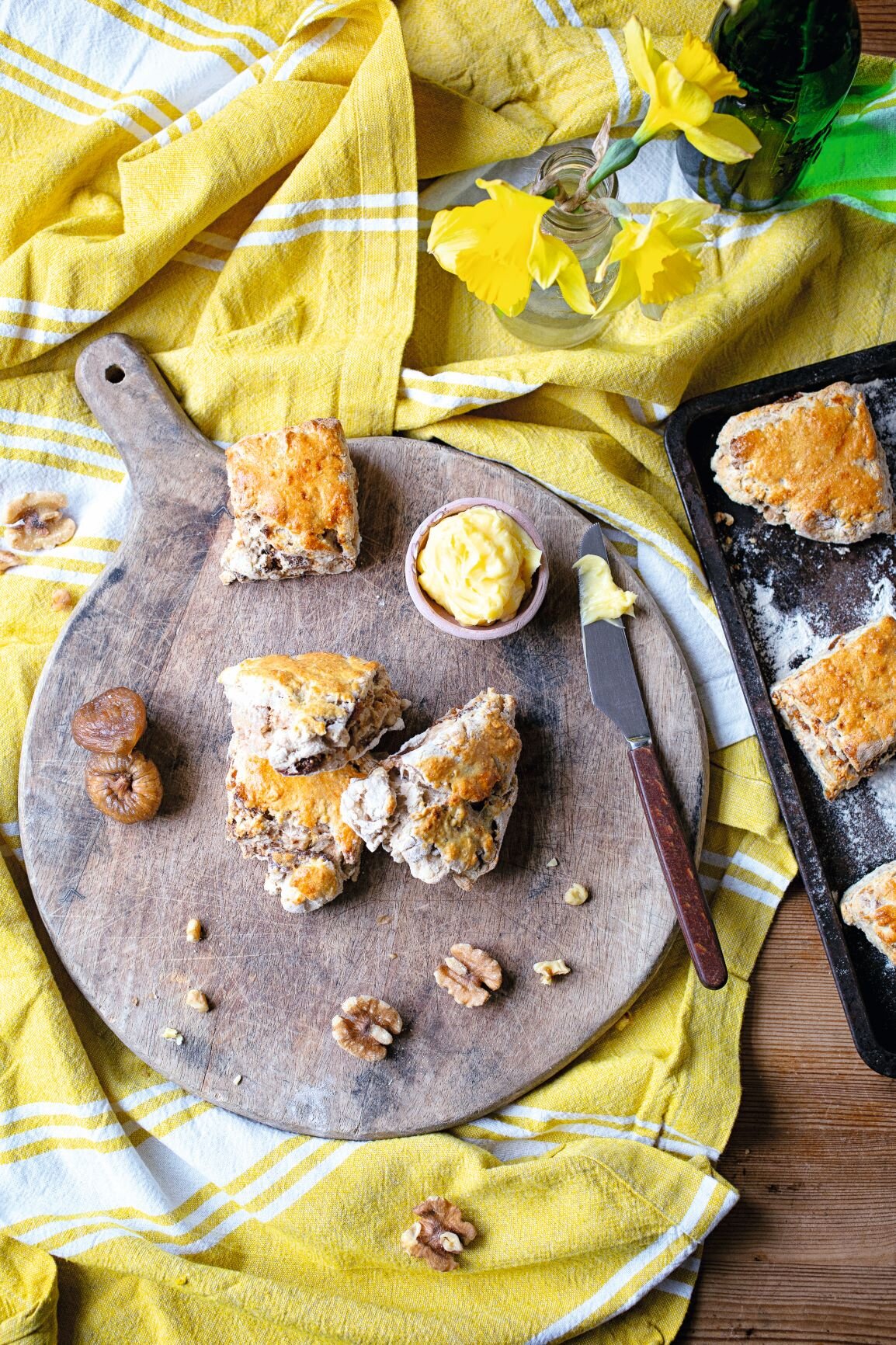
Alternatively, fling them artfully on a nature table or snuggle them next to some fig and walnut scones (recipe in our March issue), as pictured above. Spring has definitely sprung.
Buy this month's The Simple Things - buy, download or subscribe

Photography: Getty
We’re all about the gusty adventures this month. Let’s go fly a kite!
We hope you like the kite illustration on our Blossom front cover for March. Inside the issue Jo Mattock has written a piece to inspire you to take your kite on an outing. If you don’t have time to dig yours out of the shed, here’s how to make one in moments.
2 straight sticks or pieces of cane (raid last year’s runner beans patch), one around 50cm and one around 60cm but you can make them bigger or smaller as you wish
String
Washi tape (you knew you’d find a practical use for it one day, didn’t you?)
A piece of light fabric or strong paper to fit your kite frame (a bin liner will do in a kite-building emergency)
Suitable glue
Masking tape
A long piece of fabric for your kite tail, plus fabric remnants
How to make your kite
Arrange your two sticks in a T-shape, with the shorter stick crossing the longer stick about a third of the way down.
Wind string around and around at the point where the sticks join and tie it securely. Cover over the join with washi tape until you are certain the structure is secure. You can use a blob of superglue if you prefer, to anchor the string.
Use a pair of scissors to saw a small notch at either end of both sticks (4 notches), each about 3cm from the end.
Tie a piece of string around the edge of your shape, forming a diamond, using the notches to secure the string with a knot at each corner.
Place your diamond shape on top of your fabric, paper or bin liner and draw around the outside of the shape, approx 5cm bigger all the way round, then cut out your shape.
Place the diamond frame back on your fabric. Squirt a line of glue all the way around the edge of the fabric diamond and then fold the edges over the string frame to stick down.
Use masking tape to secure the fabric to the frame all around the edge and across the stick frame.
Cut a length of string a bit longer than your spar (the shorter stick). We used 65cm of string for the 50cm cane. Tie to each end of the smaller stick so the string has plenty of slack.
For your flying line, tie a long piece of string to the middle of the slack string. Make it as long as you dare.
Create a tail for your kite with a long piece of string from the bottom and decorate it with pieces of fabric tied on. Decorate the front and back of the kite as you wish.
Go fly a kite and send it soaring!
Buy this month's The Simple Things - buy, download or subscribe

Photography: Jonathan Cherry
When you put your clocks forward this Sunday spare a thought for the man who began it all
Talk of adopting different times in summer has been discussed since ancient times and Benjamin Franklin, one of the founding father’s of the United States even mooted the idea of everyone getting up a bit earlier in summer. Franklin is often credited with being the inventor of daylight saving but in fact, the chap we really have to thank is one William Willett of Chislehurst, Kent.
Willett was out riding his horse early one summer’s morning in Petts Wood, he noticed how many blinds were still down and began mulling the idea of daylight saving.
In 1907 he published a pamphlet called ‘The Waste of Daylight’, in which Willett proposed that all clocks should be moved forward by 20 minutes at 2am each Sunday in April and then back by 20 minutes at 2am each Sunday in September. It’s not a bad idea, and does negate the loss of a large chunk of sleep on ‘move the clocks’ day in Spring. Though we’d be quite sad to lose our extra hour in bed come October, it must be said.
Progress was slower than a watched clock, however, and by the time Willett’s plan was gaining the required support, World War I was on the horizon.
So eventually, it was not until 1916 that the Summer Time Act was passed, introducing British Summer Time as being GMT plus one hour and Dublin Mean Time plus one hour.
Sadly, and rather ironically, this came too late for William Willett who died in early 1915. If only he could have turned the hands of the clocks back just a little more.
Since 2002 the Act has specified the last Sunday in March as the beginning of British Summer Time. We’ll miss the hour in bed but like Willett, we’ll be glad of the extra light evenings. We might even take our horses for a little trot around the village in the semi-light dawn to celebrate.
In our March issue, our regular ‘Analogue’ feature is about a horologist and her love of clocks and watches. The issue is on sale now.
Get hold of your copy of this month's The Simple Things - buy, download or subscribe

Illustration: Kavel Rafferty
Find a likely looking spot with a few decent branches and an afternoon’s fun beckons
1 Find somewhere with plentiful natural debris (dead leaves, pine needles, ferns, bark, grasses). Avoid areas with water or where you can see animal tracks running through.
2 Build facing downwards, using a long branch as a ridge pole. Prop one end into the crook of a tree (or create a support from branches). Slope the pole downwards diagonally, propping the other end onto a stone.
3 Add ‘rib’ branches coming off your ridge pole. Use twigs to create a lattice. Don’t forget to leave a way in.
4 Layer inside with your debris (the driest and softest stuff) – leaving enough space to just be able to lay inside. If you twist handfuls of bracken before placing them they’ll have more staying power.
5 Cover outer framework with more layers of natural debris, until at least 60cm thick.
6 Once you’re inside, fill the doorway by pulling in more debris. Sleep well!
This how to was featured in this month’s March miscellany. The issue is on sale now if you’d like to read more.
Get hold of your copy of this month's The Simple Things - buy, download or subscribe

Illustration: Zuza Misko
We take a look at some famous amphibious creatures
1. Jeremy Fisher
The daddy of fictional frogs - Beatrix Potter’s dear little amphibian who wore a read coat (a frog coat presumably) and had a near miss with a trout while catching minnows for a dinner party to which he’d invited his good chums Isaac Newton (a newt) and Mr Alderman Ptolemy Tortoise.
2. Kermit the frog
This muppet must be the most famous of all frogs worldwide. With his endearingly skinny legs and rubbery mouth, he lives a much more ‘Hollywood’ life than most of his fellow fictional frogs. But as he’s often said, it’s not easy being green. He uses his fame to good ends though. Here he is taking the ice bucket challenge [https://www.youtube.com/watch?v=Mmax3yEZX58] in 2014.
3. Frog from ‘Frog and Toad’
Arnold Lobel’s fictional friends, Frog and Toad, enjoy simple adventures together such as flying kites, cleaning their homes and providing short stories for early readers. Lobel’s daughter Adrianne has suggested that Frog and Toad were a little more than friends (now we’re wondering about Jeremy Fisher’s chums, too…) and were in fact the beginning of her father coming out. Lobel himself said they represented different parts of himself (the squatter brown part and the leaner green part, perhaps?)
4. The Frog Prince
The tale dates back to Roman times but the best known version is by The Brothers Grimm and tells the story of a princess whose ball is rescued from a well by a frog on the promise that he can be her constant companion. Against her better judgement she is forced by her father to hold good on her promise, but loses her temper with the frog and hurls him against a wall. Whereupon he turns into a prince and they live happily ever after. Note the lack of a kiss in this story; all that schmaltzy nonsense was added much later.
5. Oi Frog!
A recent entry but this is one frog sure to become a classic. The first in a series of rhyming books by Kes Grey and Jim Field features a bossy cat who tells Frog he must sit on a log because frogs sit on logs. He can’t sit on a stool (mules sit on stools), he can’t sit on a sofa (gophers sit on sofas) and so on. Frog objects to sitting on a log (“They’re all knobbly and give you splinters in your bottom”) but Frog’s day gets worse when he asks what dogs sit on… (no spoilers here but it’s a heck of an ending).
Get hold of your copy of this month's The Simple Things - buy, download or subscribe

Photography by @coloursofmyday
In our March issue, we’ve looked at mandalas so we thought we’d get to know a little more about one of their most famous fans
TST: Hi Carl <pats couch>. Take a seat and make yourself comfortable. We’ve a few questions for you that might help you achieve a sense of selfhood (more on that later). Let’s get started. Tell us about your childhood.
CJ: I was born on 26 July 1875 in Kesswill in Switzerland. My father, Paul, was a Protestant clergyman but was lapsing by the moment. My mother, Emilie, suffered from very poor mental health, and when I was three, had to leave us to live temporarily in a psychiatric hospital. Now that I mention this, I wonder if perhaps this had some influence on my career as an adult. Ha! Funny the things that come out in therapy, eh? I was alone a lot as a child, having no brothers or sisters, but I wouldn’t say I was lonely. I enjoyed observing the many adults around me and learning from them. In fact, I believe I was always happiest when alone with my own thoughts. I say ‘alone’. Obviously, I always had my sense of self to chat to, as well...
TST: Well, quite. What was your education like?
CJ: I attended my local village school but my father also taught me Latin at home. The village school wasn’t all that if I’m honest. I was a keen student and interested in many aspects of science and the arts. It was expected that I would follow my father into a career in religion. But that hadn’t worked out so well for the old man himself, it seemed pretty clear. So I decided to study medicine and went to Basel University to study in 1895 and in 1902 I received my medical degree from the University of Zurich. Later, I decided to specialise in psychology and went off to study in Paris… Is this all strictly relevant?
TST: No, but it’s nice to have some context. Let’s move on to affairs of the heart…
CJ: I met the great love of my life, Emma Rauschenbach in 1903. We married and had five children together. As well as being my wife, and bringing up my children, she was my scientific co-worker for many years. You could say I kept her pretty busy. We were together until her death in 1955…
TST: Do help yourself to a tissue. They’re on the table. Let’s talk more about your work life. How did you come to be a psychologist?
CJ: While studying in Zurich I worked as an assistant to Eugen Bleuler, who you may now know as one of the pioneers in the study of mental illness. During this time, I and a few others, worked on the ‘association experiment’ which looked at groups of subconscious ideas in the mind (I tend to call the mind ‘the psyche’. It sounds much posher don’t you think?). I digress… The unconscious associations or ‘complexes’ can bring about anxiety or other inappropriate emotions. Around this time, I read Sigmund Freud’s Interpretation of Dreams which confirmed all my beliefs on complexes. Sigmund, it must be said, had a filthy mind and thought everyone was subconsciously thinking about sex most of the time. Lord! You could barely peel a banana without the man having something to say about it. I was more interested in mysticism and ‘higher things’. But that didn’t stop us becoming firm friends. For a while.
TST: So the friendship ended badly?
CJ: It did. One of my greatest sadnesses. Things were so rosy when we met in 1907. It was widely thought that I would continue Siggy’s work when he died (he was older than me, as well as more filthy-minded, you know). But it was not to be. Our temperaments and beliefs were too different. When I published Psychology of the Unconscious in 1912, Siggy took the right hump. I had deigned to disagree with some of his dearest beliefs and principles. The friendship limped on for a while but he shut me out of his in-crowd. It was no real loss to me, professionally. I’ve always worked better alone. And anyway, I was sick of his disgusting double-entendres. It was like living with Benny Hill.
TST: So where did life take you after Freud?
I launched myself into some deep self-analysis, hoping to discover my ‘true self’. I lived for a while among primitive tribes, everywhere from Mexico to Kenya, and travelled the world, studying various belief systems in hopes of discovering more about the archetypal patterns that inform the self. I brought back with me many fine ideas, one of which was that of using the mandala to discover one’s selfhood. If I’d known the darn things would be all over Instagram one day, I might have left them where they were. Still, I’m pleased to see their popularity has brought so many people a little peace in a busy world.
If you’re interested in mandalas, and would perhaps like to create one of your own, pick up a copy of our March issue, in shops now.
Get hold of your copy of this month's The Simple Things - buy, download or subscribe
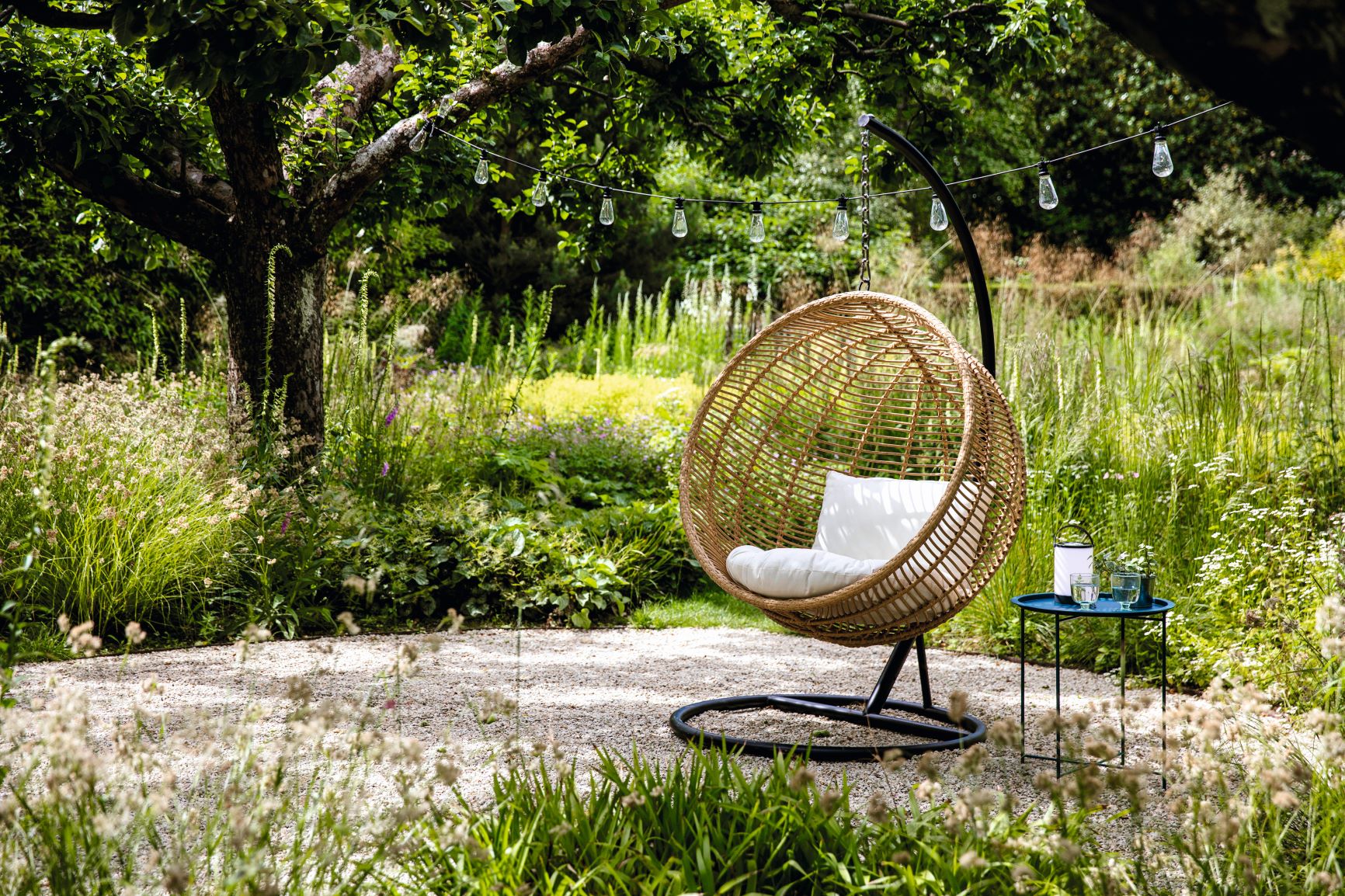
Enter for a chance to win this prize to bring spring to your home or garden
Days are starting to get a little longer and brighter, and our thoughts are naturally turning to spending time outside in the fresh air again. As eager as we may be to fling open doors and windows, fully fledged picnic and barbecue season is still a way off. However, Garden Trading has just the answer for bridging that seasonal gap.
The new Garden Room collection for spring encourages blending indoor and outdoor living, introducing a sense of flow from home to garden. Style wise, there’s more than a nod to the past, with macramé accessories and cane furniture bringing a retro 1970s feel to the collection, along with leafy greens, natural materials and woven textures. An update to Garden Trading’s popular all-weather nest chair is a shining example.
YOUR CHANCE TO WIN
A great blend of modern and nostalgic, the new hanging nest chair looks as at home in a living room or conservatory as it would in an orangery. And with its PE bamboo base, it’s safe to find it a home in the garden, too. Wherever you choose to keep it, this prize is set to become your favourite perch for a little time out all spring and summer long. Discover the full spring collection at gardentrading.co.uk.
HOW TO ENTER For your chance to win a hanging nest chair worth £350 from Garden Trading, click the button below to answer the folliowing question:
Q: Garden Trading’s macramé accessories and cane furniture bring a retro feel to the collection. But from what decade in particular?
Closing date: 10 April 2019.
TERMS AND CONDITIONS
The competition closes at 11.59pm on 10 April 2019. A winner will be selected at random from all correct entries received and notified soon afterwards. The prize cannot be swapped for cash or exchanged. Details of our full terms are on page 129 and online at icebergpress.co.uk/comprules.
We celebrate slowing down, enjoying what you have, making the most of where you live, enjoying the company of of friends and family, and feeding them well. We like to grow some of our own vegetables, visit local markets, rummage for vintage finds, and decorate our home with the plunder. We love being outdoors and enjoy the satisfaction that comes with a job well done.