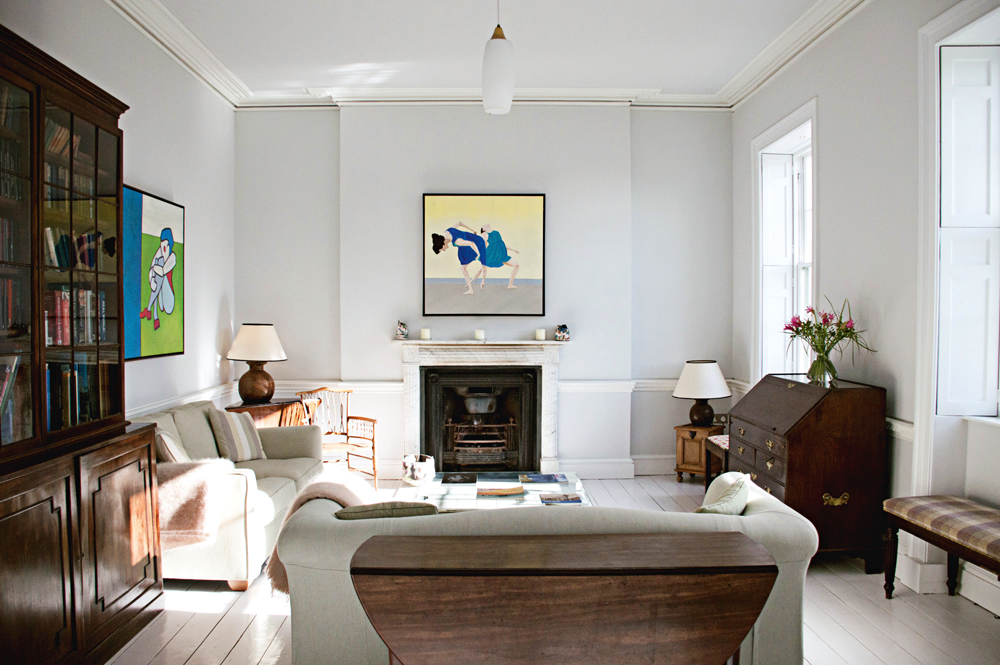
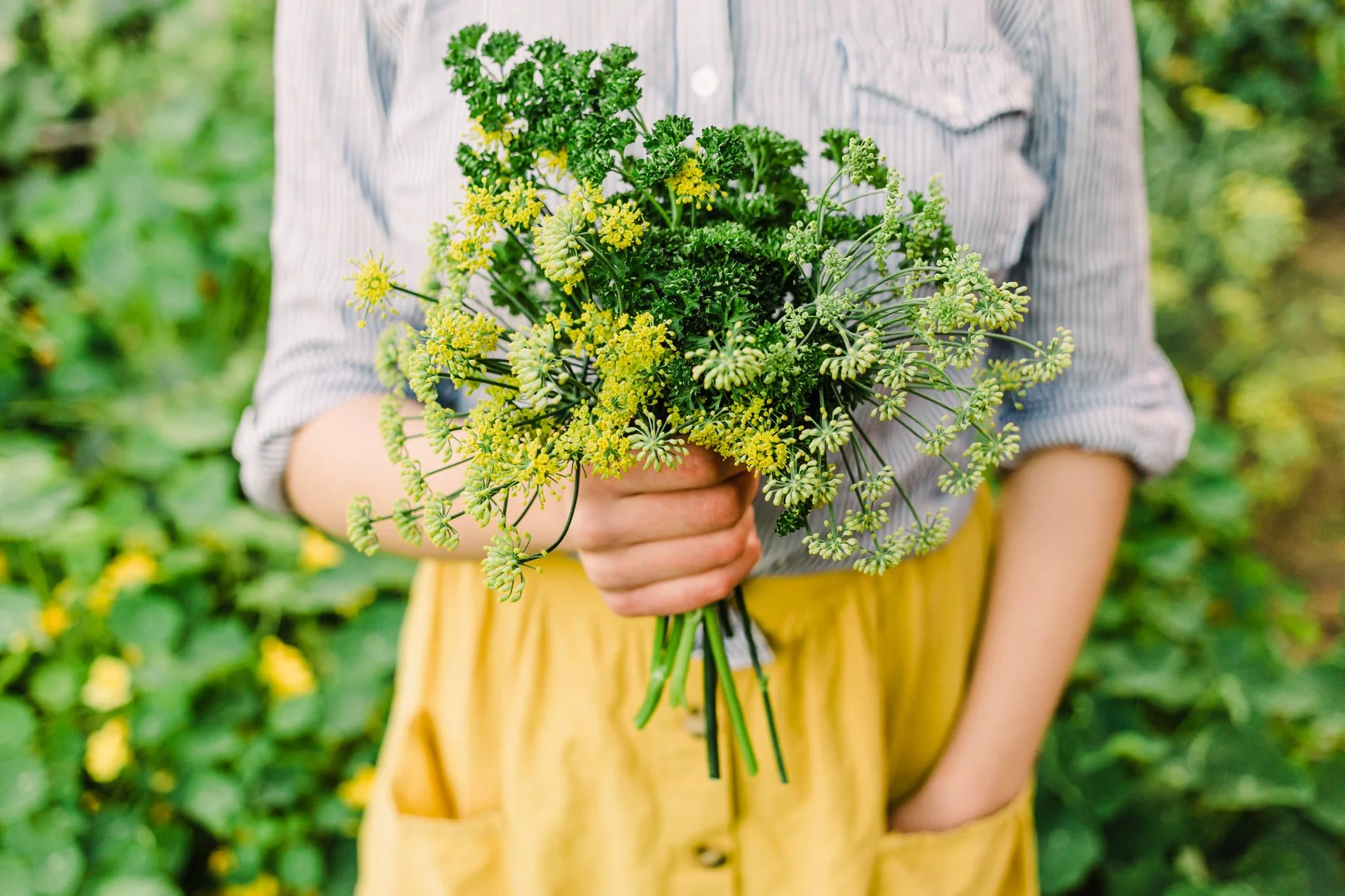
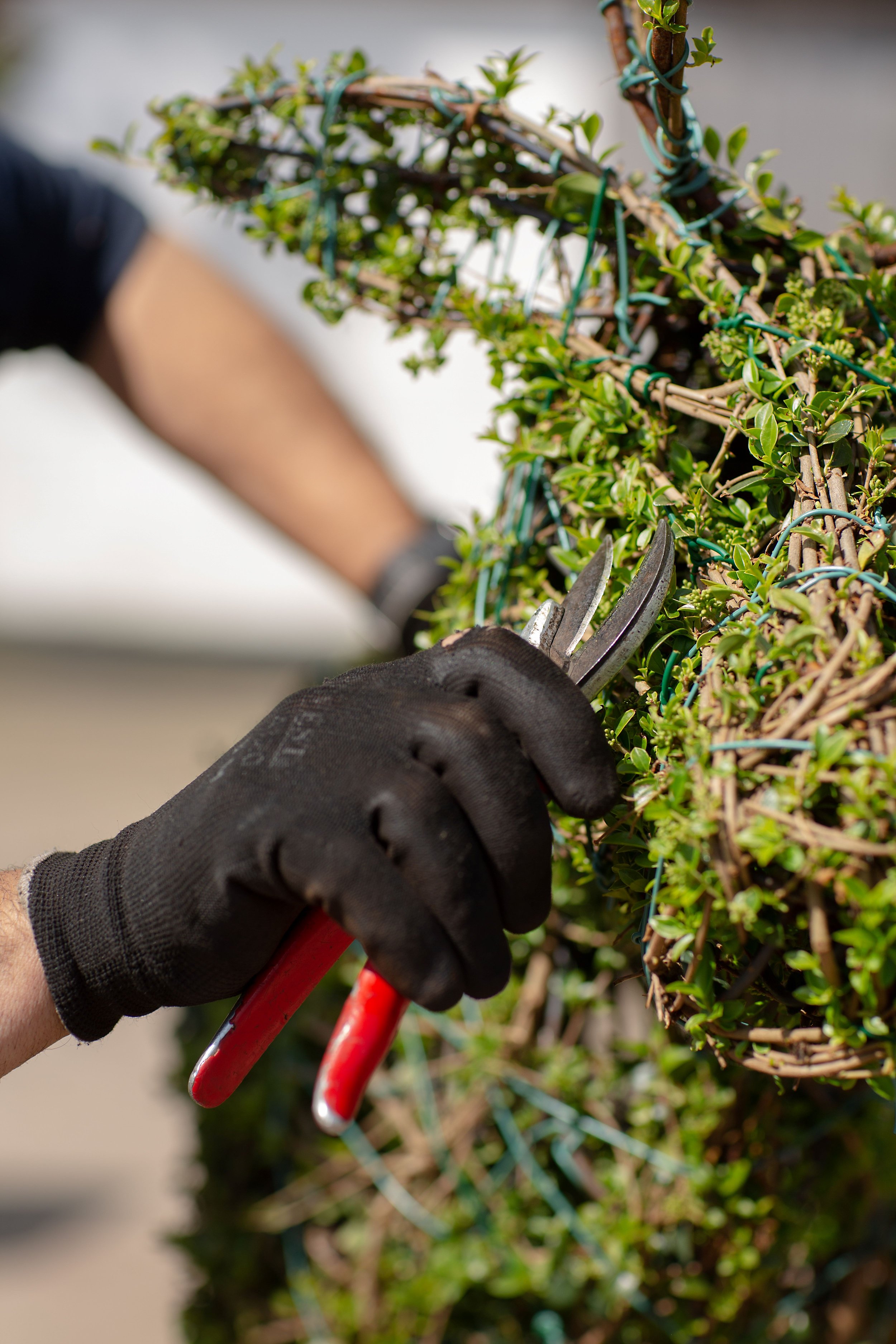
All we want is a room somewhere... This month, we relish the comforts of home. Loverly.
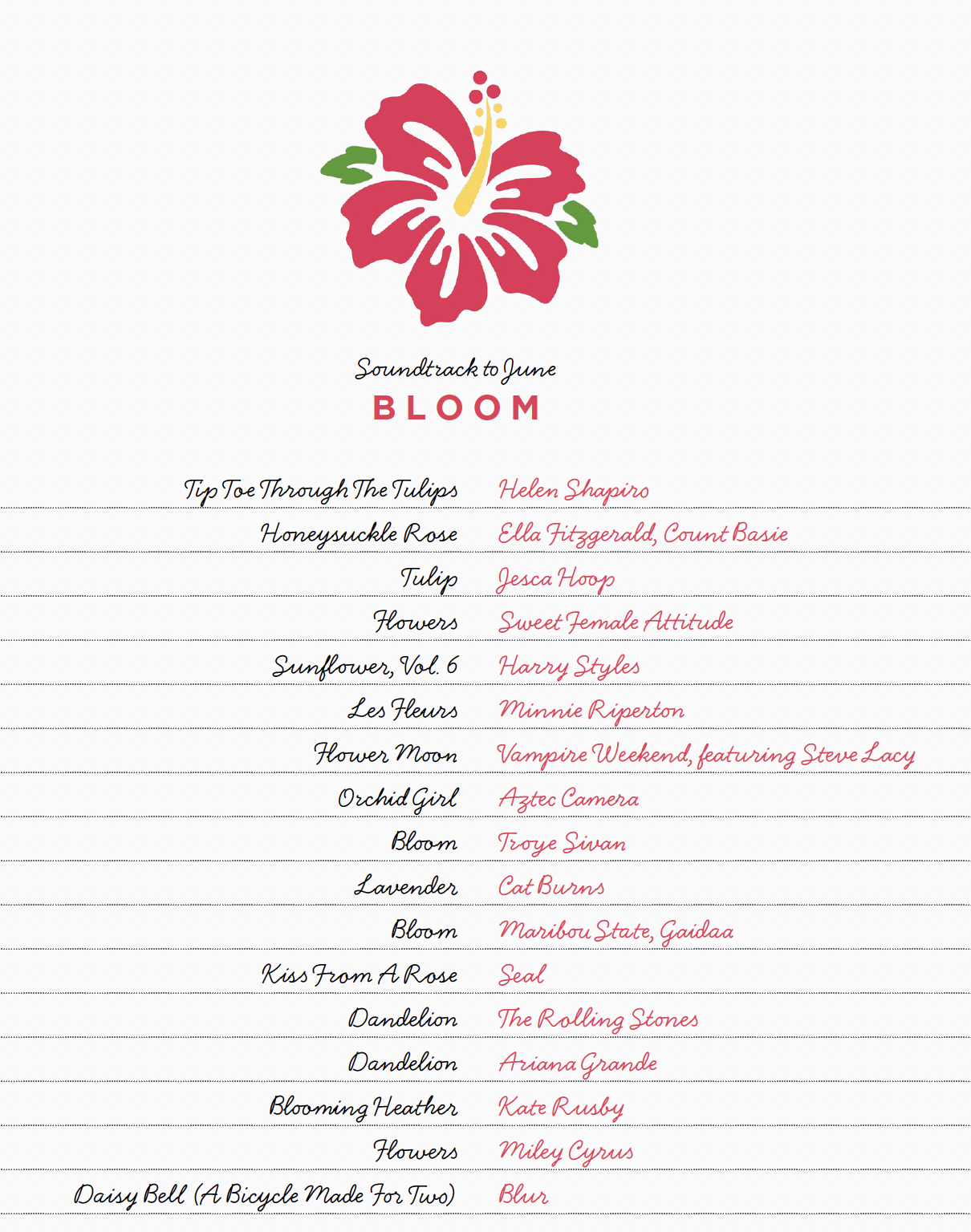
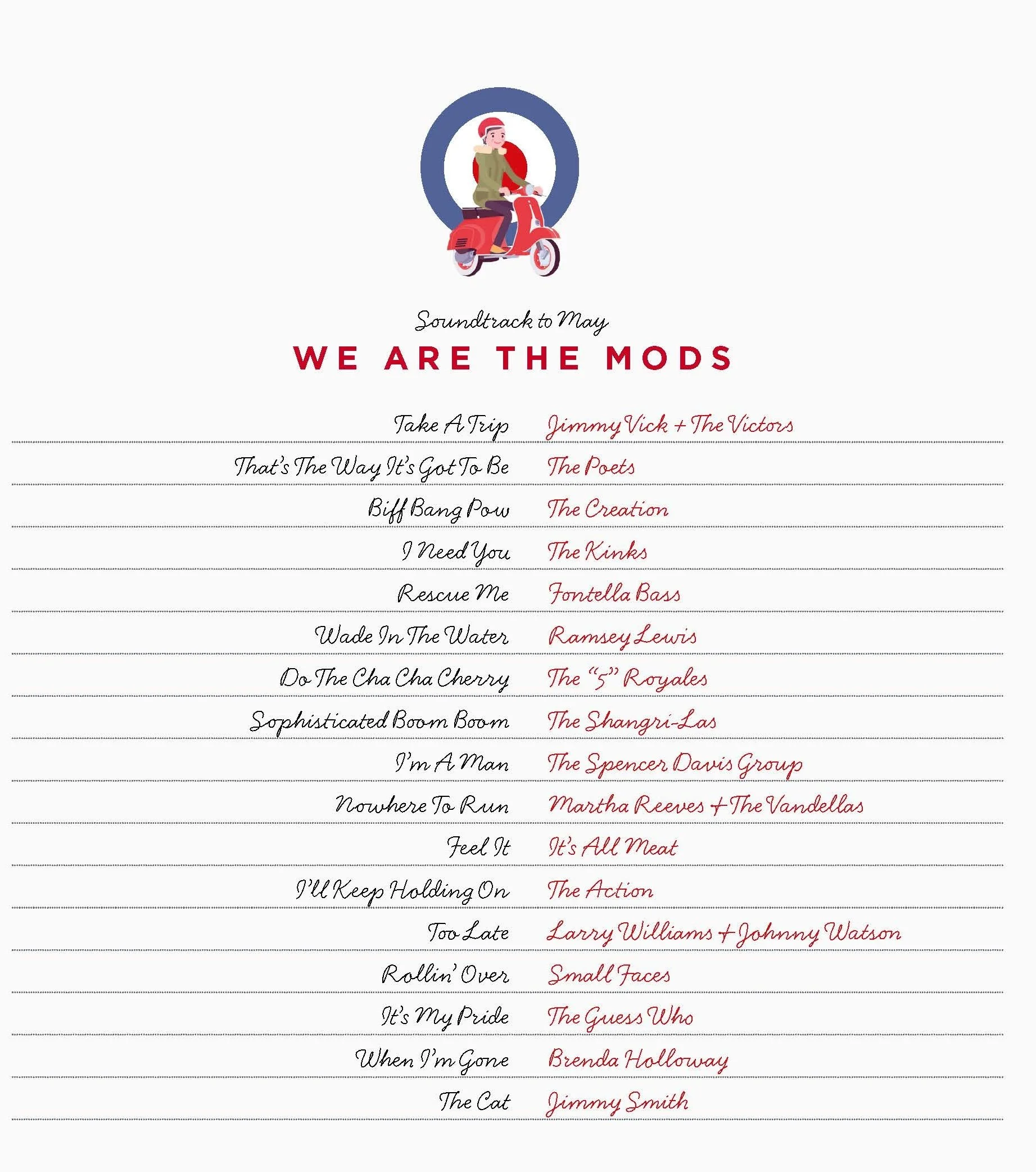
Listen to our Home playlist now.
More playlists from The Simple Things:
Featured
Blog
Taking Time to Live Well
All we want is a room somewhere... This month, we relish the comforts of home. Loverly.
Listen to our Home playlist now.
More playlists from The Simple Things:
Recipe: Lia Leendertz, photography: Kirstie Young

September's The Simple Things includes three recipes by Lia Leendertz in celebration of the ancient agricultural festival of Mabon.
Says Lia, 'I love a sausage roll, particularly to pack up and take on a picnic, and these contain all the nutty fruitiness of the season. Damson cheese is a sort of thick, sliceable jam, which I often make from my damson glut to eat with cheese and crackers, but it’s lovely here. If you can’t get hold of it, just use plum jam instead'.
Want to make Damson cheese? Scroll down for a recipe.
Makes 6 large or 18 small
50g walnuts, plus a few extra
400g free-range sausage meat or 6 pork sausages
a few sage leaves, chopped
250g pack puff pastry
100g damson cheese
1 egg, lightly beaten
1 Preheat the oven to 180C/Fan 160C/350F. Tip the walnuts onto a baking tray and bake for 7-10 minutes, until slightly toasted. Set aside to cool, then chop roughly.
2 In a bowl, combine the sausage meat (if using sausages, squeeze them out of their skins), chopped toasted walnuts and sage. If using sausage meat, season with salt and freshly ground black pepper (sausages are already well seasoned). Use your hands to mix everything together thoroughly.
3 Lay out your rectangle of pastry and slice it into three across the shorter length to give three long strips. Cut the damson cheese into batons and lay it in a line down the middle of each strip. Divide the sausage mixture and arrange it evenly along the three lengths. Carefully roll the mixture up, brushing one edge with beaten egg to stick the edges of the pastry together. Turn the roll over so that the seam is on the bottom, then cut it into however many lengths you want. Place on a baking tray lined with baking paper.
4 Brush the tops of the sausage rolls with beaten egg, then chop a few extra walnuts and sprinkle them over the top. Finish with flakes of sea salt. Bake in the preheated oven for at least 25 minutes. I often leave mine for longer, as I love the pastry really crisp and well done. Remove from the oven when yours are as you want them and leave to cool a little before eating (they’re delicious still slightly warm).
Recipe by Hugh Fearnley-Whittingstall for the Guardian (visit the original page for more damson recipes).
This traditional fruit "cheese" is a very thick, sliceable preserve that is immensely good served with actual cheese. It keeps for ages. Makes 850-900g.
2kg damsons
Around 750g granulated sugar
1. Put the damsons in a large preserving pan, add a couple of tablespoons of water and bring slowly to a simmer, stirring as the fruit begins to release its juices. Leave to simmer until completely soft. Tip the contents of the pan into a sieve and rub it through to remove the stones and skin, leaving you with a smooth damson purée.
2. Measure the purée by volume. For every 500ml, add 350g sugar, and combine in a large, heavy-based pan. Bring to a simmer over a low heat, stirring to dissolve the sugar, then cook gently, stirring regularly so it doesn't catch, until reduced to a thick purée. It's ready when you drag the spoon across the bottom of the pan and the base stays clearly visible for a second or two. This can take up to an hour of gentle, popping simmering and stirring.
3. Pour the "cheese" into very lightly oiled shallow plastic containers and leave to cool and set. It will keep almost indefinitely in the fridge. Serve in slices with bread and cheese, or, if you fancy, cut into cubes, dust lightly with granulated sugar and serve as a petit four.
Soaked cashews are the secret to lovely, creamy dairy-free lollies. Start the night before to allow time for the cashews to soak
Makes 8
6 large apricots (approx 500g), sliced
juice of an orange
125g fresh or frozen locally grown raspberries*
4–5 tbsp pure maple syrup (or honey)
60g raw cashews, soaked overnight in cold water, drained and rinsed
1 tsp finely grated orange zest small pinch of fine sea salt
* If using frozen berries, allow them to defrost a little before using in this recipe
1 Place apricots and orange juice in a medium saucepan, cover with a lid and bring to the boil. Reduce to a simmer and cook for 5 mins. Remove lid and cook for a further 8–10 mins, stirring often to prevent the bottom from catching, until thick and pulpy. Remove from heat and set aside to cool.
2 Combine raspberries and 1–2 tbsp of the maple syrup in a small bowl and lightly crush with a fork to form a rough paste. Divide evenly between 8 lolly moulds and set aside.
3 Transfer cooled apricots to a blender, along with soaked cashews, 3 tbsp maple syrup, orange zest and salt. Blend until smooth. Pour into moulds (it’s a thick mixture, so you may need a spoon to help), then using a knife, marble the raspberries through the apricot mixture slightly. Insert wooden sticks and freeze for at least 4 hours or overnight.
4 Run moulds under warm water to help release the popsicles.
Recipe taken from A Year In My Real Food Kitchen by Emma Galloway (Harper Collins)
Enter our competition to win one of three natural skincare hampers from MOA - Magic Organic Apothecary!
Read our interview with the creators of MOA and find out more about their natural skincare products.
Where and how are your products made?
We are a British brand, all our products are made in the UK and our signature herb, organic yarrow, is grown in Somerset. We even sow the seeds by hand, at the farm where it is grown. We are cruelty free certified. Our packaging comes from sustainable sources, mostly made in the UK and printed with vegetable based inks, as we try our to make our products as eco as possible.
Why you do what you do?
It was our mission to make yarrow, our hero herb, available within a skincare product. Yarrow is such a miraculous and healing herb, but not found in many products all, despite being a favourite amongst many herbalists because of its numerous properties. Our original product, The Green Balm harnesses the powers of yarrow in a multi-purpose balm. We enjoy making natural skin care which is affordable and effective whilst also attractive and magical to behold.
What inspires you?
Nature, magic and folklore, all of which we celebrate in our products, our marketing and our packaging.
What's special about your designs?
I illustrate the drawings by hand and combine them with vintage apothecary inspired design, so it makes our style pretty unique. Our potions are developed with lots of imagination and care. We’re only ready to sell them when we are truly smitten with the product, and happy that it is both therapeutic and effective. And lastly, a sprinkling of magic makes them very special too!
Competition closing date: 16 September 2016
Kelp's wonderfully fresh seashore scent makes this exfoliating scrub a summer shower must-have
MAKES: 100g
KEEPS: At least 6 months
INGREDIENTS:
1 tbsp fine sea salt
1 tbsp kelp powder
5 tsp vegetable glycerine
7 tsp sweet almond oil
5 drops juniper essential oil
5 drops lemon essential oil
METHOD:
1 Mix the sea salt and kelp together.
2 Add the glycerine and half the almond oil and mix well. If the mixture is too stiff, add more oil until it makes a thick, gloopy paste.
3 Add the essential oils and stir really well.
Note: this recipe isn’t suitable for dry skins
Courtesy of Lynn Rawlinson. Found in The Domestic Alchemist: 501 Herbal Recipes for Home, Health and Happiness by Pip Waller (Leaping Hare Press).
Illustration: Joe Snow
Putting these tips in motion can take the edge off suffering
Go gingerly
Ginger is the most trusted traditional remedy. Have it a couple of hours before travelling. Try popping a fresh slice between your teeth and gums, or nibble on a real ginger biscuit .
Take your position
One bonus of track sickness: making the call on where you sit. Go for the front seat in cars so you can see out, likewise the window seat on planes.
Eyes on the horizon
Motion sickness is caused by a conflict between what you see and what your ears – which help with balance – sense. Help your brain cope is by fixing your eyes on a stable object. Or go the other way and keep them closed.
Listen to music
Distract yourself by relaxing to calming music. But avoid reading or checking your phone as they disturb that whole eyes/ear thing.
But ultimately...
Some people are more prone to motion sickness, including women who’ve had kids and, it’s been said, introverts...
Helen Davies lives in St.Just, West Cornwall, and is the founder of organic women’s lifestyle brand EKO earthkindoriginals.co.uk. Founded in 2009 and set up in her parents’ garage, after relocating back down to Cornwall. Helen worked as a commercial fashion designer in London, before moving back to her roots in Wild West Penwith, Cornwall. EKO has grown to become an award winning ethical label, selling direct to consumers online and through independent retailers throughout the UK. It is also worn as uniform in some of the best luxury spa retreats in Europe.
Tell us about where you are waking up.
My home is a work in progress and EKO playground that celebrates our love for Cornwall, design and the great outdoors. We like collecting retro furniture, trinkets and things from our travels and hobbies, so there’s always something interesting to look at. I also work from home, so there’s no commute.
Sounds ideal. What does your work involve?
As a small brand, I’m involved in every aspect of EKO, from the number crunching spreadsheets, to creating the marketing plans and designing the seasonal collections, and everything in between. It’s a real challenge, but super exciting and I have learnt so much. I find a daily routine super important in staying focused.
I start the day with a good breakfast – it’s the best meal of the day and I wake up excited about what I am going to create! – and a strong builder’s tea. It’s then time for a dog walk, followed by a strong coffee while creating the day’s ‘to do’ list. I generally get back to emails first and then set a focus for the day and stick to it.
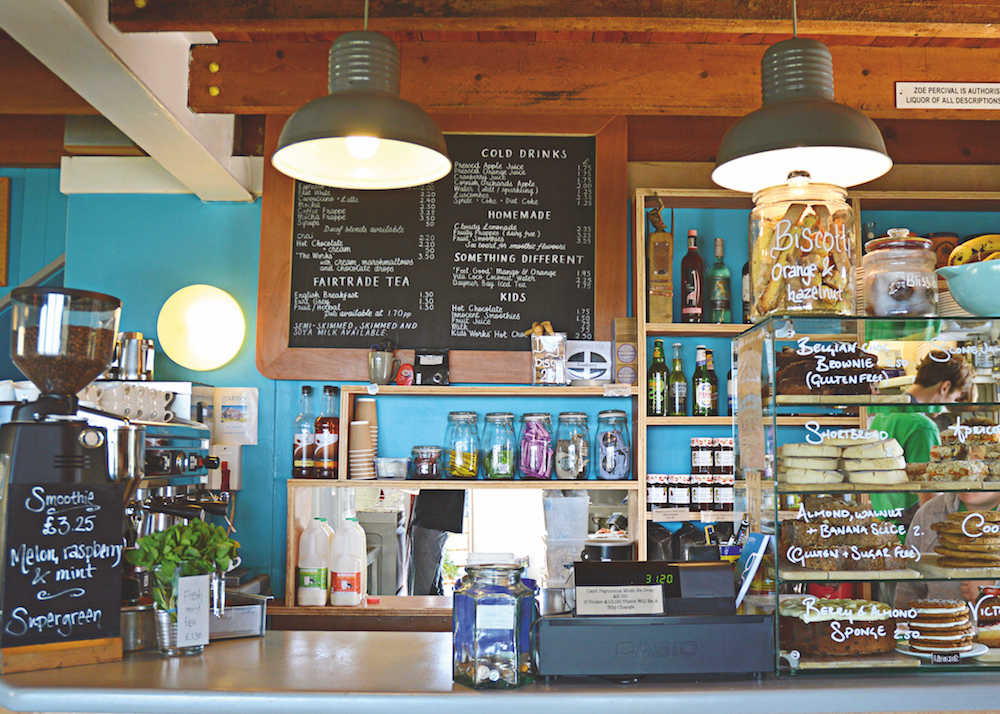
Fridays are my favourite day. I escape the office and head to the our local beach, Cot Valley, or the Dog and Rabbit café or perhaps take a short drive to somewhere like Marazion or Gwithian, where I can park up, walk the dog, grab a coffee and get the notebook out and start mapping out EKO’s future.
Phew! Sounds busy, can we get you something?
Yes please. My business cards describe me as ‘Director and Tea Maker’, so it’s always a pleasure to get one made for me. I’d love another regular builder’s tea, but with a little more milk. It seems to keep the focus going for the rest of the morning. Saffron buns, a Cornish speciality, are also a firm favourite in the office.
And do you have a favourite mug?
Yes, it has to be my Little Miss Sunshine mug, as you can’t be sad or annoyed drinking out of this. Although we do have a Mr Grumpy mug too, so you know if you’re handed this mug, it’s time to take a break…
It must nearly be lunchtime by now. Who are you eating it with, and what are you having?
It seems like the best ideas are discovered over lunch, which is usually with my mum Liz (the picker, packer and accounts guru), and Nikki (the web whizz-kid) and the piercing eyes of Buster (a crazy working cocker spaniel with way too much energy). We’re all passionate foodies (especially Buster!), and lunch is a much-anticipated event. It’s usually salad made from left overs, creatively using up what’s in the fridge, usually spinach, in-season tomatoes, seeds or pulses, with an added extra topping of tuna, feta and home made dressing.
Delicious! And how else do you like to switch off?
In the winter, it has to be kicking back in our office Ercol Windsor wingback chair, or in the summer sitting in the back yard, a real suntrap. I like switching off with a good mag (naturally The Simple Things is an office favourite). There are a few websites I gravitate to over lunch or a cuppa. I always enjoy receiving the e-newsletters from the Do Lectures, and browsing their website for inspirational talks from passionate, creative people. I also like the Tumblr blog The Yard for daydreaming, and This is Your Kingdom for outdoor inspiration.
Do you have any favourite tea-drinking companions?
It has to be my partner and my dog. I love sharing a flask of tea with my partner to warm up after a chilly sea swim or surf. We have invested in a life jacket for Buster, who loves to join us in the water too. There is nothing better than the warming feeling of a good English brew while your salty skin is still tingling.
Perfect. There’s time for one last cuppa – what do you fancy?
It has to be peppermint tea. I now associate the smell with the evening wind down and end of day switch off.
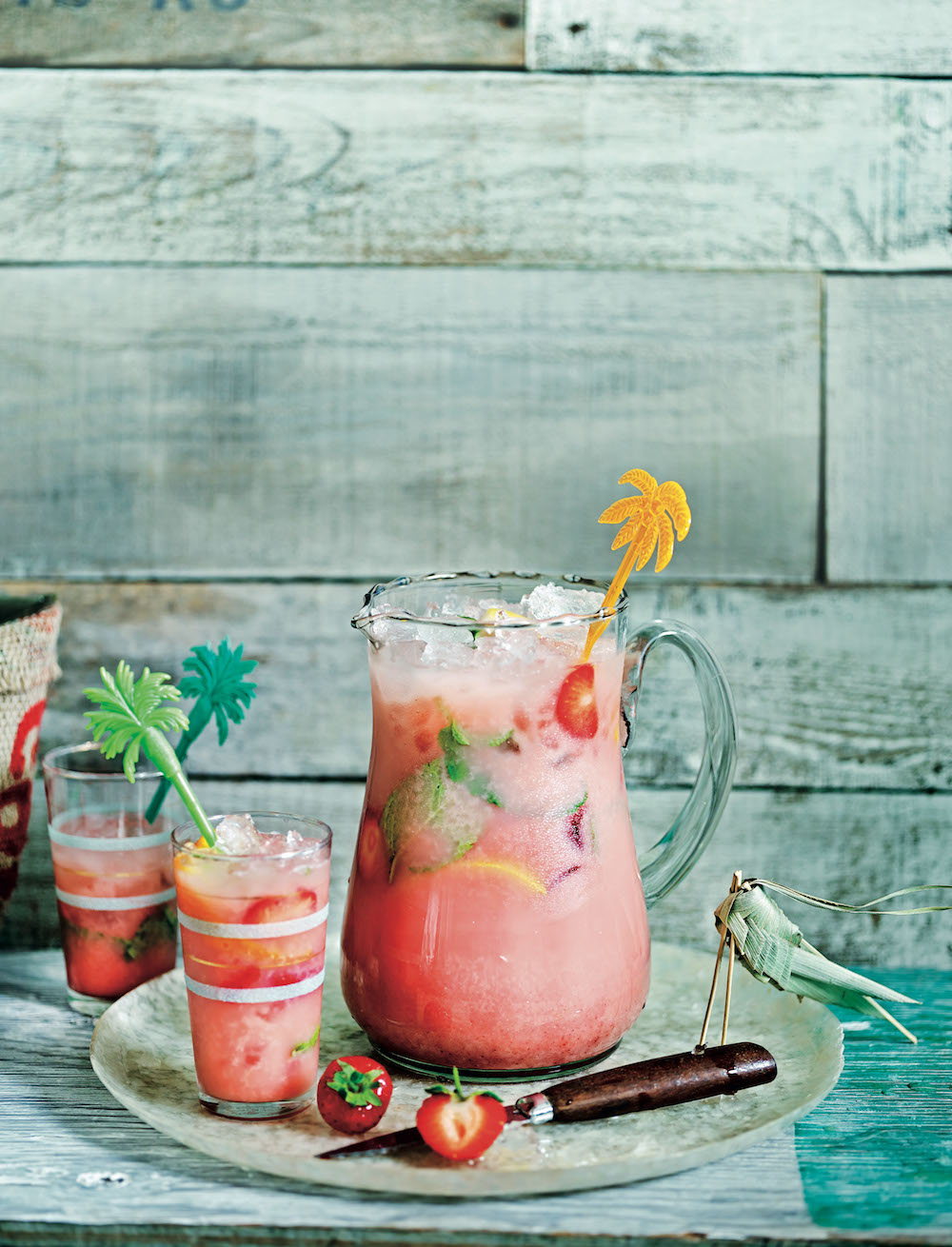
With 120 fruits native to its rainforest, there’s no wonder Brazilians make a mean cocktail. If watching the Olympics this month makes you pine for tropical climes, mix yourself a jug of this fabulously kitsch cocktail (palm trees essential) and the combination of rum, cachaça, strawberries and coconut will instantly transport you from kitchen to Copacabana beach.
75ml cachaça
75ml Malibu
50ml coconut cream
50ml lemon juice
50ml simple sugar syrup
90ml pineapple juice
180ml coconut water
75ml strawberry purée ice cubes
1 orange, sliced
1 lemon, sliced
Pour all the ingredients except the orange and lemon slices into a large jug and stir well.
Fill with ice and stir again.
Top with lemon and orange slices.
Pronounced ka-sha-sa, cachaça is the national drink of Brazil and appears in many of its cocktails. Like rum, it’s a sugar cane spirit, but distilled directly from fermented sugar cane juice rather than from the molasses. It’s now possible to find simple brands such as Sagatiba in larger supermarkets or specialist spirit shops. If you’re at loss or don’t like the taste (some people find it too rough or strong), you can substitute vodka or rum. Oh and Brazilians do really run their cars on it sometimes – if you’re ever crossing the road and notice a waft of sweetness in the air, that’s the ethanol from the sugar cane. Not one to try at home.
Recipe from Carnival! By David Ponte, Lizzy Barber and Jamie Barber (Quadrille)
Photography by Martin Poole
Image: Katharine Davies
Image: Plain Picture
This month in our series about what really goes on in a home, Clare Gogerty grabs a plate and invites us to eat out in the garden.
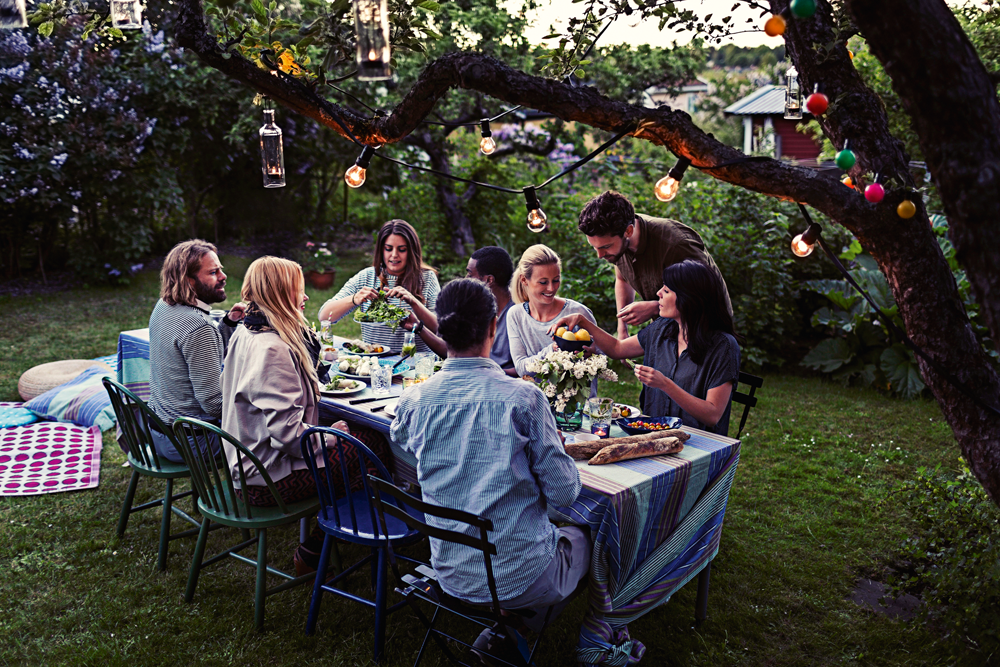
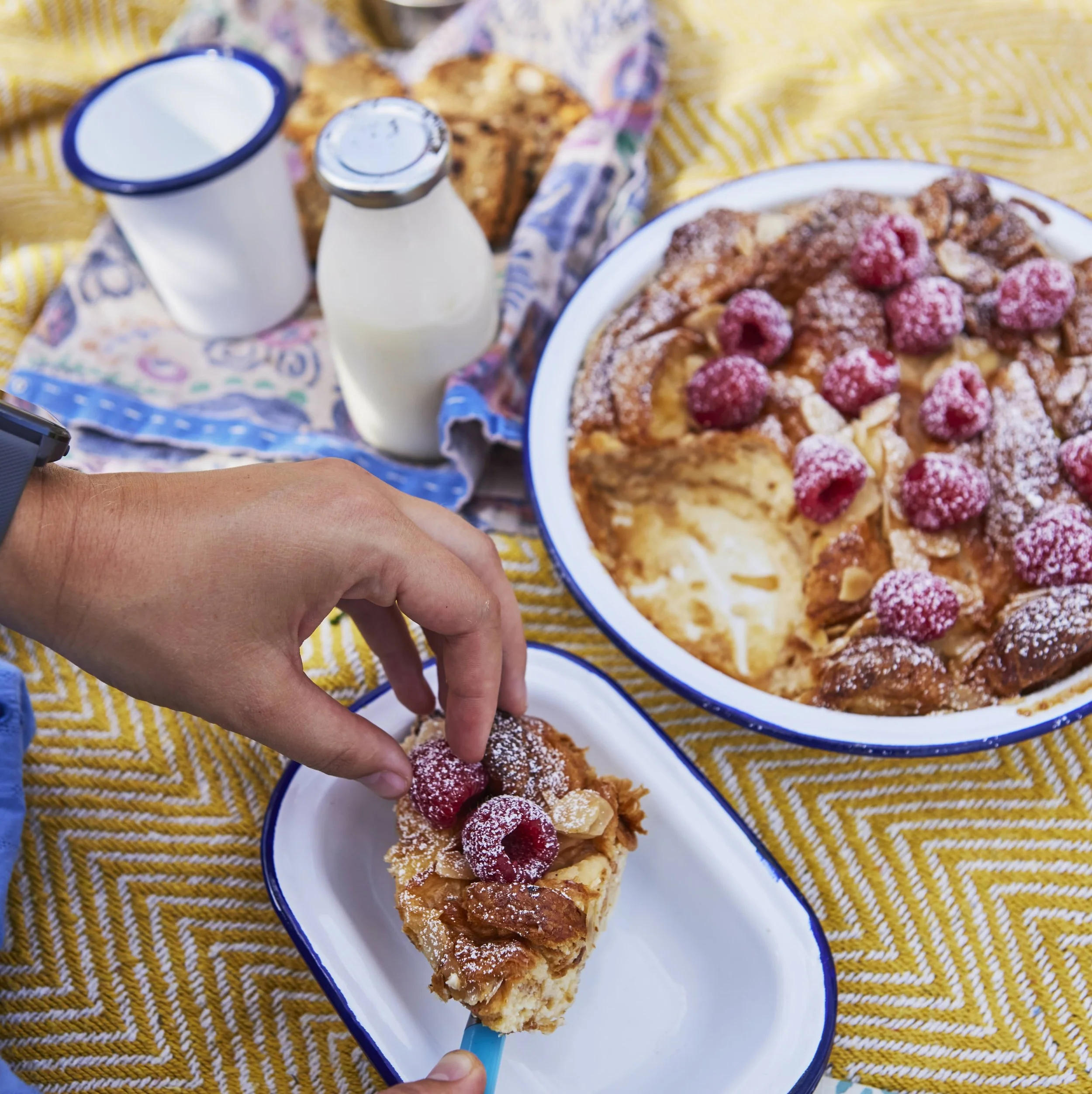
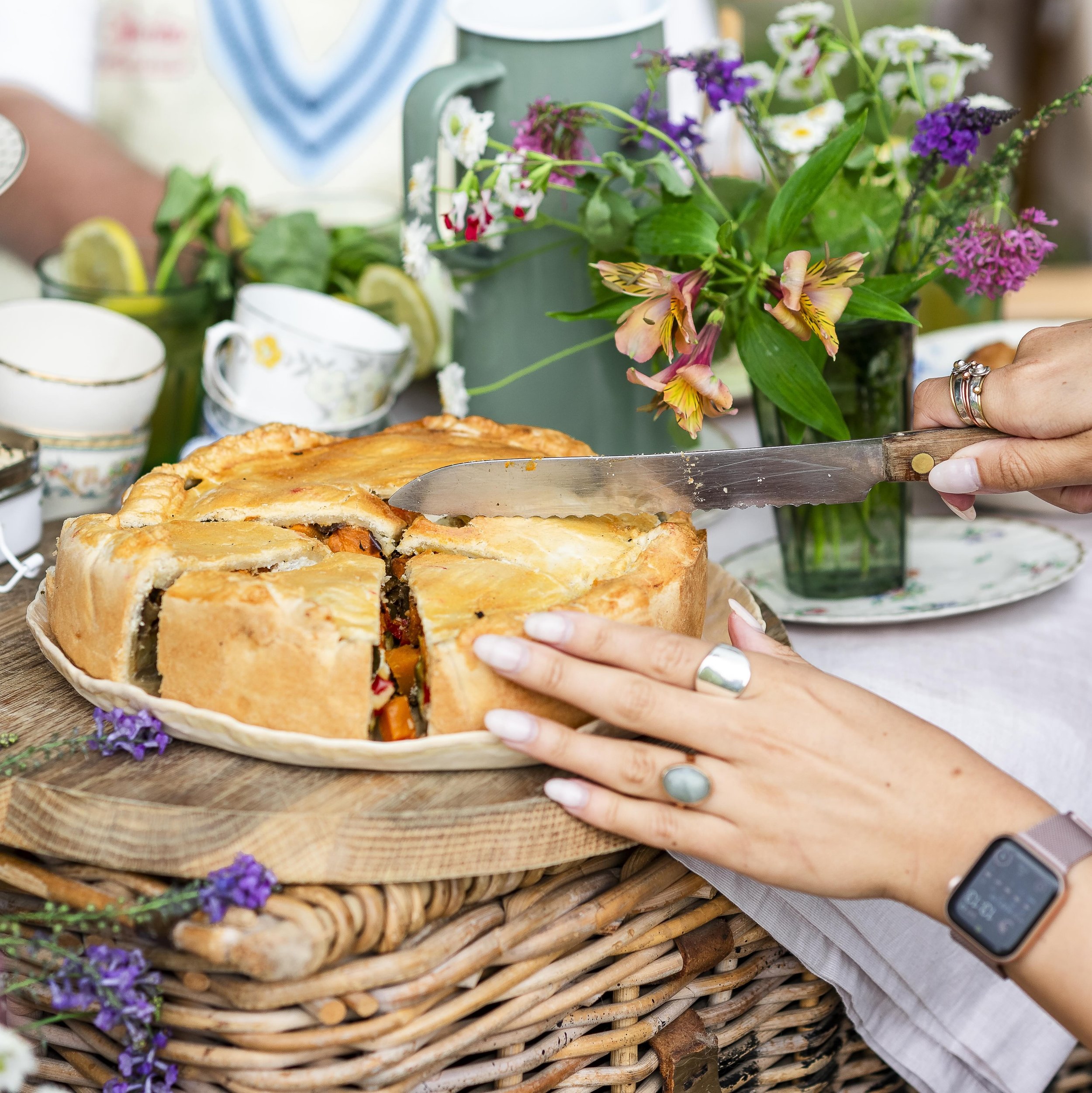
Eating every possible meal in the garden is one of the most blissful things you can do during the summer months. The simple act of sipping a cup of tea on the doorstep while listening to the birds and feeling a warm breeze on your face can transform this humdrum activity into something special. Pile a tray with toast and coffee and head outdoors for breakfast and suddenly it feels like you’re on holiday. And a glass of rosé and some nuts dished up on the patio or a balcony becomes a celebration.
Meals in the garden are simultaneously liberating and fun. Entertaining family and friends takes on a more chilled dimension when you sit beneath a tree, children and animals run around your feet and the light gradually dims. The only rules about eating alfresco is that there are no rules: the more relaxed and informal the better.
“Picnics always taste so much nicer than meals we have indoors”
Five Go Off in a Caravan by Enid Blyton
Living needs to be easy in the summer months and that means our homes too. Our shopkeeper, Louise Gorrod, has trawled the shelves at The Stuff of Life to bring you her pick of simply crafted products.
‘This pick perfectly captures the informality of living by the sea - from soft washed linens in faded blue, tactile ceramics in washed aqua and cool enamelware in chalky white – they’re the perfect accessories for an easy breezy home this summer’.
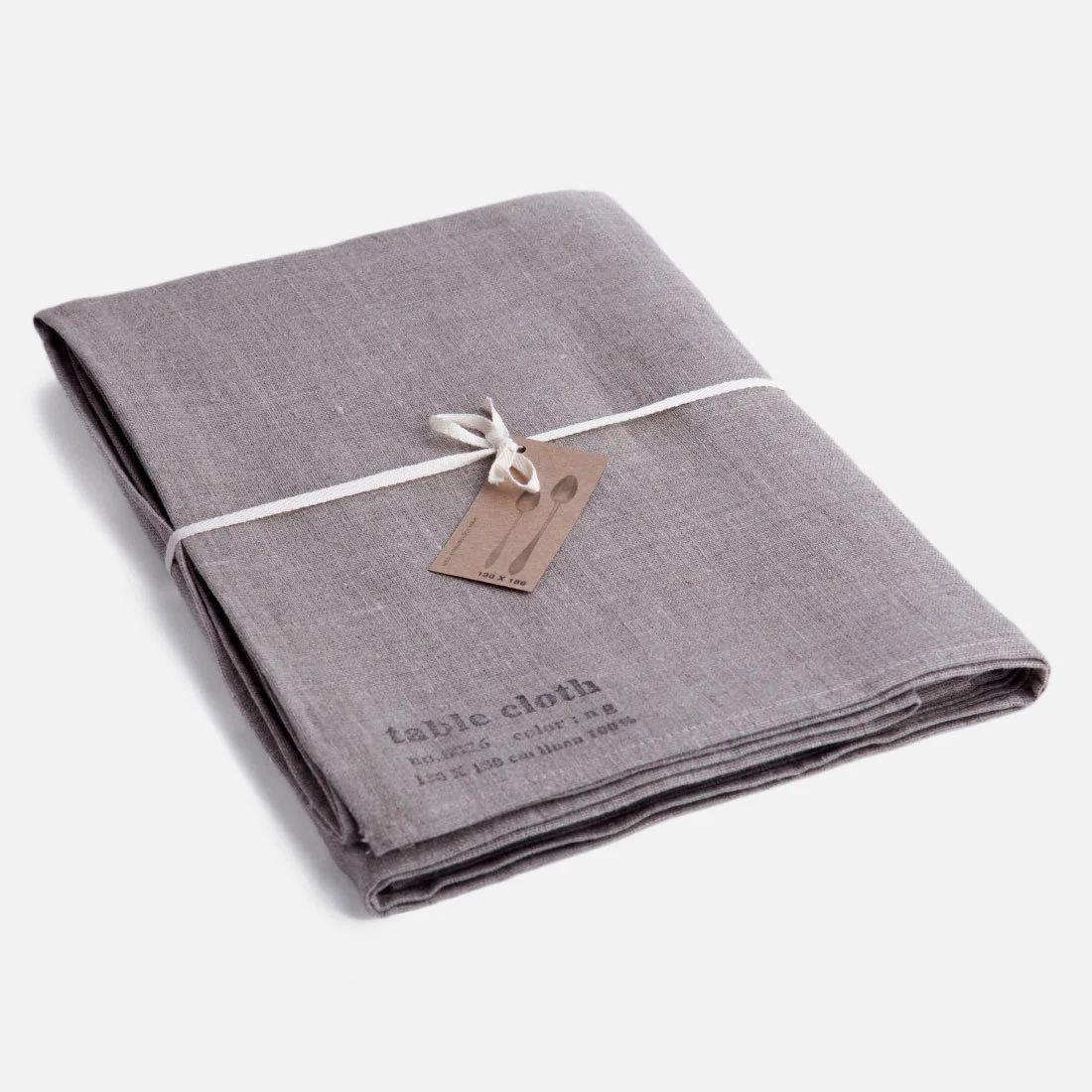
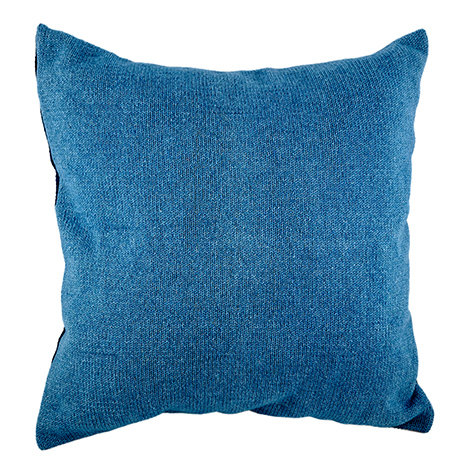
Images from top, left to right: Washed Blue Linen Napkin from LinenMe, £8.99 | Giant Straw Basket from Cachette, £16.00 | Cantine Plates from Home Address, £12,00 | Everyday Large Mug by Emma Lacey, £27.00 | Linen Tablecloth from Home Address, £70.00 | Water cups from Quince Living, £9.00 | Linen Bath Robe by The Linen Works, £120.00 | White Enamel Cutlery from Cachette, from £6.50 | Denim Light Wash Cushion by From Brighton With Love, £50.00.
The Simple Things offers readers a simple promise: ‘to celebrate the things that matter most’. Each issue is a monthly reminder of how good life can be when you remember to take the time to live it well. In this 256-page anthology, we’ve curated our favourite features from the first three years on growing, cooking, making and sharing time with friends and family.
We like to think of it as a ‘handbook for happiness’.
Featuring the best of the magazine, published 26 September 2016 by Firefly Books. Pre-ordered copies will be mailed out as close to this date as possible and each book will be signed by the editor, Lisa Sykes.
£19.95 + free UK p&p* Order here
* Check online for overseas postage prices
Photograph: Kirstie Young
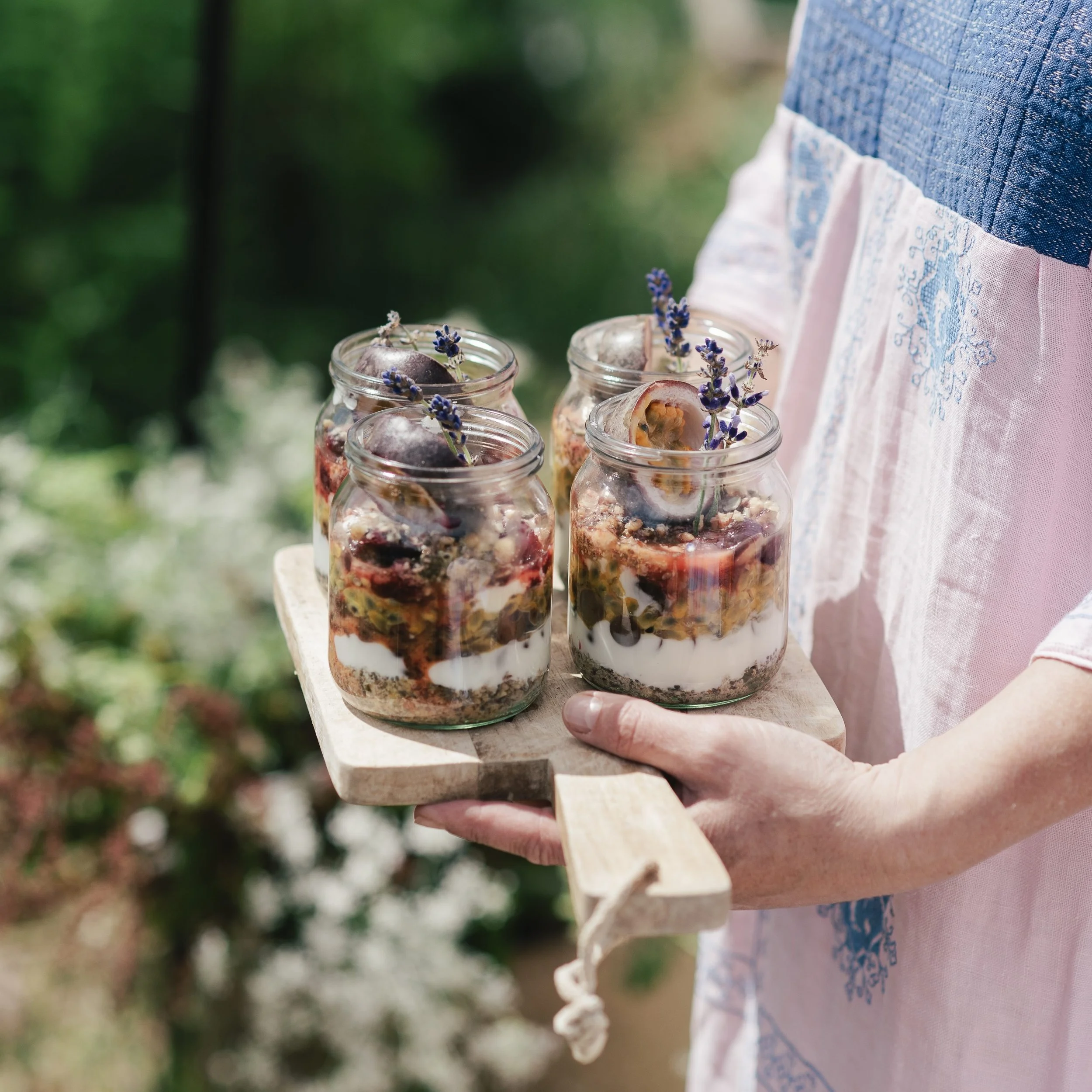
Try this berry harvest bake from Lia Leendertz
'A berry- and herb-studded brioche is a great way to celebrate this moment of wheat and berries, but to say making brioche is a bit of a faff would be quite the understatement. It’s a fun project but this dessert will work beautifully with thick, toasted slices of a good-quality bought brioche loaf if you don’t have the time to make your own. The brioche recipe is based on a recipe from River Cottage Baking, with a few additions of my own. Ideally, start making this the day before you need it, as the dough benefits from spending a night in the fridge.'
Makes 2 small loaves, serves 4-6
400g strong white bread flour
5g powdered dried yeast
10g salt
90ml warm milk
2 tbsp caster sugar
100g butter, softened
4 eggs, beaten
a handful of blackberries per loaf
basil leaves
To glaze
1 egg
2 tbsp milk
For the fruits
210g blueberries
170g blackberries
4 figs, quartered
a few sprigs of thyme
1 For the brioche, put all of the ingredients except the basil, the berries and the glaze ingredients into a large bowl and bring it all together into a dough. Knead for ten minutes (or put the dough into the bowl of your food processor and use the dough hook on it for ten minutes). Place it in a bowl, cover, and chill overnight. The next morning, remove it from the fridge and shape it into your loaves – I put mine into a round cake tin or small loaf tins – then leave them somewhere warm to prove. This could take several hours as the dough will be starting from cold.
2 Preheat the oven to 200C/Fan 180/400F. Once the loaves have doubled in size, decorate them by pushing the blackberries into the surface and laying the basil leaves across it, then beat the egg and the milk together and paint it across the surface. Bake for 10 minutes, then lower the oven setting to 180C/Fan 160/350F and bake for a further 30 minutes or until golden brown. Cool on a wire rack.
3 Place the fruits and thyme into a saucepan and simmer gently until the berries have burst, the juice is released and the figs are turned the colour of the blackberries. Slice the brioche and toast a piece per person. Serve each person a small bowlful and a piece of toasted brioche to scoop up the warm, herby fruit and to dip into the juices.
Lia Leendertz is a freelance gardening writer and the author of several books, including My Tiny Veg Plot and My Cool Allotment. Her first cookery book, Petal, Leaf, Seed: Cooking with the Garden’s Treasures is out now.
Illustration: Joe Snow
Don’t be biffsquiggled – the Oxford Roald Dahl Dictionary decodes Dahl’s brilliant word play
With the new Spielberg BFG film getting rave reviews, we thought you might like to learn to talk like the big friendly giant and co. Here goes!
phizz-whizzing (adj): splendid
plussy (adi): full of life and energy
rommytot (noun): talking nonsense
rotrasper (noun): horribly mean or nasty person
scrotty (adj): when you feel sad and gloomy
swashboggling (adj): unusual
whoopsy-whiffling (adj): splendid or marvellous
hopscotchy (adj): happy
horrigust, muckfrumping (adj): unpleasant, unwelcome
lickswishy (adj): a delicious taste
biffsquiggled, gungswizzled (adj): confused or puzzled
buzzwangle (noun) – a silly or far-fetched idea
delumptious, delunctious (adj): very tasty, delicious
dogswoggler (noun): someone who is very silly
gropefluncking (adj): something difficult to explain
grunion (noun): grumpy person
Recipe and image: Ben Mostyn and Annie Brettell
This quiche is simple to make and packed with summery flavours
Turn to page 34 of August's The Simple Things for the full riverbank picnic menu: Pork and egg pie with a lattice top, Pea, mint, spinach and goat’s cheese quiche, Potato salad, and Meringue kisses.
280g plain flour, plus extra for dusting the work surface
140g cold butter, cut into little pieces
6 tbsp cold water
300g frozen peas
handful of mint leaves
3 tbsp olive oil
2 eggs
284ml double cream
200g goat’s cheese
handful of baby spinach, wilted and water squeezed out in a tea towel
1 In a blender, combine the butter, water and flour until it resembles breadcrumbs. Roll up in to a ball and cover in clingfilm and rest in the fridge until ready*.
2 Cook the peas for 3 mins in boiling water, then drain and chill under the cold tap. In a hand blender, whizz together the peas, mint and olive oil, and season to taste.
3 Preheat oven to 200C/Fan 180C/400F.
4 Roll the pastry out on a floured surface to a circle about 3cm bigger than a 25cm tin. Drape the pastry over the tin and gently push the pastry into place using a little scrap of pastry. Leave a little pastry over the edge of the tin; this can be removed later. Chill in fridge for 10-15 mins.
5 Lightly prick the base of the tart and line with baking paper and ceramic baking beans. Blind bake for 20 mins, then carefully remove the beans and bake for a further 5-10 mins until lightly browned.
6 While the pastry is baking, beat the eggs in a large bowl. Add the cream and season.
7 When the case is ready, spread the pea mixture over the bottom of the tart case. Pour over the egg mixture. Scatter the crumbled goat’s cheese and wilted spinach over the top of the quiche.
8 Bake for 20-25 mins until set and the top is browned. Trim the edges of the pastry off and leave to cool on a wire rack.
*Or buy shortcrust pastry readymade from the supermarket if you’re short on time or inclination.
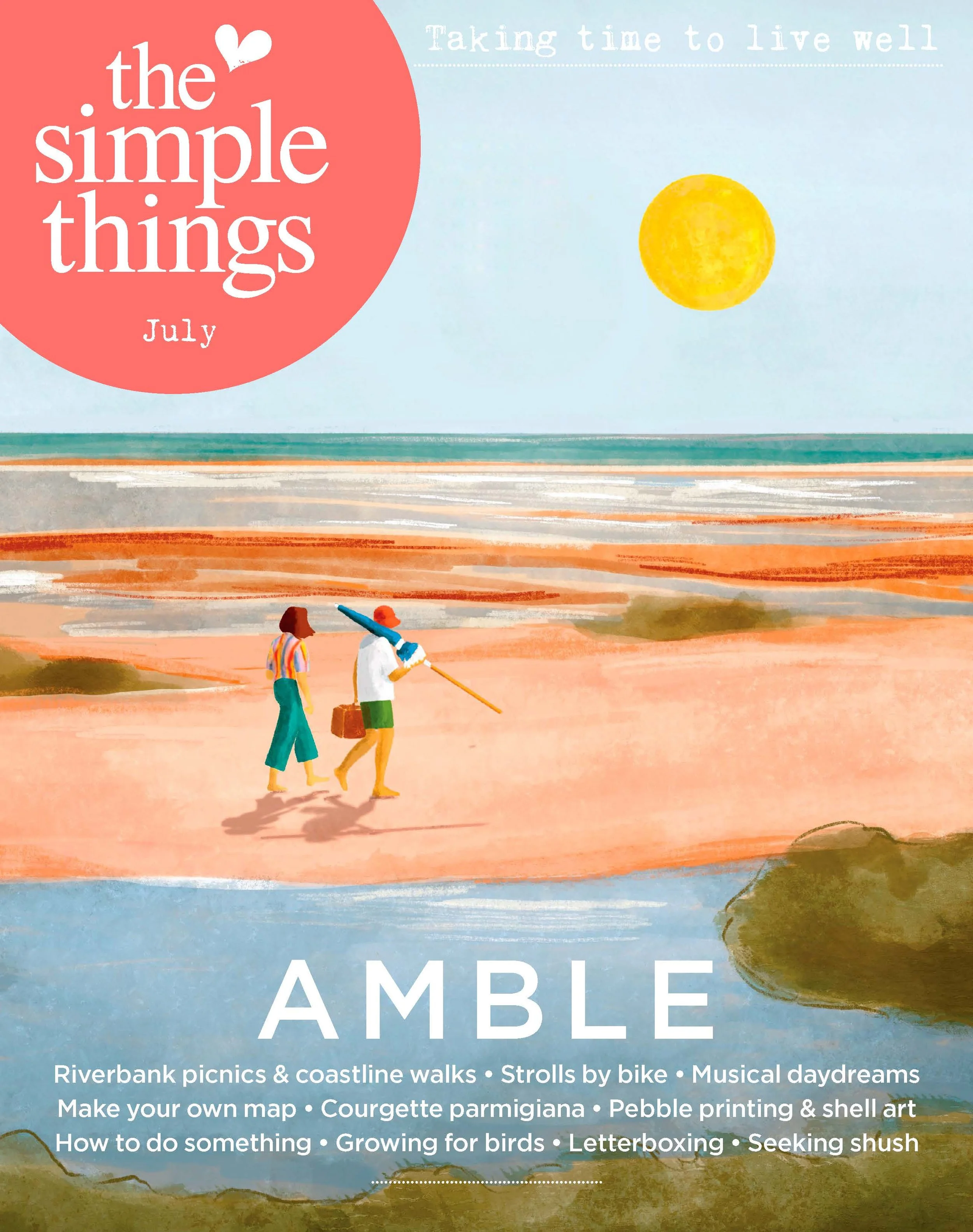
...and breathe. Summer holidays are here. But why wait to go away? Ditch
the to-do list, assemble your favourite people and bag a brook for a shady picnic. Anyone for a blackberry shandy? Eat outside and greet the wide world from a deckchair. When you can no longer resist, take a trip to the sea; for a swim, to gather seaweed or ponder on mermaids. While you enjoy the hot yellow of sunflowers, let your mind wander on, well, nothing in particular. See where slow takes you. And on the way, linger over The Simple Things
Get hold of your copy of this month's The Simple Things - buy, download or subscribe
View the sampler here
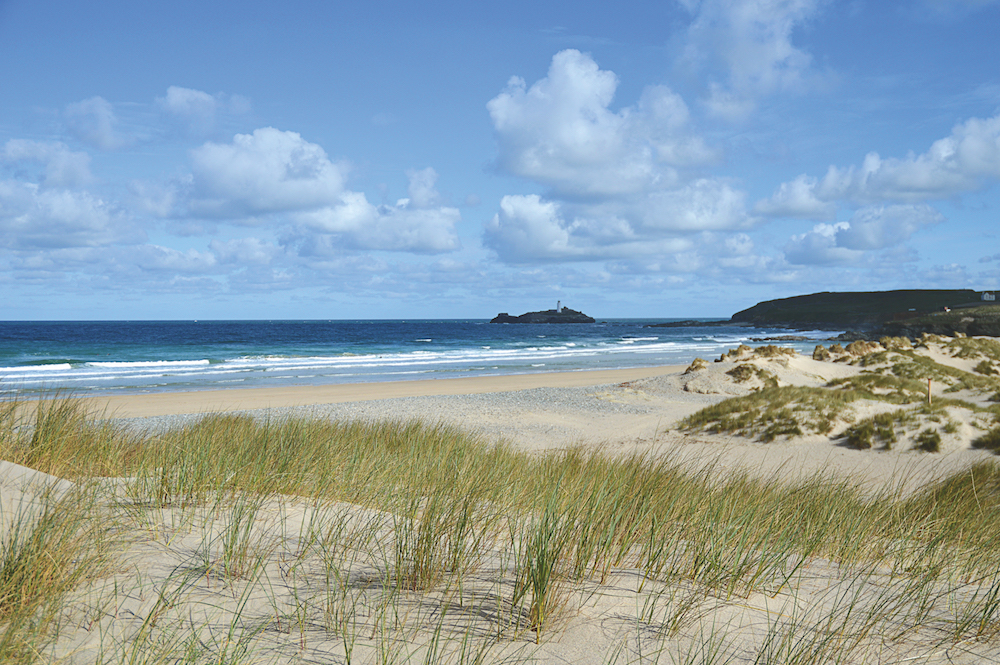
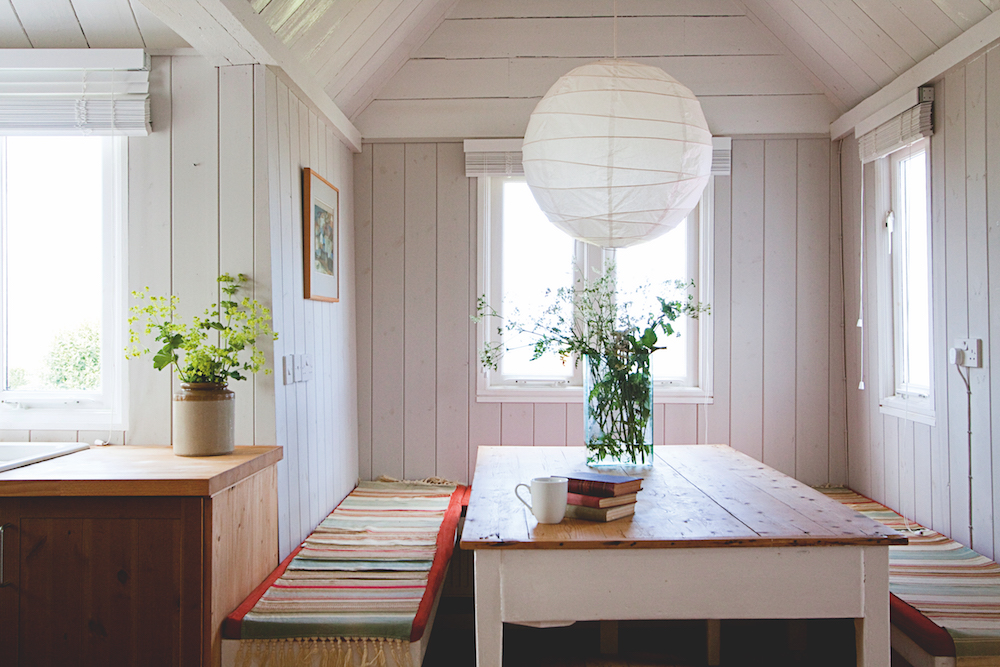
See, do, stay, love the UK. This month: Lou Archell stays in a surf shack in Cornwall
Our regular travel series comes from online UK travel guide This is Your Kingdom, whose handpicked contributors explore favourite places, special finds and great goings on.
You can read about one we love each month in The Simple Things - turn to page 80 of the July issue for more of this Cornish adventure - and plenty of others at thisisyourkingdom.co.uk.
Lou Archell is a regular contributor to thisisyourkingdom.co.uk. Follow her blog at Littlegreenshedblog.co.uk and find her on Instagram as @littlegreenshed.
It’s time to pack a bucket and spade and head to the coast with our sea songs playlist!
Image: Kirstie Young
A recycled plastic water bottle is a good way to ensure plants won't wilt in the summer sunshine. While herbaceous plants, annuals and crops in your garden will be crying out for a drink in the summer, chances are you will be out and about making the most of the gorgeous weather.
Most delicate or container-grown plants will cope with a decent glug every morning (before the sun gets too strong and can burn wet leaves) or in the late afternoon, but left any longer, can experience problems. The solution is fairly simple - once you've quenched your own thirst with a bottle of water, save it and use it to ensure your plants don't suffer in the sun.
1. Use a 1-litre plastic bottle if possible, though 500ml is fine too. Wash it out if it's had any liquid other than water in it and replace the lid.
2. Remove the bottom of the bottle with scissors.
3. Pierce a hole in the lid with a skewer to allow water to slowly drip out.
4. Dig a hole next to the plant or container you want to keep hydrated. Make it deep enough for the water to directly reach the plant's roots (but be careful not to disturb them).
5. Insert the bottle lid first and backfill the soil around the bottle. The end of the bottle should stand proud of the ground, or soil if in the container.
6. Fill with water and keep an eye on it; fill as and when needed for happy plants.
Cosy separates, snuggly coats and warming knitwear - win a Great Plains wardrobe just in time for autumn.
There’s something lovely about being well-prepared for the start of the new term. How smug would you feel to be ahead of the autumn game, with a row of new outfits hanging tidily in the wardrobe, awaiting the turning of the leaves and the first hint of a chill in the air?
We’ve teamed up with Great Plains, renowned for its simple styling and high-quality fabrics to give one reader a brand new autumn wardrobe.
The timeless new collection includes lots of cosy outerwear, investment knitwear pieces and soft jersey separates. Key looks include ’70s Parisian styling and soft, contemporary Scandinavian looks.
The collection focuses on a transitional palette of warm neutrals, from caramels and cognacs to zinc and dove greys, offset by brights such as turmeric yellow and magical ‘Northern Lights’ shades.
The prize includes £500 to spend on Great Plains’ new Autumn/Winter collection. You can see Iceberg Press’ full terms and conditions on page 129 of the August issue and at icebergpress.co.uk/comprules. For more inspiration, visit greatplains.co.uk - closing date: 5 September 2016.
We celebrate slowing down, enjoying what you have, making the most of where you live, enjoying the company of of friends and family, and feeding them well. We like to grow some of our own vegetables, visit local markets, rummage for vintage finds, and decorate our home with the plunder. We love being outdoors and enjoy the satisfaction that comes with a job well done.