Be afraid. Be very afraid.
Listen to more playlists:
Featured
More from the October issue:
Featured
Blog
Taking Time to Live Well
Be afraid. Be very afraid.
My inherited recipe books by Gill Valenti
My most treasured books lie hidden. They’re shrinking violets in my kitchen, spines frayed and indecipherable, found among modern volumes from celebrity kitchens and heavyweight classics from renowned masters. My favourite cookery books are often rediscovered by accident and, as I ease them from the shelves, they transport me to half-forgotten times and places in my past.
My Mother’s Be-Ro book, a slim booklet produced by the flour manufacturer, still falls open at the pages consulted by her, and sticky fingerprints offer clues to the ingredients of coconut macaroons and jam tarts. It conjures up memories of my scratchy bottle-green school jumper and toasting bread with my brother in front of a smoky coal fire, Blue Peter on the television.
The Farmer’s Wife book evokes my teenage years. The spicy aroma of the sticky gingerbread contained within gives way to Aqua Manda, the heady fragrance that I applied liberally on Saturday nights.
The Hamlyn All Colour Cook Book heralds early married life and, with its curried eggs and tuna bake, a new and sophisticated period along my culinary journey. As I browse the faded pages, it’s our trendy brown and orange kitchen and primrose bathroom suite (how I longed for avocado) that elbow their way through the mists of time. Fast forward ten years and the Food Aid book from which I make mushroom pâté each Christmas reminds me of the Live Aid concert that inspired its publication.
There are more, each with their own special memories, but it is a small blue book bulging with handwritten notes that means the most. These are the family recipes handed down to me over the years. One glance at the looped script and I am back in the kitchen of my childhood. It’s a sunny Sunday afternoon and my mother and aunts are chatting as they assemble bridge rolls stuffed with tinned salmon, and arrange their specialities – fruit scones, cream meringues and chocolate eclairs – on doilies. I can smell their soap and hear their gentle scolding as my cousins and I play underfoot.
I doubt I’ll be able to resist the new, glossy cookery tomes that will appear this Christmas but, as they join the rest of my collection, I know that my memories will be hiding in their midst.
We’d like to know what you treasure - whether it’s a sentimental artefact, a person, a place or something else. Tell us in 500 words what means a lot to you - email thesimplethings@icebergpress.co.uk
Handwriting analysis, or graphology, studies the unique features of writing, from the spaces between letters to the curliness of a ‘g’, to reveal our individual traits and how we interact with the world, cope with stress and express emotions.
Handwriting, as with all fine motor coordination, is a physical process; the brain sends signals to the arm, the hand and the fingers to manipulate a writing tool (the pen or pencil you are holding). The brain is very much the main control room, which is why our writing can be described as the X-ray of the mind. It is therefore not surprising that no two handwriting styles are the same and they are as unique as a fingerprint.
Before you start, write a few sentences on blank paper – avoid copying text as it will slow down your natural speed – and then sign your name under the text.
Turn to page 74 of September's The Simple Things to analyse your own handwriting.
Illustration: CLAIRE VAN HEUKELOM
On the eve of London Fashion Week, here are some starting points for dressing with a conscience
ON DEMAND & CUSTOM MADE
Encompassing made-to-order, tailormade, and DIY. Campaigners believe that the fashion industry should be more responsive to consumer demands, rather than make in bulk. Consumers can put this into practice, too. If we play a role in the production of our clothing, we’re more likely to look after it and hang onto it. Getting custom-made is an increasingly affordable option, thanks to the likes of Fox in a Glove, foxinaglove.com, offering modern styles made in Europe, and Brighton-based Dig For Victory, digforvictoryclothing.com, which specialises in vintage-inspired shapes. Clever sewers can make their own clothes. For fashionable patterns, try the Sewing Your Perfect Capsule Wardrobe project book by Arianna Cadwallader and Cathy McKinnon (Kyle Books), Sew Over It (sewoverit.co.uk) and Tilly and the Buttons (tillyandthebuttons.com).
GREEN & CLEAN
Try to buy green, where you can – and ideally items that are green through every step of the process. The textile certification helps identification, but in general look for organic, natural fibres, such as wool, cotton, silk, lyocell and hemp, rather than the likes of petroleum-derived polyester, nylon or acrylic, which don’t typically degrade in nature. Ideally you’d be able to track a garment’s credentials at every stage of production – virtually impossible at the moment, so join the campaign for greater transparency from clothing brands at fashionrevolution.org/about/transparency.
HIGH QUALITY & TIMELESS DESIGN
When you buy, try to buy better. The WRAP Love Your Clothes campaign offers best buy guides at loveyourclothes.org.uk/guides/best-buy-guides that highlight what to look for to get the most from an item of clothing. Livia Firth’s #30wears campaign is simply a prompt to ask yourself before buying if you’ll wear something at least 30 times – it’s surprising how many garments won’t reach this criterion.
FAIR & ETHICAL
Referring to traditional production, artisan crafts and animal rights. As with the Green & Clean, try to find out who made your clothes – and if anybody or anything has been harmed in the process. This can feel impossible to ascertain, so demand better and join in Fashion Revolution Day on 24 April by asking companies, Who Made My Clothes? To educate yourself further, try a copy of Fashion Revolution Zine (fashionrevolution.org), or a free course exploring the subject; futurelearn.com/courses/who-made-my-clothes.
REMAKE, REPAIR OR UPCYCLE
Extending the life of a garment by nine months reduces its impact on the environment by 20–30%. Learn the quick fixes – replacing a broken zip, sorting a wayward hem – to keep a garment in use, or up the ante and try remaking your clothes entirely. Dressmaking courses around the UK are listed at thesewingdirectory.co.uk/workshops-and-courses/ – or take advantage of the skills of a local tailor to keep beloved items in use.
RENT, LOAN OR SWAP
There’s a wealth of desirable clothing that won’t cost you a penny, if you decide to borrow from friends and family. ‘Swishing’ parties – pooling donated clothing and accessories – are a social way to share unworn clothes. And for big occasions, consider hiring rather than buying
an unlikely to be worn again frock: wearthewalk.co.uk and girlmeetsdress.com offer fashionable rental options.
SECONDHAND OR VINTAGE
Extend the life of an item of clothing by buying secondhand or vintage. See issue 63 of The Simple Things for pleasurable ways to shop secondhand, from car boots to charity shops. On Instagram @knickers_models_own offers plentiful inspiration on how to style pre-loved clothes: Caroline Jones did a full year of only dressing in clothes sourced from Cancer Research shops. And it goes both ways: hand on your own items, rather than throw away. Even garments that are no longer wearable can go for textile recycling.
Green Strategy, a Swedish consultancy on improving sustainability, suggested these seven ways we can start to shop and dress more sustainably. You can read all about it by searching ‘seven’ at their website, greenstrategy.se.
Turn to page 89 of September's The Simple Things for more on our ethical fashion feature.
Illustrations: FLORA WAYCOTT
Virgo
23 August – 22 September
“If you’re not happy at home, you’re not happy anywhere else,” said actress, Angie Harmon. Your domestic life may have been a theme for some time now, from your home to your family ties. This year is likely to have seen a lessening of difficulties but the real turning point comes in November when a much happier phase begins. Why is this important? Because the more happy and secure you feel in your foundations, the more able you’ll be to go out into the world and shine your light. This autumn is about new beginnings after which you’ll find it easier to make progress.
Turn to page 125 of September's The Simple Things for the other twelve star signs.
Do you want to go where the streets have no name? Us neither.
As you're travelling around this holiday season, consider leaving a book you've enjoyed for someone else - on a park bench, in a cafe or bar, on a train, at the hotel, cottage or campsite.
July's The Simple Things came with our bookshare book plates - maybe your book will touch someone's life. Not got a copy? Order yours today!
Many of us love books; we collect them, build a library at home, accumulate a pile by the bed of those we will get around to reading. And occasionally we have a clear out and take a box to the charity shop. When we move home, it sometimes means a purge. But what if, instead of keeping all our books, we pass a few on, recommending them in absentia to others by leaving them behind when we are out and about?
As you’re travelling around this holiday season, consider leaving a book you've enjoyed for someone else - on a park bench, in a cafe or bar, on a train, at the hotel, cottage or campsite. Some railway stations even have bookshelves for people to help themselves.
Download our free book plates so you can let people know what’s going on.
Maybe your book will touch someone’s life. It may introduce someone to a new writer they then fall for, let someone travel the world via its pages, or inspire someone to pen their own story. You’ll wonder at its journey and who picks it up next.
1 Choose a book to pass on.
2 Find a place you’d like to leave it.
3 Stick one of our book plates in the first page.
4 Write in your name, date and where you’re leaving it.
5 Leave it for someone else to enjoy.
6 Share socially: say where you left it and tag @simplethingsmag on Instagram.
Borrow a book from us! We’ll be taking a mini lending library with us to The Good Life Experience in September, so feel free to bring and borrow a book.
Download them at thesimplethings.com/blog/bookplates.
You’ll be able to print them at home, A4 size, to cut and paste them into your books.
On page 49 of August's The Simple Things, we enter the world of independent, small scale perfume makers. Flick through the feature for a handful of indie perfumers that are trying something different, and read on for our fragrance glossary.
Accord
This is where magic happens. A perfume’s accord is a blend of individual notes that lose their own identity to create an entirely new scent.
Ambergris
Made from a digestive secretion found in sperm whales (although much more likely to be synthetic today), ambergris, or amber as it is often called, is woody and sweet.
Base note
The deep, lasting scent of a perfume. It’s what you’re paying for, so make sure it lasts.
Chypre
In 1917, Coty launched their fragrance, Chypre, inspired by the island of Cyprus. It was so popular that it’s now the term used to describe woody and mossy scents.
Drydown
That lingering residue of scent that stays on your scarf for days.
Fougère
French for ‘fern’, this term refers to herbaceous plants – lavender, coumarin and oakmoss. It’ll make you think of the French countryside in the sunshine.
Gourmand perfumes
So good, you could eat them. These evoke the smell of food such as vanilla, honey and chocolate.
Middle note
The heart and dominant fragrance of the perfume – like the main film after the trailers.
Sillage
The glorious aerila trail of scent that a perfume leaves behind. We all want a perfume that does this, even though it’s not something you can smell on yourself.
Toilette
This is your everyday fragrance that’s a little easier to wear than eau de parfum.
Top note
The first burst of a fragrance, the moment it has been spritzed. This is what you smell in the shop, so hang out with your perfume for a while before you buy.
Vetiver
A green, mossy fragrance that’s often at the heart of a woody scent. Every perfume house has a vetiver perfume, and they are not all created equal, so shop around.
My walking boots by Abigail Mann
It’s strange to think that my most treasured possession is a pair of boots that are so actively ignored when I don’t need them. Usually, accidental steps in hidden bogs that cause stagnant water to seep inside is the reason for their being left in the boot of the car. Always with a pledge of a deep clean and oil, but so often exchanged for a brisk bash in the car park to get rid of the biggest clods of mud before the next walk.
These boots are older than I am. Worn in for 15 years by my mum and then passed down to me, the tricky size five-and-a-halfs have been moulded to fit from a constant cycle of damp fields, sea salt and mossy woodland paths. The laces have grown plump and awkward, sometimes stubbornly immovable through rusting eyelets and the promise of drying them out after long walks.
When I was seven or eight, I plodded alongside Mum, who wore them then, on the farm we stayed at every year; a little girl who held onto her mother’s little finger. I’d pull the grass seeds from their husks and scatter them like chicken seed. When I was ten, these boots would run away from the waves and dry with a sea salt line when we didn’t escape the swash in time. When camping, they held my tiny feet as I fetched water but couldn’t be bothered to pull on my own shoes, instead shuffling across the heath to a tap, sloshing the kettle all the way back until half of what was collected remained.
They took us through summers spent in Herefordshire: soles worn from two decades of pushing down on spades and forks to lift onions – and from standing for a photo in front of the same spot of a pine forest, year after year; a family tradition that saw my brother and I grow tall with the saplings. They were mine after new waterproofing deemed Mum’s leather boots second best. Yes, they always let the water in; yes, they barely support my ankles, but they bear the marks of a love of the outdoors that bloomed in the hills of the Brecon Beacons and along the shores of North Norfolk. They’ve taken me up mountains and down valleys when
I couldn’t afford boots of my own.
The ritual of wearing thick hiking socks and sliding into Mum’s walking boots is a kindred moment. I always send her a picture of wherever me and the boots have been; a digital scrapbook that continues the photo albums stored on the family bookshelf. They are the anticipation and adventure that pulls me away from concrete and carpet. Well used. Well loved. Irreplaceable.
We’d like to know what you treasure - whether it’s a sentimental artefact, a person, a place or something else. Tell us in 500 words what means a lot to you - email thesimplethings@icebergpress.co.uk
It’s possible to achieve a level of outdoors awareness that, although once common, is now so rare that many would label it a ‘sixth sense’. This is the practised ability to draw conclusions from all of the evidence presented to our senses almost without thinking. It is not mysterious but expert intuition, a honed ability to join the dots offered by our senses to complete a fuller picture of our environment. Once you know how, it is easy to sense direction from stars and plants, forecast weather from woodland sounds, and predict the next action of an animal from its body language – instantly.
At the most basic level, we have not entirely lost these skills. Imagine you wake in a room that is perfectly dark, thanks to heavy curtains, and hear a cockerel crowing outside. It may not take any conscious thought to appreciate that it is growing light outside. The dog’s bark at the usual time tells us that the postman is arriving. But these examples are infantile compared to what our minds are capable of outdoors. But how do we know it is retrievable? Because a few individuals have held on to these skills; indigenous tribespeople, expert hunters and fishermen...
I have sat with Dayak tribespeople in Borneo as they explained that a deer would appear over the brow of a hill, and was amazed moments later when my eyes met those of a muntjac in the predicted spot. After careful discussion it became clear that the Dayak were subconsciously tuned to the relationship between the salt on a rock, the bees, the water, the time of day and the clearing in the forest, all of which suggested deer would come to lick salt at that time.
Remnants of this ability can be found in our relationship with domesticated animals. When you’re walking a dog in a city park, it’s fairly easy to tell from the way it turns whether the person approaching from behind has a dog with them or not. Time spent enjoying this way of experiencing the outdoors helps us to begin rebuilding our lost sixth sense. And if we make this a regular part of our outdoors experience, we soon find that our brain takes over, forging shortcuts and allowing us to draw conclusions without conscious thought. We sense a dog behind us, and we sense that the weather will be fine tomorrow. It is only a small leap from that to sensing what we will find round a corner or what an animal will do next.
For the past few years, I have been researching ways we can develop this sense. Central to this are the ‘keys’, a collection of patterns and events in nature worth our attention. We notice a shape in a tree or cloud and pair that with its meaning and very soon we don’t have to think it through – we just sense the meaning. In the same way, we can watch animals and learn to appreciate the key stages in their body language. It is unbelievably satisfying to be able to predict what a squirrel or robin will do next.
To get started, try playing ‘Grandma’s Footsteps’ with a bird on a lawn. Notice how you can take a few steps towards your bird when its head is down and it’s pecking. But if you try this when its head is up, it flies off. Practise this simple little game a few times and you’ll have learned your first ‘key’ - I call it ‘The Peek’. Add a few more keys and you’ll soon be predicting not just when the bird will fly off, but the tree it will fly to and what it will do when it gets there.
Very little in our surroundings is random and, with a little practice, we can learn to sense things that we may find astonishing. Understanding how and why this happens opens a new, and very old, way of experiencing our environment. It is a more radical experience of the outdoors than has been common for centuries.
Tristan is author of Wild Signs and Star Paths: the Keys to our Lost Sense (Sceptre). Read more at naturalnavigator.com.
Grab your cossie, we’re going for a dip
Illustration: ALICE PATTULLO
With its protruding spines, downward gaze and prehensile tail, this most beguiling fish looks like a shy, prehistoric ghost. Floating upright, it hangs motionless waiting for its prey to pass, which it then sucks up through its long snout. Found in seagrass habitats from Scotland to Dorset.
Most often seen when masses, known as a ‘bloom’, are washed up on the beach. Which is a shame, as they look most beautiful floating in transparent clusters. Moon jellyfish can grow up to 40cm in diameter and have short hairy tentacles that hang from their dome like a fringe. They are mostly harmless, though may sting sensitive skin.

This elegant starfish has long slender arms which they can cleverly self-amputate if being attacked; the arms regrow. Brittle stars prefer to live in great gangs (called ‘aggregations’) on the sea bed, their arms raised to catch plankton; can number up to 1,500 per square metre. Usually in deep water but sometimes under boulders and in rockpools.
Unlike other anemones, Snakelocks anemone’s bright-green tentacles remain out all the time: all the better to sting and capture small fish. They can be found on the seabed, attached to large seaweeds, and in sunny rockpools, where their flowing tentacles with their purple tips sift through the passing currents.
Attached to rocks and other objects by a long black penduncle and with a chalky white shell which opens to reveal spiky fronds, this unusual creature has an alien-like quality.
Often disguised by seaweed and sponges that grow all over it, this large knobbly crustacean has long-jointed legs, small claws and spiky shell. It can be found in South and West England and its sustainable numbers mean it’s increasingly eaten in the UK, although most are exported to France and Spain.
How it works:
1 Choose a book to pass on.
2 Find a place you’d like to leave it.
3 Stick one of our book plates in the first page.
4 Write in your name, date and where you’re leaving it.
5 Leave it for someone else to enjoy.
6 Share socially: say where you left it and tag @simplethingsmag on Instagram.
You’ll be able to print them at home, A4 size, to cut and paste into your books.
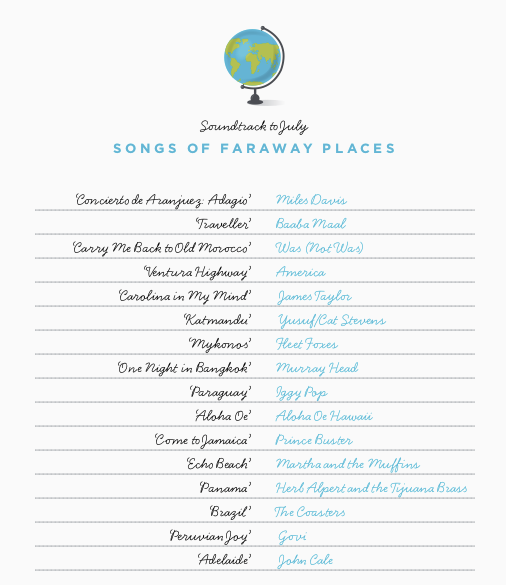
Yearning for some foreign travel? Let the music transport you
Joseph Grimaldi 1778–1837
Not strictly a circus clown (he performed mainly in panto), but deserving of a mention as he was the first to sport ‘whiteface’ and a red smile, and is known as ‘the father of modern clowning’.
Grock 1880–1959
A Swiss acrobat, Charles Wettach started as a clown in 1903. He left the circus to perform in music halls instead, subverting the form, as someone who ran away from the circus rather than to it.
Emmett Kelly 1898–1979
American, Kelly, clowned as ‘Weary Willie’, a character based on the ‘hobos’ of the depression era. His son, Emmett Kelly Junior later continued the act.
Charlie Cairoli 1910–1980
French clown of Italian descent, Charlie began clowning at the age of seven as ‘Carletto’ and later worked at Blackpool Tower’s circus for 40 years.
Lou Jacobs 1903–1992
The first ‘Auguste’ clown (the ‘red’ clown types with big shoes, lairy trousers and orange wigs), Lou Jacobs is credited with popularising the ‘clown car’ and also being the first to sport a red rubber ball as a nose.
Illustration: Kavel Rafferty
Get prepped
Increase sleep leading up to the big night. On the day, have a nap in the afternoon.
On the night
Drink lots of water
Use caffeine carefully – in smaller, regular doses rather than huge cups.
Practise deep breathing (see The Simple Things January 2018 for a guide).
Eye drops are your friend versus tiring, dry eyes. Resting with eyes closed for 10 minutes also helps.
Keep moving - Extra points for mingling or dancing.
Step into the light - Bright light fools the body that it’s not yet bedtime.
Snack on foods that provide long-lasting energy, such as peanut butter, Greek yogurt or apples.
Next day
Don’t drive or operate machinery when drowsy.
Have lots of water and fresh fruit and vegetables... and an early night!
Illustrations: FLORA WAYCOTT
21 May – 21 June
“Can you remember who you were, before the world told you who you should be?” asks Canadian author Danielle LaPorte.
We all need to recharge sometimes and the Sun’s journey through your sign in June is your chance to replenish your spirit by honouring your needs and engaging in pastimes that plug you into the universal battery. August builds on this theme of time out as Mercury goes retrograde, so whether you schedule a regular massage, daily meditation or creative hobby, know that this isn’t so much a time for pushing out into the world, but a time to reflect and heal, physically and emotionally.
Turn to page 126 of the June issue for the other twelve star signs.
The Titanic in dry dock c 1911. From Ocean Liners at the V&A until 17 June (Getty Images)
The sinking of the Titanic in 1912 is one of the world’s most famous tragedies, with the loss of around 1,500 lives. “As the first major international disaster in peacetime, it generated a huge interest,” says Eric Kentley, co-curator of ‘Titanic Stories’ at National Maritime Museum, Cornwall. “Not just in America, Britain and Ireland, but also in Scandinavia and the Baltic countries. No area seemed to be untouched.” But it continues to fascinate.
As Kentley points out, “Few people have heard about the Doña Paz or the Wilhelm Gustloff, which are far worse tragedies.” The reason, he thinks, is “partly because it is so rich in stories.” He explains: “In the two hours 40 minutes it took for the ship to sink, you can see every type of human behaviour – self-sacrifice, self-preservation, bravery, cowardice, duty, incompetence... It’s very easy to imagine ourselves on the deck of that ship and wonder how we would behave.”
Some positives did emerge from the disaster, however, such as a re-examination of safety measures at sea. And, for the QE2, a perhaps surprising surge in bookings following the release of the James Cameron film.
‘Ocean Liners: Speed and Style’, sponsored by Viking Cruises, is at the V&A until 17 June, and opens at the Dundee V&A on 15 September. ‘Titanic Stories' is at National Maritime Museum, Cornwall until 7 January 2019.
Turn to page 86 of May's The Simple Things for more on our look back at ocean liners.
“Dancing helps relieve the pain
Soothes your mind, makes you happy again”
Treating resilience not as an innate quality, but as a skill to be practised and nurtured, allows you to make lemonade whenever life throws you lemons
The Finnish word sisu refers to a mix of courage, resilience, grit and ‘guts’. In her new book Sisu: The Finnish Art of Courage (Gaia), Joanna Nylund explains how the Finns’ close connection with the weather and nature has played a crucial role in forging the resilient nature of the people. “Living in Finland means living with sharp contrasts,” she says. “It is the extremes that rule our lives – from gritting our teeth and summoning our sisu at the approach of winter to celebrating the eagerly anticipated summer with a devotion to the sun that most closely resembles Celtic worship.”
After that long, hard winter, the Finns’ summer ritual is more about celebrating discomfort than luxury hotels or even glamping. In late June, the country collectively withdraws from everyday life and heads out into nature, spending a few weeks in a mökki (summer cabin). The cabin will have a fireplace and cooking facilities, but rarely central heating – and sometimes no electricity or running water.
“Squatting by the lake to wash your dishes in cold water is so romantic!” says Nylund, who explains how their ancestors grew resilient through hardship. “We are modern people living in a modern world, but at heart we are still rural, and we love our sometimes harsh environment. It has given us our sisu.”
Nature is grounding, it teaches self-sufficiency and spending time in it boosts self-esteem. You don’t have to spend four weeks in a cabin – start by spending a bit of time outdoors every day, read and learn a little about the nature around you, dabble in being more self-sufficient by growing a few veg or salad leaves in your garden, spend a night under canvas, and go from there.
Turn to page 92 of May's The Simple Things for more of our feature on How to bounce back.
We celebrate slowing down, enjoying what you have, making the most of where you live, enjoying the company of of friends and family, and feeding them well. We like to grow some of our own vegetables, visit local markets, rummage for vintage finds, and decorate our home with the plunder. We love being outdoors and enjoy the satisfaction that comes with a job well done.