The Simple Things

Taking time to live well
  • Home
  • Subscribe
  • SHOP
  • Newsletter
  • About
  • Work with us
  • Home
  • Subscribe
  • SHOP
  • Newsletter
  • About
  • Work with us

Blog

Taking Time to Live Well

  • All
  • Chalkboard
  • Christmas
  • Competition
  • could do
  • Eating
  • Escape
  • Escaping
  • Fresh
  • Fun
  • gardening
  • Gathered
  • Gathering
  • Growing
  • Haikus
  • Interview
  • Living
  • Looking back
  • Magazine
  • magical creatures
  • Making
  • Miscellany
  • My Neighbourhood
  • Nature
  • Nest
  • Nesting
  • outing
  • playlist
  • Reader event
  • Reader offer
  • Shop
  • Sponsored post
  • Sunday Best
  • Think
  • Uncategorized
  • Wellbeing
  • Wisdom
Photography: Plain Picture

Photography: Plain Picture

Think: How to look at art slowly

Lottie Storey October 20, 2015

When you’re visiting the latest exhibition, don’t get swept along with the crowds. A slow, mindful visit inspires the imagination and piques cultural curiosity.

We’re now more open to arts and culture than ever. Last year, visitor numbers to museums and galleries increased by six per cent compared to 2013, yet we only spend a measly 15–30
seconds looking at a painting. It’s easy to see why. Visit a major arts institution for a mega exhibition and you’d be forgiven for thinking it was a rock concert. The surge of the crowd towards the ‘hit’ paintings, the determined ‘me with Matisse’ selfies, the pressure to see the star turn – the whole experience can be exhausting. But we can choose to slow down. A gallery or museum isn’t somewhere to do battle before collapsing in the cafe, but an opportunity to calm the mind.
 

How to look at art slowly

1 Try to visit a gallery or museum in quieter times, such as early morning, late afternoon or evening.
2 Treat gallery walls like a postcard rack – we pick a postcard we like without hesitation, so have the confidence to do the same with great works of art.
3 Don’t spend ages reading the labels or listening to the audio guide.
4 Take time noticing and recognising your reactions. The piece might be showing what you need more of.
5 Don’t worry if you’re scratching your head at the meaning.
6 Remember, unless you have to write an essay, you’re there to feel, not learn.

Turn to page 80 of October’s The Simple Things for more of Loma-Ann Marks’ Arts in Mind feature.


Five must-see exhibitions for winter 2015/16


Ai Weiwei
Royal Academy of Arts
19 September — 13 December 2015

Ai became widely known in Britain after his sunflower seeds installation in Tate Modern’s Turbine Hall in 2010 but this is the first major institutional survey of his work ever held in the UK and it bridges over two decades of his extraordinary career. Curated in collaboration with Ai Weiwei from his studio in Beijing, the Royal Academy presentx some of his most important works from the time he returned to China from the US in 1993 right up to present day. Among new works created specifically for the RA’s galleries and courtyard are a number of large-scale installations, as well as works showcasing everything from marble and steel to tea and glass. 


Works to Know by Heart: Matisse in Focus
Tate Liverpool
20 November 2015 – 2 May 2016


At almost three metres square, The Snail is one of Matisse’s largest and most significant paper cut-out works. Made by cutting and tearing shapes from paper hand painted by his assistants in a range of bright colours, Matisse began experimenting with this cut-out method in the late 1930s, adopting it wholeheartedly by the late 1940s when ill health prevented him from painting.
Shown alongside The Snail will be additional Matisse works from the Tate collection that span the genres of portraiture, landscape and still life, encompassing sculpture, painting and works on paper. Displaying works from 1899 onwards, Matisse in Focus will represent over 50 years of this giant of modern art’s fascinating and impressive career. 


The World of Charles and Ray Eames
Barbican
21 October 2015 - 14 February 2016


Charles and Ray Eames are among the most influential designers of the 20th century. Enthusiastic and tireless experimenters, this husband and wife duo moved fluidly between the fields of photography, film, architecture, exhibition-making, and furniture and product design.
From personal letters, photographs, drawings and artwork, to their products, models, multi-media installations and furniture, The World of Charles and Ray Eames includes not only the designs for which they are best known, but provides an insight into the lives of the Eameses, the Eames Office and the breadth of their pioneering work, bringing their ideas and playful spirit to life.
 

Alexander Calder: Performing Sculpture
Tate Modern
11 November 2015 – 3 April 2016


American sculptor Alexander Calder was a radical figure who pioneered kinetic sculpture, bringing movement to static objects. Calder travelled to Paris in the 1920s, having originally trained as an engineer, and by 1931 he had invented the mobile, a term coined by Duchamp to describe Calder’s sculptures which moved of their own accord. His dynamic works brought to life the avant-garde’s fascination with movement, and brought sculpture into the fourth dimension. Continuing Tate Modern’s acclaimed reassessments of key figures in modernism, Alexander Calder: Performing Sculpture will reveal how motion, performance and theatricality underpinned his practice. It will bring together major works from museums around the world, as well as showcasing his collaborative projects in the fields of film, theatre, music and dance.
 

Evelyn Dunbar: The Lost Works
Pallant House Gallery
3 October 2016 - 14 February 2016


A remarkable collection of lost works by WW2 Official War Artist Evelyn Dunbar (1906–1960) goes on show for the first time, including highlights from an extraordinary hoard of previously unrecorded work discovered in the attic of a Kent Coast house. Included in the exhibition are other important rediscovered, unseen or rarely seen works by Dunbar from public and private collections.


Read more:

From the October issue

More mindfulness

Unusual words to describe emotions
 

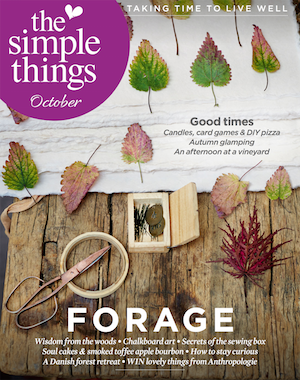
October's The Simple Things is on sale - buy, download or subscribe now.

In Think Tags think, october, issue 40, art, mindfulness
Comment

Think: Unusual words used to describe emotions

Lottie Storey October 14, 2015

Happy, sad, angry, glad – it’s all in The Book of Human Emotions by Tiffany Watt Smith

This intriguing book gets to grips with our sometimes bewildering onslaught of feelings – from anger to apathy, wanderlust to worry – and explains how emotions and our perceptions of them have changed throughout history. Watt Smith also explores how different cultures have specific vocabulary for some unexpected, but resonant moods. 

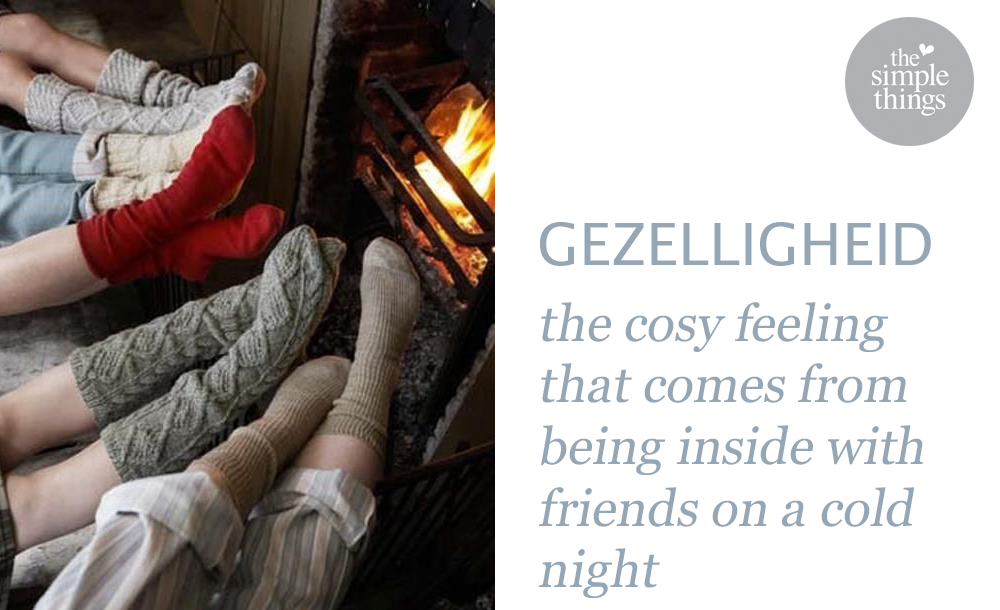
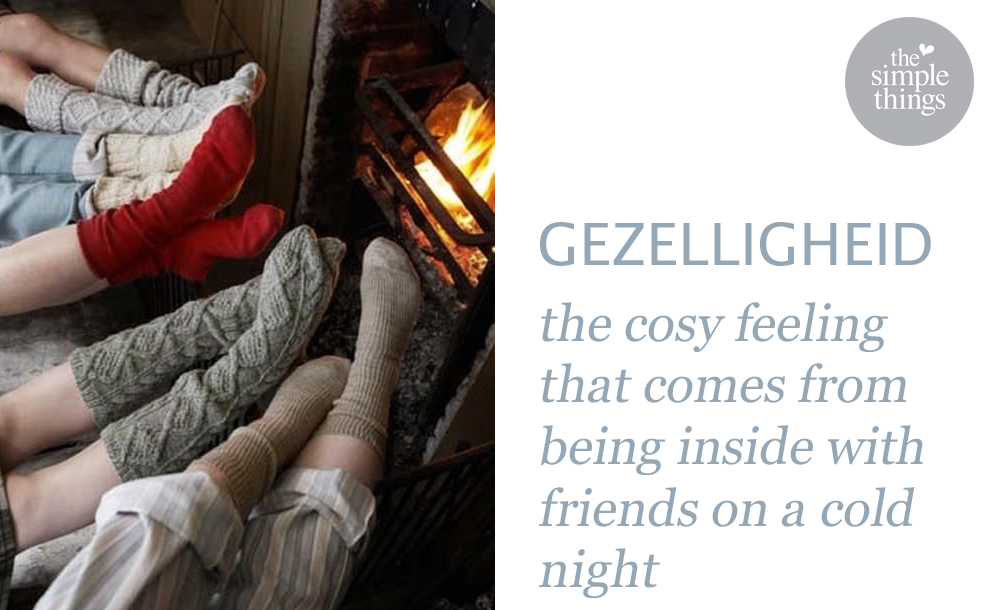
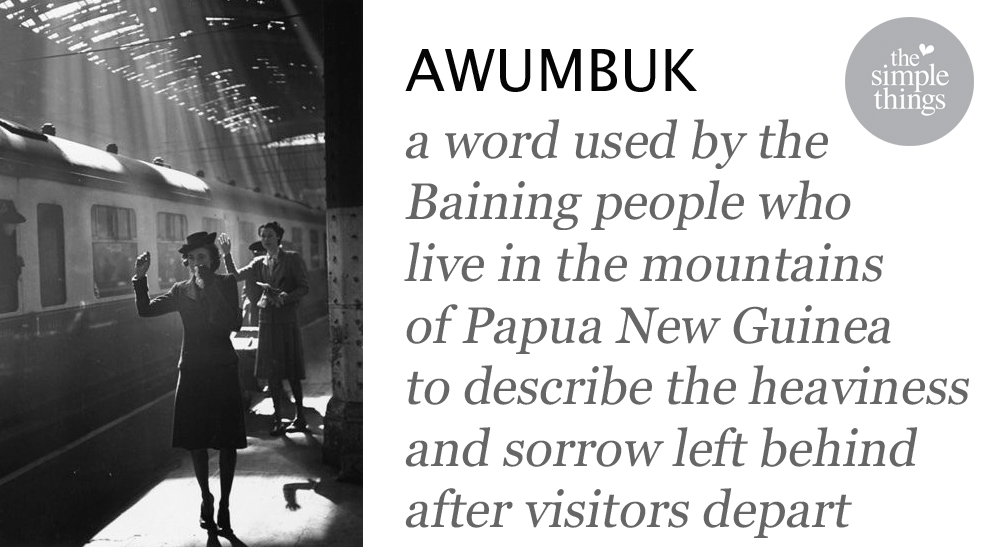
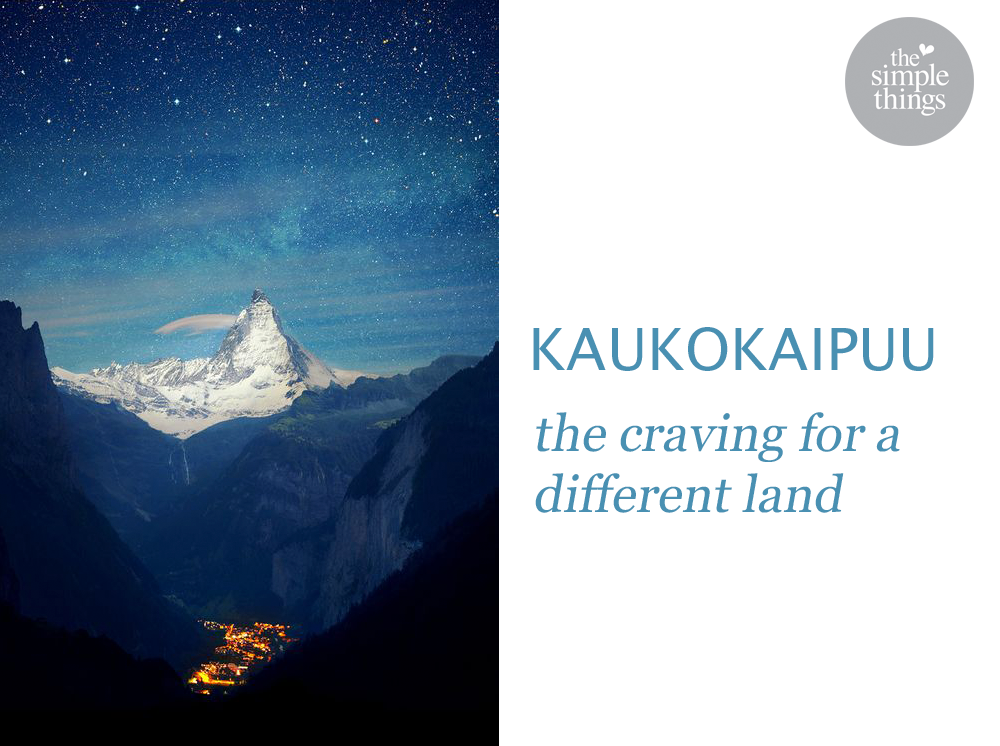
There’s the Dutch gezelligheid – the cosy feeling that comes from being inside with friends on a cold night, the Finnish kaukokaipuu – the craving for a different land – and awumbuk, a word used by the Baining people who live in the mountains of Papua New Guinea to describe the heaviness and sorrow left behind after visitors depart. 

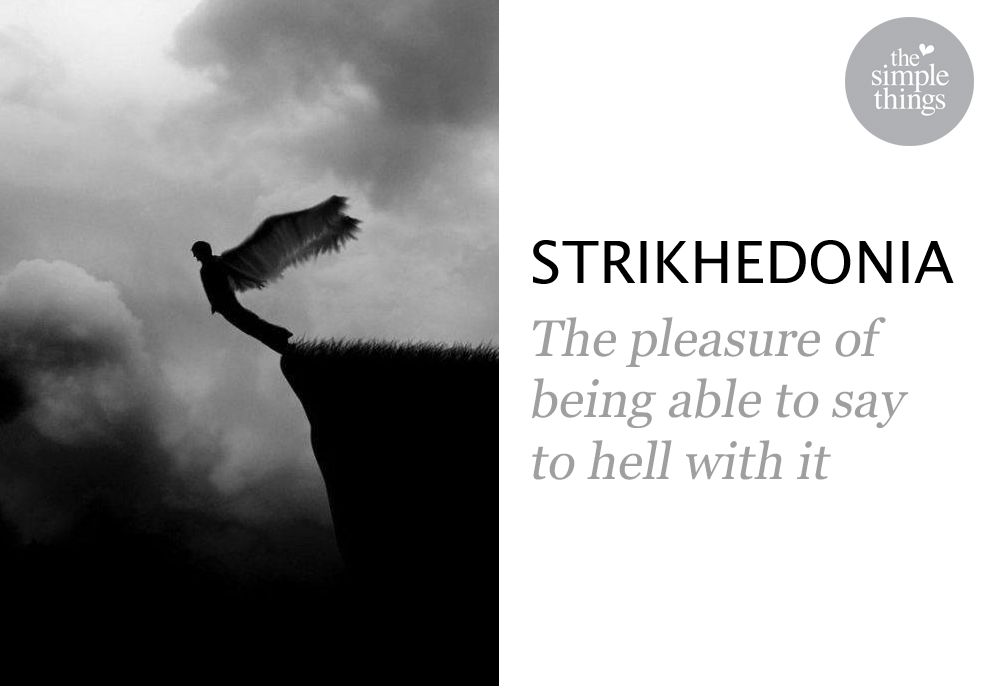
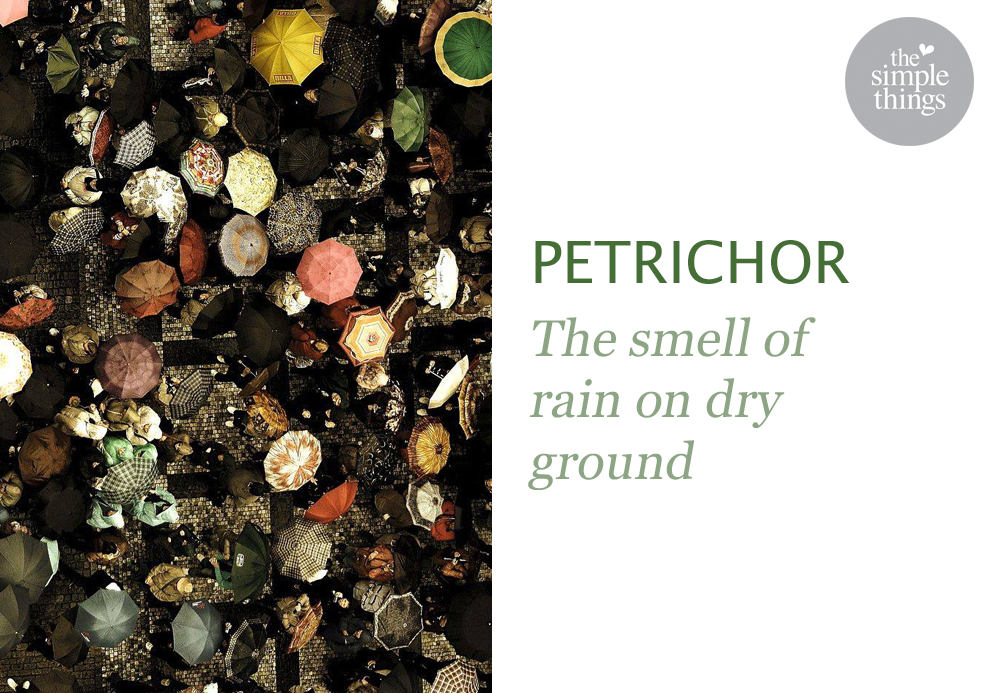
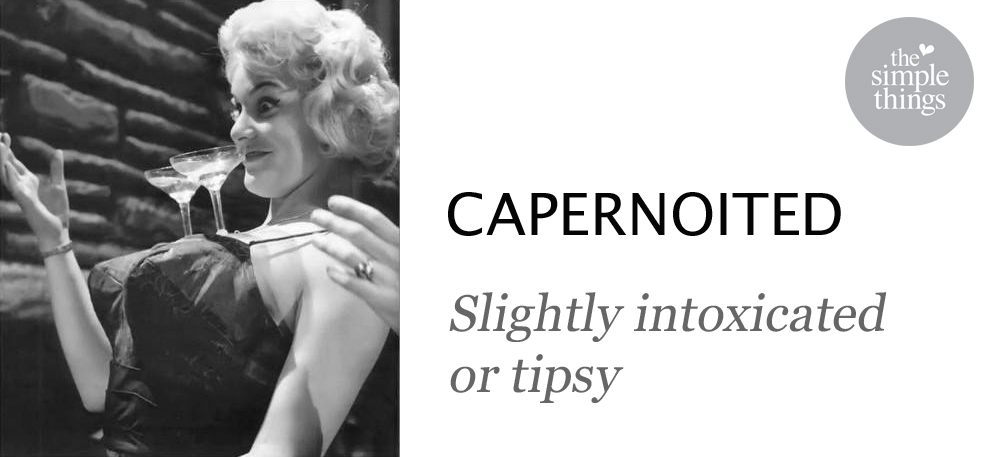
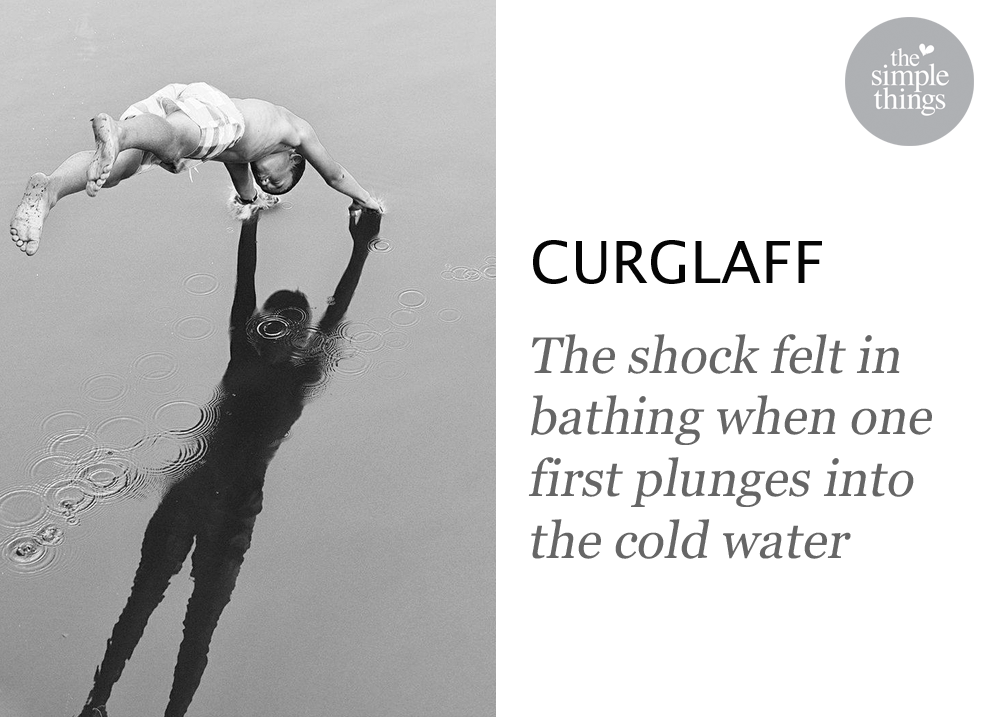
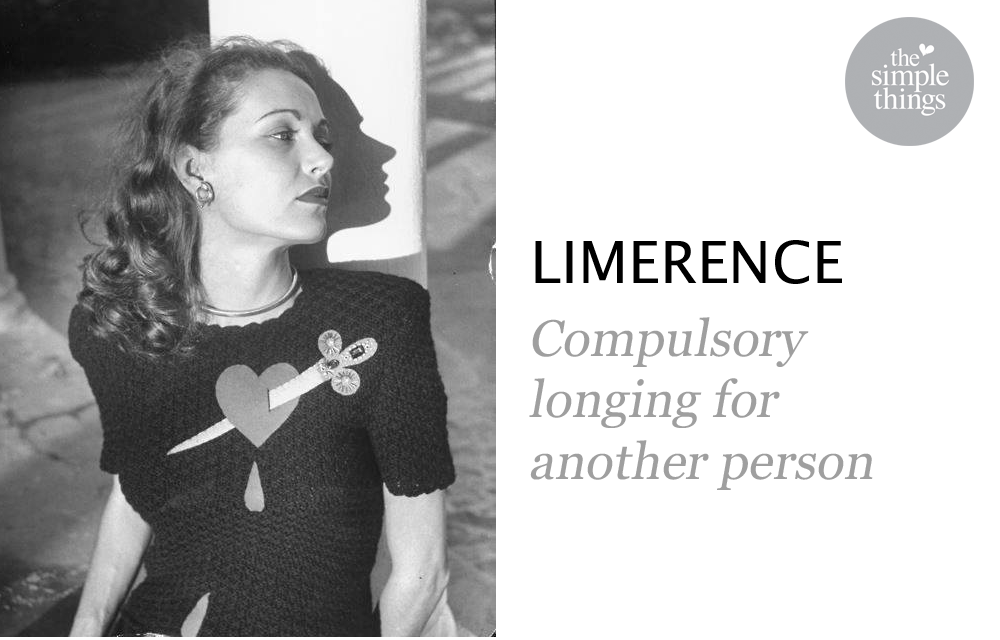
As well as these, we've found seven more unusual words and some curious images to match. Do you have an intriguing word you'd like to share with us? Head to Facebook or Twitter and let us know. And we share a Lost Word each month in the Miscellany pages of The Simple Things.

unusual-words-for-feelings-and-emotions.png
unusual-words-for-feelings-and-emotions-10.png
unusual-words-for-feelings-and-emotions-9.png
unusual-words-for-feelings-and-emotions-8.png
unusual-words-for-feelings-and-emotions-7.png
unusual-words-for-feelings-and-emotions-6.png
unusual-words-for-feelings-and-emotions-5.png
unusual-words-for-feelings-and-emotions-4.png
unusual-words-for-feelings-and-emotions-3.png
unusual-words-for-feelings-and-emotions-2.png
unusual-words-for-feelings-and-emotions.png unusual-words-for-feelings-and-emotions-10.png unusual-words-for-feelings-and-emotions-9.png unusual-words-for-feelings-and-emotions-8.png unusual-words-for-feelings-and-emotions-7.png unusual-words-for-feelings-and-emotions-6.png unusual-words-for-feelings-and-emotions-5.png unusual-words-for-feelings-and-emotions-4.png unusual-words-for-feelings-and-emotions-3.png unusual-words-for-feelings-and-emotions-2.png

Words: Lottie Storey


Read more:

From the October issue

Think posts

Good reads

 
October-cover-The-Simple-Things.png

October's The Simple Things is on sale - buy, download or subscribe now.

In Think Tags think, october, issue 40, unusual words, words, books, reading, etymology
1 Comment

Wisdom: Woodland life with Ben Law

Lottie Storey October 6, 2015

'We came from the woods, and the need to build shelter and understand our surroundings is still strong in us' - Ben Law

Remember the house in the forest on Grand Designs? There was something about its sense of place that captivated us all. Turn to page 36 of October's The Simple Things to read the interview with its creator, woodsman Ben Law. Ben shares what he's learned from building a house - and a life - in the woods.

Much of Ben's work revolves around helping people to bring an understanding of how managing a woodland resonates with how to manage the wider world, and their everyday lives. At the root of this is craft: using your hands to make something that's come from the woods fosters this connection.

"There's something about getting your hands involved with a piece of wood," he says, and simple projects, such as spoon carving, can be a welcoming entry point. Makers like EJ of Hatchet & Bear offer spoon carving courses from her Wiltshire woodland.

Meanwhile, at the other end of the spectrum, we're mesmerised by the wattle and daub hut made from just materials found in the forest by David from Primitive Technology. Take a look...

Read more:

From the October issue

Wisdom posts

Turning leaves - why they change colour and where to see them


October's The Simple Things is on sale- buy, download or subscribe now.

In Think Tags wisdom, october, issue 40, grand designs, woodland, forest, self sufficiency
Comment

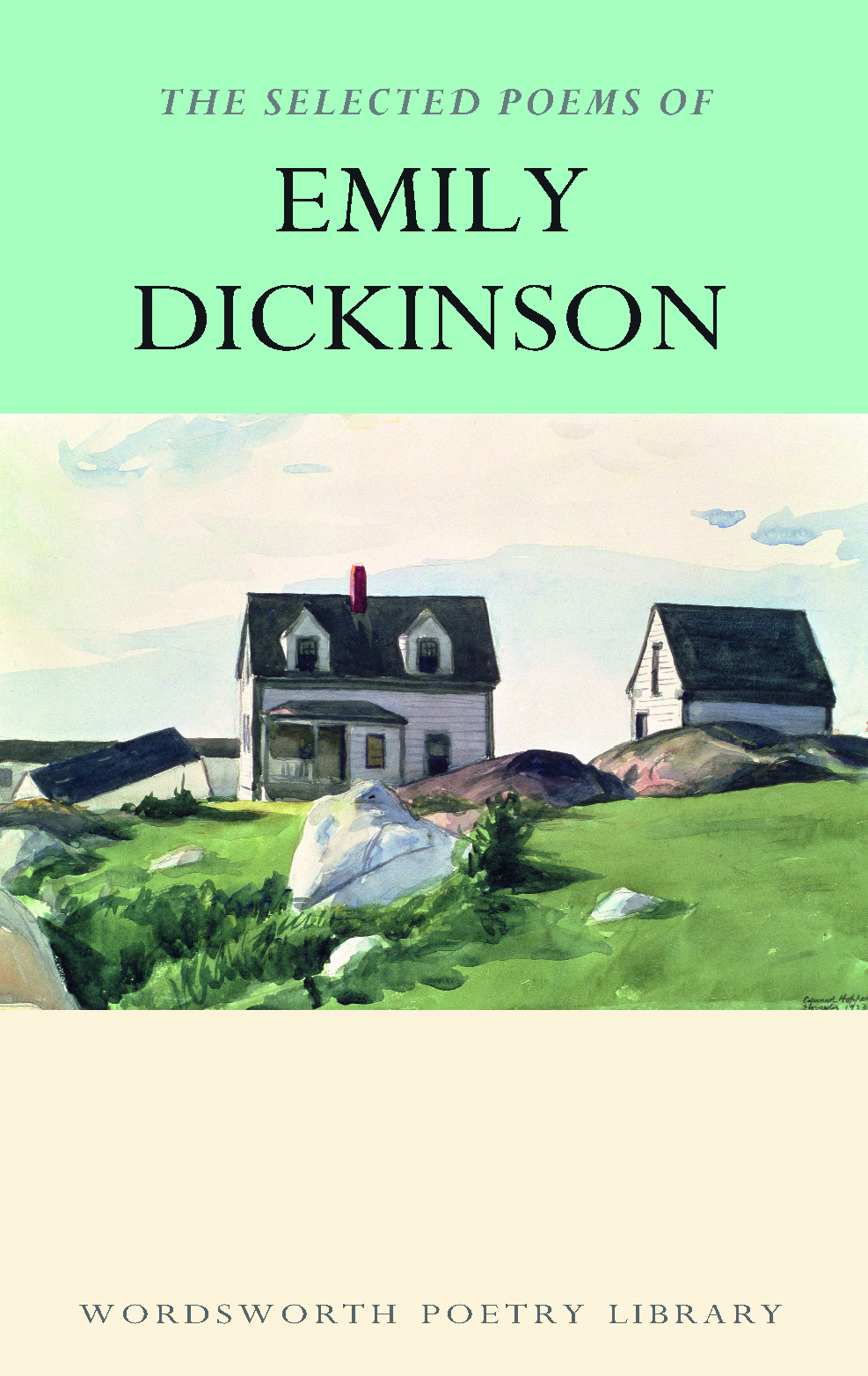
Think: Emily Dickinson

Lottie Storey September 10, 2015

Emily Dickinson was a prolific poet, but most of her 1800 works remained undiscovered during her lifetime. After her death, her sister Lavinia found a cache of her work and set about publishing the poems, with their unconventional punctuation and capitalization, and their themes of loss, love, death and immortality.

“Hope” is the thing with feathers - (314)
By Emily Dickinson

“Hope” is the thing with feathers -
That perches in the soul -
And sings the tune without the words -
And never stops - at all -

And sweetest - in the Gale - is heard -
And sore must be the storm -
That could abash the little Bird
That kept so many warm -

I’ve heard it in the chillest land -
And on the strangest Sea -
Yet - never - in Extremity,
It asked a crumb - of me.

Read more:

From the September issue

Things to make you think

More Books posts


September's The Simple Things is on sale - buy, download or subscribe now.

In Think Tags books, reading, think, issue 39, september, poetry
Comment

Wellbeing: Be a better list-maker

Lottie Storey September 4, 2015

Lists aren’t just for crossing off chores. Writing down your hopes and feelings is a powerful way to create a life you love. 

The arrival of autumn brings the irresistible urge to start again. Before you make a list of the things you need to do or change, consider that a new approach to list- making might be what you really need. Most of us use lists, even if it’s just for food shopping or when extra busy at work – but a list can have many more uses than just a physical reminder for you of what you need to do. 

Turn to page 86 of September’s The Simple Things to read Anna Hewitt’s guide to making lists. Or tick off the following tips to becoming a better list-maker.

1 Remember that how you want to feel is as important as what you want to accomplish.
2 In everyday to-do lists, include tasks that you enjoy, like going for a bike ride or meeting a friend.
3 Don’t be afraid to share your list with others for their perspective, feedback, and encouragement.
4 Be creative. Use colour, pictures, or a unique design to make your lists feel more interesting and appealing.
5 Boost your happiness regularly by making a list of three things you are grateful for each day.
6 At the end of each day choose one to three things that you will work on tomorrow – and let go of the rest.


Read more:

From the September issue

Wellbeing posts

Kick off the new term in style with The Stuff of Life


September's The Simple Things is on sale - buy, download or subscribe now.

In Think, Wellbeing Tags issue 39, september, wellbeing, think
Comment

Recipe: Jostaberry Ripple Ice-cream

Lottie Storey July 21, 2015

Ever wondered exactly what a jostaberry is? It is, in fact, a cross between a gooseberry and a blackcurrant – and the best of both. Jostaberries grow on a large bush with leaves and flowers similar to those of blackcurrant bushes, without the sharp needles of a gooseberry bush. The size of small marbles, with bright-green flesh and reddish-black skins, they have a flavour that swings more towards the blackcurrant. Their star attribute is not only their taste but their outstanding performance in the kitchen. When they are cooked for pies, fools and suchlike, their strong, concentrated flavour really shines. You could, of course, substitute blackcurrants in this recipe.

SERVES 6

For the vanilla ice cream

400ml milk
200ml double cream
1 vanilla pod
6 egg yolks, beaten
100g granulated sugar

For the ripple

400g jostaberries
200g granulated sugar

1 Put the milk and cream in a saucepan. Slit the vanilla pod open lengthwise, scrape out the seeds and put the seeds and pod in the pan. Heat slowly, stirring occasionally, until it is just too hot to put your finger in; do not allow it to boil.

2 Meanwhile, whisk the egg yolks and sugar together in a bowl. When the milk mixture is hot enough, pour it on to the eggs and sugar, whisking constantly. Return the mixture to the pan and heat gently, stirring, until it is thick enough to coat the back of the spoon. This can take up to 15 minutes. Remove from the heat and leave to cool, then chill for at least 2 hours.

3 For the ripple, put the berries and sugar in a pan, cover and cook gently, stirring occasionally to dissolve the sugar (there’s no need to top and tail the fruit, as the sauce will be strained once cooked). Once the fruit has split its skins and the juices are flowing, remove from the heat. Allow it to cool a little, then blitz in a food processor.

4 Strain through a sieve to remove the skin and pips, leaving the syrup to drip through until you are left with a dry pulp in the sieve. Cover the syrup and chill for a few hours.

5 Give the custard a good whisk to ensure it hasn’t separated, then churn it in an ice cream machine according to the manufacturer’s instructions. When it is thick and almost frozen, pour the syrup into the machine and allow it to streak the ice cream as much or as little as you wish.

7 Transfer to a plastic container and freeze. Soften slightly before serving.

Recipe from Fern Verrow by Jane Scotter and Harry Astley. Photography by Tessa Traeger (Quadrille).

This recipe features in August's issue of The Simple Things - out 29 July 2015. 


More ice cream recipes

Blackcurrant leaf ice lollies

Peppermint chocolate chip ice cream

Easiest strawberry ice cream ever

Roasted strawberry and coconut milk lollies 

Berry coconut ice lollies

In Think, Eating Tags ice cream, issue 38, august
2 Comments

Looking back: Explore Britain on Film

Lottie Storey July 10, 2015

We love this new way to explore the rich history of the UK, without having to leave the comfort of your own home. Britain on Film is an amazing archive, recently launched by the British Film Institute, which puts thousands of films online for the first time, available to watch for free through the BFI player.

The footage, taken from around the UK – including news reels, documentaries, as well as family films – dates from the 1980s all the way back to the 1890s.

The films bring the stuff of history books alive, whether they show Queen Victoria’s funeral or life on the home front in the World Wars and reveal the changing (and, sometimes, incredibly unchanging) landscape of Britain, from cities to village greens, all searchable on an interactive map.

Some of the most fascinating footage shows some of the country’s rich regional traditions. There’s Lady Godiva in Coventry, Well Dressing in Buxton and Up Helly Aa in the Shetlands in 1927 just for starters (keep a lookout for the ‘sheep’ and ‘walruses’ in the last one).

And, as revealed by the footage of 1920s pet shows at London’s Alexandra Palace and Crystal Palace, we’ve never been able to resist a cute cat or dog.

And, with summer holidays on the horizon, you can see how generations before us flocked to the seaside, whether Eastbourne, Skegness, or Aberystwyth. The coast is also the setting for one of the earliest family films, which dates to 1903 and shows the children of the Passmore family happily playing on the beach – a complete contrast to the stiff family portraits we’re so used to seeing from the era.

Take a look at the BFI Facebook page where there will be a new film posted each day. And, while the project isn’t available outside of the UK, there are still plenty of films to be explored on the BFI’s YouTube channel.


In Think Tags looking back, film, nostalgia, britain, history
Comment

Looking back: Salt-Water Sandals

Lottie Storey July 3, 2015

Beloved by bloggers across the globe, Salt-Water Sandals are the classic American summer shoe taking social media by storm. 

But what's so special about these old style sandals? And why are they on our July Wishlist?

As well as being extraordinarily comfortable, they do what the name suggests - you can wear them in the sea, making them perfect for The Simple Things style summer adventures. And they come in a rainbow of shades for instant Instagram potential.

American cult classics since the 1940s, Salt-Water Sandals began as a way to cope with leather shortages in World War II, when Walter Hoy used scrap leather left over from making military boots to shoe his children. Word soon spread and fellow St. Louis families began to ask Walter to make sandals for their kids. 

A summer staple in America for 70 years now, a new generation has discovered Hoy shoes' classic designs for themselves and their children. Grown up fans of the durable, comfortable leather shoes with a fashion savvy attitude include Sienna Miller, Alexa Chung, Paloma Faith, Fearne Cotton and Maggie Gyllenhaal. Plus, a few of The Simple Things’ team! 

Have a look at the Instagram hashtag #sunsansaltwatersandals to see them in all their glory this summer.

In Think, Living Tags looking back, summer, issue 37, july, style
Comment

Music: Here comes the new folk

David Parker May 21, 2015

Although the vernacular music of England has always been around, many of us have been distracted by the pleasures of pop music and put off folk music by witnessing middle-aged men in pubs singing through their noses. Which is a shame as traditional folk songs, with songs covering a variety of subjects including yearning maidens, laments, farewells, daring lassies, murders, drowned sailors and blowing winds, offer much in terms of storytelling and social history.

Thankfully, contemporary musicians including Northumbrian sisters The Unthanks have hauled it back into our consciousness by recording old songs as well as writing their own. Many others have picked up the folk baton with sub- genres including ‘alt-folk’, ‘psych-folk’ and ‘nu-folk’ springing up.

Download our Spotify playlist for a selection of our favourite new folk, including Lady Maisery, Telling the Bees, Mad Magdelen, The Black Feathers and the Hare and the Moon.


FIND OUT MORE

Bright Young Folk is a compendium of interviews, reviews, directories and listings of traditional British folk music artists.

HAVE A GO 

If you fancy singing a few traditional ballads, join a folk choir, now growing in popularity. The Great Sea Choir in Bristol welcomes singers of all ages without an audition. The Morris Choir in London is fairly full but welcomes those who can sing, play a fiddle or bang a bodhran. 

Turn to page 91 of June's The Simple Things for a run-down of dance, craft and folk traditions through the year.

Words: Clare Gogerty
Illustration: Alice Patullo

In Think Tags folk, issue 36, june, spotify
1 Comment

Ideas: Smile in portraiture

David Parker May 21, 2015

Why do we so seldom see people smiling in painted portraits? It’s a lot about how we want to be viewed, says Nicholas Jeeves.

Today when someone points a camera at us, we smile. Such are our expectations of a portrait. But, as a walk around any art gallery reveals, the open smile has been largely, as it were, frowned upon.
It’s commonly thought that for centuries people didn’t smile in pictures because their teeth were awful. This is not true – bad teeth were so common that this was not seen as necessarily detracting from a person’s attractiveness. Lord Palmerston, Queen Victoria’s Whig prime minister, was described as being devastatingly good-looking, despite having a number of prominent teeth missing due to hunting accidents. Nonetheless, both painters and sitters did have a number of good reasons for being disinclined to encourage the smile. The primary reason? It’s hard to do. In the few examples we have of smiles in formal portraiture, the effect is often not very pleasing, and we can still see this today. When a camera is produced, we perform gamely. But should the process take too long, our smiles become grimaces. A smile is like a blush – a response, not an expression, and it can neither be easily maintained nor recorded. 

Turn to page 96 of June's The Simple Things for more, 

A longer version of this article was originally published as ‘The Serious and The Smirk: The Smile in Portraiture’ in The Public Domain Review under a Creative Commons Attribution-ShareAlike 3.0 

If you wish to reuse it please see: http://publicdomainreview.org/legal/


In Think Tags ideas, think, smile, issue 36, june
Comment

Think: Go slow with a series of unhurried programmes from BBC Four

David Parker May 14, 2015

Inspired by the concept of slow TV, when an event is filmed in real time, BBC Four Goes Slow features a series of three deliberately unrushed programmes celebrating traditional craftsmanship, an uninterrupted two-hour canal boat journey down a historic British waterway and a recording of the birdsong of sunrise, devoid of voiceover or added sound effects.

Another brilliant example of something only BBC Four would do, this surprising selection of programmes is the antithesis to the general direction much of television is going in. Slowing everything right down gives us the time to really observe things as they happen and this series of programmes celebrates the simple pleasures of life in the slow lane.

Sounds right up our street. Want to watch again? Follow the iPlayer links below…  

Handmade is a series of three half-hour films celebrating traditional craftsmanship. In a world of fast-paced, high-tech mass production, Handmade takes a quiet, unhurried look at the making of a series of simple objects. Beautifully filmed and edited at a leisurely pace with no voiceover, each film is an absorbing, often hypnotic portrait of time-honoured skills and techniques, observing in exquisite detail the slow and careful crafting of objects such as a classic steel knife and a wooden chair.

1. Glass

hero-landscape-handmade.jpg

Filmed in real time and without voiceover or music, this is a beautifully-filmed portrait of the making of a simple glass jug by glass designer Michael Ruh.
 

2. Metal

Filmed without voiceover or music, this film is an absorbing portrait of the complex processes behind the crafting of a steel knife by bladesmith Owen Bush.
 

3. Wood

Filmed over five days, this film reveals the complex, time-consuming processes involved in creating a Windsor chair, made by Jim Steele in his Warwickshire workshop.


All Aboard! The Canal Trip

All Aboard! The Canal Trip is an uninterrupted two-hour canal boat journey down one of Britain's historic waterways filmed in real time. Inspired by the concept of slow TV, when an event is filmed in real time, the film is a rich and absorbing antidote to the frenetic pace of modern life. Take in the images and sounds of the British countryside, spot wildlife and glimpse life on the tow path, as if you were there. Guidebook facts about the canal and its history are delivered by captions imbedded into the passing landscape.
 

Dawn Chorus: The Sounds of Spring

The birdsong of sunrise in all its uninterrupted glory, free from the voiceover and music of traditional television. With the first glimmers of sunlight, the birds of Britain's woodland, heathland and parkland burst into song. This is an opportunity to sit back and enjoy a portrait of three very different habitats and the natural splendour of their distinctive chorus.
 

In Think Tags simple pleasures, bbc, documentary, think, slow
Comment

Think: Unbound Books

David Parker May 4, 2015

Founded by three writers, Dan Kieran, John Mitchinson and Justin Pollard, Unbound books is trailblazing a new way of getting books to readers. The trio had already headed down the traditional route to publication – publishers, bookshops, marketing departments – and felt that there was too much distance between author and audience, so they set about bridging the gap. Crowd-funding, they decided, was the way forward. Caitlin Harvey, Unbound’s community co-ordinator, explains: “An author comes up with an idea and if we think it has legs, then we film a pitch video, calculate the

amount we need to raise to publish the book and then put it live on the Unbound site. If we get enough people to pledge for the book in advance, we publish it and send all the supporters the ebook, a limited first edition and any other rewards included with their pledge level.” They’ll consider everything as long as it’s well written, and once you sign up to an idea you get access to the authors’ shed, an online space where writers share their techniques, showcase their work, ask for readers’ opinions and talk about all things book related. Brilliant. 

www.unbound.co.uk 

In Think Tags think, books, issue 35, may
Comment

The work of Jennie Lee

David Parker April 23, 2015

Within weeks, the fulcrum of power in the country will shift as the government changes, and it’s still anyone’s guess quite what the outcome will be. Despite election coverage spanning the economy, the budget deficit, the EU and taxes, one topic that doesn’t often come up is the country’s cultural landscape and the sticky wicket of its funding, or lack thereof.

It’s obvious why – with cuts being made to essential public services like the NHS, who is going to put their energy into championing more money for something like regional opera? But those who work in, or care about, the country’s artistic and cultural legacy would say that view is short-sighted. Those voices had the backing of MP Jennie Lee (1904–1988), whose life and legacy we celebrate in the May issue. Jennie was the author of the only white paper on the arts ever written. This year marks the 50th anniversary of the publication of A Policy for the Arts – First Steps (you can read it here: http://b.3cdn.net/labouruk/e30626bec6f30f5893_mlbrotg01.pdf) and, weeks from a general election, it seems an apposite moment to compare the situation today with that of the time of Jennie’s call to action in 1965.

Then, as now, there were obviously other priorities for government cash in the post-war period. Jenny identified the problem thus: ‘People who had never known what they were missing did not press for galleries, theatres and concert halls. Certain sections of the press, by constantly sniping at cultural expenditure, made philistinism appear patriotic.’ She suggested that the solution was to start them young, and make creative pursuits as much of a priority in the education system as the widely-established pillars of reading, writing and arithmetic: ‘If children at an early age become accustomed to the idea of the arts as a part of everyday life, they are more likely in maturity first to accept and then to demand them.’ She also stressed that there was a need for new arts venues nationwide ­– ultimately, plays and musical performances could only reach those in the provinces if there was somewhere for them to perform.

So, has Jennie’s vision come to pass? Well, as she herself predicted, ‘There is no short-term solution for what is by its very nature a long-term problem.’ Those who were at primary school in 1965, when the paper was published, are now in their 50s, and yet the demands Jennie made for the needs of arts education sound as relevant today as ever.

London still gets the lion’s share of the Arts Council’s funding (what’s left of it) and music education in schools still needs to be extended to reach every child as a matter of course, rather than the postcode lottery it still is. Though the government-backed In Harmony project (based on Venezuela’s phenomenally successful El Sistema) has had a huge impact in the six areas where it functions, there are still many parts of the UK in which children simply do not receive anything approaching a well-rounded music education at school.

Neglecting to support the arts all over the UK, not just in the capital, could prove a false economy. The fact that the contribution of art galleries, libraries and musical performances to the nation’s economy and mental health can’t be measured doesn’t mean it is non-existent. Local services have been a boon to autodidacts over the years – journalist and author Caitlin Moran [live link to http://www.caitlinmoran.co.uk], who grew up in Wolverhampton and was home-educated, says: ‘A library in the middle of a community is a cross between an emergency exit, a life-raft and a festival. They are cathedrals of the mind; hospitals of the soul; theme parks of the imagination.’

There’s also a deep, unquantifiable value in the kind of intellectual stimulation that inspires the mind to wander from the narrow annals of the everyday to a slightly higher – or simply more entertaining  – plane. I can’t put it better than Jennie herself: ‘In an age of increasing automaton bringing more leisure to more people than ever before, both young and old will increasingly need the stimulus and refreshment that the arts can bring. If one side of life is highly mechanised, another side must provide for diversity, adventure, opportunities both to appreciate and to participate in a wide range of individual pursuits. An enlightened government has a duty to respond to these needs.’

Do you hear her, party leaders? In fifty years there has still been no update on Jennie Lee’s pioneering work, so we must refer to it still. As the nation goes to the polls, those who care about the country’s cultural and artistic future have Jennie to thank for opening up a discussion about the purpose and meaning of the arts to the country as a whole.  Let’s hope it won’t be forgotten.

You can read more about Jennie Lee in The Simple Things new May issue - buy, download or subscribe now.

By Catherine Smith

In Think Tags think, issue 35, politics, may, jennie lee
Comment

Quiet: The power of introverts

David Parker April 23, 2015

Sometimes, you might think, it’s all very well trying to be mindful and appreciate the simple things… but the world around you doesn’t always seem to keep pace with what your heart or mind is telling you. If you’re a quiet person, at times the world can seem overwhelmingly loud and fast-paced, and your own contribution to it under-valued by the assertive, confident types around you.

Susan Cain has made the case for introverts in her world-famous book Quiet: The Power of Introverts in a World that Can’t Stop Talking, and through a TED talk that has had over 11 million views on YouTube.

If you identified with our feature in the May issue on being an introvert, or if you aren’t sure whether or not this is you, why not take a quiz at Susan’s site www.thepowerofintroverts.com, which also has forums, reading guides and everything you need to explore and understand your more contemplative qualities.


THREE WAYS TO APPRECIATE BEING QUIET

READ… The Highly Sensitive Person ­– How to Thrive when the World Overwhelms You by Elaine N. Aron – practical solutions for a happy and fulfilling life, including useful material for those raising a sensitive child.

GO… Get away from the chatter with a silent retreat at Gaia House in the south Devon countryside. An opportunity to reflect through meditation and mindfulness practice.  

THINK… Andrew Johnson’s downloadable recordings offer a wide range of meditations to help you cope with all life’s challenges.

By Catherine Smith 

In Wellbeing, Think Tags think, wellbeing, introverts, issue 35, may
Comment

A day in the life of a jeweller

David Parker April 20, 2015

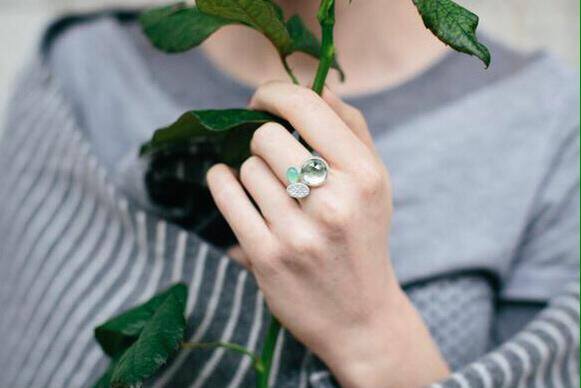
Alison Macleod is a jeweller based in Glasgow, who makes delicate jewellery based on the treasures she finds in junk shops and flea markets. 

Watch a day in Alison’s life as she works on a jewelled ring.

A Day in the Life from Eileen Dunn on Vimeo.

In Think Tags jewellery, make, video, handmade
Comment

Think: Leaping Hare Press

David Parker April 9, 2015

Ever wonder what would happen if you lobbed a seed bomb into a shabby urban wasteland? Or, instead of galloping along the usual route to work, you took time to really see what you pass by every day?

Leaping Hare Press (an imprint of Ivy Press) is about encouraging moments like this – a mood of mindfulness – whether it’s during the working day, strolling through the natural world, baking bread or heading out for a spin on a bike. The books present “edgy, exciting subjects from passionate, expert authors,” says Nikki Tilbury. They’re all about “helping us to embrace those little creative steps that engage us as individuals and communities with each other, and the natural world.”

With the mystical hare as their emblem – “fast and free, rare” – and their eye-catching jackets, the books are original, fun, accessible and share practical know-how. They are also a great way to kickstart a habit of curiosity about the world around us. 

Words: Eithne Farry

In Think Tags think, issue 34, april, books
Comment

Joyce Hatto: Love and lies

David Parker March 30, 2015

Love can mean so many things. A person, a passion, a life’s work. Pianist Joyce Hatto was blessed with all three – a talent for playing music, the drive to perfect her skill, and a loving husband who adored her playing and championed her career.

Joyce and her husband William Barrington-Coupe became implicated in one of the biggest scandals to hit the music world, involving love, lies and digital manipulation. But there’s a strong case to be made that this sorry tale is also a love story.

In retrospect, the idea that a pianist could spend her twilight years making recordings whose critical reception surpassed that of any of the live performances of her youth never quite added up. Joyce Hatto had a solid, consistent career in the 1950s and 60s, but never hit the dizzy heights of a piano star like Lang Lang (listen to a 1959 recording here). Yet in her 70s, she apparently recorded multiple works for both solo piano and piano and orchestra which received some serious critical acclaim. William, who had established his own career as a producer, released his wife’s recordings on his Concert Artist label. After a career during which she had at times felt either ignored or patronised by the music establishment, Joyce seemed at last to be receiving the credit she deserved.

But it was too good to be true. The recordings – over 100 of them – were discovered in 2007 to be fakes. Perhaps the truth is that William’s abilities as a producer outweighed those of his wife as a player – he cleverly manipulated her playing on hundreds of recordings, ‘patching up’ weak passages and her moans of pain (she was suffering from cancer) with extracts from existing recordings by, in some cases, world-famous players, ultimately rendering average playing extraordinary. This in itself requires a high level of musicality and brilliant technical skills, but William couldn’t escape the fact that he had been caught in a huge lie.

He was disgraced and his wife discredited; their names have become a byword for musical fraud. And yet, despite the scandal and shock of William’s actions, he said it was all done out of love. He always maintained that Joyce never knew what he’d done – she died in 2006, before the discovery was made – and that he was motivated by wanting to give her the gift she craved above all; recognition of her talent, and acceptance by an industry that she felt had rejected her.

Only somebody who knew her intimately, perhaps better than she knew herself, could have both recognised that need and, disregarding the consequences, fulfilled it for her. Joyce died feeling that her playing had been heard and appreciated.

It’s a favourable reading of William’s actions, for sure – but he has had ample censure. Let’s reserve that for the men like Walter Keane, who did rather the opposite – keeping his wife captive, drawing pictures that sold in their millions, while he took the credit himself. The Keanes’ story inspired Tim Burton’s 2014 film Big Eyes. Unfortunately he was far from the only artist to overshadow his talented wife.

In the April issue of The Simple Things, out now, we explore the ‘con artists’ who did just that, and redress the balance by highlighting the female artists who were stifled by their partners.

April's The Simple Things is out now - buy, download or subscribe today.

Words: Catherine Smith

In Think Tags think, issue 34, april
Comment

The wonder of walking

David Parker March 18, 2015

It stills the mind, rejuvenates the body and helps to connect our inner and outer world. Walking is so much more than getting from A to B.

On any given weekend, between seven and eight million people in the UK go for a walk, many leaving cities to walk in the hills or across the fields of the open countryside. Whether hiking alone or perambulating with friends, we share the sense of liberation that comes with walking. Out in the open air, free from observation or judgement, you can sing as loudly as you care to, shout out loud at the wind, lie down and sleep... eat with your mouth open, if you must.

Read Peter Owen Jones’ paean to perambulating on page 93 of the April issue of The Simple Things - out on 25 March 2015. Off on a jaunt of your own? Have a listen to Associate Editor, Clare Gogerty’s walking playlist while you explore the great outdoors.


In Think Tags issue 34, april, playlist, spotify, walking, wellbeing
Comment

Books: Ingredients for the perfect cold-weather reading session

David Parker February 20, 2015

With plenty of dark evenings and icy temperatures, there’s no better time than winter to settle down with a good book. Whether you’re getting stuck into the latest bestseller, or immersing yourself in the classics, guest blogger, Vicky from The Owl & The Accordion, rounded up a few key ingredients for the perfect cold-weather reading session.

Clothes

If you’re going to spend an evening immersed in a book, the most important thing is to make sure you’re comfortable. Shed the day’s stiff tailoring or rigid denim, and sink into the cosiest clothes you can find; think chunky jumpers, woollen socks and the thickest flannel pyjamas. Checks optional.

Blankets

Whether you’re heading to bed or settling down on the sofa with your novel, a good selection of blankets is the ideal accessory for a winter reading sessions. Mix up the fabrics and textures with vintage crochet, luxurious handweaving and the softest woollen wraps; for the ultimate in relaxation, pile them up and sink in.

Food and drink

There’s no doubt that reading is thirsty work, so make sure you’ve got plenty of tea on hand to keep you refreshed; if herbal is your thing, choose from relaxing chamomile, refreshing peppermint or a calming Jasmine blend, while simple Earl Grey or Darjeeling are great for traditionalists. If you’re going for a marathon reading session, you’re going to need a good selection of snacks to keep energy levels up – everyone knows that biscuits are a cuppas best friend, so mix it up with organic flapjacks, chunky chocolate chips and some florentines for a touch of chewy luxury.

Lighting

Good lighting is an essential part of reading; while you want to be able to see the print, you don’t want to feel like you’re being interrogated with overhead lights and maximum wattage light bulbs. Table and desk lamps positioned behind either your left or right shoulder are ideal, as they won’t cast shadows over the page, and the light is still soft enough to create a relaxing atmosphere. 


Join The Simple Things' virtual book club! 

We'd like your book recommendations and have put together a new board on Pinterest inviting you to contribute your top reads. Head over now to have a look and to request an invitation. Plus, show us where you read yours - we love seeing The Simple Things out there in the wild.


More:

Book group snacks Pinterest board

How to run a book club PLUS an easy book club cocktail recipe

In Think Tags book launch, books, reading, guest post, pinterest
Comment

Jazz up your jumper

David Parker February 19, 2015

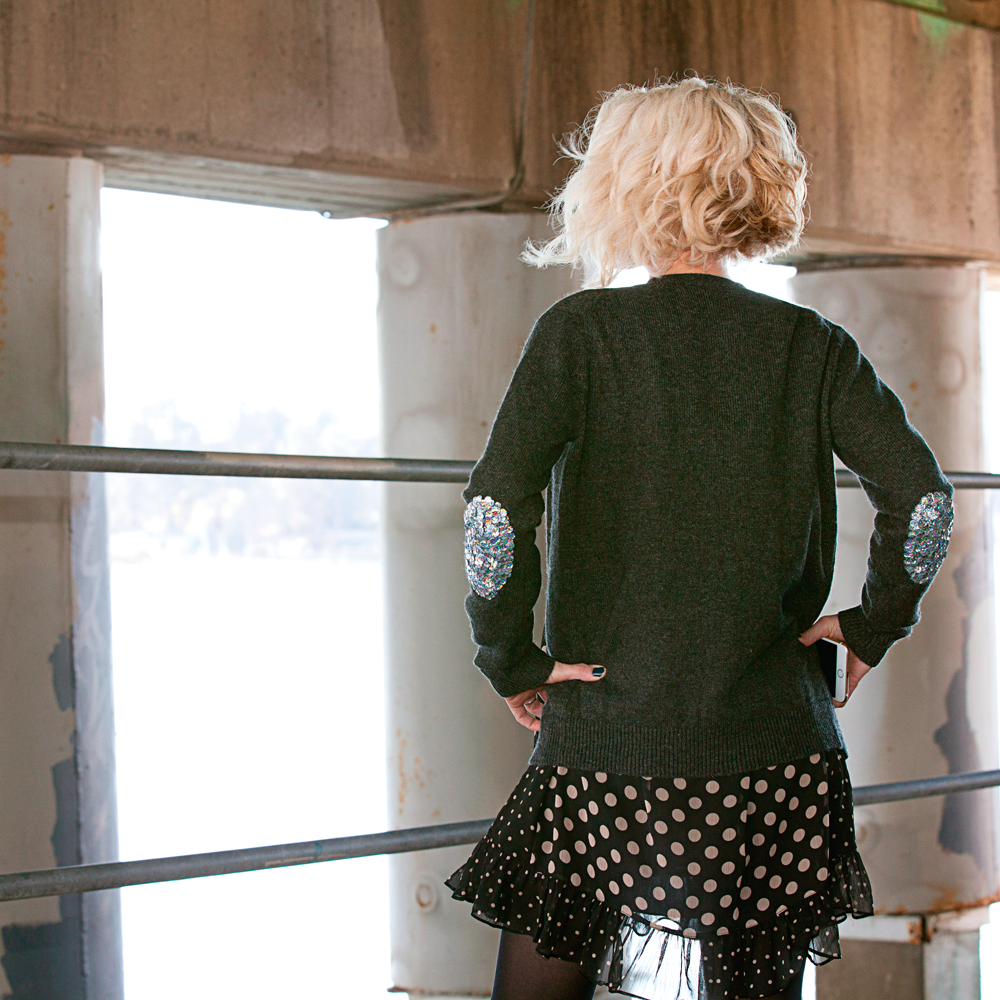
Try four no-sweat ways to put life back into an old but much-loved woolly jumper. Turn to page 109 of March's The Simple Things for the DIY Heart jumper tutorial above, or try one of these ideas. 

GET NIFTY WITH A NEEDLE

Embroidery doesn’t have to be limited to a sampler. A few colourful stitches can also brighten the neckline of a grey sweatshirt. This gorgeous embellishment was created by Donna Bramhall. There’s more fashion and fabric inspiration from around the world on her blog, Haute Culture, www.hauteculturefashion.wordpress.com.

ADD SPARKLE WITH SEQUINS

Give your poor, worn-out elbows a Strictly-style makeover with this tutorial from Cathy at the Trinkets in Bloom blog (a great source of fashionable DIYs). Sequined patches are a simple no-sew way to add a bit of sparkle to a sweater. Cathy’s blog is at www.trinketsinbloom.com.

PERK IT UP WITH PAINT

Why restrict your doodles to paper? Fabric paints and transfers mean you can proudly show off your talents on your sweater. Laura from Wrapped Up In Rainbows created herself a ‘lucky house-hunting jumper’. See her site at www.wrappedupinrainbows.blogspot.com. 

In Think, Making Tags make, diy, jumper
1 Comment
  • Blog
  • Older
  • Newer
Featured
  Download  or  subscribe   See the sample of our latest issue  here   Order  our new Celebrations Anthology   Order a copy of  Flourish 4 , our new wellbeing bookazine   Listen to  our podcast  – Small Ways to Live Well  Wear our  Slapdash Patc
Aug 29, 2025
Aug 29, 2025

Download or subscribe

See the sample of our latest issue here

Order our new Celebrations Anthology

Order a copy of Flourish 4, our new wellbeing bookazine 

Listen to our podcast – Small Ways to Live Well

Wear our Slapdash Patches and show your support for ‘good enough’

Aug 29, 2025
Join our Newsletter
Name
Email *

We respect your privacy and won't share your data.

email marketing by activecampaign
facebook-unauth pinterest spotify instagram
  • Subscriber Login
  • Stockists
  • Advertise
  • Contact

The Simple Things is published by Iceberg Press

The Simple Things

Taking time to live well

We celebrate slowing down, enjoying what you have, making the most of where you live, enjoying the company of of friends and family, and feeding them well. We like to grow some of our own vegetables, visit local markets, rummage for vintage finds, and decorate our home with the plunder. We love being outdoors and enjoy the satisfaction that comes with a job well done.

facebook-unauth pinterest spotify instagram