The Simple Things

Taking time to live well
  • Home
  • Subscribe
  • SHOP
  • Newsletter
  • About
  • Work with us
  • Home
  • Subscribe
  • SHOP
  • Newsletter
  • About
  • Work with us

Blog

Taking Time to Live Well

  • All
  • Chalkboard
  • Christmas
  • Competition
  • could do
  • Eating
  • Escape
  • Escaping
  • Fresh
  • Fun
  • gardening
  • Gathered
  • Gathering
  • Growing
  • Haikus
  • Interview
  • Living
  • Looking back
  • Magazine
  • magical creatures
  • Making
  • Miscellany
  • My Neighbourhood
  • Nature
  • Nest
  • Nesting
  • outing
  • playlist
  • Reader event
  • Reader offer
  • Shop
  • Sponsored post
  • Sunday Best
  • Think
  • Uncategorized
  • Wellbeing
  • Wisdom
Photography: Louise Gorrod

Photography: Louise Gorrod

Make | A Pumpkin Bird Feeder

Iona Bower October 4, 2020

Make pumpkins less scary and more carey for a variety of garden birds

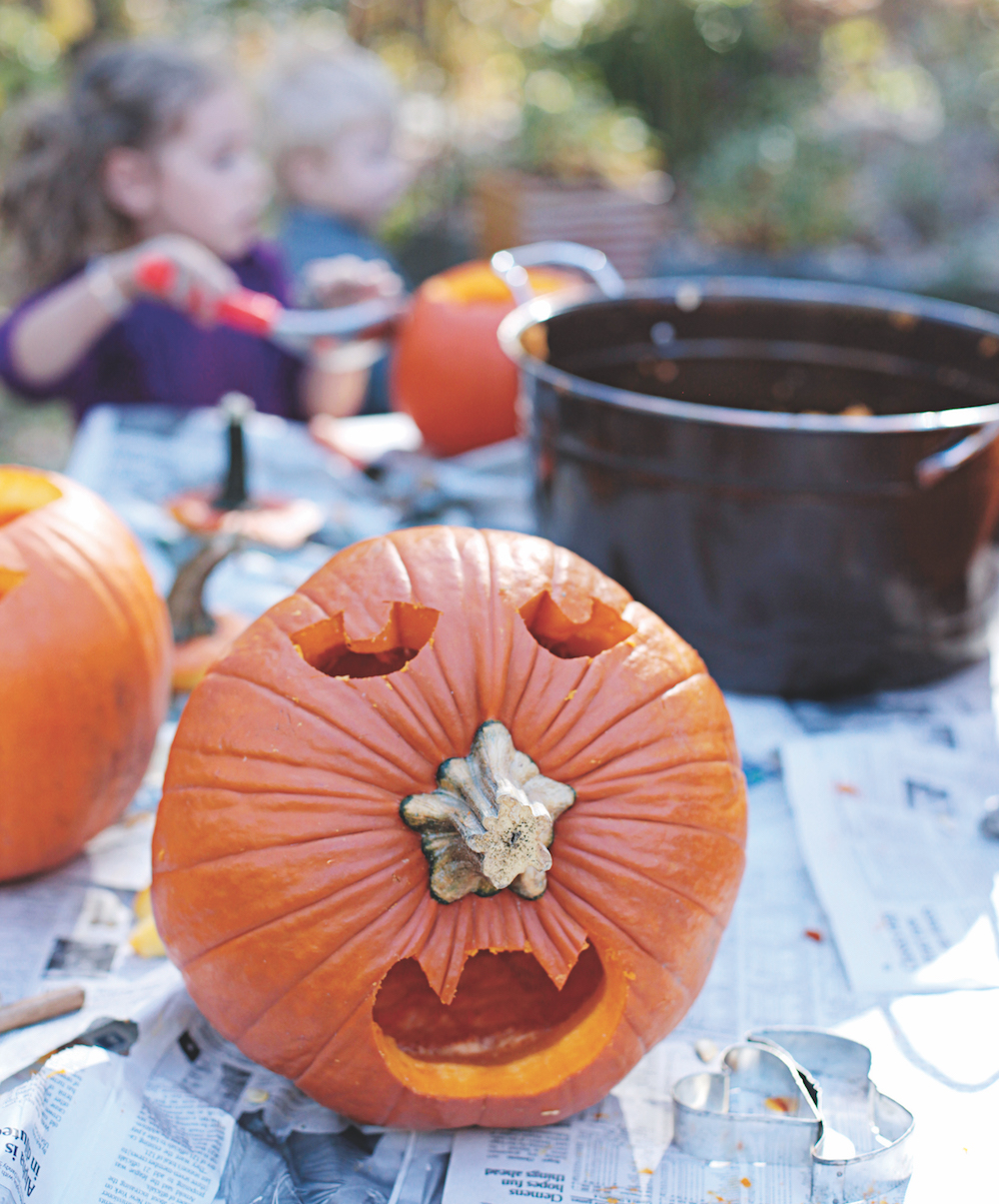
As well as being delicious to eat at this time of year, pumpkins provide the basis for some simple crafts, too. In our October issue, we have a few fabulous ideas for things to do with pumpkins (other than carve them into scary faces). There are lots more ideas here on our website too. Pumpkin beer keg, anyone?

In the meantime, get started with this really easy-to-pull-off make.

You will need:

Small pumpkin or squash (we used a ‘Red Onion’ squash)
Knife, a spoon and a skewer
2 twigs, each about 12–15cm long
Twine, about 1.5m
Drawing pin
Bird seed

1 Halve the pumpkin horizontally and scoop out the seeds, leaving 2cm of flesh intact.

2 Using a skewer, make two holes, opposite each other and large enough to securely hold the twigs. Stick a twig into each hole.

3 Cut the twine in half. Holding the two pieces together, tie a knot in the centre. You should now have four lengths of twine, joined by a knot.

4 Turn the pumpkin upside down and secure the knot of your twine to the bottom of the pumpkin with a drawing pin. Turn up the right way and adjust the lengths of twine so that the pumpkin sits straight. Knot the four lengths together at the top.

5 Fill the pumpkin with seed and hang it outside for the birds to feast on.

Find the rest of the pumpkin craft ideas on p50 of our October issue.

Buy this month's The Simple Things - buy, download or subscribe

More fun with pumpkins…

Featured
Pumpkin Beer Keg Jonathan Cherry.jpg
October 31, 2023
Make | a pumpkin beer keg
October 31, 2023
October 31, 2023
Pumpkin bird feeder Louise Gorrod.JPG
October 4, 2020
Make | A Pumpkin Bird Feeder
October 4, 2020
October 4, 2020
October 17, 2016
Halloween: Pumpkin carving
October 17, 2016
October 17, 2016

More from our October issue…

Featured
QA_-39.jpg
October 13, 2020
Competition | Win a £300 skincare treat
October 13, 2020
October 13, 2020
Toadstools.jpg
October 13, 2020
Nature studies | Fly Agaric Toadstools
October 13, 2020
October 13, 2020
Beetroot Chocolate Cake.jpg
October 10, 2020
Cake facts | root veg baking
October 10, 2020
October 10, 2020
In Nature Tags issue 100, Issue 100, pumpkin, pumpkins, pumpkin craft, bird feeder
Comment
Photograph: Alamy

Photograph: Alamy

Nature | Tree tunnels

Iona Bower September 27, 2020

Walk through a tree tunnel near you and feel like you’re entering fairyland

Those moments when you walk (or sometimes drive) through a tunnel of trees are a bit special, giving you at once a feeling of being hidden from the world and also transported somewhere magical. Of course you know that at the end of the tunnel the world will be much as it was on the side you entered it, but the strangeness of being cocooned by trees brings, just for a moment, that feeling that anything is possible and at the end of the tunnel might lie an entirely different world. 

Some tree tunnels are partially ‘man’made’, with trees planted in avenues to offer a shady walk in summer and a canopy of silhouetted branches in winter. Others are formed naturally, when a path is formed through trees by either footfall or vehicles and the branches meet in the middle overhead, never able to grow lower than the tallest person who regularly passes through. 

We think a good tree tunnel is a very fine focus for a good autumn walk, so we’ve listed a few of our favourites around Britain and Ireland. We hope you can find one near you. Send us a postcard from Fairyland!

Halnaker, West Sussex

Halnaker (pronounced ‘Ha’nacker’) is just north of Chichester and this tree tunnel walk (pictured above) follows the ancient Roman road, Stane Street. The woodland path has worn down over the years, giving the whole tunnel a circular effect and the look of a Tolkien novel. 

Kilham, East Yorkshire

Immortalised by David Hockney, who painted this tree tunnel in various seasons (they were exhibited at the Royal Academy for some time), this tunnel is between the villages of Langtoft and Kilham. Hockney painted them outside, rather than in his studio, and it’s worth familiarising yourself with the pieces before you visit; you get the feeling of stepping around Hockney himself seated at his easel as you approach.

The Dark Hedges, County Antrim

Created by more than 150 beech trees planted along the Bregagh Road between Armoy and Stanocum by the Stuart family as an entrance to Gracehill Manor, this tunnel is so spooky it’s been featured in films and TV series including Game of Thrones. It’s seriously spooky, with branches that look terrifyingly like they might just reach down and pluck you off the road. 

Laburnum tunnel, Bodnant Garden, Conwy

This 55m-long laburnum arch was planted in 1880 at Bodnant Garden, now owned by the National Trust. It’s believed to be the longest and oldest in Britain and is best visited when the flowers are in full bloom and hanging down into the tunnel at the end of May and the beginning of June. 

Yew Tree Tunnel in Aberglasney Gardens, Camarthenshire

It’s difficult to date yews. Experts originally thought this tunnel to be a thousand years old but in the 1990s dendochronologists (tree-daters to you and I) decided it was probably only a quarter of that age and guess it was planted in the 1700s. It proved enormously popular in the Victorian era. Victorians went mad for yews, apparently. 

Gormanston College Fairytale Tree Tunnel, County Meath

The cathedral-esque curves of this tree tunnel in the grounds of Gormanston College near Dublin makes for a spooky walk with a quiet reverence about it. 

Untamed tree tunnel, Kilsyth, North Lanarkshire

Some of the best tree tunnels are the slightly wild ones you just happen across. Kilsyth has one in the Burnside area, close to the sportsground. As haunted-looking as some of the most famous tree tunnels but a bit rougher round the edges and more ‘real’, this is a joy to find as you turn into it. 

Rhododendron tunnels, Sheringham Park, Norfolk

Paths and tunnels weave through the rhododendrons at Sheringham Park. They’re at their colourful best in Spring and perfect for a game of hide-and-seek, no matter your age. 

Hollow Way, Monksilver, Somerset

Hollow Way is the perfect moniker for this sunken Lane which creates a perfectly round tunnel through the trees. We recommend a stop off at the Notley Arms Inn on the way back to rest weary legs. https://www.notleyarmsinn.co.uk/en-GB

Yew tunnel, Easton Walled Garden, Grantham

Another yew tunnel, but they really do make for the best tunnels. And if it gives you a taste for the labyrinthine, the gardens also have a turf maze to enjoy. Visit in late winter or early spring to enjoy the woodland snowdrops, too. 


Do share your favourite tree tunnels with us in the comments, and turn to page 17 of the October issue to read more about understanding your walks from outdoor guru Tristan Gooley.

Buy this month's The Simple Things - buy, download or subscribe

More from our October issue…

Featured
QA_-39.jpg
October 13, 2020
Competition | Win a £300 skincare treat
October 13, 2020
October 13, 2020
Toadstools.jpg
October 13, 2020
Nature studies | Fly Agaric Toadstools
October 13, 2020
October 13, 2020
Beetroot Chocolate Cake.jpg
October 10, 2020
Cake facts | root veg baking
October 10, 2020
October 10, 2020

More tree-mendous blogs…

Featured
TST136_Message_OctoberHR.jpg
October 3, 2023
October | Things to Appreciate
October 3, 2023
October 3, 2023
Topiary for cloud pruninng.jpg
July 20, 2023
Try Out | Cloud Pruning
July 20, 2023
July 20, 2023
Tree tunnel Alamy.jpg
September 27, 2020
Nature | Tree tunnels
September 27, 2020
September 27, 2020
In Nature Tags issue 100, Issue 100, trees, nature, walks, tunnels
Comment
Photography: istock

Photography: istock

Folklore | Blackberries

Iona Bower August 22, 2020

This beautiful blackberries image is from our August issue, where we’re celebrating the beginning of blackberrying season.

Make the most of them now, though; folklore has it that you shouldn’t eat blackberries after Michaelmas Day (September 29th).

When St Michael, for whom the day is named, battled Lucifer and kicked him out of heaven, Lucifer landed in hell, on a thorny blackberry bush. So angry was he, that he cursed the blackberry bush and ensured its berries would taste foul from St Michaelmas Day onwards.

We’re unsure why the poor blackberry bush suffered the blame for Lucifer’s thorny and sore behind rather than St Michael, but it sounds like a good reason to us to get picking your blackberries now. Don’t forget to freeze a few so you can make them into a blackberry pie for St Michaelmas Day and stick it to Lucifer with your delicious early autumn blackberries.

Buy this month's The Simple Things - buy, download or subscribe

More from our August issue…

Featured
back cover aug.JPG
August 25, 2020
August | a final thought
August 25, 2020
August 25, 2020
Blackberries istock.jpg
August 22, 2020
Folklore | Blackberries
August 22, 2020
August 22, 2020
Lamingtons Photo - Edd Kimber.JPG
August 16, 2020
Cake facts | Lamingtons
August 16, 2020
August 16, 2020
Featured
Blackberries istock.jpg
August 22, 2020
Folklore | Blackberries
August 22, 2020
August 22, 2020
Blackberry flatbread Kirstie Young.jpg
August 31, 2019
Eat | Blackberry and goats' cheese flatbreads
August 31, 2019
August 31, 2019
August 2, 2016
Recipe: Toasted basil and blackberry brioche with summer berries
August 2, 2016
August 2, 2016
In Nature Tags blackberries, blackberry, folklore, foraging, August, issue 98
Comment
Paper bird by Zack McLaughlin

Paper bird by Zack McLaughlin

Nature | Peripatetic Peregrines

Iona Bower June 2, 2020

How some country-dwelling birds moved to the big smoke

We live in strange times and the beasts among us that are adaptable are those that will likely emerge the strongest.

Take the peregrine, for example; just a few decades ago, this magnificent cliff-dweller was dwindling in number in the UK, due to the (now banned) pesticide DDT. But now they’re back, and they’ve moved upmarket, taking up residence in some of the most sought-after buildings in our cities.

When Battersea Power Station was renovated and became luxury flats the first family through the door was a pair of peregrines. Unfortunately, they chose to nest in one of the chimneys that was about to be taken down and rebuilt. Peregrines are no respecters of a rising housing market. The development company had to - at a cost of £100,000 - build a mast next to the chimney with a nesting box and pray that the birds would relocate there for their next nesting season. Fortunately the peregrines acquiesced - perhaps Sarah Beeney had a word - and they’ve remained there since. 

City slicker peregrines have been spotted circling St Paul’s, diving for prey from cranes and generally cavorting all over the city. The cathedrals, cranes and chimneys from which they nest and hunt are their new cliff faces. And they’re enjoying city life very nicely, thank you. It’s thought the rise in numbers is accounted for by the large numbers of feral pigeons available for them to eat. 

But it’s not just in London that peregrines are settling down to city life. They’ve also nested successfully for many years in Norwich Cathedral spire, at St John’s in Bath, in Manchester skyscrapers, on Nottingham Trent University and even on a phone mast in Southampton. 

If you live in a city and are a lover of large birds, just look up, up, up. You might just find a peregrine looking back at you, beady of eye.

If you like the feathered chap above, you might be interested to know he was made entirely of paper and is the work of Zack McLaughlin os paperandwood.co.uk. You can see more paper birds from page 20 of our June issue.

Buy this month's The Simple Things - buy, download or subscribe

More fun with nature…

Featured
wildlife photography painted ladies.jpeg
September 23, 2025
Wellbeing | Why Wildlife Photography Helps
September 23, 2025
September 23, 2025
Hedgehog pic.jpg
April 18, 2023
Nature | Surprising Things About Hedgehogs
April 18, 2023
April 18, 2023
Meadows Wakehurst Place Coronation Meadow.jpg
June 5, 2022
Make | Your Own Meadow
June 5, 2022
June 5, 2022

More from our June issue…

Featured
train carriage.jpg
June 13, 2020
Moments | reading in railway carriages
June 13, 2020
June 13, 2020
Bakewell Slice.jpg
June 6, 2020
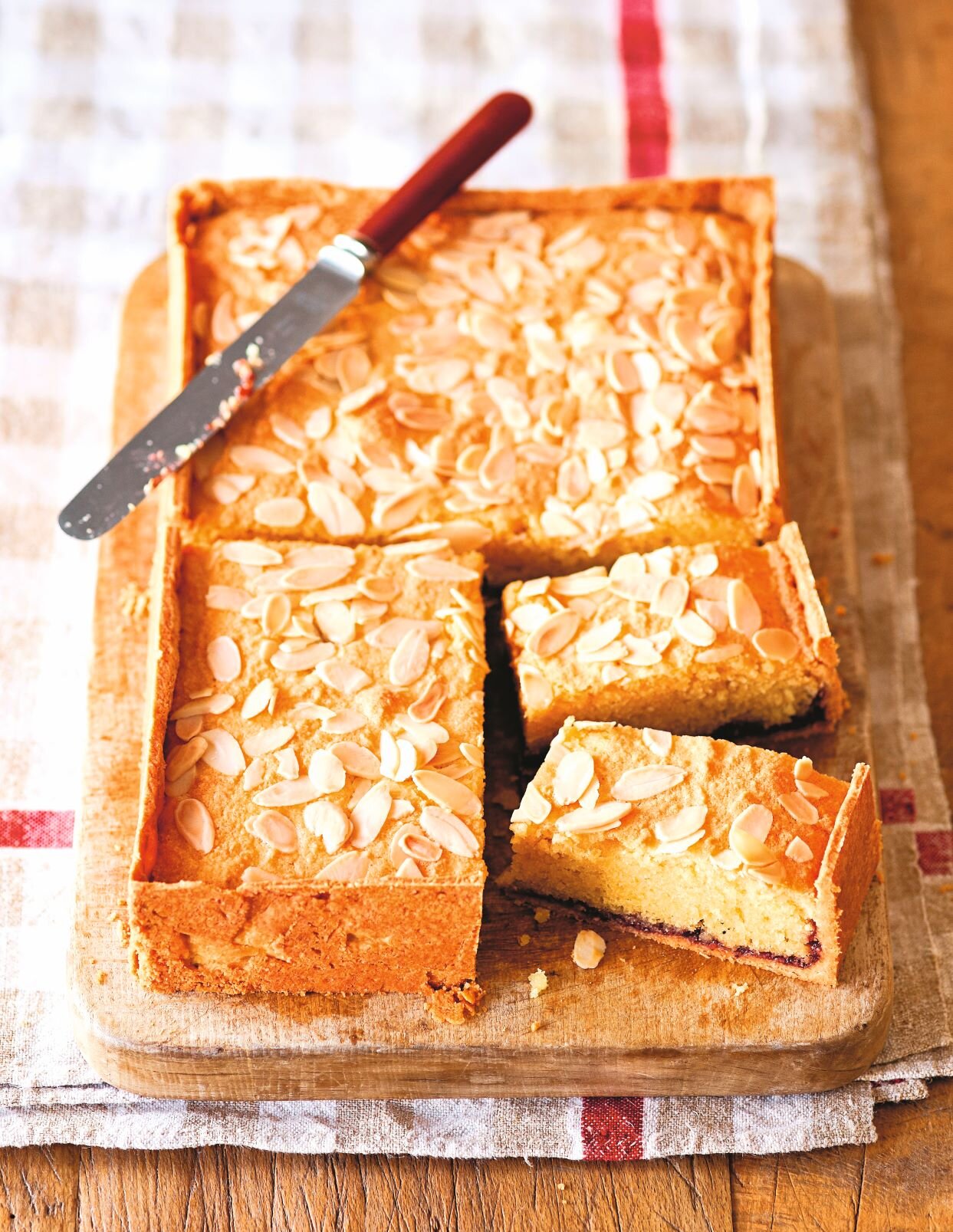
Recipe | Bakewell slice
June 6, 2020
June 6, 2020
Paper peregrine.jpg
June 2, 2020
Nature | Peripatetic Peregrines
June 2, 2020
June 2, 2020
In Nature Tags issue 96, birds, nature, wildlife
Comment
Illustration: Zuza Misko

Illustration: Zuza Misko

Wildlife | make a hedgehog hotel

Iona Bower May 10, 2020

Reach out to a spiky friend and invite them to stay in your outdoor space

Having a hedgehog visiting your garden is pretty special. In our May Inspire issue (in shops and available to buy from our online shop now), our Magical Creatures slot celebrates the hedgehog. Turn to page 64 to read all about our favourite hedge-dwelling hogs.

At this time of year, hedgehogs are putting the finishing touches to their homes and getting ready for mating season. So what better time to build a hedgehog hotel? If you want to provide a dedicated boutique bolthole or a simple bothy for hedgehogs, hedgehogstreet.org has some good ideas, whatever your budget or DIY expertise. 

Self-catering hedgehog hostel

One of the best habitats you can provide is actually just to leave an area of your garden be. A compost or a wood pile that hasn’t been disturbed for a while is a favourite place for hedgehogs to lay their heads. And because insects will also make these areas their homes, your hedgehogs will never go hungry… there’s a full room service menu of grubs and bugs for them to choose from!

Simple hedgehog B&B

Use an upside-down crate or plastic storage box (add a few air holes) and cut an entrance into the front 13cm square. Cover the box with plastic sheeting and cover that with twigs and leaves. Finally, add a comfy bed (some pet straw or dry leaves). 

Five-star hedgehog hotel 

Using untreated wood, nail together a box. Leave the ‘roof’ loose so you can get in to clean it out when it’s uninhabited. Add batons underneath to lift it off the ground slightly and stop it getting too damp. Add a narrow tunnel at the front to prevent predators getting their noses in. You can find an easy to follow plan on the RSPB’s website. 

Whatever type of dwelling you go for, remember not to put food in it. Hedgehogs like their food a little way away from their beds. And it’s best to locate it at the boundary of your garden, within five metres of the house. If you also ensure that there are some gaps under your walls or fences, you’ll make it easier for hedgehogs to find you.


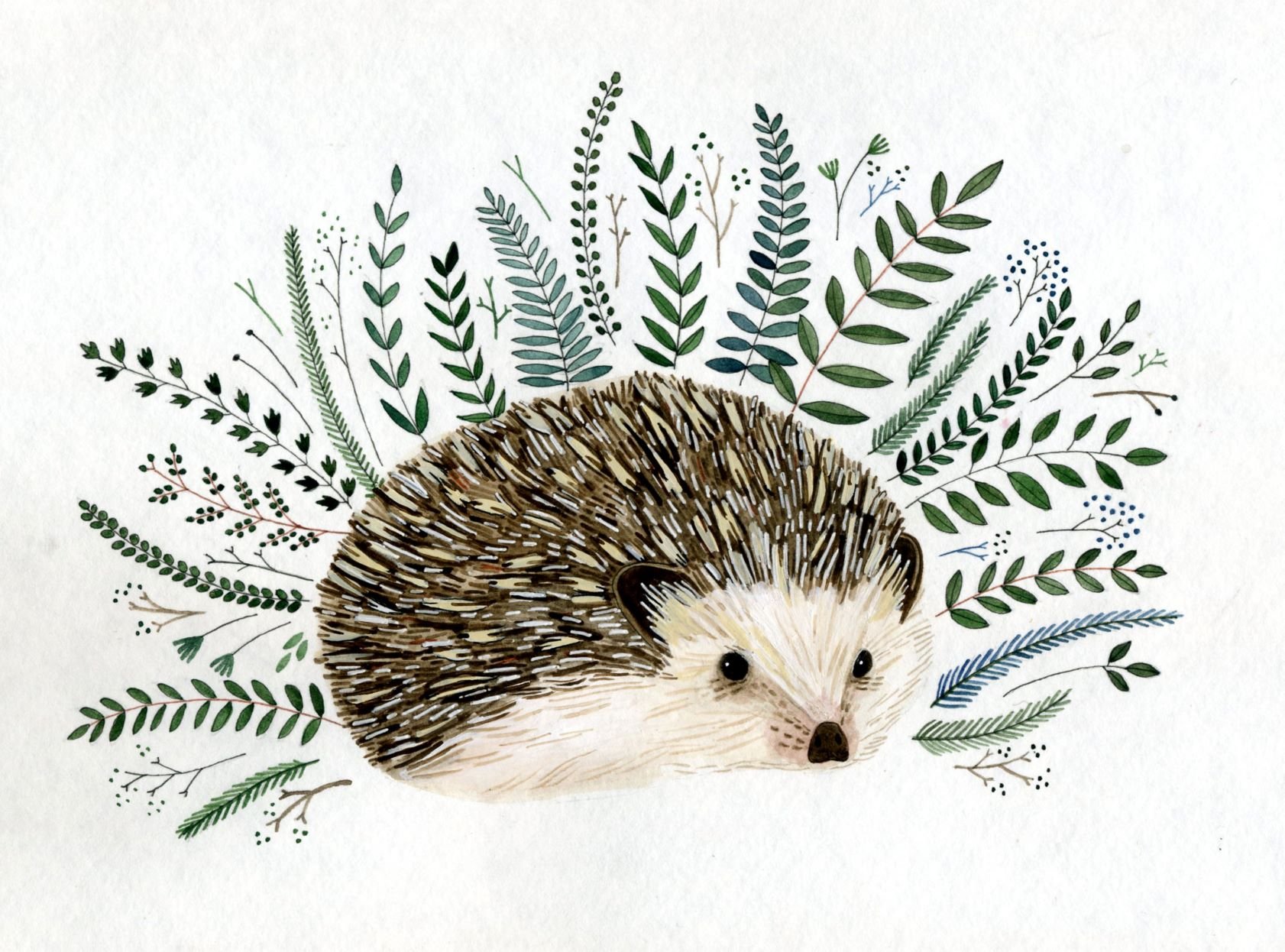
If you like the spiky little chap illustrated above by Zuza Misko, you might like to know that you can buy a print of him for £15 from our online shop. It’s one of four of our Magical Creatures that is available as a print.

Buy this month's The Simple Things - buy, download or subscribe

More from our May issue…

Featured
Sunshine chalkboard - Catherine Frawley.jpg
May 17, 2020
Learn | to play a little sunshine on the ukulele
May 17, 2020
May 17, 2020
Rosemary Kirstie Young.jpg
May 16, 2020
Food matching | Rosemary
May 16, 2020
May 16, 2020
Crayon Candle.JPG
May 13, 2020
Make | a candle from crayons
May 13, 2020
May 13, 2020

More creatures we find a bit magical…

Featured
Otter.jpeg
June 16, 2026
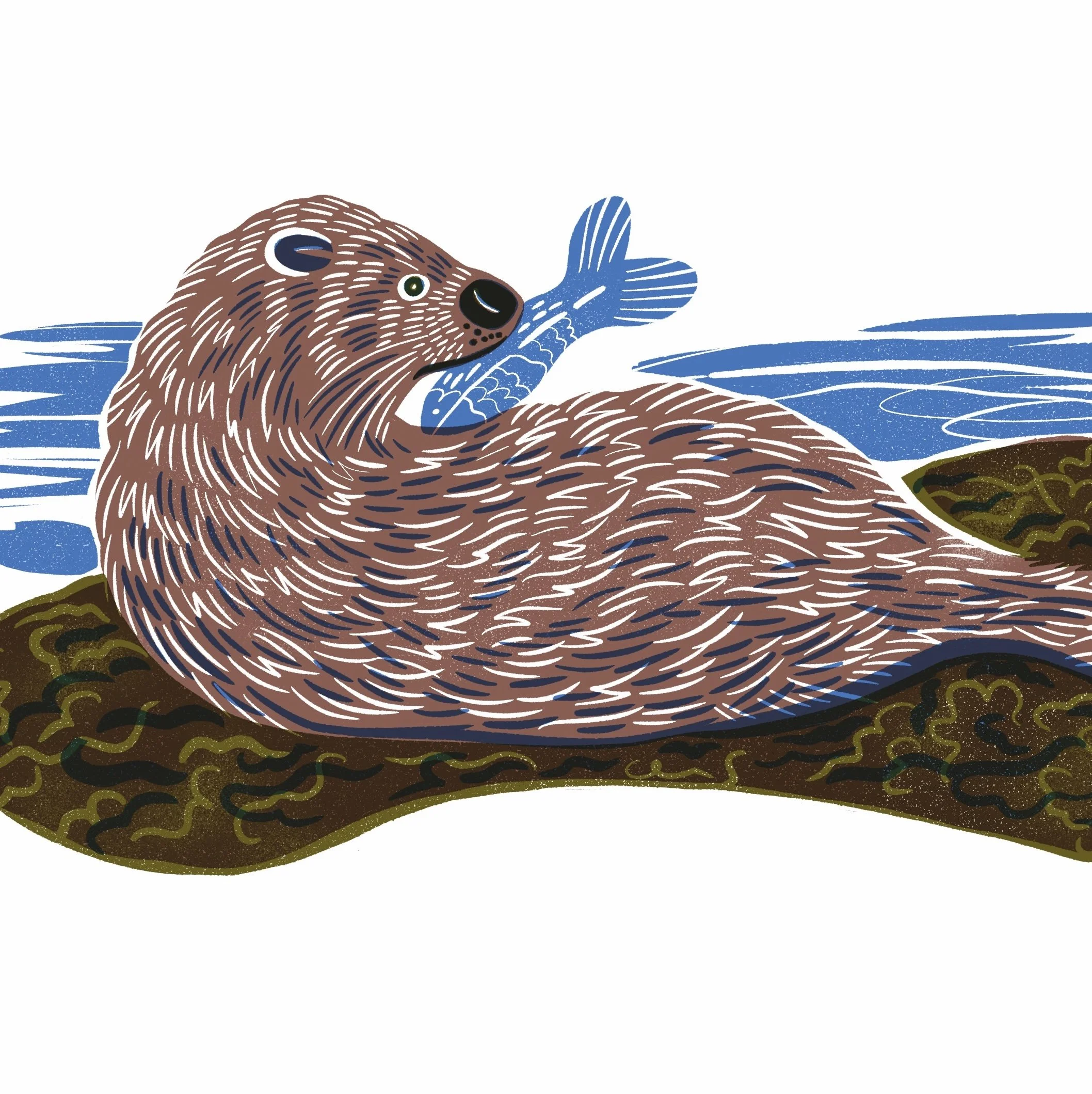
Why we Love | An Otter
June 16, 2026
June 16, 2026
Water Boatman.jpg
May 24, 2025
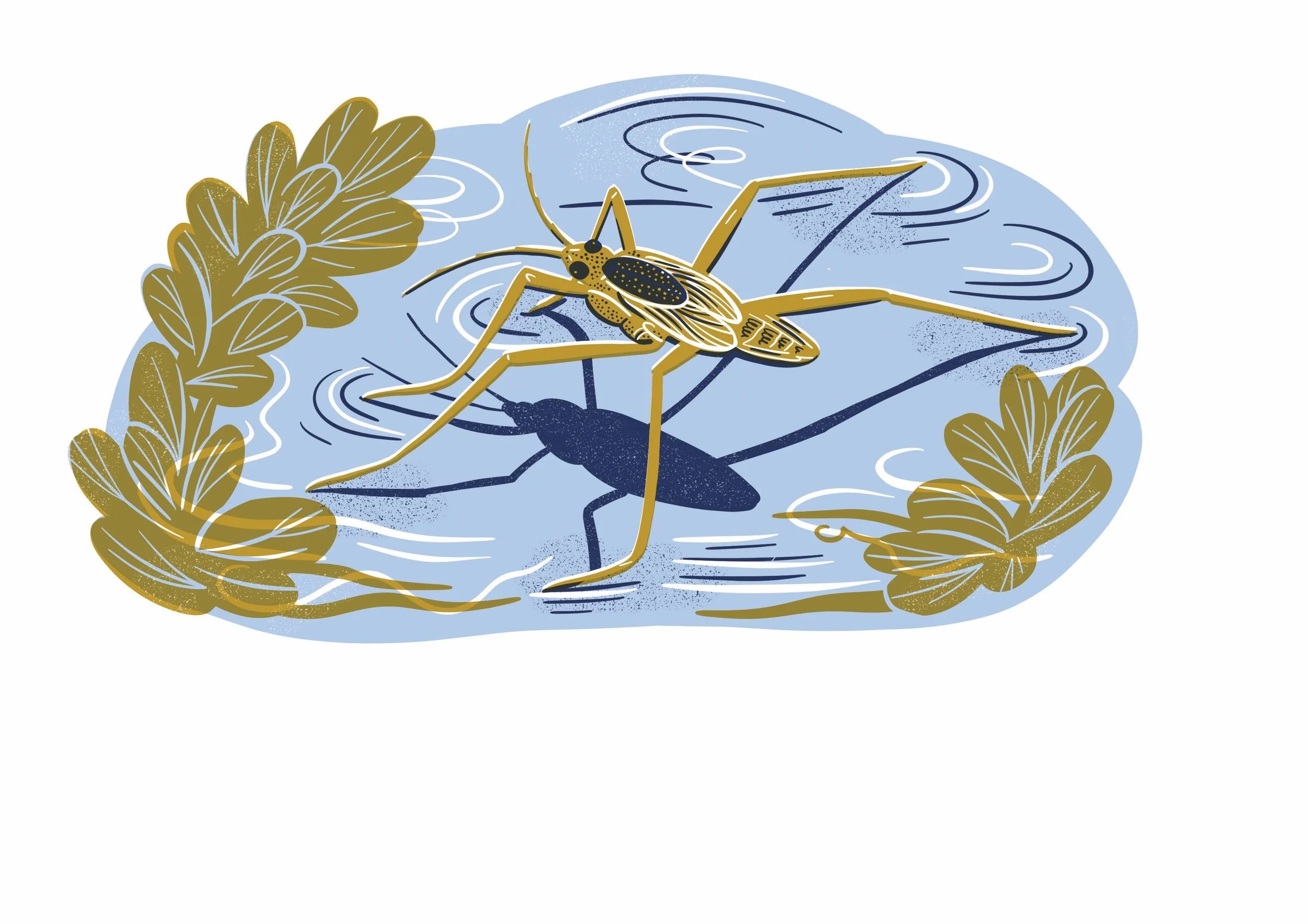
Nature | Pond-Dipping for Grown-ups
May 24, 2025
May 24, 2025
Moths2.jpg
October 10, 2023
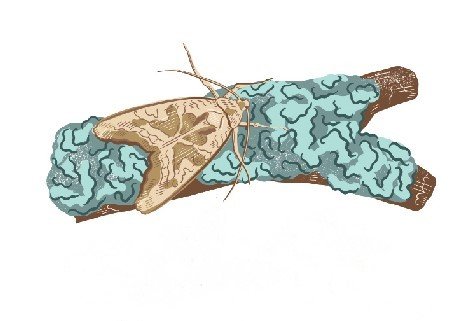
Learn | To Tell Moth Jokes
October 10, 2023
October 10, 2023
In Nature Tags wildlife, hedgehogs, magical creatures, gardens, outdoor makes, issue 95, May
Comment
Photography: Kirstie Young

Photography: Kirstie Young

Make your own | rosehip tea

Iona Bower October 26, 2019

Fancy a cuppa? We’ll just pop to the end of the garden and brew up

In our November issue, Lia Leendertz showed us how to forage rose hips and threw in a few delicious recipes, too. If you had a glut though, you might like to dry some to keep for rosehip tea, a delicately flavoured beverage that will warm you through the colder months. 

Here’s how to make rosehip tea, from hedgerow to armchair. 

  1. Pick your rosehips. After the first frost is best but if they get too frozen they’ll be no good. Lia recommends you pick them whenever you spot them, frost or no, and pop them in the freezer for a few hours to create a fake first frost. You can cut them off with scissors or a knife or just pick them off. Gloves are a good idea.

  2. Rose hips can be used whole, or you can trim either end if you prefer. You can also cut them in half and scoop out the seeds if you like. Again, not a must but the seeds are covered in tiny hairs which might spoil your tea. It depends how ‘rough’ you like your hip tea really. Give them a good wash and dry them on newspaper in the sun if you can, or just leave them to dry off indoors.

  3. To fully dry them, either put them in a food dehydrator (not many people have one but they are rather fun for all sorts of projects like this) or simply put them in the oven on its lowest heat for about three and a half hours.

  4. Once the hips are dried, pop them into a food processor and give them a quick whizz. You want the pieces to be fairly chunky still.

  5. Put the blitzed hips into a sieve and shake through any tiny bits. If you didn’t remove the hairs earlier this should get rid of them.

  6. Ta da! You have rosehip tea! Just put your tea into an airtight jar.

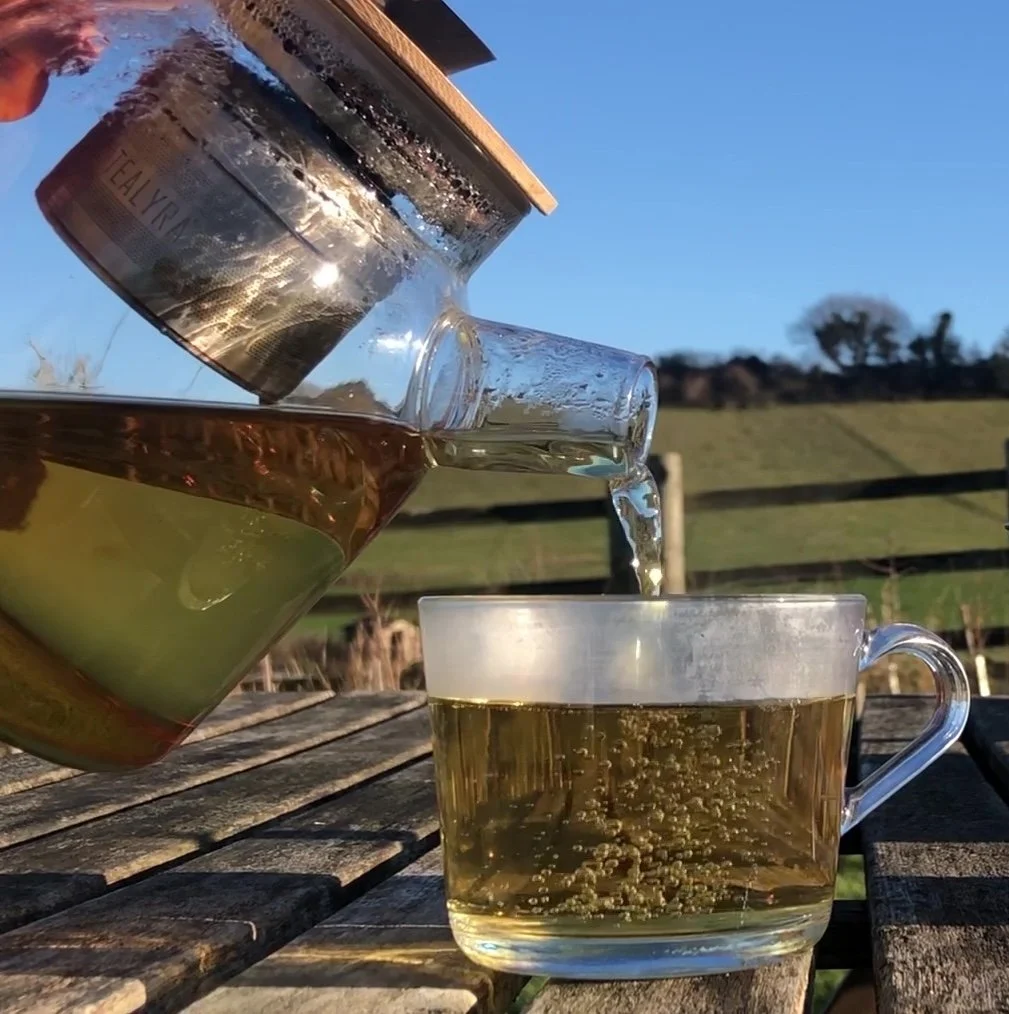
  7. To serve, put one teaspoon of the tea in a loose-leaf infuser (we like the one Teapigs sells), put it in a mug and pour boiling water on top. Allow to steep for five minutes before removing. Enjoy with a blanket and half an hour to yourself with the November ‘Cosy’ issue of The Simple Things, which is in shops now. 

Get hold of your copy of this month's The Simple Things - buy, download or subscribe

More teas to make and sip…

Featured
Peach Iced Tea Emma Croman.jpeg
June 13, 2026
Tipple | Peach Iced Tea
June 13, 2026
June 13, 2026
New - Tea pouring 2.jpeg
March 1, 2026
Grow | Homegrown Chamomile Tea
March 1, 2026
March 1, 2026
TEA COSY JUMPER.jpg
January 25, 2025
How to | Make a Tea Cosy from an Old Jumper
January 25, 2025
January 25, 2025

More from our November issue…

Featured
bookshop.jpg
June 23, 2020
Four fictional bookshops
June 23, 2020
June 23, 2020
Inclusive Trade.JPG
May 11, 2020
Competition | Win £100 to shop ethically
May 11, 2020
May 11, 2020
October back cover.JPG
November 19, 2019
November | a final thought
November 19, 2019
November 19, 2019
In Nature Tags November, cosy, rosehips, tea, project, autumn recipes, foraging
Comment
Photography: Joseph Ford

Photography: Joseph Ford

Camouflage | a short primer

Iona Bower October 16, 2019

Now you see me… now you don’t


We tend to think of camouflage as matching one’s background. And indeed, this can be used to good effect, as seen in the picture above from Invisible Jumpers by Joseph Ford and Nina , published by Hoxton Mini Press (you can see more of these fabulous photographs in our October issue). 

But in the animal kingdom, it’s all a little more subtle and complex than this (and less knitted) and the theories of how camo works have been discussed by everyone from artists to zoologists for decades. Here are a few of the nifty tricks nature uses to make itself invisible. 


Countershading

Since the Cretaceous period, many animals have been darker on the top of their body and lighter on the underside (think about a shark with its dark back and white belly - it works just as well for predators as prey). When light falls from above on a 3D object of one shade the underside appears darker than the top because of the way shadows fall, giving the object a solid appearance. Countershading works against that, using shading to counterbalance light’s effects to make the object seem to disappear. 


Mimetic resemblance

This is the sort of camo we often think of first - those mad stick insects that look like leaves, moths that have wings that look just like bark. Devious little so-and-sos. 


Counter illumination

This is a bit subtler but seen from below, most marine animals are able to be seen because they have a dark silhouette against the water. Some, like the firefly squid, produce light from bioluminscent photophores on their undersides, which counteracts the effect of their dark silhouette making them harder to see.

Disruptive colouration

In layman’s terms, this is ‘splotchiness’, like on a leopard or a flatfish. The splotches make it harder to see the contours of the animal’s body.


Contour obliteration

Also known as ‘boundary disruption’. This makes the edges of an animal’s shape looks a bit roughed up so it’s harder to discern its body as a whole from its background. 


Concealment of the eye

By far our favourite camo trick. The eye can be a bit of a target for predators, as it stands out, so concealing it can be the difference between being a survivor and being dinner. Some animals have a dark band or stripe across the eye (like a raccoon) to hide the dark pupil, others have dark patches around the eye (pandas). While others still go for total misdirection, like some fish which have a fake ‘eye’ near the end of their tail and their real eyes are tiny and easily missed. Sneaky!


You can find more pictures of the fabulous knitted camo from Invisible jumpers in our October ‘Create’ issue. Get hold of your copy of this month's The Simple Things - buy, download or subscribe


More from our October issue…

Featured
Pumpkin Beer Keg Jonathan Cherry.jpg
October 31, 2023
Make | a pumpkin beer keg
October 31, 2023
October 31, 2023
Back cover cartoon.jpg
October 22, 2019
October | a final thought
October 22, 2019
October 22, 2019
Spooky Stories Alamy.jpg
October 19, 2019
Build your own spooky story
October 19, 2019
October 19, 2019

More of nature’s wonders…

Featured
Ducks My Plot.jpeg
April 1, 2025
Language | Learn to speak 'Duck' abroad
April 1, 2025
April 1, 2025
Nature Diary.jpeg
February 22, 2025
How To | Keep a Nature Diary
February 22, 2025
February 22, 2025
grebe.jpg
February 14, 2025
Nature | Waterfowl Valentines
February 14, 2025
February 14, 2025


In Nature Tags nature, camouflage, animals, October, issue 88
Comment
Illustration: Rachel Victoria Hillis

Illustration: Rachel Victoria Hillis

Hive mind | reviving a bee

Iona Bower July 10, 2019

Spotted a bee that’s more bushed than busy? Here’s how to give him a boost


We’ve all heard the advice about reviving bees that are grounded in hot weather but there’s so much conflicting advice buzzing around, sometimes it’s hard to remember what the best thing to do is. Here’s The Simple Things’ truly simple guide to reviving a bee.

If you find a bee on the ground (not on a flower - those ones are just having a well-earned sit down), here’s what to do:

  1. Mix two tablespoons of caster sugar (not demerera*) with one tablespoon of water. 

  2. Place the solution close to the bee so it can have a drink. A spoon will do but most bees find it easier to get the sugar solution off a flower head, such as a chive or dandelion flower, or from a flat surface, so if it’s on hard ground just put a blob of the sugar solution on the ground next to it. 

  3. Back away and give the bee some space but hover nearby to see off predators.

  4. Eventually watch it fly away and feel the glow of having done a kindness for a small beast.

*And definitely never use honey. Honey can kill wild bees as you could be introducing a virus to the bee.

Other bees in a tight spot.

Damp bees

If you find a bee soaked after a heavy downpour and unable to get off the ground you can bring it inside overnight to dry off. A box with plenty of ventilation holes is a good spot for it. Don’t be tempted to keep it for any longer than necessary. Bees are not pets.

Damaged bees

Sometimes a bee that is old or has been attacked can look pretty scruffy. It’s worth trying the sugar solution trick. However, try not to get too attached. If the bee is missing wings, limbs or other bits of its body it’s probably not a good prognosis and it’s best to just let nature take its course. 

Dead bees

Are you sure? People often assume a bee is dead when it’s simply exhausted. Give the sugar solution a go and see if you can breathe new life into it before writing it off.


If you’d like to learn even more about bees, buy our July ‘Embrace’ issue, on sale now, which includes a comprehensive primer on all things bee. 

Get hold of your copy of this month's The Simple Things - buy, download or subscribe


More from our July issue…

Featured
Back cover Michelle Rial from Am I Overthinking this Chronicle Books.jpg
July 23, 2019
July | a final thought
July 23, 2019
July 23, 2019
Lavender Lia Leendertz and Kirstie Young.jpg
July 20, 2019
Science | why lavender calms
July 20, 2019
July 20, 2019
Reader holiday.jpg
July 18, 2019
Reader offer | The Simple Things Holiday
July 18, 2019
July 18, 2019

More inspiration from nature…

Featured
Ducks My Plot.jpeg
April 1, 2025
Language | Learn to speak 'Duck' abroad
April 1, 2025
April 1, 2025
Nature Diary.jpeg
February 22, 2025
How To | Keep a Nature Diary
February 22, 2025
February 22, 2025
grebe.jpg
February 14, 2025
Nature | Waterfowl Valentines
February 14, 2025
February 14, 2025


In Nature Tags issue 85, July, Bees, nature, know a thing or two
Comment
  • Blog
  • Older
  • Newer
Featured
 JULY ISSUE   Buy  ,   download  or  subscribe   Order a copy of:  Our new Homebird bookazine    Flourish Volume 4 , our wellbeing bookazine  A Year of Celebrations  – our latest  anthology  See the sample of our latest issue  here   Listen to  our p
February 27, 2026
February 27, 2026

JULY ISSUE

Buy, download or subscribe

Order a copy of:
Our new Homebird bookazine

Flourish Volume 4, our wellbeing bookazine
A Year of Celebrations – our latest anthology

See the sample of our latest issue here

Listen to our podcast – Small Ways to Live Well

February 27, 2026
Join our Newsletter
Name
Email *

We respect your privacy and won't share your data.

email marketing by activecampaign
facebook-unauth pinterest spotify instagram
  • Subscriber Login
  • Stockists
  • Advertise
  • Contact

The Simple Things is published by Iceberg Press

The Simple Things

Taking time to live well

We celebrate slowing down, enjoying what you have, making the most of where you live, enjoying the company of of friends and family, and feeding them well. We like to grow some of our own vegetables, visit local markets, rummage for vintage finds, and decorate our home with the plunder. We love being outdoors and enjoy the satisfaction that comes with a job well done.

facebook-unauth pinterest spotify instagram