The Simple Things

Taking time to live well
  • Home
  • Subscribe
  • SHOP
  • Newsletter
  • About
  • Work with us
  • Home
  • Subscribe
  • SHOP
  • Newsletter
  • About
  • Work with us

Blog

Taking Time to Live Well

  • All
  • Chalkboard
  • Christmas
  • Competition
  • could do
  • Eating
  • Escape
  • Escaping
  • Fresh
  • Fun
  • gardening
  • Gathered
  • Gathering
  • Growing
  • Haikus
  • Interview
  • Living
  • Looking back
  • Magazine
  • magical creatures
  • Making
  • Miscellany
  • My Neighbourhood
  • Nature
  • Nest
  • Nesting
  • outing
  • playlist
  • Reader event
  • Reader offer
  • Shop
  • Sponsored post
  • Sunday Best
  • Think
  • Uncategorized
  • Wellbeing
  • Wisdom

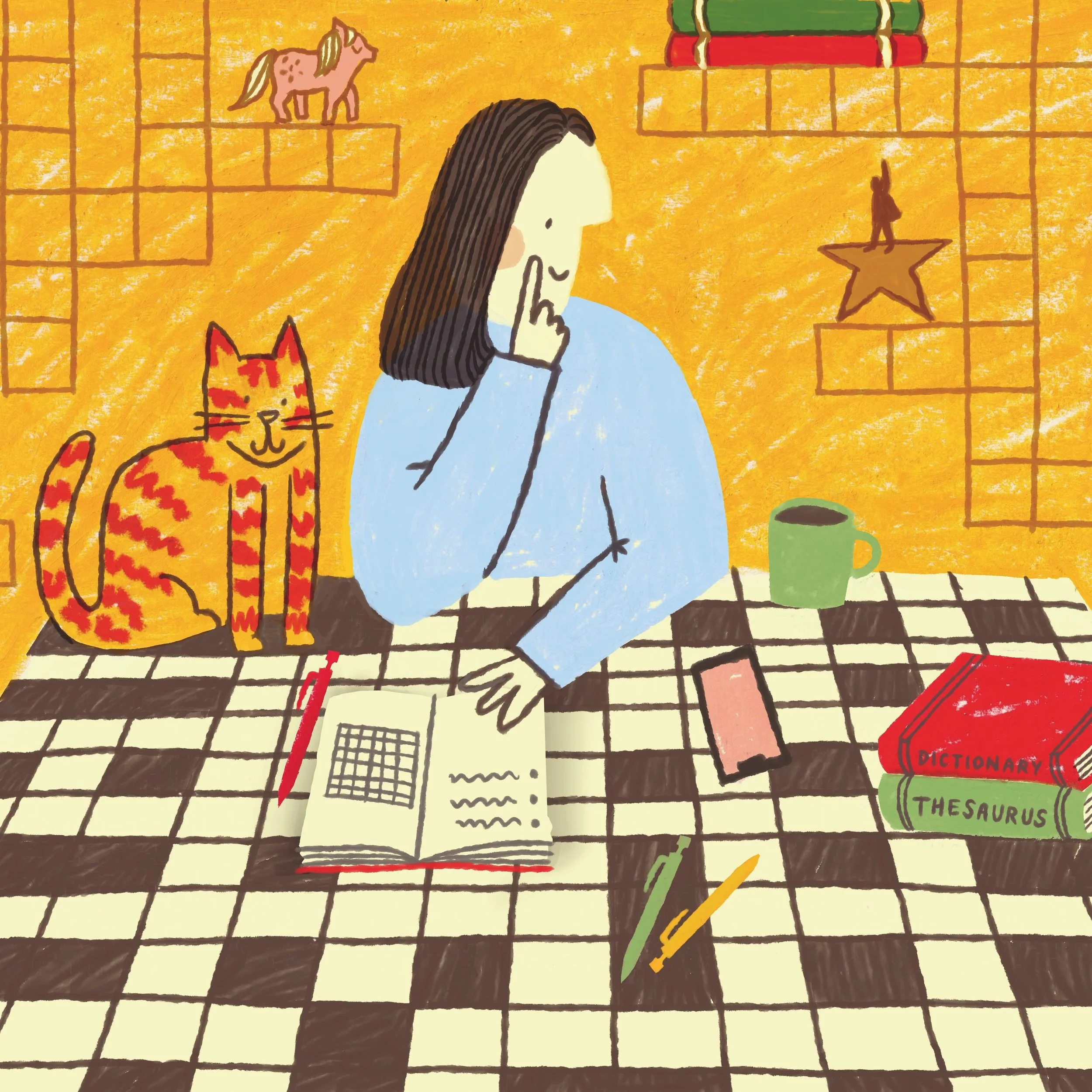
Illustration by Gracie Dahl

Wellbeing | Reasons to Love a Puzzle

Iona Bower July 26, 2026

Glance at somebody’s phone while sitting next to them on the train or standing waiting in a queue, and they’re as likely to be doing a puzzle as scrolling. While digesting world events and scrolling socials can often leave us feeling anxious or down, completing a puzzle gives a feeling of quiet satisfaction and wellbeing. Just like we enjoy a boost of adrenaline and endorphins when we do physical exercise, solving a puzzle triggers the release of dopamine, which makes us feel happy, focused and motivated.

Brain training

And it’s not just completing the puzzle that feels good. While we’re searching for words, fitting jigsaw pieces or doing calculations, our brains are being challenged. “Giving your brain a regular workout builds cognitive reserve, and the more cognitive reserve a person has, the longer it takes for diseases in their brain to cause problems with everyday tasks,” says Tim Beanland, Head of Knowledge and Learning at The Alzheimer’s Society.

In one study, people with mild cognitive impairment maintained or slightly improved cognitive function after doing a daily crossword, while those who didn’t experienced a decline. Those doing the crossword also saw an improvement in daily activities like managing finances and medication, demonstrating the practical value of keeping the brain challenged.

Whether based on words, numbers or shapes, puzzles target different areas of the brain, testing memory and knowledge as well as verbal and numerical skills and the ability to keep multiple things in your mind. You’ve probably got a favourite type of puzzle, but challenging yourself with something different or harder as well as the ones you do regularly will keep challenging the different parts of your brain, advises Tim.

Off grid

While there’s a plethora of digital games sitting on our phones, let’s not forget the value of pen and paper-based puzzles. Analogue activities help to reduce screen fatigue and there’s often a real-life social element, too, whether that’s teams crowding round a table for a pub quiz or a family completing the crossword or placing pieces of a jigsaw over a morning coffee.

Solving problems requires communication and collaboration and encourages bonding and connection, important for our mental wellbeing at any age. “There is no ‘golden’ or ‘right’ age in which to start puzzles, and you can see even young babies ‘solving problems’ as they engage with the world,” says Tim. “The more we actively engage our brains, and the sooner we do so, the better.

The blog above is by Rebecca Frank and is taken from our ‘Wisdom’ feature in our August issue, in which we meet people who create puzzles, including a crossword-setter, a treasure-hunt designer and a quiz queen! And if you’re feeling inspired to do some puzzling yourself, don’t miss our bumper summer Miscellany - with extra puzzles - in our August issue, in shops now.

Buy this month's The Simple Things -buy, download or subscribe

More ways to keep your brain busy…

Blog
Wisdom CROSSWORD_FINAL.jpeg
July 26, 2026
Wellbeing | Reasons to Love a Puzzle
July 26, 2026
Read more →
July 26, 2026
ali allen flowers jigsaw pic.jpg
July 20, 2024
Puzzle | Wild Flowers
July 20, 2024
Read more →
July 20, 2024
Getty Crosswords.jpg
July 9, 2024
How To | Solve Crosswords
July 9, 2024
Read more →
July 9, 2024

More from our blog…

Blog
Outdoor games.jpeg
August 8, 2026
Fun | Summer Games You're Never Too Old For
August 8, 2026
Read more →
August 8, 2026
the-north.jpeg
August 3, 2026
Sponsored Post | Discover Britain's Best-Kept Secret with Island Escapes
August 3, 2026
Read more →
August 3, 2026
Back garden cinema.jpeg
August 1, 2026
Culture | Films to Watch Outdoors
August 1, 2026
Read more →
August 1, 2026
In Think Tags crosswords, puzzles, brain, wellbeing
Comment

Photography: iStock

Brain fog | And how to beat it

Iona Bower February 6, 2022

Concentration becoming clouded and a mind fug descending? Try some of these ways to a clearer head

  • Eat a healthy diet – what you eat directly effects your brain and how it functions. The best diet to follow to keep your brain and body in good shape is a Mediterraneanstyle diet. Eat plenty of daily veg, wholegrains, nuts, seeds, fruit and olive oil as well as fish, eggs, beans, poultry and limited red meat. And don’t forget to keep hydrated – your brain is a thirsty organ.

  • Prioritise sleep – sleep deprivation can make you forgetful, clumsy, irritable, moody, depressed, demotivated – and hungry! Aim for seven to nine hours and no less than six or more than ten. This can be broken up into a night-time sleep and a daytime nap if that suits you better.

  • Go with your natural rhythms – your circadian rhythm works best with regular sleep habits so try to go to bed and get up at roughly the same time every day, even at weekends.

  • Get organised – make life easier for yourself by setting some systems in place. If you keep forgetting to make payments, set up some direct debits, book in a regular weekly shop, add reminders on your phone, and stick to a bedtime routine. And make lists of everything!

  • Avoid multi-tasking – focus on one thing at a time and you’re less likely to make mistakes, and feel stressed or overwhelmed.

  • Try mindfulness instead of autopilot – consciously give things more of your attention rather than doing things without thinking.

  • Slow down – relaxation techniques such as yoga, deep breathing, self-massage and meditation can all help you to put the brakes on a bit.

  • Know your limits – taking on more than you can handle is a recipe for stress. This might seem impossible when you’re overloaded with work and responsibilities, but you have the power to make different choices when it comes to your responses and thoughts.

  • Do activities that challenge the brain – learning a language, a new skill or an instrument is linked with changes in the brain. Increased cognitive activity helps preserve the volume of your whole brain and the size of the hippocampus, the part of your brain involved in memory and learning.

    Adapted from Beating Brain Fog: Your 30-day Plan to Think Faster, Sharper, Better by Dr Sabina Brennan (Orion Spring). Read more about beating brain fog in our February issue, which is in shops now. Buy this month's The Simple Things - buy, download or subscribe

More from our February issue…

Featured
Book Club new Emma Croman.jpg
February 12, 2022
Food | Fictional Feasts
February 12, 2022
Read more →
February 12, 2022
istock brain fog.jpg
February 6, 2022
Brain fog | And how to beat it
February 6, 2022
Read more →
February 6, 2022
Rachel Lees view from bed.jpg
February 5, 2022
How to | Have a Proper Lie-In
February 5, 2022
Read more →
February 5, 2022

More ways to look after your wellbeing…

Featured
Wisdom CROSSWORD_FINAL.jpeg
July 26, 2026
Wellbeing | Reasons to Love a Puzzle
July 26, 2026
Read more →
July 26, 2026
istock calm in uncertainty.jpg
June 28, 2026
Wellbeing | How to Stay Calm in Uncertainty
June 28, 2026
Read more →
June 28, 2026
Weights Shutterstock.jpg
May 31, 2026
Wellbeing : Weights for Beginners
May 31, 2026
Read more →
May 31, 2026
In Think Tags issue 116, mindfulness, psychology, brain, wellbeing
Comment
Featured
 AUGUST ISSUE   Buy  ,   download  or  subscribe   Order a copy of:  Our new Homebird bookazine    Flourish Volume 4 , our wellbeing bookazine  A Year of Celebrations  – our latest  anthology  See the sample of our latest issue  here   Listen to  our
February 27, 2026
February 27, 2026

AUGUST ISSUE

Buy, download or subscribe

Order a copy of:
Our new Homebird bookazine

Flourish Volume 4, our wellbeing bookazine
A Year of Celebrations – our latest anthology

See the sample of our latest issue here

Listen to our podcast – Small Ways to Live Well

Read more →
February 27, 2026
Join our Newsletter
Name
Email *

We respect your privacy and won't share your data.

email marketing by activecampaign
facebook-unauth pinterest spotify instagram
  • Subscriber Login
  • Stockists
  • Advertise
  • Contact

The Simple Things is published by Iceberg Press

The Simple Things

Taking time to live well

We celebrate slowing down, enjoying what you have, making the most of where you live, enjoying the company of of friends and family, and feeding them well. We like to grow some of our own vegetables, visit local markets, rummage for vintage finds, and decorate our home with the plunder. We love being outdoors and enjoy the satisfaction that comes with a job well done.

facebook-unauth pinterest spotify instagram