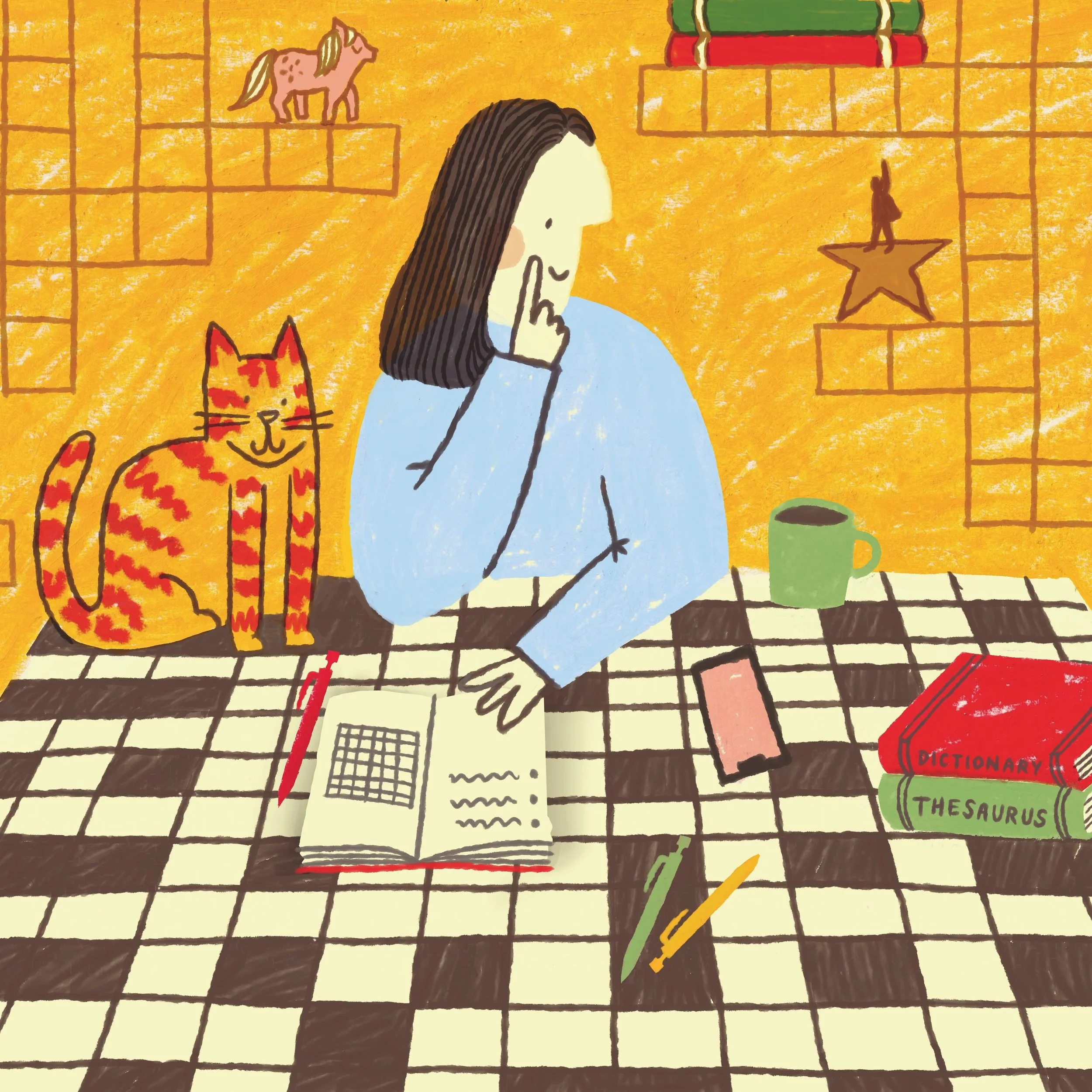
Glance at somebody’s phone while sitting next to them on the train or standing waiting in a queue, and they’re as likely to be doing a puzzle as scrolling. While digesting world events and scrolling socials can often leave us feeling anxious or down, completing a puzzle gives a feeling of quiet satisfaction and wellbeing. Just like we enjoy a boost of adrenaline and endorphins when we do physical exercise, solving a puzzle triggers the release of dopamine, which makes us feel happy, focused and motivated.
Brain training
And it’s not just completing the puzzle that feels good. While we’re searching for words, fitting jigsaw pieces or doing calculations, our brains are being challenged. “Giving your brain a regular workout builds cognitive reserve, and the more cognitive reserve a person has, the longer it takes for diseases in their brain to cause problems with everyday tasks,” says Tim Beanland, Head of Knowledge and Learning at The Alzheimer’s Society.
In one study, people with mild cognitive impairment maintained or slightly improved cognitive function after doing a daily crossword, while those who didn’t experienced a decline. Those doing the crossword also saw an improvement in daily activities like managing finances and medication, demonstrating the practical value of keeping the brain challenged.
Whether based on words, numbers or shapes, puzzles target different areas of the brain, testing memory and knowledge as well as verbal and numerical skills and the ability to keep multiple things in your mind. You’ve probably got a favourite type of puzzle, but challenging yourself with something different or harder as well as the ones you do regularly will keep challenging the different parts of your brain, advises Tim.
Off grid
While there’s a plethora of digital games sitting on our phones, let’s not forget the value of pen and paper-based puzzles. Analogue activities help to reduce screen fatigue and there’s often a real-life social element, too, whether that’s teams crowding round a table for a pub quiz or a family completing the crossword or placing pieces of a jigsaw over a morning coffee.
Solving problems requires communication and collaboration and encourages bonding and connection, important for our mental wellbeing at any age. “There is no ‘golden’ or ‘right’ age in which to start puzzles, and you can see even young babies ‘solving problems’ as they engage with the world,” says Tim. “The more we actively engage our brains, and the sooner we do so, the better.
The blog above is by Rebecca Frank and is taken from our ‘Wisdom’ feature in our August issue, in which we meet people who create puzzles, including a crossword-setter, a treasure-hunt designer and a quiz queen! And if you’re feeling inspired to do some puzzling yourself, don’t miss our bumper summer Miscellany - with extra puzzles - in our August issue, in shops now.
Buy this month's The Simple Things -buy, download or subscribe