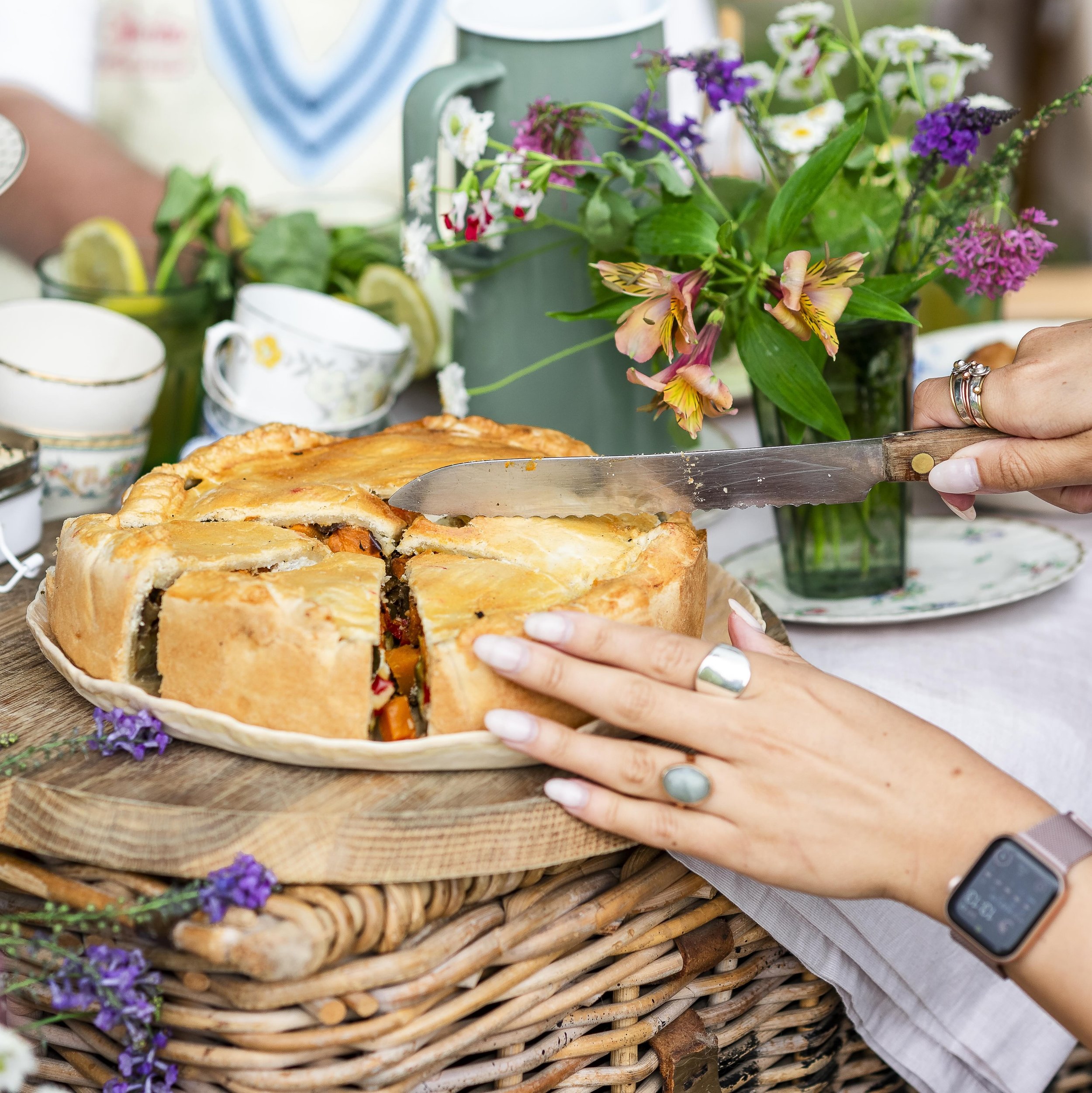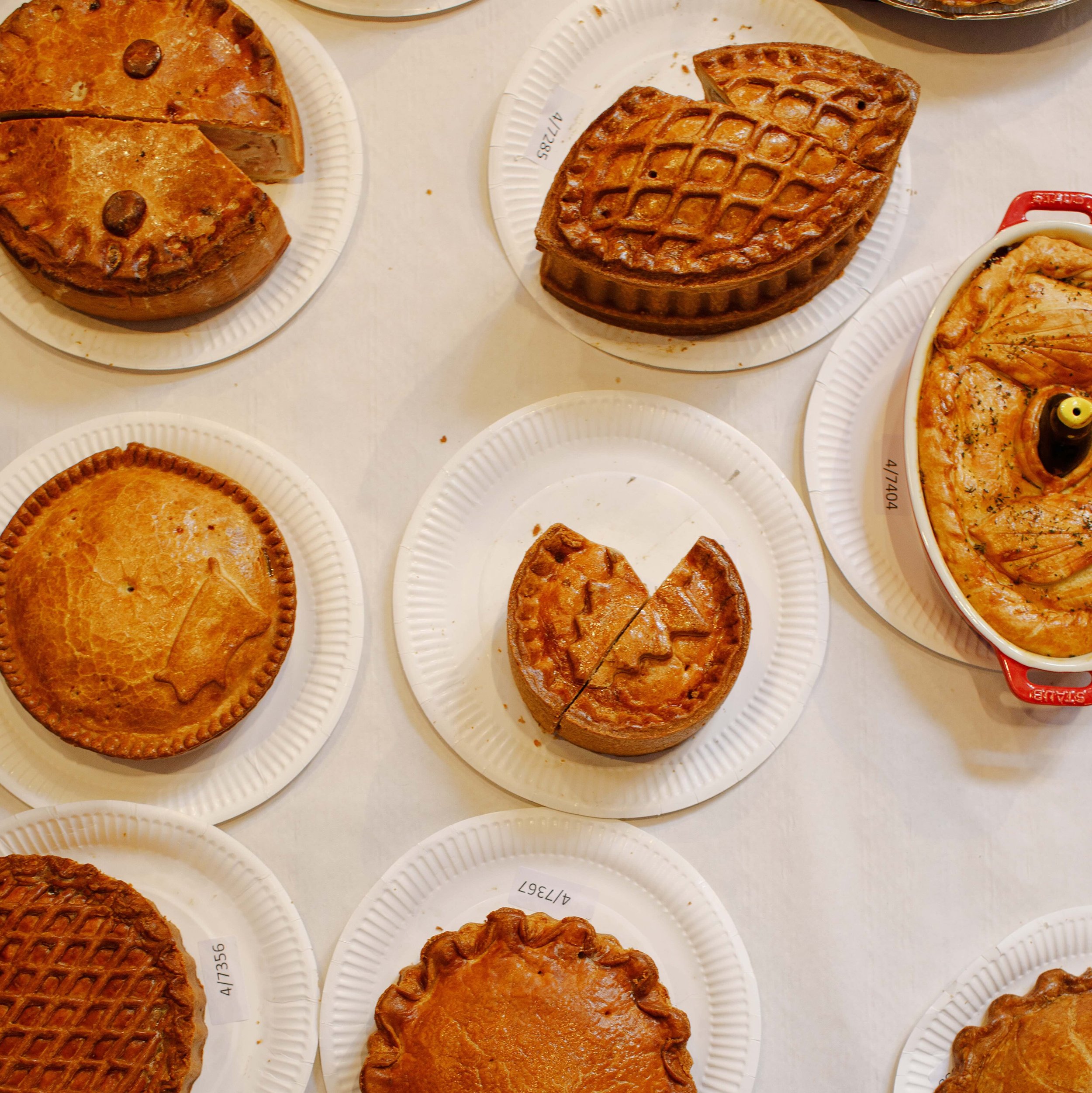
To mark British Pie Week (2-8 March) we’re taking a tour of regional pies and paying homage to a few of our favourites and a few going on our Pie To Try lists
Bedfordshire Clanger
This two-course pie was originally made for 19th century farm workers to save them coming back from the field for their lunch. Clangers are rectangular, like a sausage roll, with a savoury filling in one end (often liver, bacon or pork) and sweet at the other (usually jam or fruit), baked in a suet crust. Their name is thought to derive from their slightly heavy consistency. Subtle, they are not.
Shropshire’s Fidget Pie
Shropshire is the most famous of the ‘fidget’ pies, though they’re popular all over the Midlands. There are several theories behind the name ‘fidget pie’. Some suggest it’s because they were five-sided or ‘fitched’, others claim it’s to do with the way the ingredients jump around during cooking. The least enticing theory is that they smell like a ‘fitchett’ or polecat. Delicious! Recipes vary but the main ingredients are gammon, apple, potato and onion.
Cornwall’s Stargazy Pie
Now served all over the south west, Stargazy pie is officially and originally made in Mousehole. One stormy December night, when the cut-off village was close to starvation, a brave fisherman called Tom Bawcock put his boat out to sea and returned with enough fish for the whole village. His catch was baked into one huge pie and the villagers feasted. The inhabitants of Mousehole cook a Stargazy pie (with the heads and tails of pilchards poking out of the pastry top to see the stars) every 23 December in his honour.
Scotch Pie
These ‘hand-held’ hot water crust pies usually contain beef or lamb (once mutton) and are a common sight at football matches. The pastry lid sits a few centimetres below the edges of the pie allowing for a topping of gravy or baked beans (all your major food groups, there). They date back around 500 years and still fill Scottish bakeries today, sometimes known as a ‘shell pie’.
Welsh Oggie
Much like a Cornish pasty, Welsh Oggies were originally eaten by tin miners enabling them to take a hot lunch down the mines with them that was easy to eat. Oggies tended to be bigger than pasties (presumably Welsh miners were hungrier than their Cornish counterparts), and contained lamb and leeks rather than beef, carrots, potato and onion.
Lancashire Butter Pie (Preston Catholic Pie)
One of the cheapest and most cheering pie recipes around, this Northern pie contains simply potatoes, onions and (rather a lot of) butter. Served on Fridays when Catholics traditionally did not eat meat, it’s known in Preston as Catholic Pie or even Friday Pie. It’s also a favourite snack at Preston North End Football Club.
Devonshire Squab Pie
Traditionally made with young pigeons (hence ‘squab’) but now containing mutton or lamb, this pie also includes apples, onions, prunes and (of course) clotted cream. Those on a health kick may replace it with a dash of double cream. Some still mistakenly refer to the dish as a ‘squabble’ pie, in the belief that the recipe emerged from a disagreement between a meat-pie-loving husband and an apple-pie-loving wife. You can see the confusion, given that there’s not a squab in sight now, but sadly, it’s a misnomer.
Leicestershire’s Melton Mowbray Pork Pie
The humble pork pie dates back to medieval times but it is the Melton Mowbray version that stands as Pie King, head and shoulders above other, lesser, pork pies. In fact, it was so admired that in 2008 they were given EU geographic protection status, meaning they could only be sold as ‘Melton Mowbray’ pork pies if they adhered to certain criteria AND were made within a ten-mile radius of the town. A hot water crust encases the chopped pork and aspic filling and they are baked freestanding, not in a mould, which is what gives them their slightly bowed appearance. Possibly originally made for local fox-hunters, they are now a picnic basket staple. Brook no substitutes.
Yorkshire’s Knaresborough Picnic Pie
A summery pie, ideal for slicing and eating outdoors. The basic recipe is simply layers of boiled ham and sliced eggs, baked in pastry, but various bakeries add their own ingredients to make it ‘theirs’. Delicious with a good chutney.
Sussex Churdle
A ‘dry’ savoury pie which dates back to the 17th century made of one sheet of pastry filled with liver, bacon and onion. Once baked you create a ‘chimney’ in the middle and pour in melted cheese. We’re unsure if this is pie genius or pie heresy.
In our March issue, we take a trip to Melton Mowbray to visit the British Pie Awards and see the judging in action. The feature is by Julian Owen and the photography by Jonathan Cherry. The issue is in shops now.
Buy this month's The Simple Things -buy, download or subscribe