Photography by Alexa Phillips
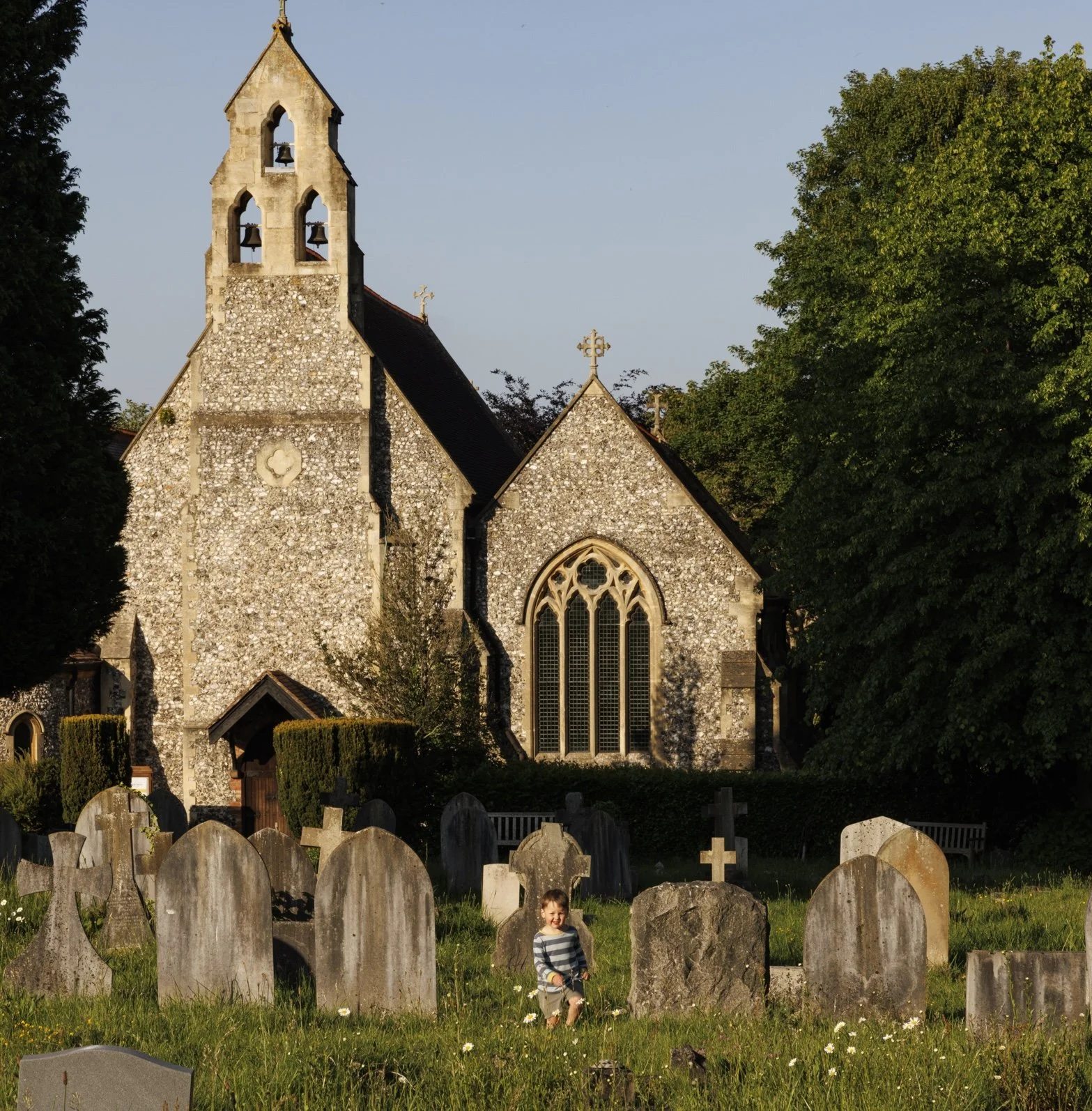
Almost every town and village has a churchyard to explore. Full of stories, nature and history, here are a few ways to respectfully while away an hour in your local church’s outside space
1. Try sketching
Churchyards often have excellent light and shade, which makes for good sketching. Put a sketch book and some stencils in your bag and find a spot to sit and sketch whatever appeals to you, from a lichen-covered grave stone to a close-up of wildflowers in a shady corner.
2. Learn a little local history
Look up the church you’re visiting before you set off. Sometimes the parish website will have all kinds of interesting history and there may well be information about the graves, too, and whether anyone of note is buried there etc. If your family have lived in the area for some time it’s worth wandering the graveyard to look for your own family names on the graves.
3. Make the most of the peace with a meditation
You don’t have to be religious to find the peace of a churchyard conducive to quiet contemplation. They are, of course, excellent places for a prayer, but also for silent meditation or breathing exercises. They’re one of the few places outdoors where you can almost guarantee you won’t be disturbed and no one will mind you taking a quiet moment to enjoy the meditative feel of the churchyard.
4. Identify birdsong
Birds are often in abundance in churchyards from small birds such as wrens and robins, right up to birds of prey and owls. Swallows and housemartins often next in church porches. Sit quietly for a while and you’ll soon tune into their song. You could record their tunes on your phone to listen to later, or use an app like Merlin to identify the species you can hear.
5. Play Eye Spy in a churchyard
There are lots of interesting features specific to churches and churchyards to notice. You might spot a holy water ‘stoup’ in the porch, gargoyles on the corner of roofs, sundials on the south wall (which often preceded church clocks). Then of course there are gravestones. The National Churches Trust points out that most graves will face east as Christians adopted the old Jewish custom of burying the dead with feet towards the rising sun and to face the Lord, who it is said will approach from the east on the day of judgement. One exception to this is the graves of vicars, who are often buried with their feet facing the church to symbolise the fact that they are still attending their flock, so any graves not facing east are worth looking out for.
6. Enjoy a book
Find a bench or a shady spot beneath a tree and lose yourself in a book. You can, of course, enjoy catching up with whatever you’re reading right now but if you want to be topical you could try How To Read a Graveyard by Peter Stanford, or The Nine Taylors by Dorothy L. Sayers, which is set in a church in the Fens.
7. Hunt for ancient trees
Yews are known for their longevity and became a symbol of resurrection and eternal life due to their evergreen foliage. Even pre-Christianity they were planted near burial grounds; it’s recently been discovered that bronze-age round barrows were surrounded by yews. So churchyards are an excellent place to start if you want to visit a really ancient tree. Visit the Ancient Yew Group’s Yew Site Database to find local examples.
8. Learn to read stained glass
Stained glass windows are best viewed from inside the church but if you happen to be in the churchyard at dusk and Evensong is taking place, the lights inside the church might illuminate it beautifully for outside viewing. Stained glass windows were originally a way for the illiterate masses to learn Bible stories. Walk around the church and you might spot particular stories depicted or even one story, depicted ‘frame by frame’. It’s interesting to look up what stained glass colours symbolise, too. White, for example, symbolises innocence, purple is for suffering or endurance, red the blood of Christ, and so on. You may also see symbolic items such as a lamb for Christ, dragons representing Satan and an anchor for Christ the Saviour. Occasionally you’ll even see that local glass artists have included references to local people or landmarks. Truly a window onto another world.
9. Go on a nature trail
Because churchyards are so peaceful they tend to attract wildlife who can find food, water and rest more easily in quiet spots. Look for butterflies and other insects in summer, particularly in hedges around the borders of the land. As dusk falls you might spot a hedgehog snuffling past or bats (not necessarily in the belfry) but certainly swooping to feast on small flying insects. Many churches have a church cat who may not be ‘wild’ exactly, but certainly adds to the animal ambience.
10. Photograph old grave stones
It’s respectful to stay clear of any ‘in living memory’ stones, particularly those that are clearly well tended and cared for by loved ones. But many churchyards have fascinating centuries-old stones whose lettering tells its own tale. Look out for stones in unusual shapes, bearing interesting words and even unusual fonts, all of which make for wonderful and thought-provoking photographs.
How to find a churchyard to visit
Churches are, by their nature, welcoming and open to all usually, so your first port of call could easily be your local church, even if you are not a church-goer. Vicars are usually only to pleased to show you around and share interesting information about the building and grounds.
The National Churches Trust is a fabulous mine of information with a search facility so you can look up your local churches and find out about their history and what there is to see before you visit.
Look up the Friends of Friendless Churches (friendsoffriendlesschurches.org.uk) which saves historic places of worship in England and Wales. They’re doing excellent work and have a ‘find a church’ facility on their website to allow you to find a church they are working with near you to visit.
This blog, which was written in a churchyard by Iona Bower, was inspired by our May issue’s My Plot feature, Holy Ground, which follows volunteers from the Greener Henley Wildlife Group who have been creating a space for nature in the quiet churchyard of Holy Trinity Church in Henley-on-Thames for four years. Read more in the May issue, which is out now.
Buy this month's The Simple Things -buy, download or subscribe