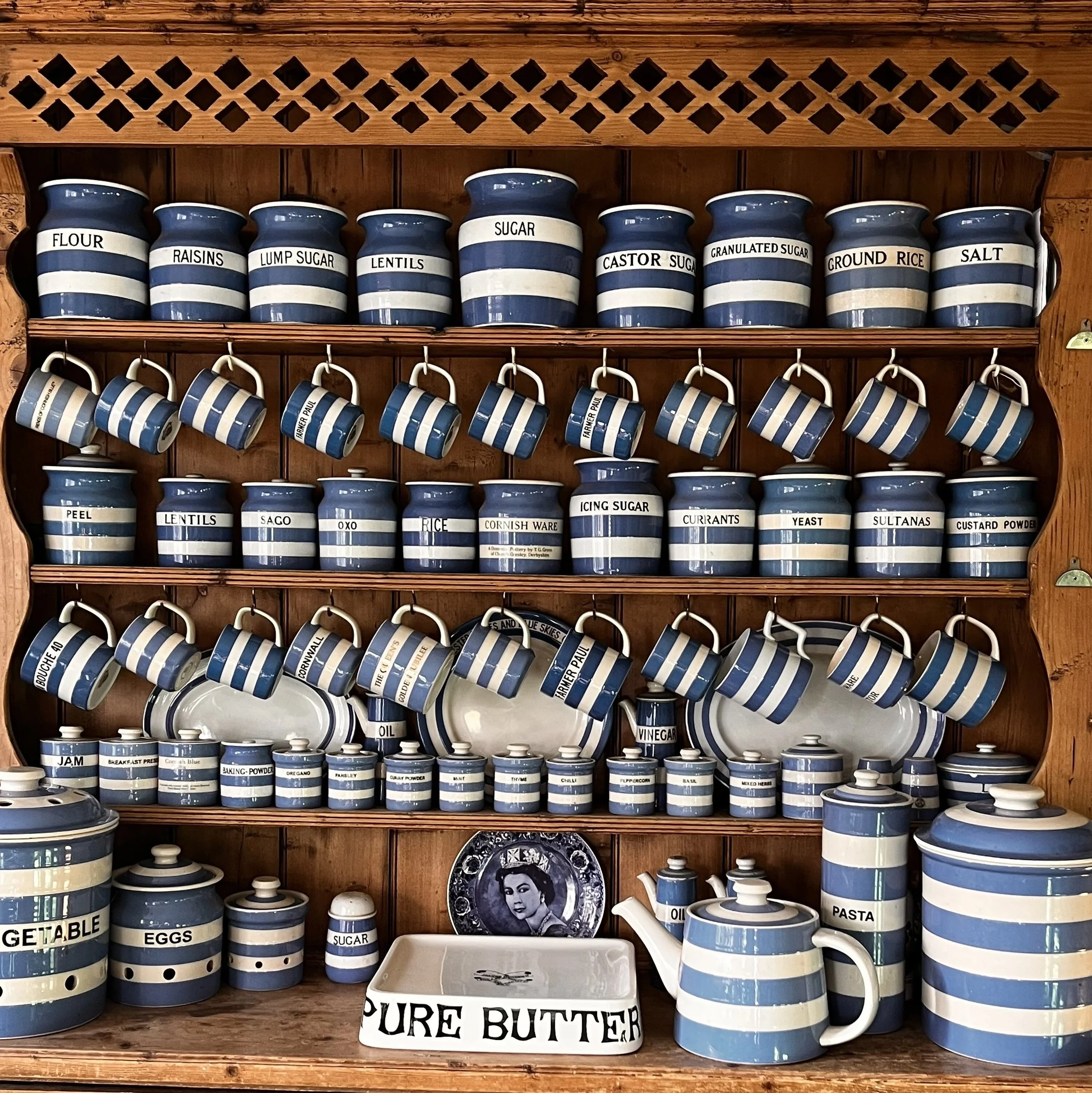
A potted history of blue-and-white pottery
Probably one of the most recognisable and most coveted pottery ranges of the last hundred years, Cornishware was once a staple in most homes and is still flying off the shelves today.
Its history is actually a bit of a love story. Thomas Goodwin Green had emigrated to Australia, having had his heart broken by one Mary Tenniel (sister of the illustrator of Alice’s Adventures in Wonderland, John Tenniel). He’d been nursing his heart while working as a telegraph pole erector when he had word that Mary had changed her mind about him and immediately upped sticks back to England. Tom was a man who knew what he wanted and didn’t need asking twice.
Whilst on honeymoon in Scarborough in 1862, he met a potter who was selling his business and offered it to him. Ever decisive, Tom snapped it up, decided to learn the trade and the rest is breakfast table history.
For many years, TG Green’s produced only very plain, utilitarian homewares, but following the first world war and the economic crisis that followed, the factory was down to two days a week and new work was urgently needed. The solution was the blue and white stripes that became known as ‘Cornishware’, allegedly in honour of the blue skies and white-crested waves of the Cornish coast. The clay was taken from Cornwall up to the potteries in Stoke on Trent, which worked out cheaper in terms of both materials and production.
By the 1930s, the white-and-blue-striped ceramics were cheering the breakfast and tea table in many homes. The business successfully weathered the hardships of World War Two and went from strength to strength but in 2007, the economic crash saw TG Green’s off and the company went into administration, closing its factory in Church Gresley.
But you can’t keep a cheery piece of crockery down for long. Having been produced abroad for some years, in 2017 the pottery began to be slowly repatriated, once again using Cornish clay, only this time the pottery was produced a factory in the West Country.
The products are now available in a range of cheery stripes in varying colours but we’re die-hard fans of the original Cornish blue.
How to spot a Cornishware fake
The popularity of Cornishware means it is often copied. If you’re buying secondhand from antiques stores or jumble sales, here’s how to spot a fake from the real thing.
Check the ‘back stamps’ on the back or underside. Fakes often have incorrect back stamps. Two common fake stamps are a triangle with the words ‘Gresley Ware’ inside or text reading T.G. Green & Co Gresley Ware’. Neither of those stamps was ever used by the company.
True Cornishware stamps differ according to their age. Cornishware from the 20s to 40s has a green maker’s mark of the church at Church Gresley. Most original Cornishware, however, has a black or green mark that is a shield with the factory name inside, crossed with the words ‘Cornish Kitchen Ware’.
Experts say you should be particularly wary of named storage jars - ‘flour’, ‘sugar’ etc as often the names were added later to make them appear to be more of a rarity.
The photograph above is by Paul Lawrence @diaryofacountryman, and is featured in our My Place pages in the January issue, which this month is all about dressers. The issue is in shops now.
Buy this month's The Simple Things -buy, download or subscribe