The Simple Things

Taking time to live well
  • Home
  • Subscribe
  • SHOP
  • Newsletter
  • About
  • Work with us
  • Home
  • Subscribe
  • SHOP
  • Newsletter
  • About
  • Work with us

Blog

Taking Time to Live Well

  • All
  • Chalkboard
  • Christmas
  • Competition
  • could do
  • Eating
  • Escape
  • Escaping
  • Fresh
  • Fun
  • gardening
  • Gathered
  • Gathering
  • Growing
  • Haikus
  • Interview
  • Living
  • Looking back
  • Magazine
  • magical creatures
  • Making
  • Miscellany
  • My Neighbourhood
  • Nature
  • Nest
  • Nesting
  • outing
  • playlist
  • Reader event
  • Reader offer
  • Shop
  • Sponsored post
  • Sunday Best
  • Think
  • Uncategorized
  • Wellbeing
  • Wisdom

Illustration: Lara Paulussen

How To | Shear a Sheep

Iona Bower November 16, 2021

Because you never know when you may be called upon to perform a skilled piece of animal husbandry

Just in case you ever find yourself, clippers in hand, being asked to give a sheep a short back and sides, here’s how to do it step by step. The Simple Things takes no responsibility for any mis-sheared sheep or injuries that befall you while shearing a sheep while following our instructions. Sorry.


1. First, catch your sheep

Approach the animal slowly and calmly but with a determined look in your eye that lets the sheep know who’s boss. We’ll assume you have chosen a dry day (you can’t shear wet wool) and that the sheep has fasted for a day, too; those things aren’t your concern. Herd the sheep to your shearing site with your arms and legs, then gently tip the sheep onto her back, holding her right leg in your right hand and the woolly top of the brisket with your left hand. She should have all four feet in the air, belly exposed, head turned to one side and be leaning back into your body with your legs supporting her shoulders. We never said this was a dignified process. 

2. Start shearing

Begin with the belly piece as this is dirtiest and worth the least money. You’re aiming to get the whole fleece off in one piece with the belly piece wrapped in the middle but it’s a bit like peeling an orange in one go - it takes practice - so just do your best. If you’re right handed, hold the shears in your right hand and use your left to pull the skin taut to avoid nicks. Start each blow (that’s the technical term for each ‘go’ with the shears) at the brisket (neck) end, and shear down to the flank (back legs). Take a blow down the left side, then the right side, then do the middle - like you do with painting your nails. 


3. Do the delicate bits

Shear around the crotch and down the inside of each hind leg by leaning right over the sheep, with her head still resting on your leg. Be very careful of her teats - cover them with your hand as you shear as it is possible to cut them right off and that won’t be a relaxing experience for you or the sheep. 


4. Mind the hind

Turn the sheep onto its right side and shear the outside of the left hind leg. Four blows should take you from the foot up to near the back bone. 


5. Tails you win

If the sheep has a tail, do it at this stage, shearing from tip to top and finishing with a short blow up the back at the base of the tail. 


6. More familiar ground: chest, neck and chin

Turn her side on to you, your right foot in between her hind legs and the left behind her back supporting her bottom. We hope you wore some old shoes for this… Hold her head under the chin with her head facing up at you. Try not to let her sad look make you feel awkward. Take the clippers from the brisket to just below the chin, ‘unzipping’ the fleece, and then up the face in short strokes, ending at the bottom of the ear and eye. 


7. Show a bit of leg

Again, shift her slightly onto her right side and lean over her to shear up her left leg and onto the left shoulder. Do inside the left foreleg while you’re here. 

8. The big mow

You’re on the home strait now and are about to shear the back. Lie her on her right side across your shin with your right foot placed between her back legs and your left foot under her shoulder. Starting at the tail, take long, steady blows up the back down her left side, beginning at the outside edge and working across to just past the spine. 

9. Home and hosed

Shift the sheep onto her left side and shear the rest of the neck and shoulders, then the right foreleg, from the shoulder, downwards.  Finally, shear the wool down her left back and side, from the neck towards her rear end, finishing with the right hind leg. Ta da! You’re done!


10. You should now skirt (clean) and roll the fleece ready for sale, but we think you’ve done enough. Give your hands a thorough wash, sit down for a well-deserved cuppa and reflect upon the fact that a pro shearer can do all that in under two minutes. We’re more at home with a knit one, purl one sort of endeavour if we’re honest. 

We were inspired to find out more about sheep-shearing after we read the Know A Thing or Two feature on wool in our November issue.

Buy this month's The Simple Things - buy, download or subscribe

More from our November issue…

Featured
Kelpies statue Alamy.jpg
November 2, 2021
Visit | Giant Statues
November 2, 2021
November 2, 2021
Wellbeing Sleep Stocksy.jpg
October 31, 2021
How to | Get to Sleep More Easily
October 31, 2021
October 31, 2021
Black Widow Cocktail 2.JPG
October 30, 2021
Tipple | Black Widow Cocktails
October 30, 2021
October 30, 2021

More things to know a thing or two about…

Featured
Dragon new.jpg
February 10, 2024
Outing | Hunting for Dragons
February 10, 2024
February 10, 2024
sheep.jpg
November 16, 2021
How To | Shear a Sheep
November 16, 2021
November 16, 2021
Bee_Illo.jpg
July 10, 2019
Hive mind | reviving a bee
July 10, 2019
July 10, 2019
In Think Tags wool, sheep, how to, katot, know a thing or two
Comment
Background image: Shutterstock

Background image: Shutterstock

A could-do list for October

Iona Bower September 26, 2021

Here’s our ‘Humble’ could-do list for this month. The idea behind a could-do list is that you can pick and choose which bits you want, do them all if you like, or just read and enjoy the idea. Or if you have your own ideas for a could-do list, get started on one of your own.

Buy this month's The Simple Things - buy, download or subscribe

More playlists…

Featured
Could do Feb.JPG
January 29, 2022
February | A Could-do List
January 29, 2022
January 29, 2022
Could do list.JPG
December 31, 2021
January | Could-do lists
December 31, 2021
December 31, 2021
Dec Could Do.JPG
November 20, 2021
A Could-Do List for December
November 20, 2021
November 20, 2021

More from our blog…

Featured
Churchyard Alexa Phillips.jpeg
May 23, 2026
Outing | Spend an Hour in a Churchyard
May 23, 2026
May 23, 2026
June Bloom playlist.png
May 22, 2026
Playlist | Bloom
May 22, 2026
May 22, 2026
Suma 2.jpeg
May 22, 2026
Sponsored Post | Bathe in Goodness with Suma
May 22, 2026
May 22, 2026
In Think Tags issue 112, could do
Comment
Photograph: Stocksy

Photograph: Stocksy

Etymology | Scrumping

Iona Bower September 25, 2021

Good words and what they mean. This month: the etymology (or ate-‘em-ology) of scrumping

It’s apple harvest time. But if you have a tree, make sure you get there before the scrumpers do. The practice of ‘scrumping’ for apples is as old as apple trees themselves but interestingly the term ‘scrumping’ doesn’t appear until 1886. 

Etymologists aren’t sure of its history but it’s thought to come either from a dialectical term meaning ‘something shrivelled or withered’ (which probably comes from the Middle Dutch, schrimpen) or from the adjective ‘scrimp’ which meant thrifty, and later morphed into the verb ‘to scrimp and save’ that we use today. 

Both theories are supported by the earliest meaning of ‘scrumping’ which referred not to actual stealing but simply to taking either windfalls or the smallest apples which were left on the trees after the apple harvest was over. So they’d be the slightly shrivelled apples no one wanted, and you’d save yourself money by taking them. 

Scrumping is, strictly speaking, illegal and one of those things that is charming and scampish when you are eight years old but tends to be frowned upon once you hit 28 years old. So if you’re going to do it, either take a child with you as cover, or do it on common land and call it ‘foraging’ instead. 

Oh, and one last word of caution: if you’re outside the UK, scrumping has a very different and slightly lewder meaning, so proceed with caution. Ask someone to scrumping with you and you might get invited in for more than apple crumble. 


Core values: Apple recipes for your illegal wares

If you’ve been scrumping (or just been to the farm shop) here are a few apple recipes from our blog that will soon see off a glut. 

Bircher Muesli with Cinnamon and Grated Apple

Barbecue Baked Apples

French Apple Tart

Crab Apple and Fennel Seed Leather

Apple Doughnuts

Crab Apple Whisky

Buy this month's The Simple Things - buy, download or subscribe


More from our blog…

Featured
Churchyard Alexa Phillips.jpeg
May 23, 2026
Outing | Spend an Hour in a Churchyard
May 23, 2026
May 23, 2026
June Bloom playlist.png
May 22, 2026
Playlist | Bloom
May 22, 2026
May 22, 2026
Suma 2.jpeg
May 22, 2026
Sponsored Post | Bathe in Goodness with Suma
May 22, 2026
May 22, 2026

More etymology…

Featured
Pitstone Mill Alamy.jpg
March 15, 2022
Etymology | Tilting at Windmills
March 15, 2022
March 15, 2022
Apples Stocksy.jpg
September 25, 2021
Etymology | Scrumping
September 25, 2021
September 25, 2021
Walnuts Kirstie Young.jpg
September 29, 2019
Etymology | juglandaceous
September 29, 2019
September 29, 2019


In Think Tags issue 112, apple, etymology, autumn
Comment
Photograph by @prettyprospectcottage

Photograph by @prettyprospectcottage

Inspiration | In The Bath

Iona Bower September 12, 2021

Rub a dub dub, ideas from the tub

Many of us find inspiration hits us when we’re soaking in the bath. In our busy lives, we don’t often get the chance to enjoy a few moments of quiet relaxation, and that’s often when ideas have the chance to bubble to the surface, along with the loofah. 

Here are a few notable people for whom the bath has been a place of inspiration. Have a read and perhaps you’ll be inspired to run a bath yourself and have a soak. 

Archimedes

The Greek scholar allegedly discovered displacement when he stepped in the bath and noted that the water level rose as he entered it, meaning the volume of water displaced must be the same as the volume of the object submerged. He was apparently so excited that (after shouting ‘Eureka!’) he ran naked through the streets of Syracuse. 

Sylvia Plath

The American poet found deep inspiration in the bath. Here she is writing in ‘The Bell Jar’ about how a bath solves everything. 

“There must be quite a few things a hot bath won’t cure, but I don’t know many of them. Whenever I’m sad I’m going to die, or so nervous I can’t sleep, or in love with somebody I won’t be seeing for a week, I slump down just so far and then I say : “I’ll go take a hot bath.”

I remember the ceiling over every bathtub I’ve stretched out in. I remember the texture of the ceilings and the cracks and the colors and the damp spots and the light fixtures. I remember the tubs, too : the antique griffin-legged tubs, and the modern coffin-shaped tubs, and the fancy pink marble tubs overlooking indoor lily ponds, and I remember the shape and sizes of the water taps and the different sort of soap holders. I never feel so much myself as when I’m in a hot bath…

The longer I lay there in the clear hot water the purer I felt, and when I stepped out at last and wrapped myself in one of the big, soft white hotel bath towels I felt pure and sweet as a baby.”

Shigeru Miyamoto

The legendary games designer had a vintage bath tub as a perk at his office at Nintendo. During a highly stressful work period for him in the 1980s when he was under pressure to come up with a game, his bath inspired him to design Donkey Kong. We’re not sure what the links between baths and donkeys is, but we can see how it might have inspired his next great game, featuring two plumbers now known to the world as Mario and Luigi. 

Agatha Christie

Is said to have found inspiration for her crime novels while soaking in the tub and eating apples. She’d often be there so long she’d end up surrounded by a ring of apple cores discarded around the edge of the bath. 

Douglas Adams

The author of The Hitchhiker’s Guide to the Galaxy loved a bath and often found ideas there. His old flatmate has often reminisced about Adams’ hour-and-a-half-long baths, and the fact that if he wasn’t in one, he was just out of one, or about to get into one. 

Winston Churchill

The former Prime Minister was a lover of long and frequent baths and is said to have strategised for World War Two from the bath. 

Benjamin Britten

Composer Benjamin Britten is said to have religiously taken a freezing cold bath in the mornings and a scalding hot one at night. We can’t say it <definitely> helped with his Piano Concerto, but it surely can’t have done any harm?

Steve Jobs

Ok, it’s not strictly a bath but needs must when you’re launching Apple Inc. Steve Jobs is said to have found a little quiet and relaxation in the loos at Apple, dangling his feet into the toilet bowl to give them a soak. 

The beautiful bath (and dog) pictured above are one of the bathrooms featured on our My Place feature in our September issue. Find more inspirational places to soak starting on p112 of the issue.

Buy this month's The Simple Things - buy, download or subscribe


More from our September issue…

Featured
Churchyard Alexa Phillips.jpeg
May 23, 2026
Outing | Spend an Hour in a Churchyard
May 23, 2026
May 23, 2026
June Bloom playlist.png
May 22, 2026
Playlist | Bloom
May 22, 2026
May 22, 2026
Suma 2.jpeg
May 22, 2026
Sponsored Post | Bathe in Goodness with Suma
May 22, 2026
May 22, 2026

More bathroom inspiration…

Featured
@honeyjoyhome bath.jpeg
April 10, 2025
Science | Archimedes' Principle Explained
April 10, 2025
April 10, 2025
Bathsalts make 2.jpg
October 30, 2022
Make | Homemade Bath Salts
October 30, 2022
October 30, 2022
bath with dog my place.jpg
September 12, 2021
Inspiration | In The Bath
September 12, 2021
September 12, 2021
In Think Tags issue 111, bathtime, bath
Comment
Photograph by @snelle_mail

Photograph by @snelle_mail

Lists | Famous Penfriends

Iona Bower June 15, 2021

In our June issue we celebrate the joy of penpal letters. Here are a few famous penpals whose correspondence we’d love to sneak a look at…


JRR Tolkien and CS Lewis

Tolkien and Lewis were great mates and kept up the friendship via letters, too. Though both rather serious literary figures, apparently their letters were full of fun. 

Catherine The Great and Voltaire

Even rulers and philosophers need to unburden themselves sometimes. This pair corresponded for some 15 years. 

PG Wodehouse and Agatha Christie

Showing it’s never too late to get a penpal, Wodehouse and Christie began their correspondence when he was 88 and she was 79. They were both huge fans of the other’s work. 

Charles Darwin and Joseph Hooker

Darwin wrote to botanist, Hooker, for many years, even setting out his early idea that animal species ‘might not be immutable’ years before he wrote about evolution fully in On The Origin of Species. 

Henry James and Edith Wharton

These two great novelists corresponded for most of their adult lives, unburdening themselves about their personal troubles in letters (Wharton had an unhappy marriage and James suffered with depression). 

Vincent and Theo Van Gogh

The artist was a prolific letter writer, but the person he wrote to most frequently was his brother Theo, who kept them all carefully, and many of them can still be read today. Sadly, his less careful brother Vincent destroyed most of Theo’s letters back to him. There’s brotherly love for you.


Read more about penfriends, how to find them, what to write to them and more in our June issue, on sale now.

Buy this month's The Simple Things - buy, download or subscribe
More from our June issue…

Featured
Churchyard Alexa Phillips.jpeg
May 23, 2026
Outing | Spend an Hour in a Churchyard
May 23, 2026
May 23, 2026
June Bloom playlist.png
May 22, 2026
Playlist | Bloom
May 22, 2026
May 22, 2026
Suma 2.jpeg
May 22, 2026
Sponsored Post | Bathe in Goodness with Suma
May 22, 2026
May 22, 2026

More letter-writing inspiration…

Featured
Letter writing Stocksy.jpeg
April 21, 2026
History | Letters that Changed the World
April 21, 2026
April 21, 2026
ElenaAbraham_IMG_5405_small @snelle_mail.jpg
June 15, 2021
Lists | Famous Penfriends
June 15, 2021
June 15, 2021
Postcards Alamy.jpg
August 11, 2020
Wish you were here
August 11, 2020
August 11, 2020
In Think Tags letters, penfriends, writing
Comment
Photography: Fanni Williams/tillyandthebuttons.com

Photography: Fanni Williams/tillyandthebuttons.com

Design | characters who rock a stripe

Iona Bower May 11, 2021

How a Breton top gives anyone a bit of an edge

Striped tops have become a wardrobe staple for many of us in recent years, but no matter how ubiquitous they become, they always make us think of a few famous stripes wearers.

Funnily enough, despite stripes being fairly commonplace now, there’s always something about a fictional character who rocks a stripe. They tend towards the unorthodox and rebellious. In Medieval Europe a stripe was a symbol of disorder and also difference, worn only by societal outcasts such as lepers, hangmen and clowns. So perhaps that’s one reason why characters who are a little ‘outside’ the bounds of normal are often portrayed in stripes. That, and the fact that we all know they just look cool, of course. 

Here are a few characters from fiction, film and television, who must have earned their stripes in the stripes-wearing stakes. 

Dennis the Menace

Dennis’s stripes have a long history. When he was first drawn in 1951 he had plain clothes and just a striped tie. Just a few months later the black-and-white tie became a black-and-white jumper and only a few months after that did the jumper become the signature black and red Dennis is famous for.  

Pippi Longstocking

Astrid Lindgren’s curious, kind and superhumanly strong nine year old character, Pippi Longstocking has become sort of synonymous with stripes, though we remember her most for her knee-length, mismatched stripy socks. 

Ernie and Bert from Sesame Street

Rocking a stripe in completely opposite ways, Ernie’s stripes are horizontal like his big wide smile, while Bert’s are vertical, like his long face. But they complement each other perfectly. 

Where’s Wally?

Known for his red-and-white-striped jumper, as well as his red-and-white beanie and round specs, Wally is drawn by Martin Handford, usually tiny and surrounded by other red-and-white-striped things so as to make finding Wally trickier. 

The Cat in the Hat

Also sporting red and white stripes but far more ostentatious is Dr Seuss’s The Cat in the Hat, a six-foot-tall cat wearing a red-and-white-striped top hat. As if a massive, rhyming cat with a paunch might otherwise go unobserved...

Bee from Ant and Bee

Another character from children’s fiction who must be mentioned for their stripes is Angela Banner’s Bee from the Ant and Bee books. Although we’re not sure whether or not Bee counts as rocking a stripe, since he is stark naked and his stripes are all natural. Does that make him <more> stripy for being striped to his very core? Or less stripy because he didn’t choose his stripes? These are the sorts of big questions we are unafraid to ask here at The Simple Things. 

The chaps from O Brother Where Art Thou?

Literally rocking a stripe are Ulysses, Delmar and Pete, who escape in their prison stripes from a chain gang, head off in search of buried treasure and have an accidental hit record as The Soggy Bottom Boys. There’s something about those stripy prison slacks that looks a bit cooler in O Brother Where Art Thou’s faded sepia tones, too. 

Betelgeuse

In his vertical black and white striped suit there’s no mistaking Tim Burton’s obnoxious poltergeist. He might not have got away with that outfit in life, but he certainly cuts a dash in those stripes now he’s dead. Which just goes to show how a stripe really can lift any outfit. 

You can read more about the stripy Breton top in our Wearing Well series on page 83 of the May issue.

Buy this month's The Simple Things - buy, download or subscribe


More from our May issue…

Featured
Almost Wild.jpg
May 22, 2021
How to | Go (Almost) Wild Camping
May 22, 2021
May 22, 2021
westcross_property_renovation1.jpg
May 18, 2021
Ways to spend time in a window seat
May 18, 2021
May 18, 2021
Rhubarb Mimosa.jpg
May 15, 2021
Tipple | Rhubarb Mimosas
May 15, 2021
May 15, 2021

More musings on style…

Featured
Churchyard Alexa Phillips.jpeg
May 23, 2026
Outing | Spend an Hour in a Churchyard
May 23, 2026
May 23, 2026
June Bloom playlist.png
May 22, 2026
Playlist | Bloom
May 22, 2026
May 22, 2026
Suma 2.jpeg
May 22, 2026
Sponsored Post | Bathe in Goodness with Suma
May 22, 2026
May 22, 2026
In Think Tags issue 107, style, stripes, fun
Comment
Photograph: Alamy

Photograph: Alamy

Music appreciation | The Flight of the Bumblebee

Iona Bower April 17, 2021

Join us for a brief music lesson on Rimsky-Korsakov’s 1900 composition The Flight of the Bumblebee and find out what all the buzz was about

The fast and frenetic Flight of the Bumblebee is probably one of the most loved and recognised pieces of music in the classical canon. Obviously, it’s intended to imitate the noise and flight pattern of a bee. But here are a few more facts about it so that if it’s ever played in your presence you can nonchalantly comment on it and look very clever indeed. 


Why was it written?

It’s actually just a very small part of an opera called The Tale of Tsar Saltan. Flight is an interlude between scenes one and two of Act Three. 

What’s it all about, then?

At this point in the opera, Gvidon has been separated from his father, but an enchanted swan, whose life he once saved, turns him into a bumblebee so he can fly to find him. 

Which instruments can I hear?

It’s been played by many different ensembles, but chances are you can hear a lot of strings (mainly violins) and a flute and piccolo. Originally it was written for a symphonic orchestra. 

What should I be listening for?

Note the unusually fast tempo, which never slows, and actually becomes more frenetic as the piece moves towards its end. It’s made up of running chromatic semiquavers (sixteenths of a note), which give the buzzing, humming effect. 

Have I heard this somewhere else?

Definitely. Artists of all kinds have sampled and referenced it over the years. It’s appeared in the computer game Tetris, in a Bob Dylan track, and it even appeared in the pilot episode of The Muppets. 

Do say… “Rimsky-Korsakov’s composition really is a stunning piece of violin virtuosity. Doesn’t it just lift the soul?”

Don’t say… “Oh. LOVE a bit of Rip Your Corsets Off. Pass the fiddle, I can play a passable version myself, I reckon.”

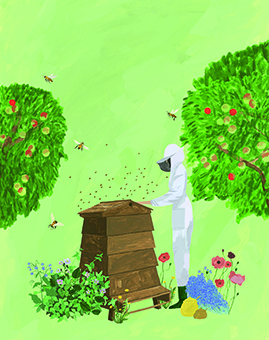
The beautiful bumblebee picture above was used on our subscriptions page this month, which you can find out more about by clicking the subscription link below. .
Buy this month's The Simple Things - buy, download or subscribe
From our April issue…

Featured
@Kemitelford pockets.JPG
April 18, 2021
Quiz | What's in my pocket?
April 18, 2021
April 18, 2021
Alamy (mention subs ad).jpg
April 17, 2021
Music appreciation | The Flight of the Bumblebee
April 17, 2021
April 17, 2021
Courtesy of Mills and Boon.jpg
April 11, 2021
Why we love | ridiculous romantic novel titles
April 11, 2021
April 11, 2021

More musical appreciation…

Featured
@the.narrows.project 2.jpeg
March 22, 2025
Outing | Music Rooms
March 22, 2025
March 22, 2025
Bananarama_gettyimages.jpg
July 4, 2021
Fact file | Bananarama
July 4, 2021
July 4, 2021
Playlist.JPG
June 17, 2021
Playlist | Leaders of the Pack (girl bands)
June 17, 2021
June 17, 2021


In Think Tags issue 106, music, bees
Comment
@nicguymer japanese doll collection.JPG

Why collecting is self caring

Iona Bower February 20, 2021

Thought yoga and meditation were the way to happiness, health and enlightenment? You might find your collection of Cornishware or coins is just as effective

Collecting often gets a bad name psychologically, with many believing that people collect in order to fill a hole that is missing in their lives, perhaps things they weren’t able to have as a child, or were unable to afford previously. There’s also a school of thought that collecting is something built deep within us, as a way of displaying to potential mates all our many and glorious possessions. And don’t ask Freud about his theory on collecting, unless you have a strong stomach. 

But psychologists now believe that there may be many positive benefits to collecting. And we’ve collected a few of them here:

Collecting can make you happy
Hunting for something and finding it, whether it’s a rare stamp, part of a coffee set, or a teddy bear, gives us a sense of joy. And having something new and beautiful in our homes is always a pleasure. We tend to collect things we love so having those things around us increases our happiness. 


Collecting can create community
Whether you’re attending conferences and collectors’ fairs in person or simply talking to others online about your collection, a collection can give you a link to others with the same passion and perhaps even create new friendships. It also gives us a sense of belonging to something bigger than ourselves.


Collecting can reduce anxiety
Spending time absorbed in any activity, such as arranging your collection or searching out new finds is a stress reducer. It allows you to escape from everyday life and focus completely on something else. 

Collecting allows us to be childlike
Children tend to be more natural collectors than adults, and peak ‘collector’ age is about 10. It’s something we tend to do more when we have lots of time on our hands, so children, people who have retired and, let’s face it, quite a lot of us in lockdown, are bigger collectors, and it’s lovely to rediscover that pleasure and pride we took in collections as children; like stepping back to a simpler time. 

Collecting improves our knowledge and brain function
As well as the obvious increase in knowledge about your subject area, being a collector helps with memory function and brain power, as you stretch your grey cells, remembering facts, dates and where you put that Penny Black...

You can meet more collectors in this month’s My Place pages which feature some beautiful collections from Instagram. such as the one by Nicky Guymer @somedaystuidio.co.uk pictured above.


Buy this month's The Simple Things - buy, download or subscribe

More from our February issue…

Featured
Churchyard Alexa Phillips.jpeg
May 23, 2026
Outing | Spend an Hour in a Churchyard
May 23, 2026
May 23, 2026
June Bloom playlist.png
May 22, 2026
Playlist | Bloom
May 22, 2026
May 22, 2026
Suma 2.jpeg
May 22, 2026
Sponsored Post | Bathe in Goodness with Suma
May 22, 2026
May 22, 2026

More collections…

Featured
@nicguymer japanese doll collection.JPG
February 20, 2021
Why collecting is self caring
February 20, 2021
February 20, 2021
Inside Issue 8: meet this month's collector
April 8, 2013
Inside Issue 8: meet this month's collector
April 8, 2013
April 8, 2013
Inside The Simple Things Issue 7: the Collector
February 26, 2013
Inside The Simple Things Issue 7: the Collector
February 26, 2013
February 26, 2013


In Think Tags collector, commections, think
Comment
Adrian Mole.jpeg

Life lessons | from Adrian Mole

Iona Bower February 7, 2021

We can learn all sorts of life lessons from a peek at the pages of someone’s diary (particularly those of teenaged intellectuals, of course). 

Stuck at a crossroads in life, or struggling with a moral conundrum? Look no further than the diaries of our favourite young Intellectual. Adrian Mole, who always has words of wisdom, whether you’re struggling with a friend who has become a punk or a lack of correspondence from Malcolm Muggeridge. 

When simple pleasures present themselves, make the most of them and store them away in your memory to cheer you another time. 

“At four o’clock I had one of those rare moments of happiness that I will remember all my life. I was sitting in front of Grandma’s electric coal fire eating dripping toast and reading the News of the World. There was a good play on Radio Four about torturing in concentration camps. Grandma was asleep and the dog was being quiet. All at once I felt this dead good feeling.”


Living an authentic life is important, but sometimes warmth and comfort are more vital still.

“Nigel is a punk at weekends. His mother lets him be one providing he wears a string vest under his bondage T-shirt.”


Looking after your body will improve energy levels but so much of it is about taking good care of your wellbeing, too. 

“My skin is dead good. I think it must be a combination of being in love, and Lucozade.”


Home is where the heart is but often it pays to expand one’s horizons if adventure is what you want. Just be sure it is what you want. 

“I have never seen a dead body or a female nipple. This is what comes from living in a cul de sac.”


To have a real chance at achieving your dreams, you should plot a route backwards from where you want to be to where you are now. And play to your strengths.

“Had a long talk with Mr Vann the Careers teacher today. He said that if I want to be a vet I will have to do Physics, Chemistry and Biology for O level. He said that Art, Woodwork and Domestic Science won’t do much good. I am at the Crossroads in my life. The wrong decision now could result in a tragic loss to the veterinary world.”


Don’t waste your time on things you think you should like; life is short and there are many things out there that will give your pleasure. 

“I think Jane Austen should write something a bit more modern.”


Only give for the joy of giving, rather than the prospect of receiving thanks.

“I remembered my resolution about helping the poor and ignorant today, so I took some of my old Beano annuals to a quite poor family who have moved into the next street. I know they are poor because they have only got a black and white telly. A boy answered the door. I explained why I had come. He looked at the annuals and said, ‘I’ve read ’em,’ and slammed the door in my face. So much for helping the poor!”


Remember that ‘there but for the grace of God… before criticising others’

“My grandma let the dog out of the coal shed. She said my mother was cruel to lock it up. The dog was sick on the kitchen floor. My grandma locked it up again.”


We’re all allowed to have off days, so don’t be hard on yourself. Especially if you are extraordinary. 

 “I still haven’t heard from Malcolm Muggeridge. Perhaps he is in a bad mood. Intellectuals like him and me often have bad moods. Ordinary people don’t understand us and say we are sulking, but we’re not.”


Whatever the situation, your grandmother was probably right about it. 

“Grandma rang and said that it was all around the Evergreens that I was ‘keeping bad company’. She made me go round for tea.”


We were inspired to turn to Mole after reading our feature Dear Diary, about great diarists in our February issue, which is on sale now.

Buy this month's The Simple Things - buy, download or subscribe


More from our February issue…

Featured
Back page.JPG
February 23, 2021
February | a final thought
February 23, 2021
February 23, 2021
Prawn Toasts Catherine Frawley.JPG
February 9, 2021
Recipe | Sesame Prawn Toasts
February 9, 2021
February 9, 2021
Bodkincreates.jpg
February 3, 2021
Where to buy | espresso cups like the ones on our February cover
February 3, 2021
February 3, 2021

More wisdom for intellectuals (and book lovers)…

Featured
Librarians Getty.jpeg
May 14, 2026
Reading | What librarians mean to me
May 14, 2026
May 14, 2026
Book trails Alamy.jpeg
March 5, 2026
Outing | Book-based trails to follow
March 5, 2026
March 5, 2026
Alamy Tower.jpeg
January 6, 2026
Fiction | Top Towers from Books
January 6, 2026
January 6, 2026
In Think Tags issue 104 Issue 104, diaries, diary, books, literature
Comment
Illustration: Jessica Hayman

Illustration: Jessica Hayman

Project | Uncover the History of your Home

Iona Bower January 5, 2021

If you’ve ever thought about tracing your family tree, you might like to research the history of your home

Whether you live in a mediaeval pile or are the first owners of your new build, there’s plenty of detective work to be done finding out about previous owners or the history of the land your home is built on. In our January issue, house historian Melanie Backe-Hansen has written about the joy of getting to know your home’s heritage and how to get started.

If you’re inspired but unable to get out much at the moment, here are a few things you can do online to make a start on your research. You can read the whole feature on page 100 of the January issue, in shops and available from our online store now.

Maps
Start with the historic Ordnance Survey maps online, which were produced from the 1860s and then periodically through to the late 20th century. A wide selection for England, Scotland, and Wales can be viewed at the National Library of Scotland (maps.nls.uk).

Local history
Find out about the development of the area over time or even provide clues as to why and when your house was built. Start with British History Online (british-history.ac.uk).

1939 Register
A census taken in the first month of the Second World War providing valuable details of residents. Available on subscription sites ancestry.co.uk and findmypast.co.uk.

Census (1841-1911)
Taken every ten years, they record all those resident in the house on census night, with details of family relationships, occupations, and ages. Also found on findmypast. co.uk and ancestry.co.uk.

Newspapers
Search for your house, former occupants, plus events, through historic newspapers. An increasing amount of information can be unearthed by searching britishnewspaperarchive.co.uk.

Land Registry
This department is responsible for registering the ownership of property in England and Wales. A title register can provide details of recent ownership and, in some cases, historic details going back decades. Go to the official website at gov.uk/government/ organisations/land-registry.

Buy this month's The Simple Things - buy, download or subscribe
More from our January issue…

Featured
Back cover.JPG
January 27, 2021
January | a final thought
January 27, 2021
January 27, 2021
Seaweed alamy.jpg
January 16, 2021
Nature | Seaweed Weather Forecasting
January 16, 2021
January 16, 2021
Tinker and Fix_June20_114.jpg
January 12, 2021
Organise | an excellent toolbox
January 12, 2021
January 12, 2021

More domestic histories…

Featured
detectorists.jpeg
April 14, 2026
How to | Hunt Buried Treasure
April 14, 2026
April 14, 2026
Dolls house.jpg
September 14, 2023
A Brief History | Dolls' Houses
September 14, 2023
September 14, 2023
We Are History.jpg
August 26, 2023
Think | We are history
August 26, 2023
August 26, 2023
In Think Tags history, homes, January, issue 103, Issue 103
Comment
Could do.JPG

January | a could-do list

Iona Bower January 1, 2021

We hope you might find some inspiration in our January ‘snug’ could-do list.

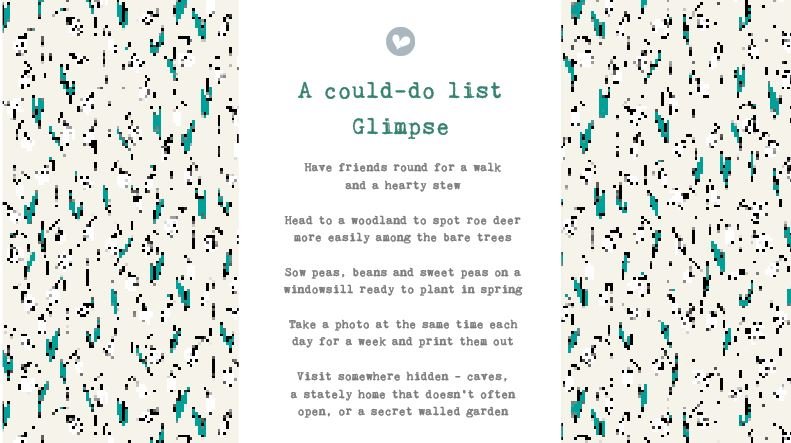
Here at The Simple Things we don’t believe in ‘to-do lists’ and all their associated pressures. But we are very much in favour of could-do lists… ideas for things we might see, do, experience or make. Much of the joy of them is simply in the anticipation. It doesn’t matter if you do them or not. The act of creating a list and mulling it over is pleasurable in itself.

And there’s never a better time thatn January to make your own could-do list, with a new month, a new year and a metaphorical blank page in front of you. Borrow some ideas from ours, make your own, or just read and enjoy. And share yours with us below if you’d like. What could you do this January ?

Wishing you a very snug and hopeful 2021, from all of us at The Simple Things.

Buy this month's The Simple Things - buy, download or subscribe
More from our January issue…

Featured
Back cover.JPG
January 27, 2021
January | a final thought
January 27, 2021
January 27, 2021
Seaweed alamy.jpg
January 16, 2021
Nature | Seaweed Weather Forecasting
January 16, 2021
January 16, 2021
Tinker and Fix_June20_114.jpg
January 12, 2021
Organise | an excellent toolbox
January 12, 2021
January 12, 2021

More could-do lists…

Featured
Could do Feb.JPG
January 29, 2022
February | A Could-do List
January 29, 2022
January 29, 2022
Could do list.JPG
December 31, 2021
January | Could-do lists
December 31, 2021
December 31, 2021
Dec Could Do.JPG
November 20, 2021
A Could-Do List for December
November 20, 2021
November 20, 2021
In Think Tags could do, issue 103, Issue 103, January, new year
Comment
@finepreserversbooks Bookshelves.jpeg

Think | Bookshelf psychology

Iona Bower December 28, 2020

Photograph courtesy of @finepreserversbooks

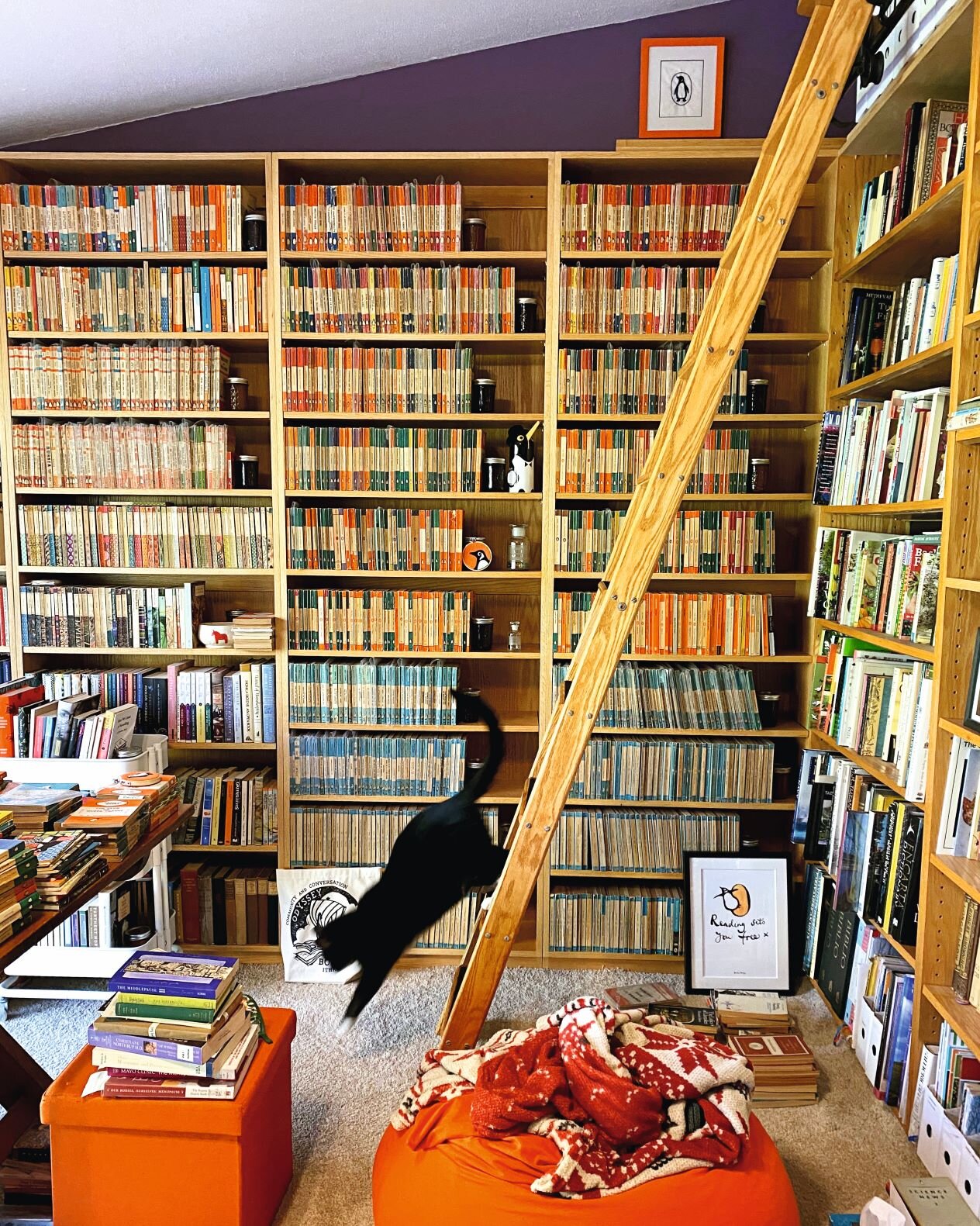
Looking through someone’s books can tell you so much about them, but the way in which you organise those books may say as much about you as the books themselves. Which of these bookshelf styles is yours and what does it tell passing visitors about you?

The Colour Co-ordinator

Colour co-ordinated bookshelves speak of someone who regards their books as part of their decor. Colour Co-ordinators have occasionally been derided by bookshelf psychologists and accused of caring more about the look of their books than what’s inside them. But often it’s more about making books part of your home and displaying them almost as art, rather than simply something to be shelved. 

The Alphabetical Arranger

If it’s good enough for bookshops, it’s good enough for us. The big question is: do you go full alphabeticisation or do you organise alphabetically, within genre? And do you alphabetise your genres, too, from Adventure down to Young Adult, or is that overkill? Either way, Alphabetical Arrangers tend to be neat and tidy types who like a simple system that enables them to lay their hands on what they want immediately. 

The Genre Grouper

Organising your books by type is probably the purist’s way, being closest to the Dewey Decimal system. It makes sense, after all, to have all your crime novels together, biographies nestling side by side and nature writing cosying up in the same corner. Those who organise by genre tend to be wide readers (those of us who only read chick lit clearly have no need of such methods) and they tend to be really thoughtful and scientifically minded. If you’re the sort of person who sees the inherent evil in having Jeffrey Archer cuddling up to Aristophanes you might well be a Genre Grouper. If you can’t see the inherent evil in that, you might want to take a good hard look at yourself.

The Chronological Curator

There are two methods of organising your books chronologically. One is to shelve by date of publication, so Greek myths at one end, the latest Val McDermid at the other. The other is to shelve by date you bought them. Now, bear with us, because this isn’t as mad as it sounds. If you’re someone who easily forgets author names or book titles, you might find you can more easily remember that you read a book on a certain holiday back in 2011, or that someone bought you a particular book for Christmas last year. It makes a kind of logical sense in a way. Either way, Chronological Curators are usually mathematical, ordered types. They think in a linear way but aren’t without romance where books are concerned, after all, there’s something lovely about seeing the whole of your book collection laid out like a timeline - of either literary history or your own personal reading history. 

The Slapdash Stacker

Eschewing organisation in favour or a more ‘organic’ way of storing books, these types stack their books both vertically and horizontally, creating a higgeldy piggeldy but joyous library. You might assume a Slapdash Stacker is not a lover of books but often this method of book storage is used by real reading fanatics, who find that other methods are simply too restrictive. If a tall hardback doesn’t fit where it should on its genre shelf, where does one put it? And if your ‘H’ shelves are packed but you’ve bought a new Joanne Harris, you’ll have to get rid of a Mark Haddon, which might be very upsetting. Whereas if you’re a Slapdash Stacker, there’s always room for one more book… somewhere… 

The Pages Out Proponent

If you’ve not come across this phenomenon, you might want to sit down for this one. Suddenly fashionable is storing your books with the spines turned in so that only pages face outwards, giving a uniform look… but meaning you can’t actually see any of the titles. Defendants of this method claim that actually in centuries gone by, titles were often printed on the side of the cut pages rather than on the spine, so it makes a kind of sense. We don’t like to be prescriptive but this is patently nonsense. We are not in the 16th century and people who stack their books this way are perverse. <gavel>

If you love looking at other people’s bookshelves as much as we do, don’t miss our My Place feature in our January issue, in which we feature some of the most beautiful bookshelves we’ve seen, such as this one, pictured above by Maureen of @finepreserversbooks.

Buy this month's The Simple Things - buy, download or subscribe
More fun for bookworms…

Featured
Librarians Getty.jpeg
May 14, 2026
Reading | What librarians mean to me
May 14, 2026
May 14, 2026
Book trails Alamy.jpeg
March 5, 2026
Outing | Book-based trails to follow
March 5, 2026
March 5, 2026
Alamy Tower.jpeg
January 6, 2026
Fiction | Top Towers from Books
January 6, 2026
January 6, 2026

More from our January issue…

Featured
Back cover.JPG
January 27, 2021
January | a final thought
January 27, 2021
January 27, 2021
Seaweed alamy.jpg
January 16, 2021
Nature | Seaweed Weather Forecasting
January 16, 2021
January 16, 2021
Tinker and Fix_June20_114.jpg
January 12, 2021
Organise | an excellent toolbox
January 12, 2021
January 12, 2021
In Think Tags issue 103, Issue 103, books, bookshelves, my place
Comment
Photography: The Happy Newspaper/Widdop

Photography: The Happy Newspaper/Widdop

Seeking out | Happy news

Iona Bower November 7, 2020

Good news is all around us, if you just know where to look

In our November issue we met Emily Coxhead (pictured), founder of The Happy Newspaper, along with several other inspirational ‘shiny, happy people’ whose job it is to put a smile on your face. 

With the world as it is, there’s never been a better time to look for good news, so we’ve collated a list of a few places you can go to find it. 

1. The Happy Newspaper

As a self-described ‘platform to share positive news and wonderful people, there’s lots to make you smile here. Visit The Happy Newspaper to buy online or find your nearest stockist. They even sell ‘happy confectionery’ should you feel in need of a really strong dose of happy. 


2. Positive News

A magazine and a movement that aims to change the world for the good. It is published in print every quarter and daily online and you can buy a copy through our own online shop, picsandink.com. Find our more at Positive News. 


3. The Good News Network

A US-based website with good news, lifestyle and business stories to cheer your day. The Good News Network. They also publish the GNN Podcast, which is a happy treat for your ears. 

4. BBC Uplifting Stories

Even Auntie is getting in on the happy news act now, with a special section on BBC News’s website for stories to uplift. Find them at the BBC website and search uplifting news. .


5. Squirrel News

Why squirrels, you ask? Well why not, we say. But also, they pick only the most nourishing nuts to store away, not the ones that will do them no good. And that’s what Squirrel News, based in Berlin, does too. Visit them here: squirrel-news.net. 


Buy this month's The Simple Things - buy, download or subscribe

More from our November issue…

Featured
Fire Jonathan Cherry.JPG
November 5, 2020
Fun | Games to play around a fire
November 5, 2020
November 5, 2020
Cattern Cakes Kirstie Young.jpg
November 3, 2020
Recipe | Cattern Cakes
November 3, 2020
November 3, 2020
Seed packets Emma harris.jpg
November 1, 2020
Make | Personalised Seed Packets
November 1, 2020
November 1, 2020

More happy news…

Featured
HappyNews  The Happy NewspaperWiddop.jpg
November 7, 2020
Seeking out | Happy news
November 7, 2020
November 7, 2020
SIM76.POSITIVENEWS_Must credit Jo Emmerson.png
October 9, 2018
Positive News from around the world | Balancing the books
October 9, 2018
October 9, 2018
positive news.png
September 6, 2018
Positive News from around the world
September 6, 2018
September 6, 2018


In Think Tags positive news, positive thinking, happy
Comment
Photography by @designermumetc

Photography by @designermumetc

Potted Histories | The Kilner Jar

Iona Bower October 17, 2020

Kilner jars are a staple of the nation’s larders. We thought we’d lift the lid on their history

The Kilner company was originally established as a bottle manufacturer, with the Kilner Glassworks being founded by John Kilner in 1842 in Thornhill Lees, West Yorkshire, making bottles and apothecary items. The company passed to Kilner’s four sons on his death and continued to be hugely successful, even accepting an award at The Great Exhibition in 1862 for innovation in glassmaking. 

But in 1871 the company was taken to court over the coal smoke that billowed from its chimneys, polluting the neighbouring land. The judge ruled that ‘no man has the right to interfere with the supply of clean air.’ The factory was forced to close temporarily in order to convert to gas furnaces but managed to get back on its feet, even investing in new mechanisation as the end of the century loomed.

It wasn’t until 1900 that Kilner produced its first jar with its famous patented vacuum seal, still recognisable to bottler and preservers today. But in the first decades of the 20th century, competition in the industry saw Kilner suffer and eventually in 1937 the company went bankrupt and the patents and were sold to United Glass Bottle Manufacturers. 

Despite the business leaving the hands of the Kilner family, the jar itself went from strength to strength. In the 1960s the first Kilner jars with metal discs and screw bands were introduced and in the 1970s replaced with a less attractive but very practical plastic screw band. 

In 2000 the Rayware Group bought the patent, design and trademark for the original Kilner jar and today the range includes everything from infusion jars to make-and-take Kilners for picnics, and specially designed tops for every job from butter-churning to spiralizing. 

So next time you’re bottling tomatoes or packing up your salad lunch, consider that you’re screwing the lid onto a Victorian miracle and 120 years of glassmaking history.

In our October issue, we’ve curated a few pages of photographs of lovely larders, including the one above by @designermumetc.

Buy this month's The Simple Things - buy, download or subscribe

More from our October issue…

Featured
Churchyard Alexa Phillips.jpeg
May 23, 2026
Outing | Spend an Hour in a Churchyard
May 23, 2026
May 23, 2026
June Bloom playlist.png
May 22, 2026
Playlist | Bloom
May 22, 2026
May 22, 2026
Suma 2.jpeg
May 22, 2026
Sponsored Post | Bathe in Goodness with Suma
May 22, 2026
May 22, 2026

Things to make and put in jars…

Featured
March 14, 2021
Recipe: Goose egg lemon curd
March 14, 2021
March 14, 2021
Kilner.JPG
October 17, 2020
Potted Histories | The Kilner Jar
October 17, 2020
October 17, 2020
seville-and-blood-orange-marmalade-recipe.png
January 12, 2019
Recipe: Seville and Blood Orange Marmalade
January 12, 2019
January 12, 2019
In Think Tags larders, larder, kilner jars, preserving, history
Comment
Picture courtesy of National Trust picture library

Picture courtesy of National Trust picture library

Top ten National Trust ghosts

Iona Bower September 12, 2020

Spooks, spirits and scones: the National Trust boasts a cast of hundreds of ghosts

In our September issue, we’ve taken a look at national treasure, The National Trust, in its 125th year, and delved into some of the houses’ lesser known residents. So we thought we should also celebrate some of the properties’ former residents who are still hanging around the hallowed halls and creepy corridors of NT properties. Here are our top ten favourite National Trust Ghosts:

1 The Roman Soldiers at Treasurer’s House

A legion of weary soldiers has been spotted a couple of times in the cellars at Treasurer’s House in York, the most interesting being in 1953 when a chap installing boilers in the cellar saw a line of filthy, weary soldiers emerge from the wall. They wore green tunics and had round shields - both facts were dismissed as incorrect at the time - these soldiers were thought to wear red and have rectangular shields. And they were visible only from the knees up. Later, it was discovered that in fact there was a legion based here who used round shields and wore green. Later still, an old Roman road was discovered about 18 inches below the cellar floor. The soldiers had been walking on the original road. 

2 Francis Drake, Buckland Abbey

One of the Trust’s more famous residents who has outstayed his welcome is Sir Francis Drake who settled at Buckland Abbey in Devon when his days on the Golden Hind were over. His ghost is said to ride across Dartmoor in a black coach, driven by headless horses. 

3 Dripping Man, Scotney Castle

A dripping wet man is said to haunt Scotney Castle in Kent, allegedly a Revenue Officer, murdered by smugglers and thrown into the moat, who returns regularly, seeking revenge on his assailant. 

4 St Cuthbert, Lindisfarne

Holy Island in Northumberland provided sanctuary for St Cuthbert and the monk’s spirit is said to still wander near the priory to this day when the moon is full and the tide is high. 

5 Anne Boleyn, Blickling Hall

Blickling Hall in Norfolk is home to several spirit squatters but the most famous of them must be Anne Boleyn. Blickling is built on her birthplace and it’s said that every year on May 19th, the anniversary of her execution, her ghost, holding her head in her own lap, is driven by ghostly coach up to the door of Blickling Hall by a headless coachman. As it nears the entrance, the coach vanishes.  

6 Seven-foot skeleton, Dunster Castle

A proper, spooky, rattler of chains, this one… Dogs refuse to enter the room under the Gatehouse at Dunster in Somerset, where a giant skeleton was found manacled to several others. 

7 Mr Windham the book lover, Felbrigg Hall

Bookworm William Windham loved books so much he risked his life to save the library of a friend when it caught fire and died of his injuries a short while later. But staff at his former home, Felbrigg Hall in Norfolk, often report seeing him sitting in a chair or table in the library, catching up on his reading. Apparently he only visits when a certain combination of books are left on the library table. 

8 The floorboard-tampering poltergeist, Sizergh

A spirited poltergeist is said to create ‘happenings’ at Sizergh in Cumbria. Several times it has torn floorboards from the floor and flung them about the place; a sort of spirited 60-minute Makeover, if you will.

9 The White Lady, Washington Old Hall

Washington is home to many a ghost (there’s also a grey lady and a crying child) but the white lady wanders the corridors, wringing her hands. It’s said the smell of lavender pervades the place, too. We conclude that she can only be rubbing in some calming hand lotion. 

10 Tutting gent, Penrhyn Castle

At Penryhn Castle, pictured above, a volunteer encountered a short gentleman in a brown suit, who entered the room, tutted, raised his eyebrows and then disappeared around the corner and vanished completely. Suggestions were that it might be the third Earl of Penrhyn, unimpressed with the new layout of his furniture. 

If you’d like to go National Trust ghost-hunting near you, visit the NT’s page of their most haunted houses. Read our feature on the National Trust in the September issue starting on p70.

Buy this month's The Simple Things - buy, download or subscribe
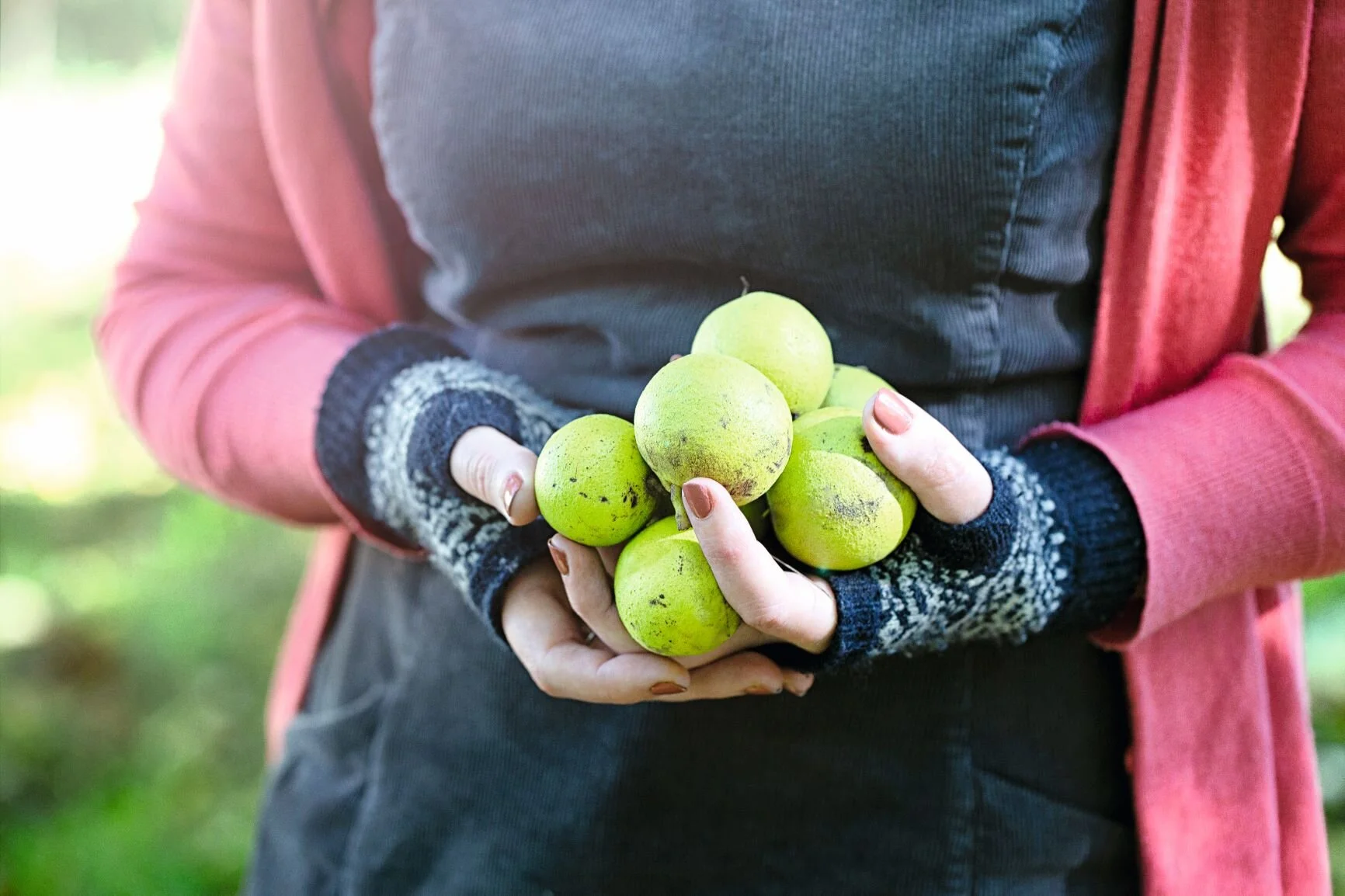
More from September issue…

Featured
Keeping warm Kavel Rafferty.JPG
September 20, 2020
How to | stay warm outside on cooler evenings
September 20, 2020
September 20, 2020
Larks and Owls Shutterstock.JPG
September 19, 2020
Are you a night owl or a lark?
September 19, 2020
September 19, 2020
Good mood food.JPG
September 15, 2020
Recipe | Sweet potato with cauliflower and minted yoghurt
September 15, 2020
September 15, 2020

More spooky fun…

Featured
Alamy_2CCAJN3Alamy horror.jpg
October 25, 2022
Fun | Gothic Book Title Generator
October 25, 2022
October 25, 2022
Penrhyn ©National Trust Images Paul Harris (2).jpg
September 12, 2020
Top ten National Trust ghosts
September 12, 2020
September 12, 2020
Gin fizz Cathy Pyle Kay Prestney.jpg
November 2, 2019
Autumn tipple | pomegranate and rosemary gin fizz
November 2, 2019
November 2, 2019
In Think Tags issue 99, ghosts, spooky, National Trust
Comment
Emma Paton @finlay_fox attic pic.jpg

Five fictional (and factual) attics

Iona Bower September 5, 2020

We’re all predisposed to love an attic aren’t we? The chance of finding a long lost treasure, the secrecy of a huge room, hidden at the top of a house, the thrilling idea that it could be a private space just for us? 

It’s little wonder they feature in so many books, both fiction and factual. The attic is a metaphor for the brain - a space right at the top of the house, where all manner of creative and imaginative happenings might occur, a place where memories are stored, and made. How many writers scribbled in garrets, locked away in a dusty loft, after all? You don’t hear of many writers furiously penning novels in sparkling open-plan kitchens, do you? They’re a space to get away, feel ‘above’ mere mortals bumbling about in living rooms and bedrooms. Here we celebrate five literary attics: 

1. Thornfield Hall’s attic in Jane Eyre

The first Mrs Rochester is the inhabitant of the attic in Charlotte Bronte’s best-known novel. Jane hears various crashes, moans and the like and it transpires that the source of them all is Bertha Rochester, one-time beauty and now ‘demon’ in the attic who starts fires, bites visitors and chews up Jane’s wedding veil. Since we know Rochester is about to marry Jane bigamously, frankly we’re with the first Mrs R on this one and think the veil-shredding (and probably some of the biting) is fair enough. (Also, Mr Rochester is pretty irritating. We might have bitten him too.) Poor Mrs R jumps to her death during a fire at Thornfield but holds a special place in our hearts as the first and our favourite ‘mad woman in the attic’. 

2. Jo March’s attic in Little Women

Like many women writing in attics, Jo is a bit of a bluestocking, who wished to be a boy and found her skirts cumbersome. She writes her way out of her femininity, wearing a ‘scribbling suit’ of a black pinafore to soak up the ink and a feathered cap, like a master craftsman, and into a comfortable inhabitation of confident womanhood. Again, the attic is both an escape and a sign of Jo’s superior intellect. And we loved her for her inky hands and the rats that nibbled her pencils. 

3. Anne Frank’s attic in the secret annex

Never could an attic be more thrilling than the real attic in Amsterdam in which Anne Frank enjoyed some fresh air, away from the stuffiness of the rest of the annex each morning. Anne wrote her famous diary in the secret annex in which she was hiding and the rat-infested attic, which was mostly used for storage was her escape, with one little window that it was possible to look out of without fear of being seen. 

4. The attic in Flowers in the Attic

Much though we love a creepy Gothic tale in autumn, we might not linger too long on this very disturbing tale by VC Andrews of incest and abuse that haunted many of our teenaged years. Suffice to say, the attic here holds many a secret and spawns many more secrets of its own. <Shudder> 

5. The attic in The Yellow Wallpaper

It’s the decor that’s the real star of this novel by Charlotte Perkins Gilman. When a young woman is sent to spend a period of rest in a colonial mansion at the turn of the last century, she’s shut up in the old nursery on the top floor of the house. Far from resting her mind, the room itself turns her imagination inside out as she endlessly describes the wallpaper, comes to believe there is a woman trapped inside it and then becomes that woman herself. A beautiful feminist novel that’s deliciously creepy, too. You aren’t sure whether you want to never go upstairs again or disappear to the top of the house forever. 

In our September issue our My Place feature is all about (much less creepy and much more beautiful) attic rooms like this one above by @finlay_fox.  Buy this month's The Simple Things - buy, download or subscribe

More from our September issue…

Featured
Keeping warm Kavel Rafferty.JPG
September 20, 2020
How to | stay warm outside on cooler evenings
September 20, 2020
September 20, 2020
Larks and Owls Shutterstock.JPG
September 19, 2020
Are you a night owl or a lark?
September 19, 2020
September 19, 2020
Good mood food.JPG
September 15, 2020
Recipe | Sweet potato with cauliflower and minted yoghurt
September 15, 2020
September 15, 2020

More things to love about your home…

Featured
@homeinthehemlocks front door.jpg
October 1, 2024
Rituals | Closing the Front Door
October 1, 2024
October 1, 2024
westcross_property_renovation1.jpg
May 18, 2021
Ways to spend time in a window seat
May 18, 2021
May 18, 2021
Emma Paton @finlay_fox attic pic.jpg
September 5, 2020
Five fictional (and factual) attics
September 5, 2020
September 5, 2020
In Think Tags issue 99, attics, home, books
Comment
back cover aug.JPG

August | a final thought

Iona Bower August 25, 2020

From Am I Overthinking This by Michelle Rial (Chronicle Books)

We’ve reached the end of our August ‘Promise’ issue. September is winging its way to your shops and doormats as we speak.

We had some hot days in August here at Simple Things Towers. We hope you were lucky enough to get some nice weather (and a few ice creams ), too! Here’s an illustration from our August back cover to raise an end-of-summer smile.

Buy this month's The Simple Things - buy, download or subscribe
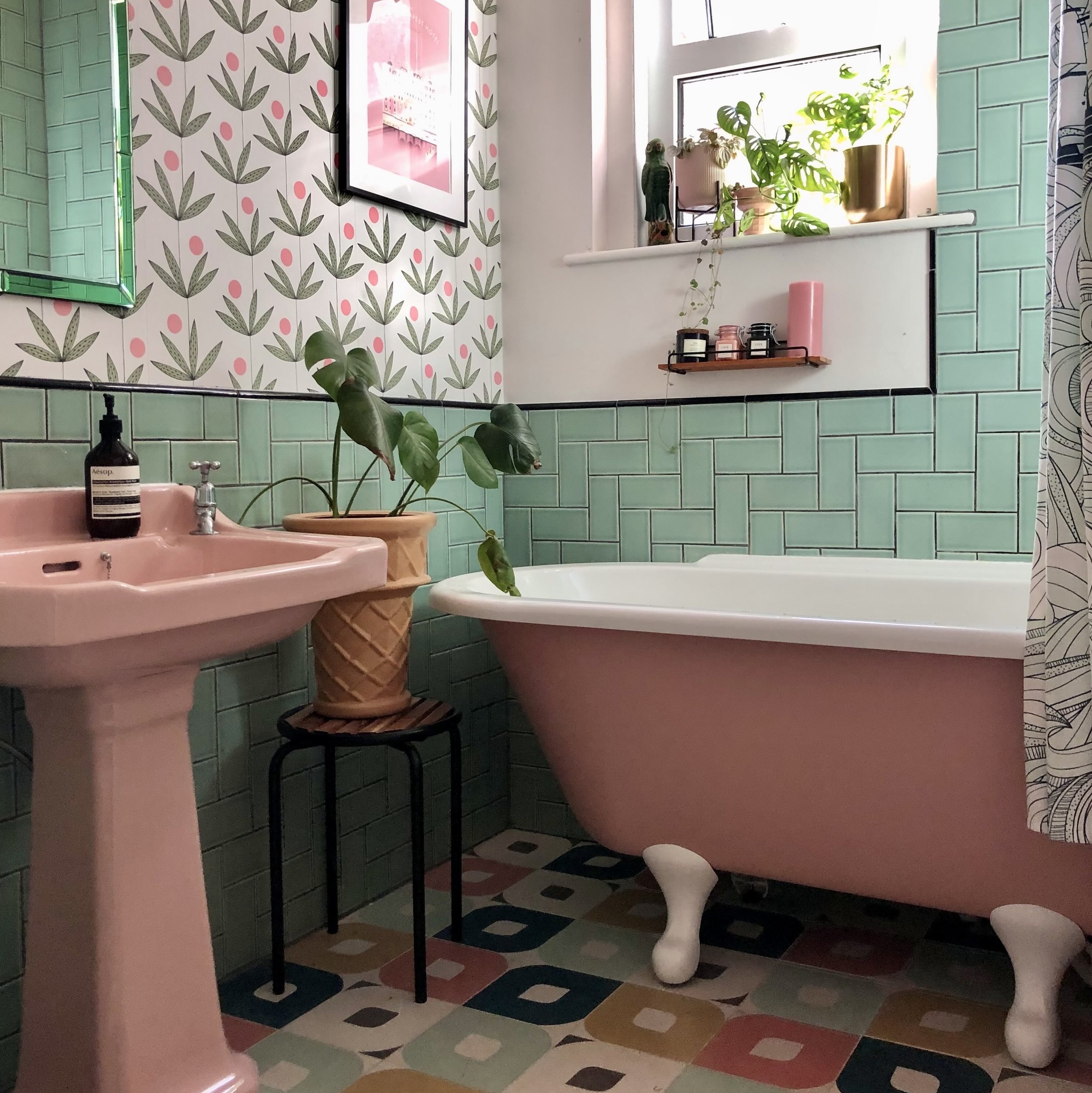
More from our August issue…

Featured
back cover aug.JPG
August 25, 2020
August | a final thought
August 25, 2020
August 25, 2020
Blackberries istock.jpg
August 22, 2020
Folklore | Blackberries
August 22, 2020
August 22, 2020
Lamingtons Photo - Edd Kimber.JPG
August 16, 2020
Cake facts | Lamingtons
August 16, 2020
August 16, 2020

More wit and wisdom from our back covers….

Featured
Back page lone wolf.JPG
March 24, 2021
March | a final thought
March 24, 2021
March 24, 2021
Back page.JPG
February 23, 2021
February | a final thought
February 23, 2021
February 23, 2021
Back cover.JPG
January 27, 2021
January | a final thought
January 27, 2021
January 27, 2021


In Think Tags issue 98, back cover, am I overthinking this
Comment
Photography: Edd Kimber

Photography: Edd Kimber

Cake facts | Lamingtons

Iona Bower August 16, 2020

Lamingtons are the sort of cake we think we should have in the house more often. If you haven’t come across one before, they’re cuboid sponge cakes dipped in chocolate sauce and then rolled in desiccated coconut. 

Another classic Australian gem no one should miss out on is the beautifully illustrated children’s book Possum Magic by Mem Fox. Every Australian child since it was published in 1983 has a much-loved copy of this tale of a young Possum called Hush and her Grandma who has turned Hush invisible, using bush magic, to hide her from snakes. Together they travel around Australia sampling national dishes to find the dish that will make Hush visible again, and the final cure is a lamington. We don’t usually do spoilers, but here’s the very end of the book so you can appreciate the importance of Lamingtons, too. 

In Hobart, late one night, in the kitchens of the casino, they saw a lamington on a plate. Hush closed her eyes and nibbled. Grandma Poss held her breath - and waited.

"It's worked! It's worked!" she cried. And she was right. Hush could be seen from head to tail. Grandma Poss hugged Hush, and they both danced "Here We Go Round the Lamington Plate" till early in the morning.

So from that time onwards, Hush was visible. But once a year, on her birthday, she and Grandma Poss ate a Vegemite sandwich, a piece of pavlova and half a lamington, just to make sure that Hush stayed visible forever.

And she did.

The photo above is taken from One Tin Bakes: Sweet and Simple Traybakes, Pies, Bars and Buns by Edd Kimber (Kyle Books). You can find the recipe on p27 of our August issue, which is in shops now, or you can buy it direct from us online and have it arrive on your doormat.

Buy this month's The Simple Things - buy, download or subscribe

More from our August issue…

Featured
back cover aug.JPG
August 25, 2020
August | a final thought
August 25, 2020
August 25, 2020
Blackberries istock.jpg
August 22, 2020
Folklore | Blackberries
August 22, 2020
August 22, 2020
Lamingtons Photo - Edd Kimber.JPG
August 16, 2020
Cake facts | Lamingtons
August 16, 2020
August 16, 2020

More cake facts…

Featured
Pineapple Upside Down Cake.jpg
May 8, 2021
Cake Facts | Upside-down Cake
May 8, 2021
May 8, 2021
Beetroot Chocolate Cake.jpg
October 10, 2020
Cake facts | root veg baking
October 10, 2020
October 10, 2020
Simnel Cake Sam A Harris, Fitzbillies.jpg
March 21, 2020
Cake facts | Simnel cake
March 21, 2020
March 21, 2020
In Think Tags issue 98, cake fadts, Australia, children's books, cake, lamingtons, sponge cake
Comment
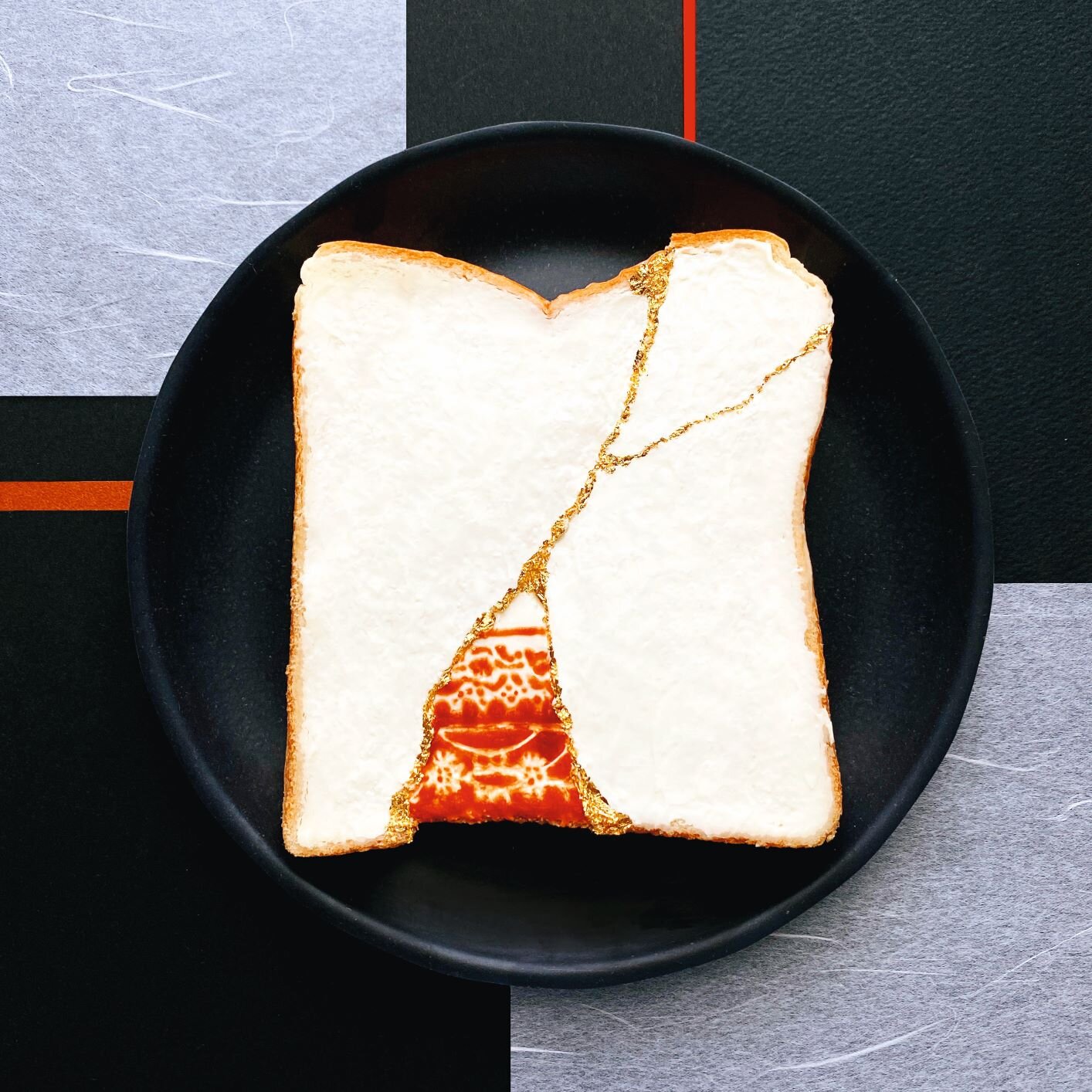
Toast Kintsugi by  Manami Sasaki

Toast Kintsugi by Manami Sasaki

Science lesson | the toast centre of the brain

Iona Bower August 15, 2020

Some fascinating facts about how your brain smells toast

There’s something strangely evocative about the smell of burnt toast. You can probably remember the last time you suddenly detected it and dashed for the grill. 

But did you know there’s a part of your brain specifically dedicated to smelling burnt toast? 

In 1950, Canadian Dr Wilder Penfield was working on a treatment for cerebral seizures that worked by zapping particular nerve cells with electrical probes. One of his patients was a woman with epilepsy who smelled burnt toast whenever she was about to have a seizure. 

With her sedated but awake, Dr Wilder removed part of her skull and stimulated various parts of the brain until the woman exclaimed “I can smell burnt toast!” He was able to remove this small bit of brain tumour and stop the seizures, and the process, which later became known as the Montreal Procedure would go on to help millions of people with epilepsy.

So next time you burn your breakfast, spare a thought for Dr Wilder Penfield and raise a crust to him. 

In our August issue, we’re celebrating more impressive work with toast, looking at some of the ‘toast art’ by Manami Sasaki (@sasamana1204), such as the one above. You can read more on p16. The August issue is in shops now, or you can buy it from our online store.  Buy this month's The Simple Things - buy, download or subscribe

More from our August issue…

Featured
back cover aug.JPG
August 25, 2020
August | a final thought
August 25, 2020
August 25, 2020
Blackberries istock.jpg
August 22, 2020
Folklore | Blackberries
August 22, 2020
August 22, 2020
Lamingtons Photo - Edd Kimber.JPG
August 16, 2020
Cake facts | Lamingtons
August 16, 2020
August 16, 2020

More science lessons from our blogs…

Featured
@honeyjoyhome bath.jpeg
April 10, 2025
Science | Archimedes' Principle Explained
April 10, 2025
April 10, 2025
Alamy tablecloth.jpg
May 21, 2022
Magic | Do the Tablecloth Trick
May 21, 2022
May 21, 2022
August 15, 2020
Science lesson | the toast centre of the brain
August 15, 2020
August 15, 2020
In Think Tags issue 98, science, toast
Comment
Photography: Petek Arici/istock

Photography: Petek Arici/istock

Reading | Flash Fiction

Iona Bower July 23, 2020

If you like a short story, you might enjoy these ‘flash fiction’ tales

We’re big fans of flash fiction – especially, if you see our feature in our August issue, when you’re struggling to read right now. 

Back in 2018, we asked you to write a 100-word flash fiction story on the theme of ‘summer’. And you did not disappoint. We’ve reprinted some of our favourites below. And, should you feel inspired, we’ve a new flash fiction competition with Seasalt launching in our September issue – watch this space.  


The five-second flight by Kirsty Boswell 

“Go long!” he yelled. So long I went. As I meandered around strewn towels, flicking sand up off my feet with every stride, I turned my head to see him release with the force of an Olympic discus thrower. It soared through the air, a bright blue UFO. Over the crimson crowns of balding dads waiting for beeps to reveal hidden treasure. It floated above the boy burrowing a magnificent crater, searching for the middle of the earth. It swooped over the baby enjoying a mouthful of sand, and crashed straight in to Mum’s 99. And then we ran. 


Before the flood by Agnes Halvorssen 

 Summer has gone off the rails. Doors slam and the hot sun shakes in the sky, the clouds pull close and raise their arms. She does not blow them away to reveal a clear blue, but pulls them nearer. There are rumours that she has been spending time with Winter. She comes back cold to the touch, icicles hiding in her golden locks, the tip of her nose red and damp. And nowadays Winter has a wild faraway look in his eyes, and pools of water gathering around his boots. 


Don’t look now by Gemma Smith 

‘Beware,’ shrieked the sign on the wall, ‘ignore at your peril.’ Eyes darting wildly, I make a bid for safety, clutching my prize to my chest as if it might evade me at the first opportunity. Lulled by its gentle rhythm, the ocean pulls me to it; the sun’s glow enveloping me as I step out from the dark cobbled streets, trance-like, into the open harbour. Feverishly unwrapping the pristine white paper, I marvel at the molten gold within, and then…GONE. Circling like a feathered storm in a squawking flurry of teacups, my aerial pursuers strike. Bloody seagulls. Bloody toastie. 


Hanami by Christopher P Davis 

They were midway through lemon-scented drinks when a wisteria flower descended feather-lightly into his glass and stirred the bittersweet memory of the previous summer. The two of them had hired bikes at dawn and rode across Tokyo, eventually finding their way to Yoyogi Park, where they spent the afternoon beneath purple trees, watching the dancers and talking, while he stroked her hazel-brown hair. A year had passed since then and he still wondered whether they had made the right decision. “What are you thinking about?” his date asked, noticing his faraway gaze, and tucking a blonde lock behind her ear. 


Summer wardrobe by Kate Life 

The seasonal shift sent her packing. Carefully she exchanged cashmere and tweed for cottons in shades of citrus zest and ice-cream scoops. Folding corduroy, she thought of Tom. He was the scent of wood-smoke, a trudge through leaves, crumble, and chilled fingers that had chivalrously scraped her windscreen clear. She transported him to the world of summer: petrol fumes heavy in sluggish air, the pop of fizz, and songs that would grate when autumn came. “Oh well,” she thought, shoving the last zippered package into the depths of the bed, “I can mothball him, till October at least.” 


Daisy days by Hannah Pank 

The pleasantly warm air of summer has finally tempted my head above the soil, a crown of pure, brilliant white petals encircling my golden yolk of a centre. A young girl is dancing upon the ground beside me, bare feet barely indenting the warm grass beneath. She stumbles over in a fit of laughter, giggles erupting from dimpled cheeks. Chubby fingers clumsily begin to interlock the bodies of my sisters, weaving them into a crown. Then I am chosen to adorn the head of the girl of my dreams. Together we dance toward the sunset. 

 Buy this month's The Simple Things - buy, download or subscribe
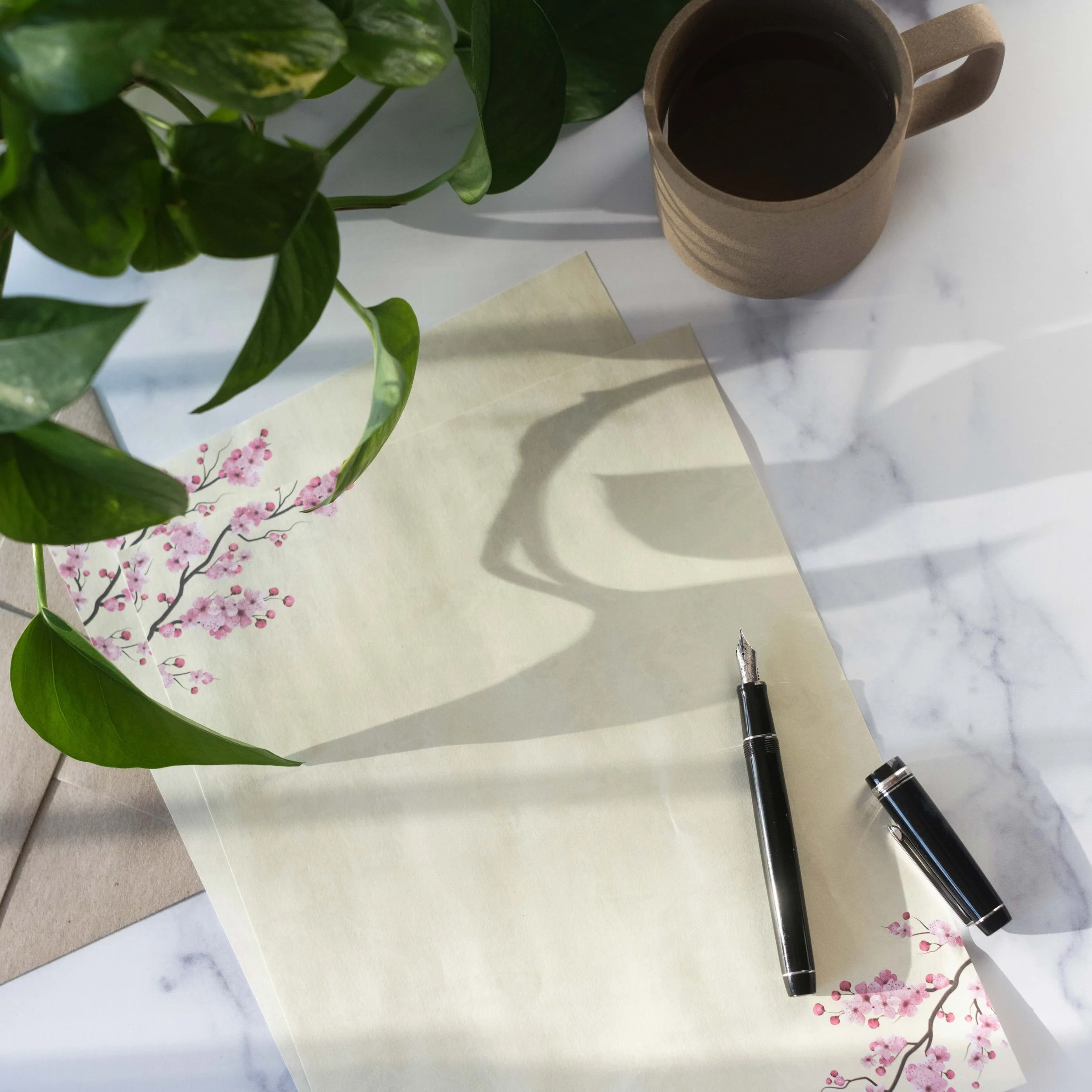
More bookish things…

Featured
Librarians Getty.jpeg
Reading | What librarians mean to me
Book trails Alamy.jpeg
Outing | Book-based trails to follow
Alamy Tower.jpeg
Fiction | Top Towers from Books

More from our August issue…

Featured
back cover aug.JPG
August 25, 2020
August | a final thought
August 25, 2020
August 25, 2020
Blackberries istock.jpg
August 22, 2020
Folklore | Blackberries
August 22, 2020
August 22, 2020
Lamingtons Photo - Edd Kimber.JPG
August 16, 2020
Cake facts | Lamingtons
August 16, 2020
August 16, 2020
In Think Tags issue 98, August, flashfiction, books, reading
Comment
  • Blog
  • Older
  • Newer
Featured
 MAY ISSUE   Buy  ,   download  or  subscribe   Order a copy of:  Our new Homebird bookazine    Flourish Volume 4 , our wellbeing bookazine  A Year of Celebrations  – our latest  anthology  See the sample of our latest issue  here   Listen to  our po
February 27, 2026
February 27, 2026

MAY ISSUE

Buy, download or subscribe

Order a copy of:
Our new Homebird bookazine

Flourish Volume 4, our wellbeing bookazine
A Year of Celebrations – our latest anthology

See the sample of our latest issue here

Listen to our podcast – Small Ways to Live Well

February 27, 2026
Join our Newsletter
Name
Email *

We respect your privacy and won't share your data.

email marketing by activecampaign
facebook-unauth pinterest spotify instagram
  • Subscriber Login
  • Stockists
  • Advertise
  • Contact

The Simple Things is published by Iceberg Press

The Simple Things

Taking time to live well

We celebrate slowing down, enjoying what you have, making the most of where you live, enjoying the company of of friends and family, and feeding them well. We like to grow some of our own vegetables, visit local markets, rummage for vintage finds, and decorate our home with the plunder. We love being outdoors and enjoy the satisfaction that comes with a job well done.

facebook-unauth pinterest spotify instagram