Choo, choo! Get your ticket and climb on board
Listen to more playlists:

Featured
Blog
Taking Time to Live Well
Choo, choo! Get your ticket and climb on board
My kayak by Sara Pearse
My kayak is a bright, cerulean blue, and sturdy, with smooth, solid curves. When I see photos of me in it, I look different, somehow – alone, strong, adventurous. This person, paddle slicing through glassy water, is free. She can take off on a whim, cope with whatever is thrown at her, and is always on the cusp of discovering something new – a hidden cove, a shoal of darting mackerel, a secret house only glimpsed from the sea. This person knows exactly where she is going, isn’t lost in the day to day.
My husband bought it for me after a hospital stay. Me, clock-watching as his 30-minute operation became four hours, words muttered about haemorrhaging, cauterising, complications. When he finally emerged, he still wasn’t well. I remember the nurse’s flushed face, the young doctor’s shaking hand as it dawned things weren’t quite going to plan. I’d never faced death like that, right in the eye. What scared me was how lonely it was – my husband was the one I turned to in a crisis, but this time the crisis was him. My stomach dipped as I thought about our two young daughters. What would I tell them?
But he made it through, and after, there was a freedom about him – something loose,
untethered. We did the things we’d only talked about before, dreams we’d squirrelled away inside our heads – took the risky job, adopted the kitten my daughter wanted (not just one but two), bought the kayak I’d been coveting.
There’s something primal about paddling. It feels ancient, the rhythm of it. I’m part of the water, literally feeling it, its movements, as it resists the paddle stroke by stroke. So low on the water, without the grumble or whine of a motor – the birds mistake me for one of them. They arc through the sky, or sit perched on a nearby rock, feathers slick with water. Cormorants dive headfirst into the waves right in front of me, reappear a minute later, black heads gleaming.
I chart the changing seasons from the water, and I’ve learnt that the sea has its own topography. I now know where the rocks are, crusty with barnacles, just jutting out of the water, and where the beds of sea grass hide, the swathes of seaweed – gelatinous green ropes and brown fern-like growths that loop around the paddle.
I can’t wait to show my daughters this world, but I’ll still kayak alone – remembering why we bought it, to become the person I am inside my head.
We’d like to know what you treasure - whether it’s a sentimental artefact, a person, a place or something else. Tell us in 500 words what means a lot to you - email thesimplethings@icebergpress.co.uk
My hand-written recipe book by Jacqui Hitt
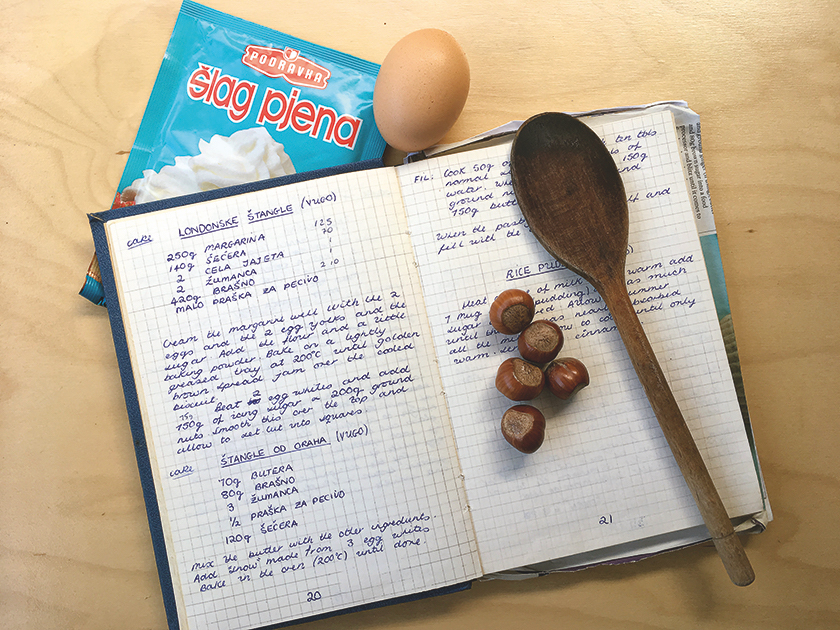
Among my collection of recipe books is a special one with a plain, blue cover. It’s filled as much with unforgettable moments as it is with edible delights. Whenever I flick through its pages, I find myself back in 1986. I’m 17 and living with a family in Belgrade in what is now Serbia. At that time, it was the capital of the ‘non-aligned socialist republic’ of Yugoslavia: neither Western nor fully behind the ‘Iron Curtain’.
My strongest memory is of sitting at the table in the hallway that doubled as a dining room in my host family’s flat, noting down recipes in my notebook. Most were ones my host mother, Marija, taught me to cook. We had little shared language and cookery was an activity we could do together without words. Weighing, chopping, stirring, and rolling could all be done by watching or gesturing to each other.
I wrote down some of the recipes in English, others in Serbo-Croatian, occasionally a mix of the two. Many only detail rough quantities: three cups of flour, two cups of sugar, one of oil and large amounts of eggs (10 or 12 is not unusual). There are smudges and stains showing where ingredients strayed onto the page.
Marija’s cooking was different from what I knew from home, restricted by shortages imposed by a communist state. Food was strictly seasonal and local. Special dishes stood out because they were a rare treat.
On birthdays and important holidays, Marija would spend hours making cakes or savoury bakes from scratch. Filo-pastry filled with spicy ground meat or salty cheese; a strawberry cake with whipped cream that will forever be the best I’ve tasted; and plum dumplings so juicy that they burst in my mouth at first bite.
I still make these dishes, and just looking at the list of ingredients sends me back to a specific moment in time. The little chocolate, cream-filled išleri biscuits Marija made for my 18th birthday. The cinnamon-scented apple cake she baked to celebrate her son’s return from military service. The simple delight of a pile of pancakes filled with rosehip jam on a cold winter’s night.
I treasure my recipe book for many reasons – for the memories it contains and the fact that, woven into every page, are recipes for a good life as well as fabulous food.
We’d like to know what you treasure - whether it’s a sentimental artefact, a person, a place or something else. Tell us in 500 words what means a lot to you - email thesimplethings@icebergpress.co.uk
Getty Images
The t-shirt evolved from 19th-century underwear. Light, well fitted and easily washed, it became popular as a bottom layer of clothing for workers and those in the armed forces, and made its first written appearance in 1920, in F Scott Fitzgerald’s debut novel, This Side of Paradise. The first printed t-shirt ever worn publicly is believed to be an Air Corps Gunnery School t-shirt, which appeared on the cover of LIFE magazine in 1942. While in 1938, an American marketing campaign argued that “you don’t need to be a soldier to have your own personal t-shirt”, the style really took off thanks to film appearances on Marlon Brando in A Streetcar Named Desire (1951) and James Dean in 1955’s Rebel Without a Cause. They’ve been worn by everyone, from heartthrobs to more normal types since.
Turn to page 80 of the March issue for more on the T-shirt and how much it says about who we are, what we believe and where we belong.
Our favourite songs from the movies.
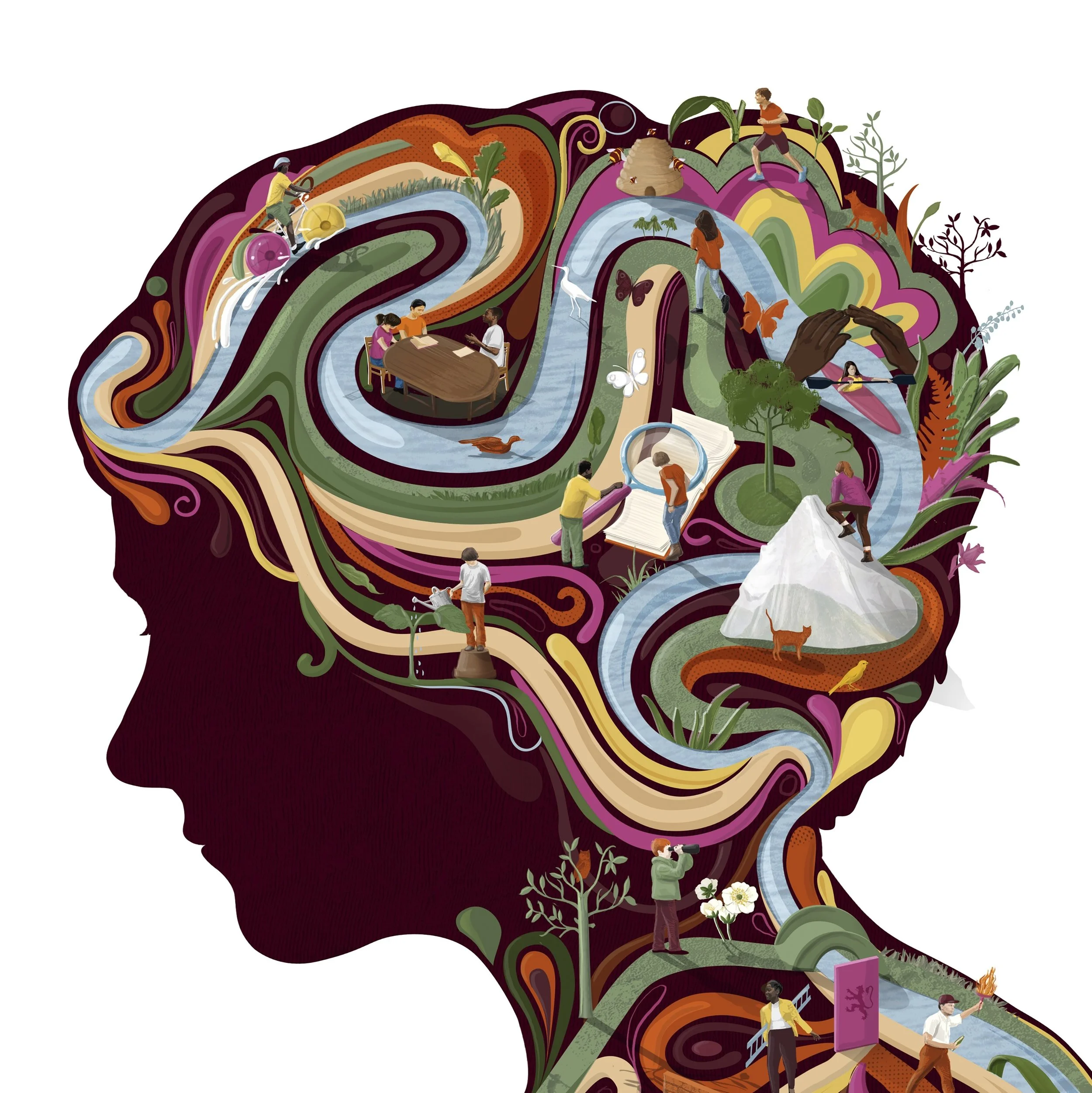
The theme for our March issue of The Simple Things is HAPPY. Free with every issue - one of four Happiness patches (find out how to get yours). Meanwhile, here are a few everyday actions that can enrich your life
Be active
Climb a hill. Or go for a walk or run. Simply stepping outside will have a positive impact. Cycle. Play a game. Garden. Dance. Exercising makes you feel good, so discover which physical activity you most enjoy and that works for your level of fitness.
Connect
Gather friends. Spend time and share good food with those around you. Think of home, work and your local community as the cornerstones of your life and invest time in developing relationships there. These connections will support and enrich you every day.
Keep learning
Make a campfire. Try something new. Rediscover an old interest. Sign up for that course. Take on a different responsibility at work. Fix a bike. Learn to play an instrument or how to cook your favourite food. Set a challenge you will enjoy achieving. Learning new things is a confidence booster – and is fun.
Take notice
Watch clouds. Be curious. Catch sight of the beautiful. Remark on the unusual. Notice the changing seasons. Savour the moment, whether you are walking to work, eating lunch or talking to friends. Be aware of the world around you and what you are feeling. Reflecting on your experiences will help you appreciate what matters to you.
What makes you happy? Come over and tell us on Facebook or Twitter.
Plus - enter our competition! Design our fifth patch and you could win a VIP experience to The Good Life Festival 2018.
Books to make you literally (and literarily) LOL. As loved by The Simple Things team
How Hard Can It Be? by Allison Pearson
An about-to-be-50 mother juggles her return to work with teenagers, ageing parents and hormonal hell.
Nomad by Alan Partridge
Steve Coogan’s creation travels in the footsteps of his father to Dungeness power station while trying to secure a TV series.
Love, Nina by Nina Stibbes
The (real) letters written by a nanny to her sister as she’s plunged into the midst of the London literati in the 1980s. Even more hilarious for being true.
Me Talk Pretty One Day by David Sedaris
A series of essays following Sedaris’ attempt to learn French after moving from New York to Paris.
What would you add? Come over and tell us on Facebook or Twitter.
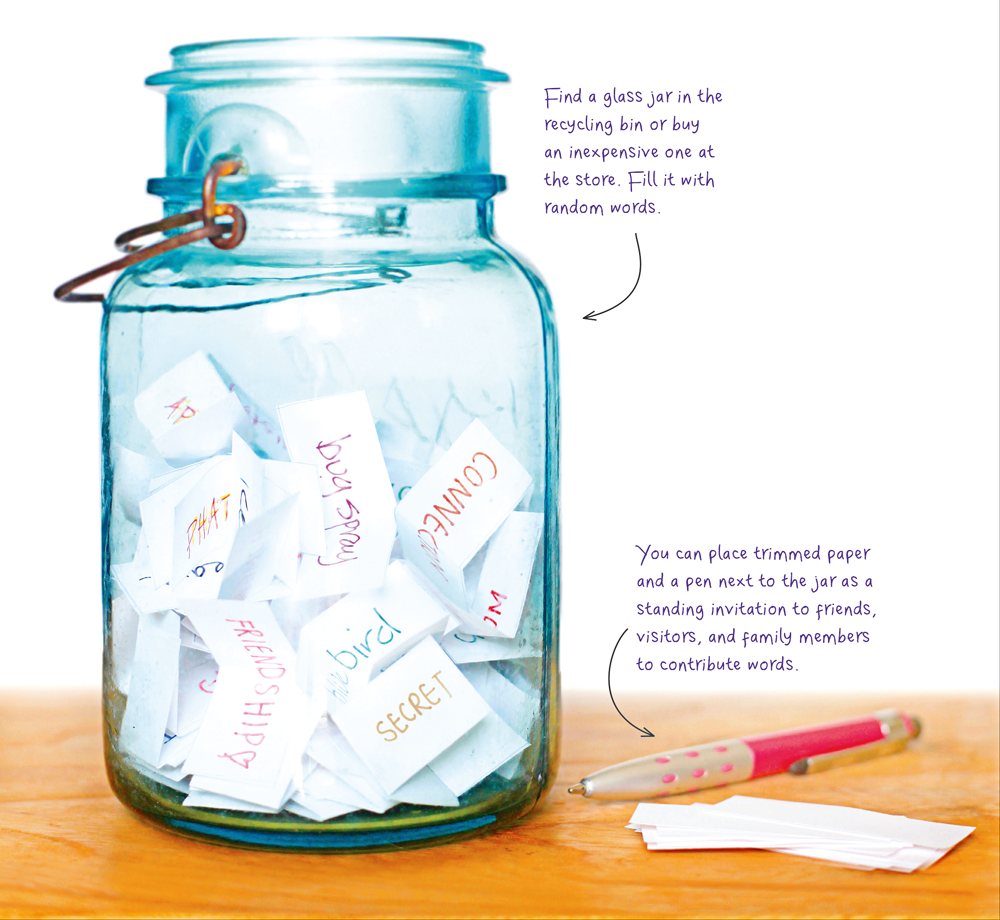
This is one of the simplest yet most fruitful and rewarding journal prompts, because it’s uncomplicated and never fails to inspire, sitting on your shelf or desk, always available for spontaneous creativity.
Find a glass jar in the recycling bin or buy an inexpensive one. Fill it with random words. Leave trimmed paper and a pen next to it as a standing invitation to friends, family and visitors to contribute words.
Choose a word or a few words from the jar and write them on a journal page. Draw a sketch based on the word(s) or incorporate them into a small piece of writing – a poem, a blurb, the beginning of a story or a speech bubble. When you’re finished, add a new word to the jar.
Turn to page 77 of February's The Simple Things for another Journal Sparks idea: Picture your day in geological layers.
It’s Fairtrade Fortnight from 26 February, a time to reflect on how you could do more to support growers, farmers and producers in developing countries.
The message for this year’s campaign is “come on in”, encouraging people to open their doors and minds to Fairtrade. Women produce 80% of the world’s food and Fairtrade acts to ensure female farmers get the same opportunities and rights as their male counterparts.
Ivania Calderón Peralta is a single mother of five and organic coffee farmer in Nicaragua who works for a cooperative that supplies beans to Café Direct. “Before, women didn’t have the freedom to participate in the decision-making processes,” she says. “Now, we have managerial responsibilities and different roles and, thanks to training funded by Faitrade, women can make progress.” The work of the foundation spans industries from food to fashion to technology. The first Fairtrade African Gold from Uganda launched in the UK last year and food products bearing the Fairtrade logo are being introduced all the time.
Find out more about Fairtrade Fortnight at fairtrade.org.uk.
Losing a loved one is never easy, but new ways to deal with death can help us find comfort after bereavement, some of which are explored on page 72 of February's The Simple Things.
Put a spring in your step and a duster in your hand.
My Spode Mug by Vera Fletcher
My mug has kept me company for almost a decade, gifted towards the end of a friendship that would inevitably decant, leaving only the gritty sediment swirling in the bottom, hard to digest. It’s a memento of the surreal; a whirlwind romance, a move across oceans, an incapacitating illness and a slow recovery as everything else fell apart. It’s a reminder of simple kindnesses, of which there were many, in a place without the familiar, a talisman from another life.
It’s been half empty and half full. It’s caught tears and echoed laughter. I’ve cradled it delicately and been tempted to hurl it at various things, even a few people. . . It’s seen me stripped bare; contorted by rejection and rage, wallowing in self pity. It’s been by my side as I’ve learned and evolved... matured.
It’s a mug I’d never have picked; the crockery is too thin, the pattern too old. It’s too refined for my raw edges; too British for my Antipodean routes. Inexplicably, I like it. But I treasure it because she gave it to me, one Christmas. Alexander McCall Smith taught me later that Spode could fuel an argument and feed a story, as I sat alone in an Edinburgh flat with my steaming mug in hand. You Brits sure do put a lot of heat into tea. Time has carved out many lines on us both; the handle now too cracked to house any hot liquids. And still it remains, home to a family of toothbrushes. It’s neglected and toothpaste splodged but never unloved.
As I write this, the mug shatters, as if guided by a force bigger than the tiny hands which clambered up and tried to ‘borrow’ it from the shelf. “It don’t matter, Mummy,” my toddler comforts me. And while my heart aches as I collect up all the pieces, I know he’s right. It is just a mug. I treasure it not for the pattern or the pottery.
I treasure it as a waymarker to memories. And they will come to me without this prop. All these things it held still exist, true memories are imbibed. The broken pieces bring a freedom to choose new possibilities, to make my own happiness. Maybe I’ll finally take that mosaic course I’ve wanted to do for years. Or maybe, just maybe, I’ll get in touch with the lady with the cracking smile and infectious laugh that once upon a time gifted me my beloved Spode mug.
We’d like to know what you treasure - whether it’s a sentimental artefact, a person, a place or something else. Tell us in 500 words what means a lot to you - email thesimplethings@icebergpress.co.uk
You may not be quick on the draw, but these suggestions will help you make your mark
Portraiture is hard, especially if you know the person – it’s easy to notice if the likeness isn’t spot on. Suffice to say, you won’t become Leonardo overnight, but if you want to improve your skills, using this process may be helpful...
Forget what you think you know about the face. Don’t bother about the details initially – consider the whole head. Lightly sketch out the structure of the head first, using an H or HB pencil: focus on the areas where bones are nearest to the skin: that’s cheekbones, brow, forehead, chin and jawline.
You could draw a very light line down the middle of the face to centre the nose, and another for the eyes so they don’t go wonky later.
Shade in the shadows with a softer pencil (something like a 3B). Again, go lightly. You could take a photo and change the filter to black and white to help you work out where the shadows should be. Keep blending, using your finger or a smudging tool.
Finally, add the details, such as the eyes and lips.
Illustration: Joe Snow
Learn to fill your lungs more efficiently
Check yourself
Then practise
Mindfulness - learn the basics of this super-useful sanity saver
“In bringing your attention to the breath, you’re necessarily bringing your attention to the present moment,” says Zen master Julian Daizan Skinner, author of Practical Zen (Singing Dragon). He suggests you aim for 25 minutes, starting with less and building up to that if you need to.
1 Find a comfortable sitting position and create a firm triangular base for your body. You can sit cross-legged on the floor, with your bottom on a cushion so your hips tilt forward, keeping your spine straight, or sit upright on a chair with feet firmly planted on the floor.
2 Make it your intention to sit still, but if you need to move occasionally, that’s fine. Don’t force anything.
3 You can either shut your eyes or keep your eyes gently focused on the ground in front of you.
4 Slowly bring your awareness to your breathing. Don’t try to change it, just watch it. Notice where it is in your body and bring your attention there.
5 Mentally count your breaths. In-breath: one. Out-breath: two. And so on, up to ten. Then start again at one.
6 Thoughts, worries and memories are bound to arise and that’s fine. Just notice them. Allow every moment to be exactly as it is.
Turn to page 85 of February's The Simple Things for more on our Mindfulness special.
Not planning on giving up chocolate for Lent? Try one of these ideas instead.
Carry your own drinking bottle and drink tap water.
It can provoke anxiety so give yourself a break every now and then.
Speak to those you care about and remain blissfully unaware of those you don’t.
Buy food locally and more frequently to avoid waste and get savvy with sell-by dates and leftovers.
It creates negative energy. If you haven’t got anything nice to say...
What would you add? What are you giving up? Come over and tell us on Facebook, Instagram or Twitter.
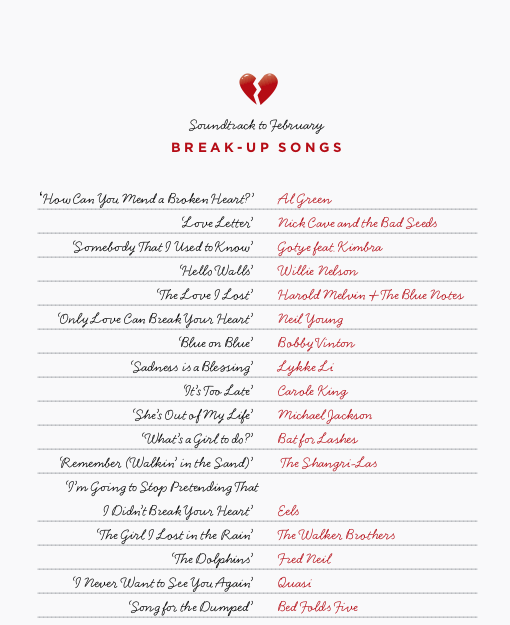
What becomes of the broken hearted? They sit around and listen to sad songs…
Once upon a time...
...we used to tell stories and now we probably don’t so much. It’s National Storytelling Week this month (28 Jan–3 Feb) – a great reason to rediscover the delights of the spoken story
Many of us stop reading aloud or making up stories when we don’t have children to read to, but there’s nothing to stop you from reading to your partner or a friend – it can be a surprisingly bonding experience, great for a winter’s night.
Or, you could offer to read to an elderly relative or neighbour or volunteer in a local care home. To Read Aloud by Francesco Dimitri (Head of Zeus) is a collection of 75 extracts from different writers with time taken to read aloud from just 3 to 15 minutes. Choose from themed chapters (change, love, nature etc).
As you get more confident with reading aloud, try making up your own stories. Base them on your own experiences if you find it easier and visualise (rather than write) the beginning, middle and end, before you start. For inspiration, try going to a storytelling event – there are plenty this month (see sfs.org.uk).
For a bit of fun at home, play a storytelling game, such as Rory’s Story Cubes, where you roll the ‘dice’ and create a tale using all the pictures. Board games such as Tell Tale (for younger families) and The Awkward Story Teller (for adults and teenagers) work well, too.
In January, we look forward and our diaries become our close companions. But, poised between two years, it’s also a time to look back, and diaries, journals and almanacs are also a tool for reflection. As we turn the first page of a new year, we explore their history, purpose and what they mean to us on page 80 of January's The Simple Things.
Cover your own local area, festivities and personal celebrations, and use it as a guide through your own year. Buy a notebook, mark out the months and divide it into topics that interest you, perhaps...
1 Look up dates for local festivities and fetes and mark them in their correct month in your almanac. Add family birthdays, personal traditions and anniversaries.
2 Are there recipes that you revisit every year? A special birthday cake recipe? Your mum’s twist on marmalade? Even a recipe from a cookbook that you return to again and again for a summer barbecue or an autumnal dinner. Pop it in so that it is easy to find.
3 Moon phases, and moon and sun rises and sets will vary – if only by minutes – by area. Find yours. A great source is timeanddate.com.
4 Leave space to note the flowering of bluebells in your local woods, the arrival of the swifts, and the first touches of autumn on the trees.
Change happens to us all, it’s how we deal with it that matters
We celebrate slowing down, enjoying what you have, making the most of where you live, enjoying the company of of friends and family, and feeding them well. We like to grow some of our own vegetables, visit local markets, rummage for vintage finds, and decorate our home with the plunder. We love being outdoors and enjoy the satisfaction that comes with a job well done.