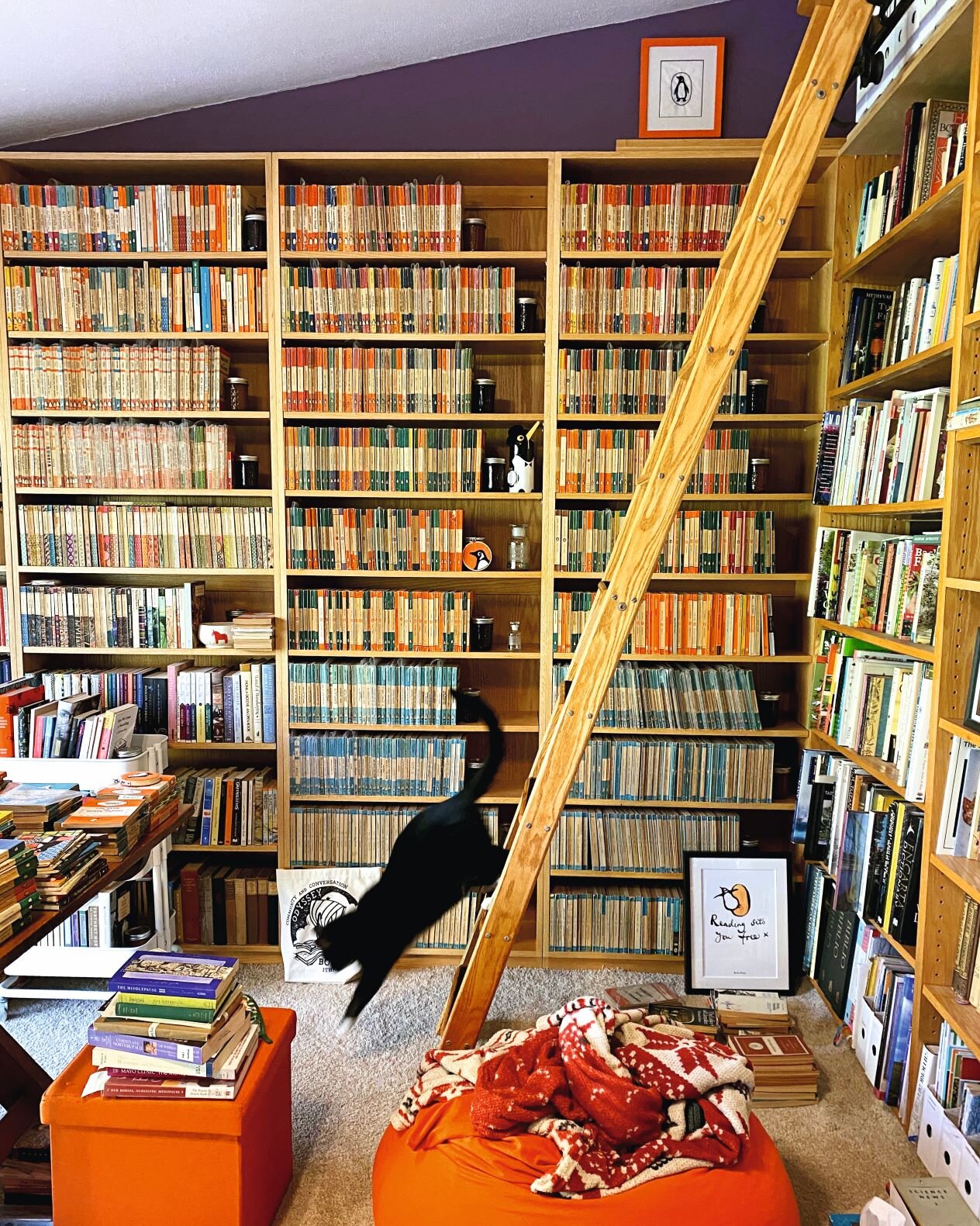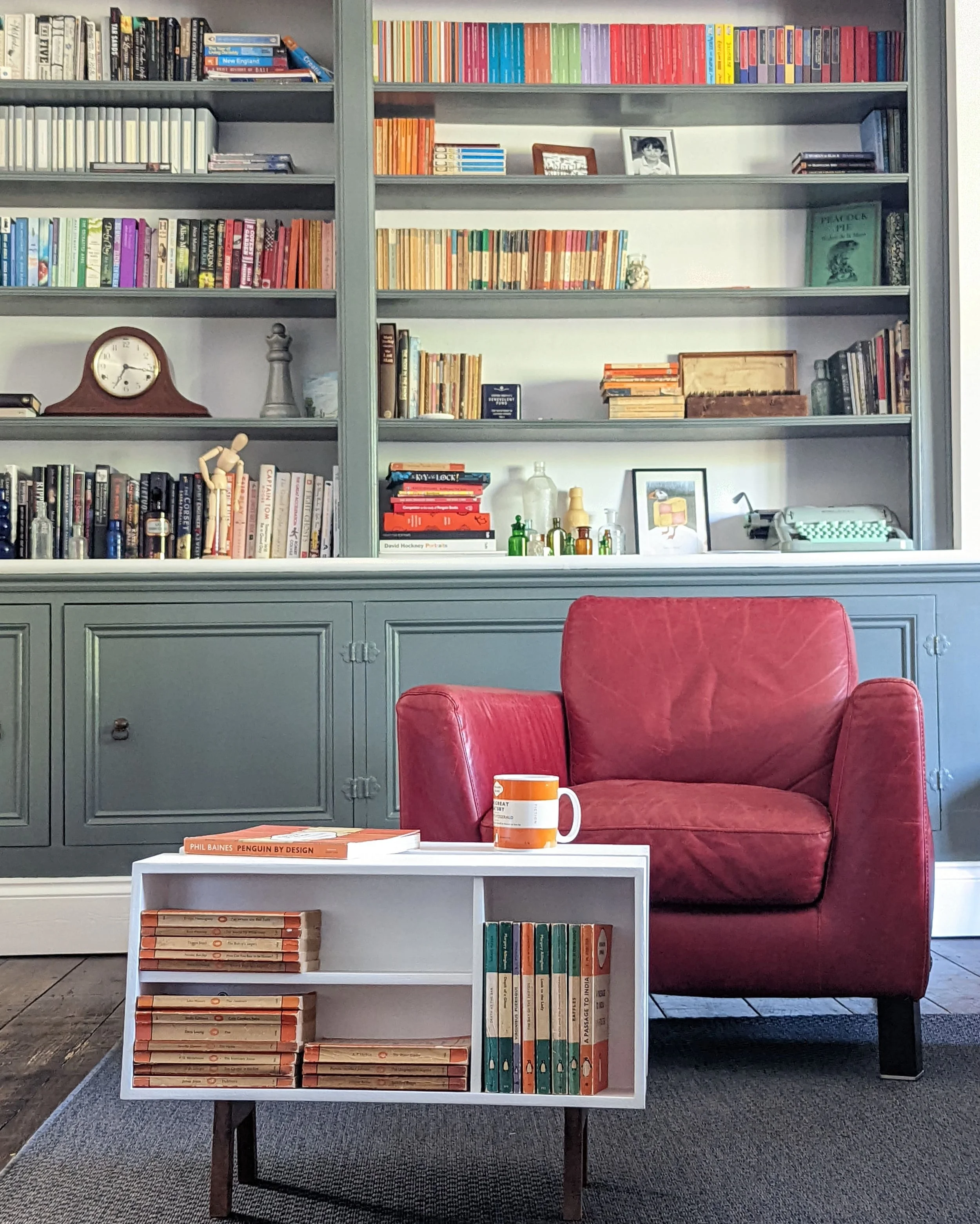
Photograph by @pigeonpostbooks
Alphabetically? Far too boring. By colour? So ten years ago. Bamboozle visiting guests and perplex your family by arranging your books in some of these niche ways
Geographically
This is fairly straightforward but not many people do it. You arrange your books according to where they are set in the world. First by continent, then country and, if necessary, by county or city. You might find you have so many British novels, for instance that you need a section for Edinburgh to include The Prime of Miss Jean Brodie and Trainspotting and a section for Devon to include The Hound of the Baskervilles and Tarka the Otter. Fancy reading A Suitable Boy again? Head to your ‘India’ section. Want to lend a friend Big Little Lies? That’ll be nestled next to Rabbit Proof Fence under ‘Australia’.
By Size
We feel like this is the new ‘by colour’ arrangement which all felt very quirky (and still does look pretty good, we’ll grudgingly admit). This is self-explanatory really but if it feels a bit boring, you should know that it’s how Samuel Pepys arranged his personal library so you are in good company. He allowed himself to keep precisely 3,000 books at a time and numbered them in order of size: 1 was the smallest and 3,000 was the largest.
By Mood
We like this because it invites discussion: you arrange your books by how they make you feel. So obviously most horror and some fantasy will fall under ‘Scared’. But while some crime novels will also be in this section, others will fall into ‘Cosy’. Chick lit might go under ‘Amused’ or ‘Comfort Reads’. The sections are entirely up to you and whether anyone else can find a book in your library will depend on just how well they know you. Very satisfying.
By Personal Chronology
This is a bit like the system described in Nick Hornby’s High Fidelity, where books are arranged according to your life experiences, sort of autobiographically. But here, it’s done purely by date read. You might have to go through some old diaries and calendars to work it out but you’d be surprised by how easy it is eventually when you start to remember that your dad gave you this novel the Christmas after you finished university and you read it in your childhood bedroom or that you took that play on holiday the year you stayed in a caravan in the Lakes because it rained all week and you’d finished it by Sunday afternoon. Your bookshelves become a sort of map of your life’s reading, which is very pleasing.
Six Degrees of Separation
This is fun because only your cleverest friends will guess what you’ve done and you can feel rather smug about it. You do need an encyclopaedic knowledge of who is who in the world of writing, however. Ready? Each book is linked by its author to the one next to it. For instance, AS Byatt might sit next to Margaret Drabble (because they are sisters). Drabble could then sit next to the biographies of Michael Holroyd (because they were married) or to Thomas Hardy (she edited a collection of critical essays about him). How you link them is entirely up to you.
Spine to the wall
If you want to be completely mysterious, you could turn all your books ‘pages out’ and spines to the wall. On the plus side, people won’t be able to easily borrow your books without permission as they won’t be able to find what they are looking for. On the downside… Neither will you.
The bookshelves above belong to Amy Bethel (@pigeonpostbooks) and are one of the ‘little libraries’ featured in our October My Place pages. Turn to page 110 to see more of them.
Buy this month's The Simple Things -buy, download or subscribe