To mark Mother’s Day on 15 March, our latest playlist is dedicated to mothers, mums, moms and mammas.
Have a listen here.
We make a playlist for every issue of The Simple Things. You’ll find this in our March 26 PEEK issue, available to buy here.

Blog
Taking Time to Live Well

DJ: Frances Ambler
Image: Adobe Stock
To mark Mother’s Day on 15 March, our latest playlist is dedicated to mothers, mums, moms and mammas.
Have a listen here.
We make a playlist for every issue of The Simple Things. You’ll find this in our March 26 PEEK issue, available to buy here.
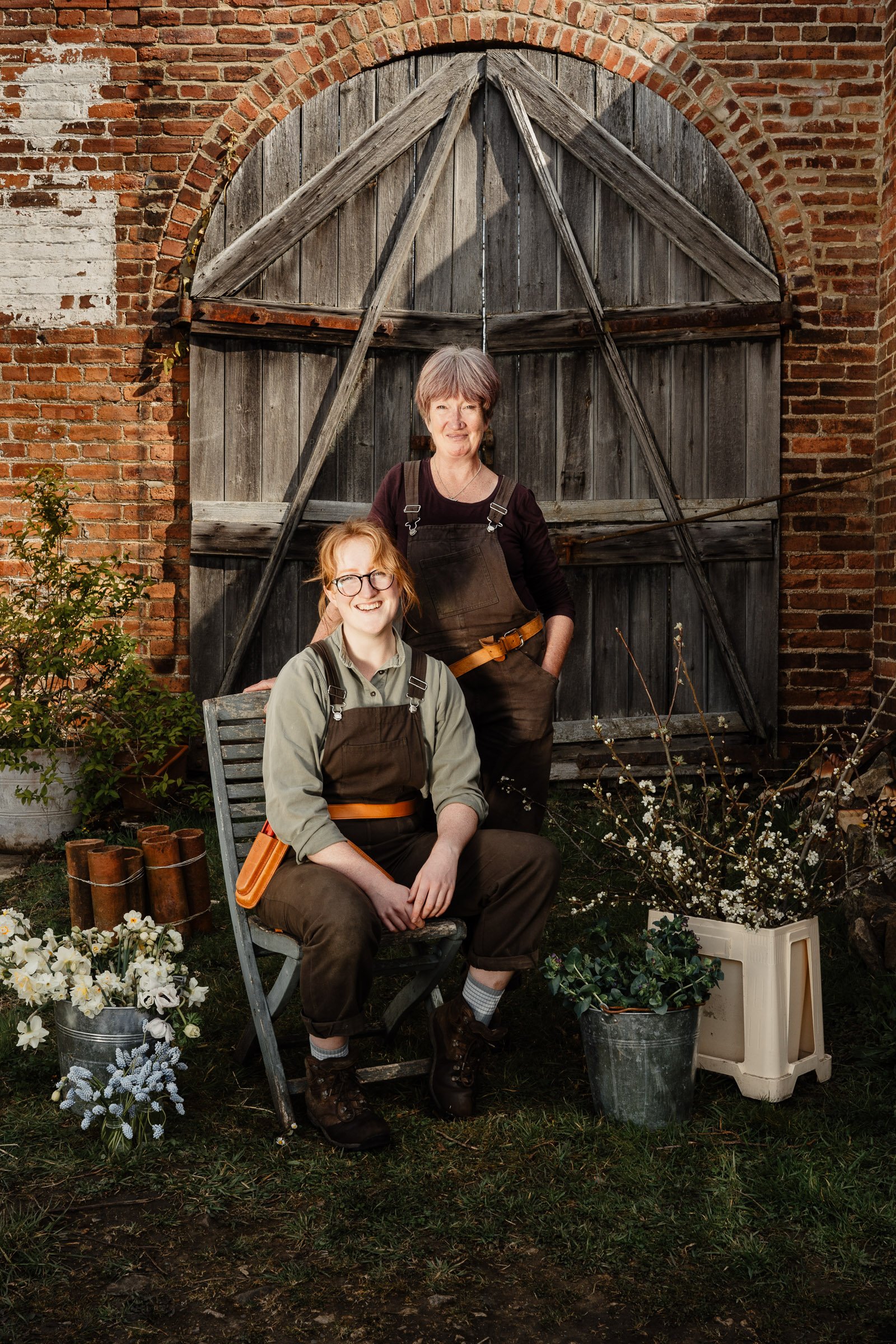
Mothers do often seem to know best don’t they? This month, as we mark Mother’s Day, we thought we would share some wisdom from The Simple Things’ team’s own mums
“I remember when I was having a real wobble during exams and was woefully unprepared. Rather than telling me off for my lack of revision, Mum just gave me the biggest cuddle and told me that it didn't matter what results I got, the sun would still rise tomorrow and the world would still turn. Really simple, but it really resonated and was just what I needed to hear. She also used to say there was nothing a G&T and a pack of Walkers Ready Salted couldn't fix. I’d agree with that, too.”
Abbie Miller, Sub Editor
“My mum used to always say 'never go food shopping hungry', which is actually very good advice. She also told me when I was little that when you get money out of the cashpoint, a person is the other side pushing it through. I used to shout 'thank you' until I was about 10.”
Rob Bidiss, Commercial Director
“‘Kiss the ugly frog’. That stuck with me! The idea is, if you've a load of tasks to do (in this case it was revision), start with the one you're most dreading as you'll feel relieved once it's done and the rest won't seem so bad!”
Jo Mattock, Commissioning Editor
“My favourite piece of advice my mum has ever given me is: ‘Never drink alone. If you’re on your own, pour yourself a drink and switch on The Archers, then you can have a glass of wine with everyone in The Bull!’. Genius.”
Iona Bower, Editor at Large
“My mum used to say before I went out: 'Be good, and if you can't be good be careful'. Sound advice.”
Karen Dunn, Commissioning Editor
“My mum always said ‘everything feels better after a walk up the garden’. Whatever the problem was (tummy ache, friendships, homework) I was always told to go for a walk up the garden and it would feel better. She was right, too.”
Rebecca Frank, Wellbeing Editor
“My mum doesn’t have just one pearl of wisdom but she does start most sentences with 'What you could do...' Among the funniest what-you-could-dos include 'what you could do is put a portable loo in your front garden rather than convert the under stair cupboard' and the time she suggested what my sister could do was combine her wedding with an event that happened the day before so she could re-use the flowers!”
Liz Boyd, Picture Editor
In our March issue, we met several women who have learned skills, passions and philosophies from their mothers, including Roisin Taylor and her mum Caroline, who passed on her passion for growing. You can read more about all the mums and their wisdom from page 56.
Buy this month's The Simple Things - buy, download or subscribe

Sweet and sticky buns to make for Mother’s Day… or just because
A speciality of Bristol, these are made by local bakers the day before Mothering Sunday. Traditionally, on this day only, the Lent fast was relaxed. The buns used to be decorated with caraway or aniseed; today, hundreds and thousands are used.
MAKES 12
FOR THE BUNS
500g strong white bread flour
1 tsp salt
50g caster sugar
7g sachet instant yeast
50g unsalted butter, diced and softened
300ml water
FOR THE ICING
200g icing sugar
2–3 tbsp water
1. Put the flour in a large bowl. Add the salt and sugar on one side, the yeast on the other. Add the butter and three-quarters of the water, then turn the mixture round with the fingers of one hand. Add the remaining water a little at a time, mixing until you have taken in all the flour and the dough is soft and slightly sticky; you might not need all the water.
2. Oil the work surface to stop the dough sticking. Turn out the dough and knead for 5 mins, or until smooth and no longer sticky. Lightly oil the bowl, return the dough to it and cover with cling film. Leave to rise for at least an hour, until doubled in size. Line 2 baking trays
with baking parchment.
3. Scrape the dough out of the bowl onto a lightly floured surface and fold it inwards repeatedly until all the air has been
knocked out and the dough is smooth. Divide into 12 pieces.
4. Roll each piece into a ball by placing it into a cage formed by your hand on the work surface and moving your hand in a circular motion, rotating the ball rapidly.
5. Put the balls of dough on the prepared baking trays, spacing them slightly apart. (They should just touch each other when they have risen.) Place each tray in a clean plastic bag and leave to prove for about 40 mins, until the rolls have doubled in size. Heat the oven to 220C/Fan 200/425F.
6. Bake for 10–12 mins, until the rolls are golden and sound hollow when tapped underneath. Transfer to a wire rack to cool.
7. For the icing, mix the icing sugar with enough water to give a thick but pourable consistency. Dip each roll into the icing and then into the hundreds and thousands.
Recipe taken from Paul Hollywood’s British Baking, Photography Peter Cassidy (Bloomsbury, £8)
Mothering Sunday is on 27 March in the UK. It has been celebrated on the fourth Sunday of Lent since the 16th century. This recipe was first published in our March 2015 issue but we don’t think you can make them enough, really.
Buy this month's The Simple Things - buy, download or subscribe

Photography: Sam A Harris
This light fruitcake, served traditionally for Mothering Sunday and Easter, and layered with marzipan might look innocent enough, but it is, in fact, steeped in mystery and intrigue.
Leaving aside the missing 12th marzipan apostle (that’s Judas, who betrayed Jesus and therefore is not deserving of a marzipan sphere in his name), there are other puzzles… Such as where Simnel cake got its moniker.
There are several stories. Are you sitting comfortably? Then take a slice of Simnel and we’ll begin.
One tale goes that the cake was named for Lambert Simnel, who invented it while working in the kitchens of King Henry VII as punishment for trying to usurp the throne. Simnel, a boy of ten, had been passed off as one of the two princes in The Tower, who were allegedly murdered by Richard III (so not a terribly convincing story, really). He turned out to be a much more convincing kitchen hand though and did so well he was eventually promoted to the position of Falconer by the King. However, we remain unconvinced that Lambert is the true King of Simnel cake. When you’ve made up a whopper like being heir to the throne of England, who’s going to believe you when you say you’ve invented a new cake, after all?
An even bolder story appears in Chambers’ Book of Days in 1867. This story says that the cake was invented by a couple by the name of Simon and Nelly (we expect you already have a hunch where this is going). They had set about making a cake to mark the end of Lent, using some leftover plum pudding from Christmas. Simon thought they should boil the cake and Nelly was convinced it should be baked. After a brief domestic disagreement they compromised, deciding to boil the cake first and then bake it. And this happy union of baking methods produced a cake that became named after both of them - the Sim-Nel cake. (We’d have gone for Nelsim, had we been young Nell… assuming, of course, that we believed this very tall tale).
The least charming, most tedious story, is probably the most believable. ‘Simila’ is Latin for the sort of fine, white flour that was used for these Lenten cakes, and it’s easy to see how Simnel would come from simila. We told you it was slightly tedious. There’s no arguing with Latin though (unlike Simon and Henry VII, who it seems were both up for a bit of a disagreement).
The rather fine Simnel cake pictured above is taken from Fitzbillies: Stories & Recipes From a 100-year-old Cambridge Bakery by Tim Hayward and Alison Wright (Quadrille) with photography by Sam A. Harris. You can find the recipe on p23 of our March ‘Blossom’ issue.
Buy this month's The Simple Things - buy, download or subscribe

Photograph: Kirstie Young
Delicately spiced pink rhubarb, lashings of cream and a crisp brown sugar meringue makes for pav perfection. Just the ticket for lunch this weekend.
If you have fussy children to please, you could swap the ginger for white sugar, but this version works beautifully.
The addition of vinegar (a Nigella tip) helps to make the middle beautifully soft and chewy. All but the whipped cream for the topping can be made ahead of time and the whole assembled just before eating. Note that the two main components require plenty of oven time at different temperatures, so plan ahead.
Serves 8
FOR THE MERINGUE
6 egg whites
300g soft brown sugar
1 tsp red wine vinegar
50g crystallised ginger, sliced thinly
FOR THE TOPPING
3 sticks rhubarb
3 tbsp honey
Zest and juice of one orange
1 vanilla pod, split
3 Chinese star anise
1 vanilla pod
500ml double cream, to serve
TO MAKE THE MERINGUE
1. Preheat the oven to 180C/Fan160C/350F. Cover a baking sheet with parchment paper; set aside.
2. In a perfectly clean bowl, whisk the egg whites until they form peaks, then slowly whisk in the sugar a tbsp at a time. It will turn sepia-coloured and shiny. Sprinkle in the vinegar and the crystallised ginger, then carefully fold in until combined.
3. Spoon and smooth the mixture into a circle approximately 23cm across on the lined baking sheet. Place in the oven and reduce the heat to 150C/Fan130/300F. Bake for 1 hour 15 minutes, or until it is dry and crisp on the outside. Turn off the oven, open the door slightly, and leave to cool completely.
FOR THE RHUBARB TOPPING
4. Preheat the oven to 180C/ Fan160/350F. Slice the rhubarb into 2-inch pieces and place in a deep- sided baking dish. Pour over the honey and orange juice. Scrape
the beans out of the vanilla pod into the juices, then add the pod along with the Chinese star anise.
5. Bake for around 30 minutes, until the rhubarb is tender but still holding its shape. Remove from the oven and leave to cool.
6. Whip the cream and spread it generously over the cooled meringue base. Spoon the rhubarb carefully onto the top, dribbling over some of the juices, and serve immediately.
For the rest of Lia Leendertz's rhubarb feature - including recipes for Tempura mackerel with rhubarb relish, and Dusky pink lady cocktails - turn to page 36 of the March issue of The Simple Things. Not got your March issue? Buy now, subscribe or look inside

Make your mother's day with a batch of madeleines, fresh from the oven, with our recipe  Few cakes say family and memory as strongly as these little baked beauties. Make Mother's Day special with our recipe for freshly baked madeleines - the way to any mum's heart.
These sponge shells get their shape from a moulded madeleine tray but taste just as good made in a muffin tin.
Madeleines (makes about 24)
Ingredients:
130g unsalted butter 3 eggs, at room temperature 1 egg yolk 120g granulated sugar Pinch of sea salt 175g flour, plus extra for dusting 1 tsp baking powder Zest of 2 medium oranges
Method:
1. Melt the butter in a small saucepan on medium heat until it just starts to turn golden brown. Be careful not to overheat. Set aside to cool.
2. Using a pastry brush, generously grease the madeleine tin with a little of the melted butter. Dust with flour and place the tins in the fridge to set.
3. With a stand mixer, whisk the eggs, egg yolk, sugar and slat until the batter starts to thicken, about 5 minutes.
4. Sift the flour and baking powder and use a spatula to fold the flour into the batter mixture. Add the orange zest to the cooled butter, then slowly drizzle the butter into the batter until you've incorporated all of the butter in the mixture.
5. Cover the bowl and place int he refrigerator for at least 1 1/2 hours.
6. Preheat the oven to 22oC (200C fan), 425F, gas mark 7. Drop the batter in the middle of each mould until about three-quarters full without spreading it. Bake for 8 to 9 minutes in the upper third of your oven until slightly brown and set to the touch.
For the full Mother's Day menu - Coq au vin blanc; Citrus salad with beetroot, fennel & radishes; Apple tart; Madeleines - turn to page 28 of The Simple Things issue 21.
Buy now, or have a look through the digital sampler:
We celebrate slowing down, enjoying what you have, making the most of where you live, enjoying the company of of friends and family, and feeding them well. We like to grow some of our own vegetables, visit local markets, rummage for vintage finds, and decorate our home with the plunder. We love being outdoors and enjoy the satisfaction that comes with a job well done.