Photography by Cecily Whitmarsh Boon @boonandbramble
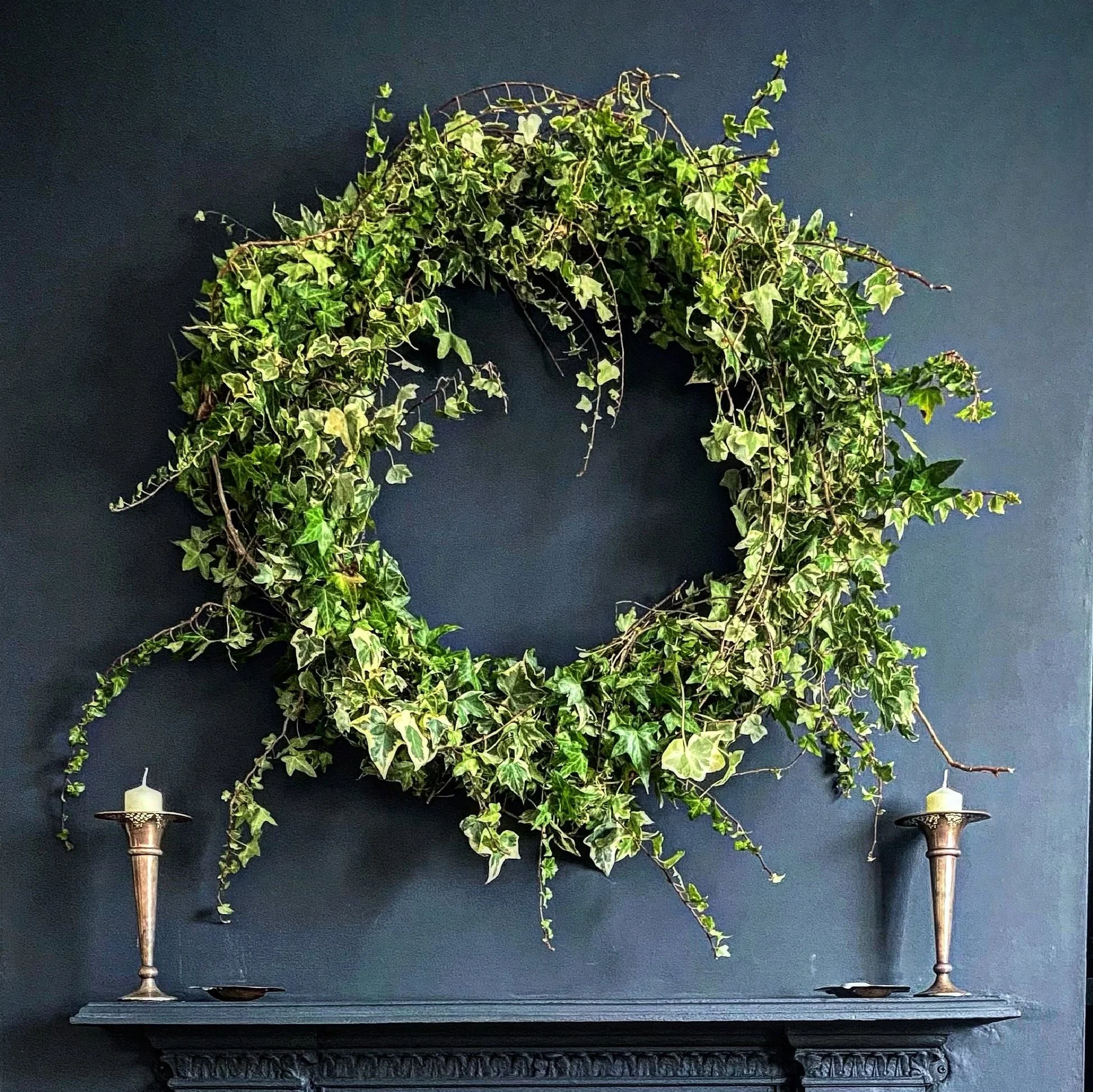
Thought to be derived from ‘writhen’, an Old English word that means ‘to twist’, the symbolism of the wreath is in its circular shape. Like the wreath, the world keeps turning and the wheel of the year continues, reminding us that dark winter days will soon be replaced by long, light evenings. In pre-Christian times, the solstice was celebrated with wheels of greenery to pray for the return of the sun.
Hanging a wreath on one’s door may well date back to the Romans, who hung wreaths on their doors as a sign of high status. (If you’ve seen the price of some wreath making workshops, these days, you might think not a lot has changed).
The door-going Christmas wreath, however, is not to be confused with the Advent wreath: the same shape but laid flat on a table with candles incorporated to count the Sundays in Advent. It wasn’t until the 19th century that festive wreaths were moved from table to front door. Made from holly, ivy and pine cones, these Victorian adornments were known as Welcome Rings, designed to impress festive guests.
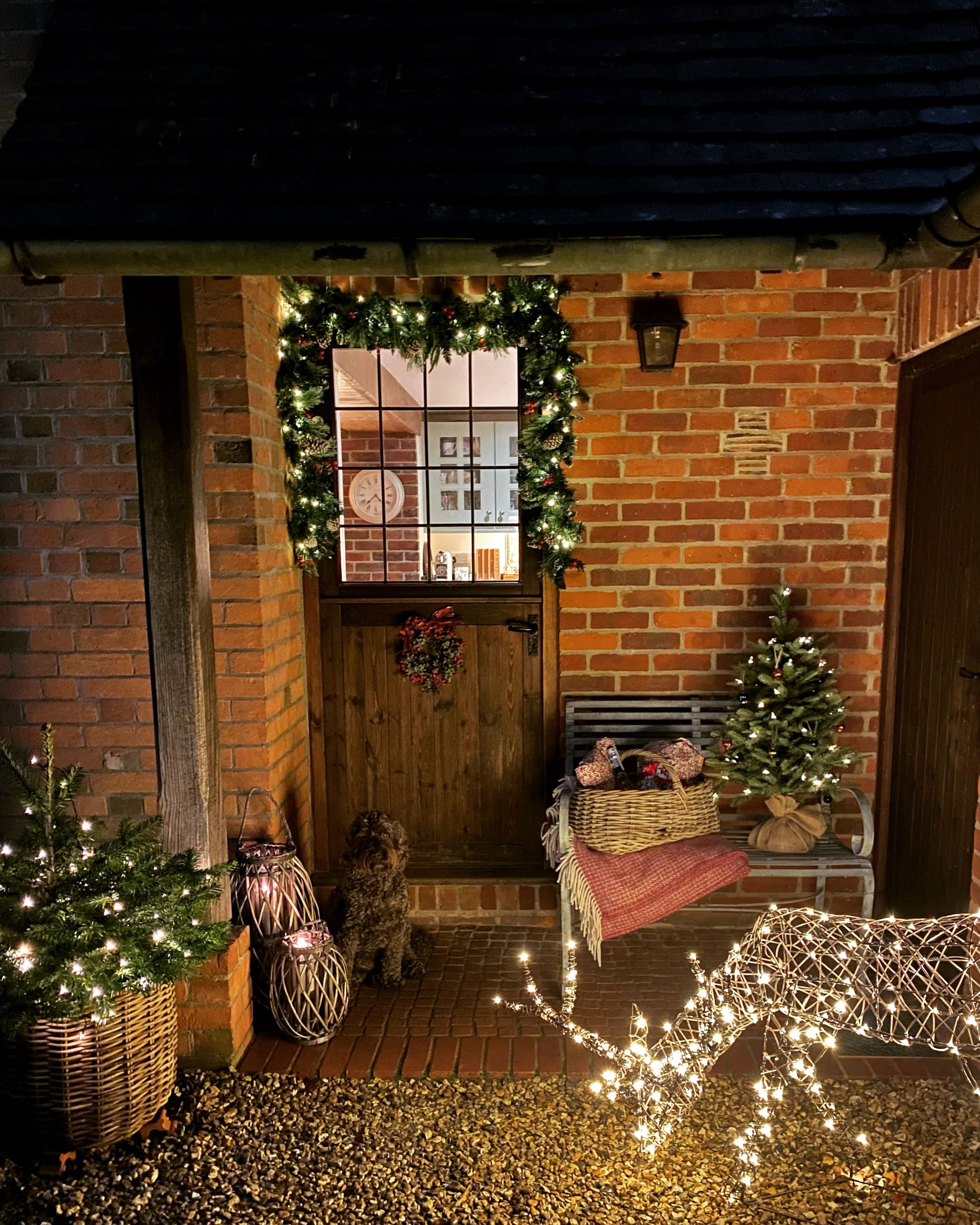
If you’d like to be impressed by some festive greenery, too, or simply be cheered by the reminder that lighter days are soon to come, you might like our My Place pages in our December issue, which feature festive foliage in homes around the globe, like the one pictured above.
Buy this month's The Simple Things -buy, download or subscribe