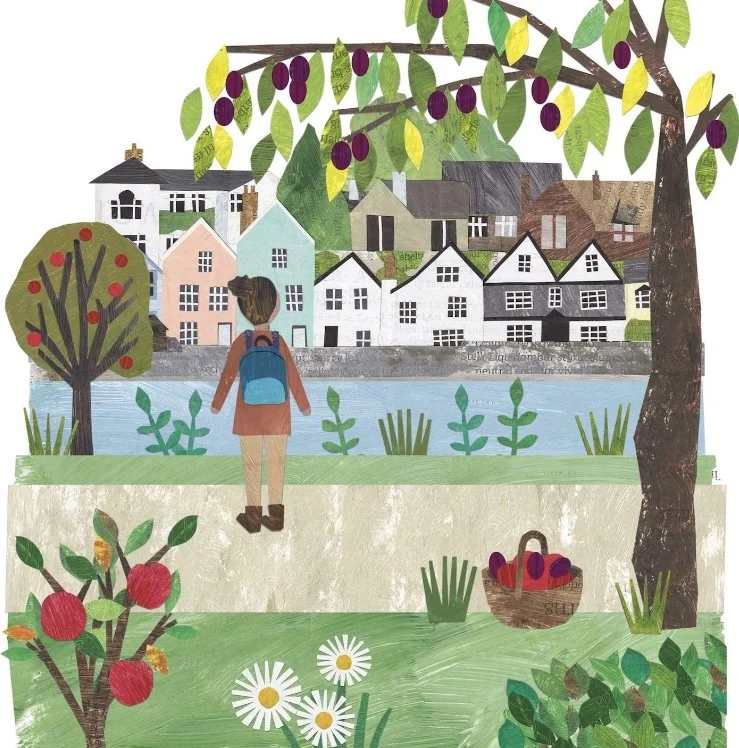
Illustration by Christina Carpenter
Not all orchards look like a clutch of apple trees. Here’s how to find the secret ones…
All over our villages, towns, and cities, heritage fruits hide in plain sight, revealing clues to human history. Victorians planted damsons near textile towns because their skins yielded a brilliant purple dye. Once chemical dyes took over, these trees were abandoned to the wild hedgerows. Meanwhile, 19th-century navvies tossed fruit pips along canal banks, leaving towpaths lined with wild crab apples and feral pear trees. Rather than filling your tubs with blackberries, spend an afternoon tracking down these lost orchards. Seek out ancient town edges, towpaths, and old estate walls for heirloom fruits hanging heavy over footpaths. Find your local bounty with the urban foraging map Falling Fruit (fallingfruit.org). This global database combines municipal street tree inventories with insights from local foragers. Each pin notes whether a tree is on public land, overhanging a footpath, or requires permission – encouraging conversations, and ensuring ethical foraging.
This blog by Jo Tinsley was taken from our Almanac pages which feature seasonal things to note and notice, plan and do each month.
Buy this month's The Simple Things -buy, download or subscribe